 Preview
 Send
Send Share
Share
 Details

 Download
 Similars
 X-Ray
X-Ray Diaporama
Photograph of Palenque taken by A.P. Maudslay
 Print
Print- WallArt
- Documentary Photography
 1894
1894 25.0 x 30.0 cm
 British Museum
 Read More
Giclée / Art Print
Museum-quality giclée or canvas print with fast production and flexible finish options. ( Buy Hand Made Painting Buy Image)




P118B $10

P118H $10

P118W $10

P438Z $10

P508JH $12

P508YH $12

P805H $10

P805Z $10

P919BZ $10

P919G $10

P919XJ $10

P959ZH $10

P968JZ $12

W106C $8

W218G $10

W218JH $8

W218Y $10

W307PJ $10

W316G $10

W316PJ $8

W316Y $10

W398PJ $8

W4111J $10

W500HY $15

W500JH $15

W692G $12

W849H $8

W940BG $15

W953PJ $8




Pick from our preset sizes that match the artwork's original proportions.

You may enter your own dimensions to fit a specific frame or space. If your selected size does not match the original image's proportions, we will either crop the artwork or extend the image with a mirrored or solid-fill edge. A digital mockup will be sent for your approval before production begins.
Please note that the on-screen preview does not reflect the actual cropping or extension. Only the mockup will accurately show the final composition.
While custom sizes are available, we recommend selecting a dimension from the predefined list to preserve the original proportions.
Worldwide Delivery () in 2 weeks instead of standard 4/5 weeks. (7 September)

Free Worldwide Express Shipping

High-Quality Linen Canvas

Full Shipping Insurance

Customs Tax Refund Guarantee

True Color Matching Guarantee

100-Day Return Policy (Defects Only)

100% Money-Back Guarantee

Bulk Discount Offer
 Glass option is only available in size under 110 CM

Photograph of Palenque taken by A.P. Maudslay
Giclée / Art Print
Reproduction Size
-


Total Price
$ 63
A Glimpse of Ancient Palenque: A Photographic Record by Alfred Percival Maudslay
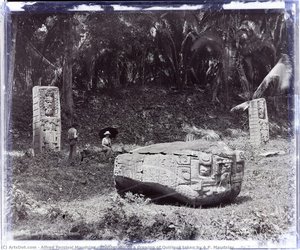
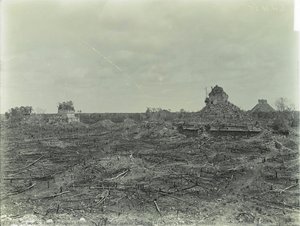
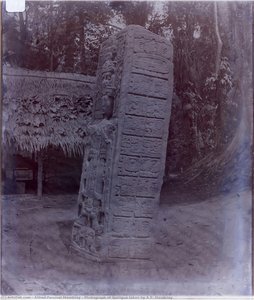
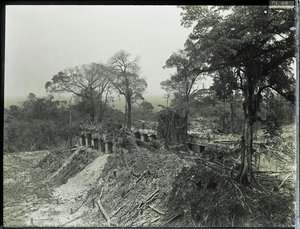
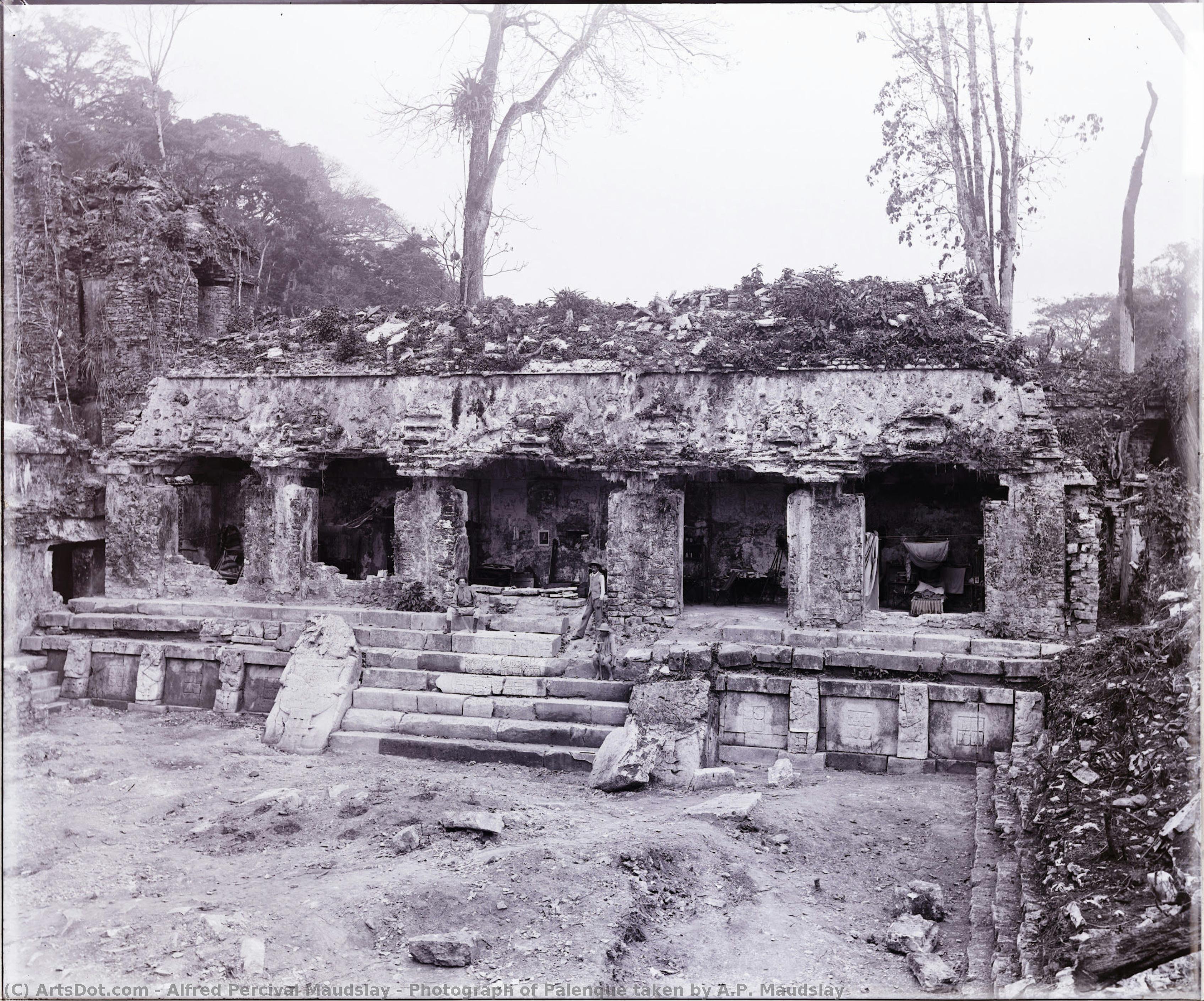
The photograph presented here – “Photograph of Palenque taken by A.P. Maudslay” – offers a remarkably intimate and evocative window into the heart of ancient Mayan civilization, specifically the ruins of Palenque in Mexico. Captured in 1894 by the British colonial administrator and pioneering archaeologist, Alfred Percival Maudslay, this silver gelatin print transcends mere documentation; it’s a testament to early exploration, a quiet dialogue between observer and observed, and a poignant reminder of a lost world slowly reclaiming itself.
Maudslay's journey into the Americas began with a fascination for natural history and a deep-seated desire to document the diverse cultures he encountered. His time in Central America, particularly his work with the British Honduras government, fostered a profound respect for indigenous traditions and a meticulous approach to archaeological investigation. This photograph isn’t simply a snapshot; it's the product of careful observation, deliberate composition, and a keen eye for detail – qualities that would define his legacy as one of the most significant early photographers of Mesoamerican ruins.
The Architecture and its Setting
Dominating the frame is a substantial stone structure, undoubtedly a temple or perhaps a ceremonial building integral to Palenque’s complex urban layout. The scale of this edifice immediately commands attention, conveying a sense of monumental grandeur despite the inherent fragility of ancient ruins. Surrounding it is a dense tapestry of vegetation – towering trees, tangled vines, and lush undergrowth – creating a powerful contrast between the rigid geometry of the architecture and the organic chaos of the jungle. This juxtaposition speaks volumes about the passage of time; Palenque isn’t merely standing as a relic of the past but actively being absorbed back into the natural world.
The composition itself is remarkably balanced, utilizing a wide-angle perspective to emphasize both the scale of the building and its integration within the surrounding environment. Scattered throughout the scene are several human figures – likely explorers or researchers documenting the site – providing a crucial element of scale and hinting at the ongoing process of archaeological discovery. These figures serve as silent witnesses to the grandeur of Palenque, underscoring the ambition and dedication required to unravel the mysteries of this ancient civilization.
A Monochrome Palette of Time
The photograph’s monochromatic palette – a carefully controlled range of grays from deep blacks to bright whites – is crucial to its impact. The absence of color forces the viewer to focus on texture, form, and light, revealing the intricate details of the stone surfaces and the dappled patterns of sunlight filtering through the jungle canopy. The subtle variations in tone create a sense of depth and dimensionality, lending a remarkable realism to the image. The diffused lighting suggests an overcast day or perhaps the early morning hours, contributing to the photograph’s contemplative mood.
Close examination reveals the rough textures of the weathered stones – evidence of centuries exposed to the elements – alongside the softer surfaces of the foliage. The strong vertical lines of the columns and walls provide a structural counterpoint to the more fluid shapes of the surrounding vegetation, creating a dynamic interplay between order and chaos.
Symbolism and Historical Context
Beyond its aesthetic qualities, “Photograph of Palenque taken by A.P. Maudslay” carries significant symbolic weight. The ruins themselves represent the enduring legacy of the Mayan civilization – a testament to their sophisticated understanding of mathematics, astronomy, art, and architecture. The presence of human figures underscores the ongoing effort to understand and preserve this cultural heritage. Furthermore, the encroaching jungle symbolizes the relentless power of nature, reminding us that even the most imposing structures are ultimately subject to time’s inevitable march.
Created in 1894, this photograph represents a pivotal moment in archaeological photography. Maudslay's meticulous approach and his commitment to capturing the essence of Palenque set a new standard for documenting ancient sites – a legacy that continues to inspire photographers and researchers today. It’s more than just an image; it’s a window into a vanished world, inviting us to contemplate the rise and fall of civilizations and the enduring beauty of the natural landscape.
Technical Details & Reproduction
The photograph is a silver gelatin print, a technique common during the late 19th century that allowed for detailed reproduction. Maudslay likely utilized a large-format camera and glass plate negatives to achieve the remarkable clarity and detail evident in the image. The dimensions are 25 x 30 cm, offering a substantial size suitable for display and study. Reproductions of this artwork retain the original’s nuanced tonal range and textural richness, providing a faithful representation of Maudslay's vision.
Related Artworks
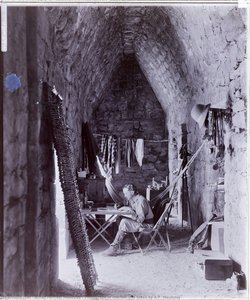
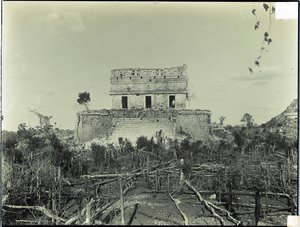
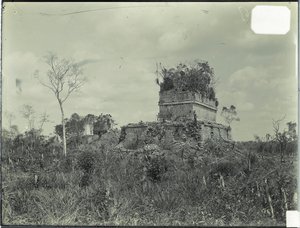
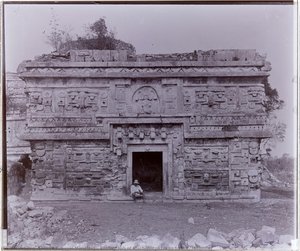
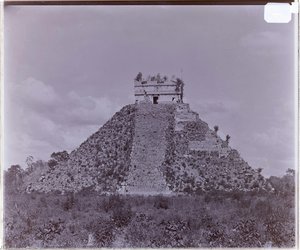
Artist Biography
**early life and education**
alfred percival maudslay, a british colonial administrator and archaeologist, was born on 18 march 1850 in london into a wealthy family. he studied natural sciences at trinity hall, cambridge, obtaining a ba in 1872.**career and travels**
maudslay's early plans for a medical career were deferred as he travelled with his brother, touring central america, mexico, and parts of the united states. this journey sparked an interest in archaeology, which would later define his legacy. after returning home, maudslay again postponed medical school to travel to iceland in 1873. his chronic bronchitis led him to seek a warmer climate, leading to a series of positions in jamaica, trinidad, and eventually, the south pacific.**archaeological contributions**
maudslay's time in the british pacific colonies laid the groundwork for his future archaeological pursuits. he became interested in collecting ethnographic materials, which would eventually contribute to the formation of the university museum of archaeology and ethnology at cambridge. his friend, ornithologist osbert salvin, encouraged maudslay to explore the maya ruins of quiriguá and copán.**notable achievements**
* maudslay was the first to describe the site of yaxchilán. * he explored chichén in the 1880s, taking extensive photographs. * published the first long-form description of chichen itza in his book, biologia centrali-americana. * made a complete translation with annotations of bernal díaz del castillo's historia, which remains the standard english edition.**artistic legacy**
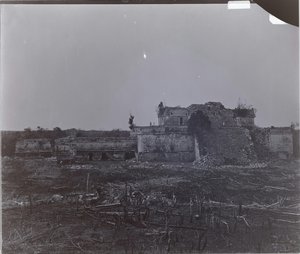
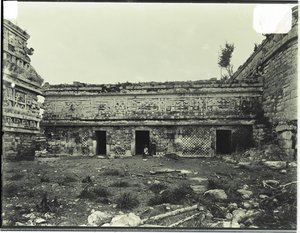
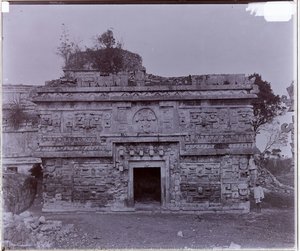
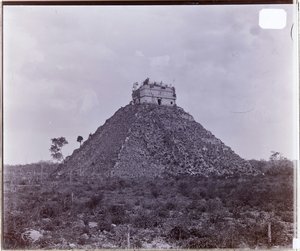
maudslay's photographs and writings have been preserved, offering a unique glimpse into the world of 19th-century archaeology. his work can be found in various museums, including the british museum (london, united kingdom), which houses several of his photographs.- photograph of chichén itzá taken by a.p. maudslay (16 x 21 cm, british museum, photograph)
- photograph of chichén itzá taken by a.p. maudsly (25 x 30 cm, british museum, photograph)
- photograph of copán taken by a.p. maudslay (31 x 25 cm, british museum, photograph)
**conclusion**
alfred percival maudslay's legacy is a testament to the power of curiosity and exploration. from his early days as a colonial administrator to his later years as an archaeologist, maudslay's work continues to inspire and educate.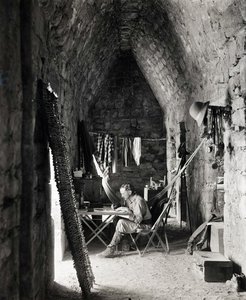
alfred percival maudslay
1850 - 1931 , United Kingdom
Quick Facts
- Artistic Movement Or Style: Archaeology/Photography
- Date Of Birth: 1850
- Date Of Death: 1931
- Full Name: Alfred Percival Maudslay
- Nationality: British
- Notable Artworks: ['Photograph of Chichén Itzá']
- Place Of Birth: London, United Kingdom
Related Articles

Monochrome Visions: Exploring the Aesthetic & Historical Significance of Black & White Photography
Explore the rich history & artistic power of black and white photography. From early techniques to iconic masters like Ansel Adams, discover why monochrome continues to captivate art lovers today. Expert insights for collectors.
Beyond the Lens: Photography's Enduring Influence on Modern & Contemporary Art
Explore photography's pivotal role in shaping modern & contemporary art. Discover key movements, influential artists like Stieglitz, and expert collecting advice from ArtsDot.

Dark Masterpieces: 10 Iconic Paintings Dominated by Black Tones |
Explore 10 iconic paintings dominated by black tones, from Rembrandt’s chiaroscuro to Goya's dark expressions. Discover the stories behind these masterpieces & find museum-quality art reproductions for your home at .
Witnessing History Through Lens & Light: Documentary Photography's Enduring Legacy
Explore the powerful history of documentary photography – from its origins to contemporary masters like Gordon Parks & W. Eugene Smith. Discover how this art form shapes our understanding of society and witness pivotal moments in time.

Pictorialism: A Search for Artistic Photography's Soul – Aesthetics, Techniques & Legacy
Explore the captivating world of Pictorialism – a pivotal movement that transformed photography into fine art. Discover key artists like Stieglitz & Käsebier, techniques, and collecting tips from experts.