 Preview
 Send
Send Share
Share
 Details

 Download
 Similars
 X-Ray
X-Ray Diaporama
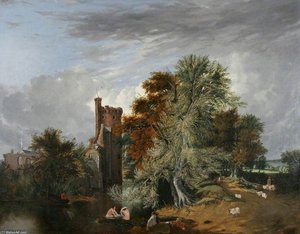
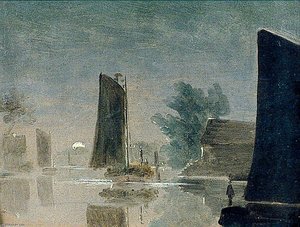
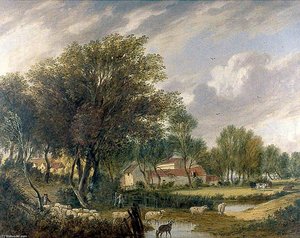
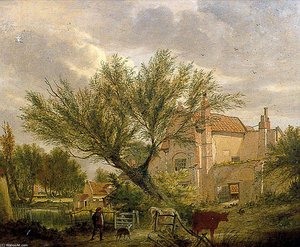
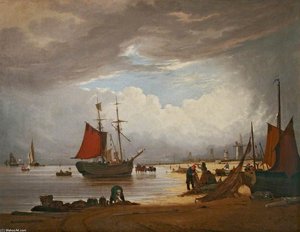
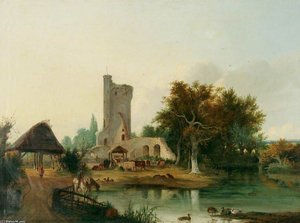
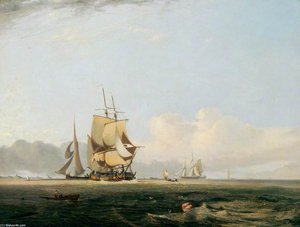
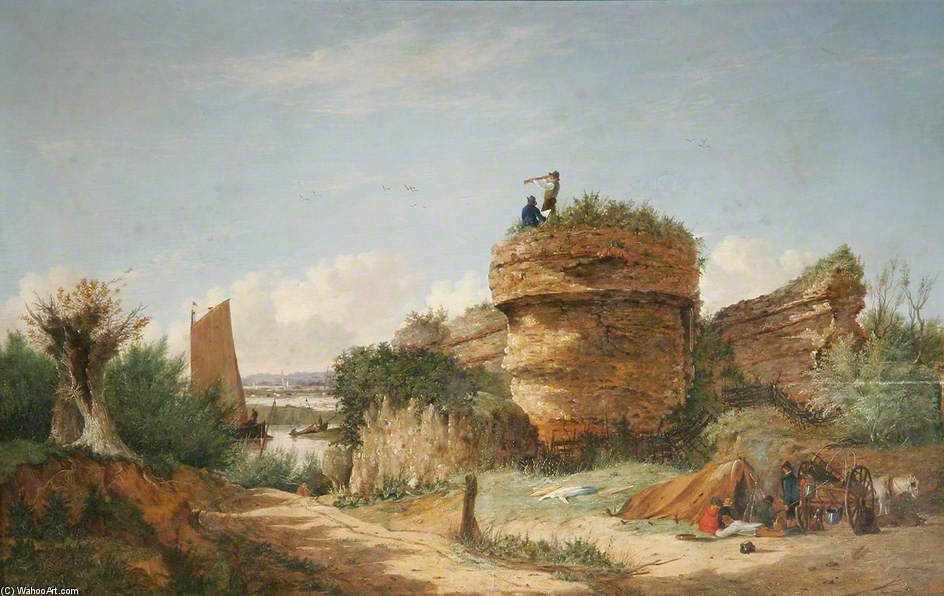
Burgh Castle Near Yarmouth, Norfolk

 Read More
Hand Made Oil Reproduction
Hand-painted oil on canvas in your size and frame, made to order by our artists. ( Buy Print Buy Image)




































Pick from our preset sizes that match the artwork's original proportions.

You may enter your own dimensions to fit a specific frame or space. If your selected size does not match the original image's proportions, we will either crop the artwork or extend the painting with additional hand-painted elements. A digital mockup will be sent for your approval before production begins.
Please note that the on-screen preview does not reflect the actual cropping or extension. Only the mockup will accurately show the final composition.
While custom sizes are available, we recommend selecting a dimension from the predefined list to preserve the original proportions.
After order, ArtsDot.com team will email client for instructions and provide a mockup preview
Worldwide Delivery () in 3/4 weeks instead of standard 5 weeks. (17 August). No compromise on quality.

Free Worldwide Express Shipping

High-Quality Linen Canvas

Full Shipping Insurance

Customs Tax Refund Guarantee

True Color Matching Guarantee

60-Day Return Policy (Defects Only)

100% Money-Back Guarantee

Bulk Discount Offer
 Glass option is only available in size under 110 CM

Burgh Castle Near Yarmouth, Norfolk
Reproduction Medium
Reproduction Size
-


Total Price
$ 263
Related Artworks
Artist Biography
Jean-Honoré Fragonard: A Master of Rococo Delight
Jean-Honoré Fragonard, a name synonymous with the vibrant and sensual world of late 18th-century France, remains one of the most beloved figures in art history. Born in Grasse, Provence, in April 1732, his life was a testament to artistic freedom and an unwavering pursuit of pleasure – qualities that profoundly shaped his distinctive style. Fragonard’s career, spanning nearly five decades, unfolded against the backdrop of the Ancien Régime, a period marked by both opulent extravagance and simmering social unrest. Unlike many artists of his time who sought patronage from royal courts, Fragonard largely operated independently, catering to a discerning clientele of wealthy private collectors, a decision that allowed him remarkable creative liberty. His legacy isn’t defined by grand historical narratives but rather by the exquisite intimacy and playful eroticism he captured on canvas – a world of stolen kisses, languid picnics, and exquisitely dressed figures immersed in moments of carefree delight.Early Influences and Artistic Training
Fragonard's artistic journey began with a formal education under François Boucher, a leading figure of the Rococo style at the Académie Royale de Peinture et de Sculpture in Paris. Boucher’s influence is undeniably present in Fragonard’s early works, particularly his penchant for lush compositions and graceful figures. However, Fragonard quickly distinguished himself through an exuberant energy and a willingness to depart from Boucher's more restrained approach. He spent several years studying the art of Italian masters during a period of royal patronage in Rome, meticulously copying works by artists like Caravaggio and Rubens – a process that profoundly impacted his technique and understanding of light and shadow. These studies weren’t merely exercises in imitation; they instilled within him a deep appreciation for dramatic contrasts and dynamic movement, elements he would later incorporate into his own paintings with remarkable skill. The red chalk drawings from this period reveal an intense focus on capturing the essence of form and gesture, showcasing Fragonard's exceptional draftsmanship.The Zenith of Rococo: Genre Scenes and Erotic Allusions
Fragonard’s artistic peak arrived during the 1760s and 1770s, a period marked by an explosion of creativity and a celebration of pleasure. He became renowned for his *genre scenes* – intimate depictions of everyday life that often carried subtle erotic undertones. These paintings, frequently commissioned by wealthy patrons seeking to adorn their salons, were characterized by their loose brushwork, vibrant colors, and suggestive compositions. Works like *The Swing*, perhaps his most famous painting, exemplify this style perfectly. The scene depicts a young woman being swung through the air by her lover, while an older man observes with amusement – a seemingly innocent tableau that nonetheless hints at hidden desires and illicit affairs. Similarly, *A Young Girl Reading* captures a moment of youthful flirtation, while *The Bolt* portrays a clandestine rendezvous in a moonlit garden. These paintings weren’t overtly explicit but relied on carefully crafted details—a suggestive glance, a strategically placed hand, or the implied presence of hidden figures—to evoke a sense of mystery and intrigue.Technique and Style: A Painterly Approach
Fragonard's artistic technique was remarkably innovative for his time. He eschewed the meticulous blending and smooth surfaces favored by many of his contemporaries, opting instead for a rapid, almost impressionistic approach. His brushstrokes were loose and visible, creating a sense of immediacy and spontaneity. This “painterly” style—characterized by a focus on capturing the essence of light and color rather than precise detail—became a hallmark of his work. He was particularly adept at using color to create atmosphere and mood, employing a rich palette of pastel hues and vibrant greens to evoke the beauty of the French countryside. Furthermore, Fragonard’s mastery of red chalk drawing allowed him to develop a keen eye for form and composition, which he then translated seamlessly into his paintings. His ability to capture fleeting moments of emotion and create a sense of intimacy made his work incredibly appealing to a wide range of patrons.Legacy and Historical Significance
Despite the tumultuous events of the French Revolution, Fragonard continued to paint throughout his life, adapting his style to reflect the changing times. He died in Paris in August 1806, leaving behind an astonishingly prolific body of work—over five hundred paintings, along with numerous etchings and drawings. While often dismissed as a mere follower of Boucher, Fragonard’s influence on subsequent generations of artists is undeniable. His embrace of sensuality, his innovative technique, and his celebration of pleasure helped to shape the development of Rococo art and paved the way for later movements such as Romanticism. Today, his paintings are treasured in museums around the world, offering a glimpse into a bygone era of elegance, indulgence, and artistic brilliance. They remain a testament to the enduring power of beauty, desire, and the human capacity for joy.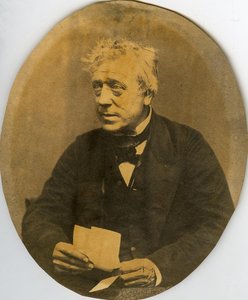
alfred stannard
1806 - 1889 , United Kingdom
Quick Facts
- Artistic Movement Or Style: Rococo
- Artists Or Movements Influenced By This Artist: ['Rococo']
- Artists Who Influenced This Artist:
- Antoine Watteau
- François Boucher
- Date Of Birth: 5 April 1732
- Date Of Death: 22 August 1806
- Full Name: Jean-Honoré Fragonard
- Nationality: French
- Notable Artworks:
- The Swing
- A Young Girl Reading
- The Bolt
- Place Of Birth: Grasse, France
Related Articles

Evoking Emotion & Transcendence: Romantic Landscape Painting (18th-19th Century)
Explore the emotional depth of Romantic landscape painting (18th-19th century). Discover key artists like Friedrich & Cole, and the concepts of the sublime. Expert insights for art lovers & collectors.
Alfred Worthington: Bridging Victorian Realism & Early Modern Landscape Painting
Explore the captivating landscapes of Alfred Worthington (1834-1927), a pivotal figure bridging Victorian realism & early Impressionism. Discover his Welsh hunting scenes, artistic evolution, and collecting guide.
The Evocative Embrace of Reality: Exploring Romantic Realism in 19th-Century Painting
Explore the captivating world of Romantic Realism! Discover key artists like Courbet & Millet, masterpieces, and the social context behind this influential art movement. Expert insights for collectors at ArtsDot.
Luminism: Capturing Ephemeral Light & Transcendence in 19th-Century American Landscape Painting
Explore the captivating world of Luminism! Discover the key artists, techniques & legacy of this influential 19th-century American art movement. Expert insights & high-quality reproductions at ArtsDot.
Daniel Maclise: Historical Narratives & Romantic Ideals in 19th-Century British Art
Explore the life & works of Daniel Maclise, a leading Victorian historical painter. Discover his captivating murals, Shakespearean scenes, and portraits at ArtsDot.com – handmade oil paintings & museum-quality prints.