 Preview
 Send
Send Share
Share
 Details

 Download
 Similars
 X-Ray
X-Ray Diaporama
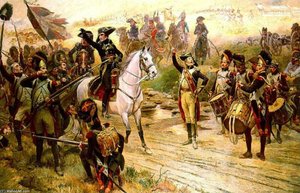
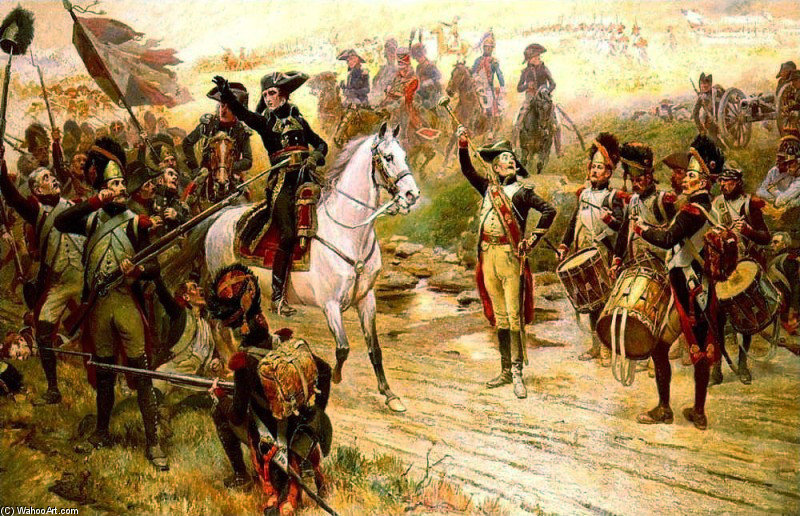
Bonaparte A Marengo


 Read More
Hand Made Oil Reproduction
Hand-painted oil on canvas in your size and frame, made to order by our artists. ( Buy Print Buy Image)




P118B $10

P118H $10

P118W $10

P438Z $10

P508JH $12

P508YH $12

P805H $10

P805Z $10

P919BZ $10

P919G $10

P919XJ $10

P959ZH $10

P968JZ $12

W106C $8

W218G $10

W218JH $8

W218Y $10

W307PJ $10

W316G $10

W316PJ $8

W316Y $10

W398PJ $8

W4111J $10

W500HY $15

W500JH $15

W692G $12

W849H $8

W940BG $15

W953PJ $8




Pick from our preset sizes that match the artwork's original proportions.

You may enter your own dimensions to fit a specific frame or space. If your selected size does not match the original image's proportions, we will either crop the artwork or extend the painting with additional hand-painted elements. A digital mockup will be sent for your approval before production begins.
Please note that the on-screen preview does not reflect the actual cropping or extension. Only the mockup will accurately show the final composition.
While custom sizes are available, we recommend selecting a dimension from the predefined list to preserve the original proportions.
After order, ArtsDot.com team will email client for instructions and provide a mockup preview
Worldwide Delivery () in 3/4 weeks instead of standard 5 weeks. (16 August). No compromise on quality.

Free Worldwide Express Shipping

High-Quality Linen Canvas

Full Shipping Insurance

Customs Tax Refund Guarantee

True Color Matching Guarantee

60-Day Return Policy (Defects Only)

100% Money-Back Guarantee

Bulk Discount Offer
 Glass option is only available in size under 110 CM

Bonaparte A Marengo
Reproduction Medium
Reproduction Size
-


Total Price
$ 263
Artwork Description
A Triumph of Realism: Alphonse Lalauze’s Marengo
The Battle of Marengo, June 24th, 1800 – a pivotal moment in Napoleonic history and an enduring subject for artistic interpretation. Alphonse Lalauze’s monumental canvas captures not merely the tactical maneuvers of Bonaparte's army but strives to convey the visceral experience of war itself—a feat accomplished with unparalleled realism that cemented his place among the foremost painters of his era. This essay delves into the intricacies of Lalauze’s approach, examining how he transformed historical documentation into a powerfully emotive visual narrative.The Artist’s Vision: Capturing the Essence of Conflict
Lalauze wasn't simply interested in recreating a battlefield scene; he sought to distill its essence—the terror, the exhilaration, and the sheer physicality of combat. Influenced by the Barbizon School’s emphasis on direct observation and tonal modulation, Lalauze eschewed idealized representations favored by earlier Romantic painters. Instead, he meticulously studied topographical maps and military reports, painstakingly reconstructing the terrain around Marengo with astonishing accuracy. This dedication to detail extended beyond mere landscape; he captured the expressions of individual soldiers—faces etched with fatigue, determination, and fleeting glimpses of triumph—creating portraits that resonated with psychological depth.Technique: Mastering Light and Shadow – The Barbizon Legacy
Lalauze’s technique exemplifies the Barbizon School's commitment to tonal painting—a method characterized by gradual transitions between light and dark hues rather than harsh contrasts. He employed a layering process, applying thin glazes over underdrawings to build up color gradually, achieving remarkable luminosity and capturing the atmospheric haze prevalent on the battlefield. The artist’s masterful manipulation of chiaroscuro – the interplay of light and shadow – dramatically accentuated the dynamism of the scene, emphasizing the movement of troops and highlighting key figures like Bonaparte himself. Lalauze's brushstrokes were deliberate and confident, conveying a sense of immediacy that mirrored the urgency of the moment.Historical Context: Napoleon’s Gamble and Artistic Response
Marengo represented a daring gamble by Napoleon—a calculated risk aimed at securing victory over Austria and Prussia after suffering setbacks earlier in the campaign. The battle's outcome profoundly impacted European politics, bolstering Napoleon’s prestige and reshaping the geopolitical landscape. Artists responded to this historical drama with fervor, attempting to convey its significance through visual mediums. Lalauze’s painting stands apart from many others of its time not only for its technical brilliance but also for its profound engagement with the psychological complexities of warfare—a reflection of Napoleon's own leadership qualities and a testament to the artist's ability to translate historical events into enduring artistic statements.Symbolism: Beyond Representation – Emotion and Narrative
While Lalauze’s depiction adheres rigorously to factual observation, it is imbued with symbolic resonance. The positioning of Bonaparte—seated atop his horse, gazing towards the advancing troops—represents authority and strategic command. The smoke billowing from the battlefield symbolizes destruction and chaos, yet simultaneously illuminates the heroic deeds of those involved. Furthermore, the artist's careful attention to facial expressions conveys a spectrum of emotions—fear, courage, hope—transforming the canvas into a narrative that transcends mere visual representation.Emotional Impact: A Window Into Napoleonic Spirit
Ultimately, Lalauze’s Marengo succeeds in transporting viewers back to June 24th, 1800, eliciting an emotional response rooted in admiration for Napoleon's tenacity and conveying the palpable atmosphere of battle. The painting serves as a powerful reminder that art can illuminate not only historical events but also the human spirit—demonstrating how artists like Lalauze harnessed technique and symbolism to forge enduring legacies of artistic achievement.Related Artworks
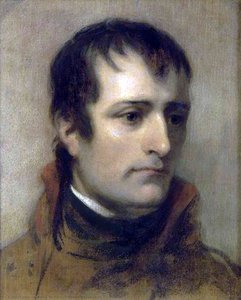
Artist Biography
Adolphe Lalauze: A Pioneer of Realistic Napoleonic Painting
Adolphe Lalauze (8 October 1838 – 18 October 1906) stands as a significant figure in French art history, particularly recognized for his masterful depictions of Napoleonic battles and landscapes. Born in Paris, he embarked on an artistic journey marked by unwavering dedication to capturing the grandeur and drama of historical events with remarkable precision—a stylistic approach that distinguished him from many of his contemporaries. Lalauze’s career blossomed during the Belle Époque, a period characterized by optimism and cultural flourishing, providing fertile ground for artists like him to explore ambitious themes and techniques.- Early Life & Training: Lalauze received formal training at the École Supérieure des Beaux-Arts in Paris, honing his skills in engraving alongside painting. This dual focus instilled in him a profound understanding of visual representation and contributed significantly to his later artistic endeavors.
- Engraving Career: Before dedicating himself primarily to oil painting, Lalauze established himself as a respected engraver, producing prints for prominent publications and demonstrating an exceptional command of tonal gradation and detail—skills that would prove invaluable in translating the dynamism of battle scenes onto canvas.
- Napoleonic Landscapes & Battles: Lalauze’s artistic reputation solidified through his prolific output of Napoleonic paintings, notably “Army of Africa,” “Unknow,” and “The Battle Of Haelen.” These works exemplify his commitment to realism, meticulously rendering the textures of terrain and conveying the intensity of combat with palpable emotion.
Major Achievements & Recognition
Lalauze’s paintings garnered considerable acclaim during his lifetime, securing commissions from royal patrons and elevating his status within the Parisian artistic community. His works were exhibited extensively at prestigious salons, cementing his legacy as one of France's foremost painters of Napoleonic history. Furthermore, Lalauze’s influence extended beyond his own generation, inspiring subsequent artists to embrace realism and explore ambitious historical narratives.Symbolism & Influence
While Lalauze primarily focused on depicting historical scenes, his artistic sensibilities were undeniably shaped by the Symbolist movement—a trend that sought to infuse art with emotional depth and psychological nuance. Like many Symbolists, Lalauze aimed to convey not merely what he saw but also what he felt—capturing the essence of human experience within meticulously crafted compositions. His unwavering commitment to realism served as a counterbalance to Symbolism’s expressive tendencies, resulting in a uniquely compelling artistic voice.Legacy & Historical Significance
Adolphe Lalauze's contribution to French art is undeniable. He remains an exemplar of Romantic Realism, demonstrating the power of observation and technical skill to illuminate historical narratives with profound emotional resonance. His paintings continue to captivate audiences today, offering a glimpse into a pivotal period in European history—a testament to his enduring artistic vision and lasting impact on the landscape of French art.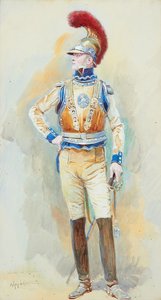
alphonse lalauze
1872 - 1936 , France
Quick Facts
- Artistic Movement Or Style: Book illustration
- Date Of Birth: 8 October 1838
- Date Of Death: 18 October 1906
- Full Name: Adolphe Lalauze
- Nationality: French
- Notable Artworks:
- Army Of Africa
- Unknow
- The Battle Of Haelen
- Place Of Birth: Paris, France
Related Articles
Émile Jean Horace Vernet: Romantic Realism & Depicting 19th-Century Life
Explore the life & art of Émile Jean Horace Vernet, a master of Romantic Realism. Discover his captivating battle scenes, portraits, and Orientalist works – a window into 19th-century France. Learn about his techniques & enduring legacy.
Romantic Realism's Finest: 10 Masterpieces for Your Home | ArtsDot
Explore 10 defining masterpieces of Romantic Realism! Discover Courbet, Millet & Daumier's powerful paintings—capturing emotion and social realities. Find museum-quality reproductions for your home at ArtsDot.com.
Philip James de Loutherbourg: Romantic Visions of Maritime Life & the Sublime
Explore the dramatic naval scenes & landscapes of Philip James de Loutherbourg (1740-1812), a key figure in Romantic painting. Discover his legacy, theatrical innovations & iconic works like 'The Battle of the Nile' at ArtsDot.
Paul Huet: Capturing the Essence of French Romanticism Through Light and Landscape
Explore the captivating world of Paul Huet (1803-1869), a master of French Romantic landscape painting. Discover his influence on Barbizon & Impressionism, and browse high-quality reproductions at ArtsDot.

Romantic Landscapes: 10 Masterpieces for Your Home | ArtsDot
Journey through 10 Romantic landscape masterpieces by Friedrich, Turner & Cole. Explore emotional art, sublime nature scenes & iconic 19th-century paintings. Find museum-quality reproductions for your home at ArtsDot.com – discover the full collection online!