 Preview
 Send
Send Share
Share
 Details

 Download
 Similars
 X-Ray
X-Ray Diaporama
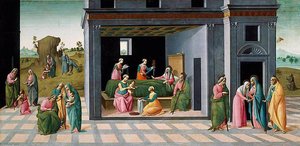
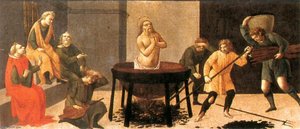
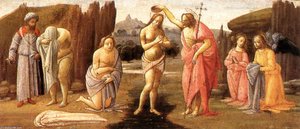
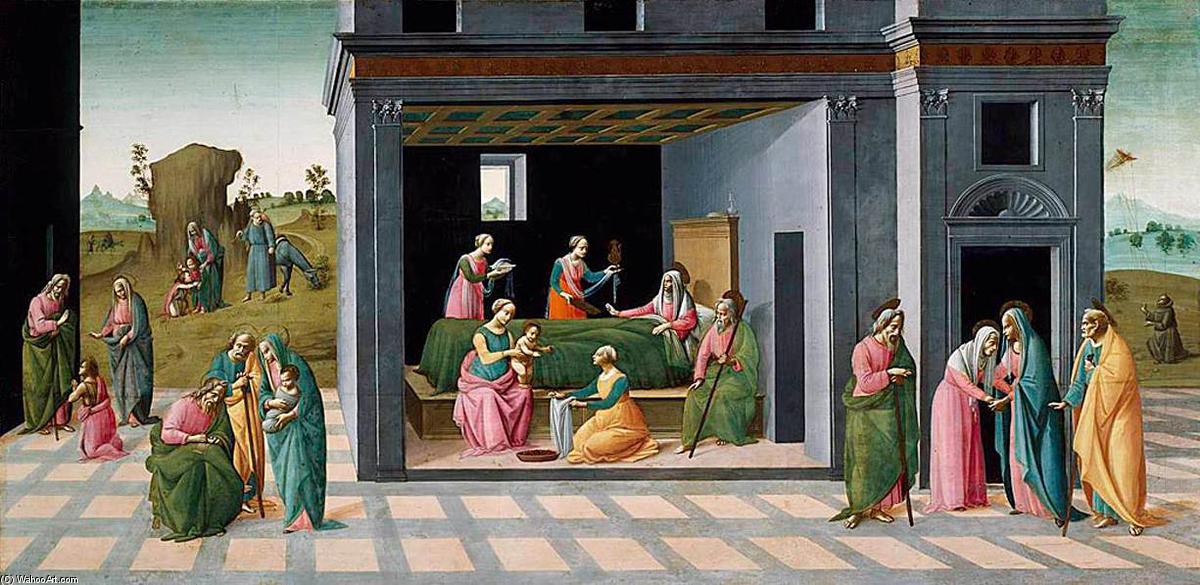
Scenes from the Life of St John the Baptist
 Tempera
- Renaissance
 1490
1490- Renaissance
 74.0 x 150.0 cm
 Art Institute of Chicago
 Read More
Hand Made Oil Reproduction
Hand-painted oil on canvas in your size and frame, made to order by our artists. ( Buy Print Buy Image)




P118B $10

P118H $10

P118W $10

P438Z $10

P508JH $12

P508YH $12

P805H $10

P805Z $10

P919BZ $10

P919G $10

P919XJ $10

P959ZH $10

P968JZ $12

W106C $8

W218G $10

W218JH $8

W218Y $10

W307PJ $10

W316G $10

W316PJ $8

W316Y $10

W398PJ $8

W4111J $10

W500HY $15

W500JH $15

W692G $12

W849H $8

W940BG $15

W953PJ $8




Pick from our preset sizes that match the artwork's original proportions.

You may enter your own dimensions to fit a specific frame or space. If your selected size does not match the original image's proportions, we will either crop the artwork or extend the painting with additional hand-painted elements. A digital mockup will be sent for your approval before production begins.
Please note that the on-screen preview does not reflect the actual cropping or extension. Only the mockup will accurately show the final composition.
While custom sizes are available, we recommend selecting a dimension from the predefined list to preserve the original proportions.
After order, ArtsDot.com team will email client for instructions and provide a mockup preview
Worldwide Delivery () in 3/4 weeks instead of standard 5 weeks. (6 September). No compromise on quality.

Free Worldwide Express Shipping

High-Quality Linen Canvas

Full Shipping Insurance

Customs Tax Refund Guarantee

True Color Matching Guarantee

100-Day Return Policy (Defects Only)

100% Money-Back Guarantee

Bulk Discount Offer
 Glass option is only available in size under 110 CM

Scenes from the Life of St John the Baptist
Reproduction Medium
Reproduction Size
-


Total Price
$ 263
A Sacred Narrative in Tempera: The Life of St John the Baptist
In the quiet corridors of the Art Institute of Chicago, there exists a window into the late Quattrocento, a period where the Florentine Renaissance breathed life into sacred stories through meticulous detail and divine light. Scenes from the Life of St John the Baptist, painted in 1490 by the skilled hand of Alunno Di Domenico (also known as Bartolomeo Di Giovanni), is not merely a painting but a rhythmic, visual pilgrimage. This tempera masterpiece, stretching across a grand 74 x 150 cm expanse, invites the viewer to step into a world where the earthly and the divine intersect through architectural grace and human emotion.
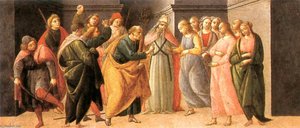
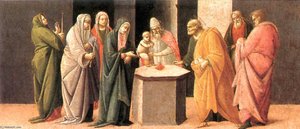
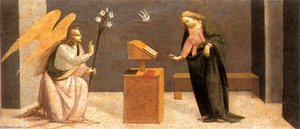
The composition is a masterclass in narrative structure, divided into three distinct, captivating sections that guide the eye through the pivotal moments of the Saint's journey. On the left, a tender yet somber scene unfolds around a bed, perhaps capturing a moment of profound illness or miraculous healing, where the intimacy of the figures draws us into their shared vulnerability. The central panel shifts toward dialogue and movement, featuring figures engaged in a spirited conversation that suggests the transmission of wisdom or prophecy. Finally, the rightmost section presents an atmosphere of scholarly or religious devotion, populated by figures clutching books and scrolls, grounding the miraculous life of the Saint within the intellectual and liturgical traditions of the late medieval period.
The Artistry of the Florentine Workshop
To understand this work is to understand the legacy of the Florentine workshop. As a student of the legendary Domenico Ghirlandaio, Bartolomeo Di Giovanni infused his work with the precision and clarity characteristic of the era. The technique of tempera on canvas allows for a luminous, jewel-like quality; notice how the palette dances with vibrant shades of green and soft pinks, colors that breathe vitality into the period clothing of the subjects. These hues are not merely decorative but serve to highlight the rhythmic movement of the figures against the structured backdrop of arches and columns.
The artist utilizes architectural elements—the strength of classical columns and the elegance of rounded arches—to create a sense of profound depth and perspective. This use of space does more than provide a setting; it creates a stage where light and shadow play across the faces of the faithful, evoking a sense of permanence and sanctity. For the discerning collector or interior designer, this piece offers a sophisticated balance of historical weight and aesthetic lightness, making it an ideal centerpiece for spaces that value classical elegance and storytelling.
An Eternal Legacy for the Modern Collector
Beyond its technical brilliance, Scenes from the Life of St John the Baptist resonates with an emotional depth that transcends centuries. There is a palpable sense of devotion in every brushstroke, a quiet reverence that speaks to the human desire for meaning and connection to the sacred. The meticulous attention to detail—from the texture of a scroll to the gesture of a hand—ensures that the painting remains a captivating subject for contemplation.
For those seeking to adorn a curated collection or an exquisitely designed interior, a high-quality reproduction of this work offers more than just decoration; it offers an infusion of history and soul. It serves as a conversation piece that honors the craftsmanship of the 15th century while bringing the timeless beauty of the Italian Renaissance into the contemporary home. Owning such a piece is an invitation to live surrounded by the enduring light of Florentine genius.
Related Artworks
Artist Biography
Bartolomeo di Giovanni: The Silent Student of Florentine Genius
Bartolomeo di Giovanni, a name often overshadowed by the brilliance of his contemporaries, remains a captivating figure in 15th-century Florentine art. Known primarily through the designation “Alunno di Domenico” – meaning “student of Domenico Ghirlandaio” – this elusive artist’s legacy rests largely on his crucial contributions to the famed Ospedale degli Innocenti frescoes and predella panels, revealing a unique artistic voice within the bustling workshop of one of Florence's most celebrated masters. His life was tragically short, ending in his early thirties, yet his work offers a poignant glimpse into the evolution of Renaissance painting and the subtle interplay between master and pupil.
Born around 1458 in Florence, Bartolomeo’s origins remain somewhat shrouded in mystery. He was likely apprenticed to Domenico Ghirlandaio, a position that afforded him invaluable experience and access to the latest artistic techniques. Ghirandaio's workshop was a crucible of innovation, attracting talented young artists eager to hone their skills – and Bartolomeo undoubtedly benefited immensely from this environment. While his early life is sparsely documented, archival research has firmly established his identity beyond the simple label of “student,” revealing him as a distinct artist with a developing style.
The Predella Panels: A Window into Artistic Innovation
Bartolomeo’s most significant contribution to art history lies in his execution of predella panels – the small, narrative scenes that adorned the altarpieces of the late 15th century. These panels, particularly those he completed for Domenico Ghirlandaio's Adoration of the Magi (1488) at the Ospedale degli Innocenti, are remarkable for their emotional depth and subtle stylistic departures from the prevailing conventions. The scenes depict episodes from the life of St. John the Baptist – a subject frequently chosen for its devotional appeal – showcasing Bartolomeo’s skill in portraying human figures with a delicate grace and expressive quality.
What distinguishes Bartolomeo's work is not a radical departure, but rather a refinement of Ghirlandaio’s style. He retained the master’s characteristic use of bright colors, meticulous detail, and balanced compositions, yet infused his scenes with a greater sense of intimacy and psychological realism. Notably, he employed a looser brushstroke and a more expressive handling of drapery than Ghirlandaio, hinting at a developing personal style. The “Scenes from the Life of St John the Baptist” are particularly noteworthy for their evocative storytelling and the artist’s ability to capture fleeting moments of emotion.
Influences and Artistic Development
Bartolomeo's artistic development is inextricably linked to his apprenticeship with Domenico Ghirlandaio. However, it’s increasingly clear that he was also influenced by other prominent Florentine artists of the period. The subtle echoes of Sandro Botticelli’s elegant line and the influence of Fra Angelico’s devotional intensity can be detected in his work, suggesting a broad artistic education. Furthermore, some scholars have pointed to possible connections with the more austere and emotionally charged style of Piero di Cosimo, a contemporary painter known for his dramatic depictions of religious subjects.
Despite these influences, Bartolomeo ultimately forged his own distinctive path. His predella panels demonstrate a remarkable ability to synthesize diverse stylistic elements into a cohesive and compelling narrative. He skillfully balanced technical proficiency with emotional sensitivity, creating works that are both aesthetically pleasing and deeply moving.
A Tragic End and Lasting Legacy
Bartolomeo di Giovanni’s life was tragically cut short in 1501, likely due to illness. His untimely death deprived the art world of a promising talent whose potential remained largely untapped. Despite his brief career, Bartolomeo left behind a significant body of work that continues to fascinate and intrigue scholars today. His predella panels, particularly those from the Ospedale degli Innocenti, are considered masterpieces of Florentine Renaissance painting, offering invaluable insights into the artistic practices and cultural values of the era.
Today, Bartolomeo di Giovanni is recognized as a significant, though often overlooked, figure in the history of Italian art. His work stands as a testament to the power of apprenticeship, the enduring influence of master artists, and the remarkable creativity that flourished within the vibrant artistic landscape of Renaissance Florence.
alunno di domenico (bartolomeo di giovanni)
1475 - 1503 , Italy
Quick Facts
- Artistic Movement Or Style: Renaissance
- Artists Or Movements Influenced By This Artist: ['Botticelli']
- Artists Who Influenced This Artist: ['Domenico Ghirlandaio']
- Date Of Birth: 1458?
- Date Of Death: 1501
- Full Name: Bartolomeo di Giovanni
- Nationality: Italian
- Notable Artworks:
- St John's Life
- The Nativity
- Madonna and Child
- Place Of Birth: Florence, Italy
Related Articles

John Constable's Masterpieces: Explore 25 Iconic Landscapes for Your Home
Journey through John Constable's 25 most celebrated landscapes. Explore Romanticism, Dedham Vale & his masterful use of light in iconic paintings like 'Hay Wain'. Find museum-quality art reproductions and elevate your home decor on ArtsDot.com.

John Singer Sargent's 25 Masterpieces: Portraits & Beyond | ArtsDot
Explore 25 iconic John Singer Sargent paintings – from dazzling portraits to Impressionist landscapes. Discover the stories behind Madame X, El Jaleo & more! Find museum-quality art reproductions and elevate your home decor with ArtsDot.com.
Illuminating Surfaces: A Comprehensive Exploration of Tempera on Panel Painting Techniques & Historical Significance
Explore the rich history & techniques of tempera painting! Discover Renaissance masters like Botticelli & Fra Angelico, conservation insights, and the enduring legacy of this captivating art form. Learn more now!
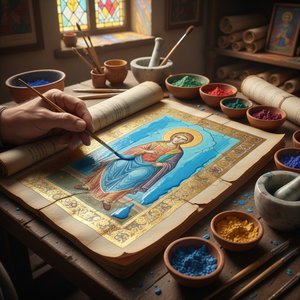
Illuminating History: A Comprehensive Exploration of Tempera Painting Techniques & Artistic Legacy
Explore the rich history & techniques of tempera painting! Discover Renaissance masters like Botticelli & Fra Angelico, conservation insights, and the enduring legacy of this captivating art form.

El Greco's Masterpieces: Explore 25 Iconic Paintings & Spiritual Visions | ArtsDot
Journey through El Greco's 25 most iconic paintings! Explore the spiritual depth & dramatic beauty of this Spanish Renaissance master. Discover art history, techniques & find museum-quality reproductions for your home at ArtsDot.com.