 Preview
 Send
Send Share
Share
 Details

 Download
 Similars
 X-Ray
X-Ray Diaporama
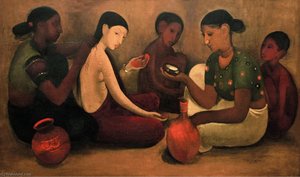
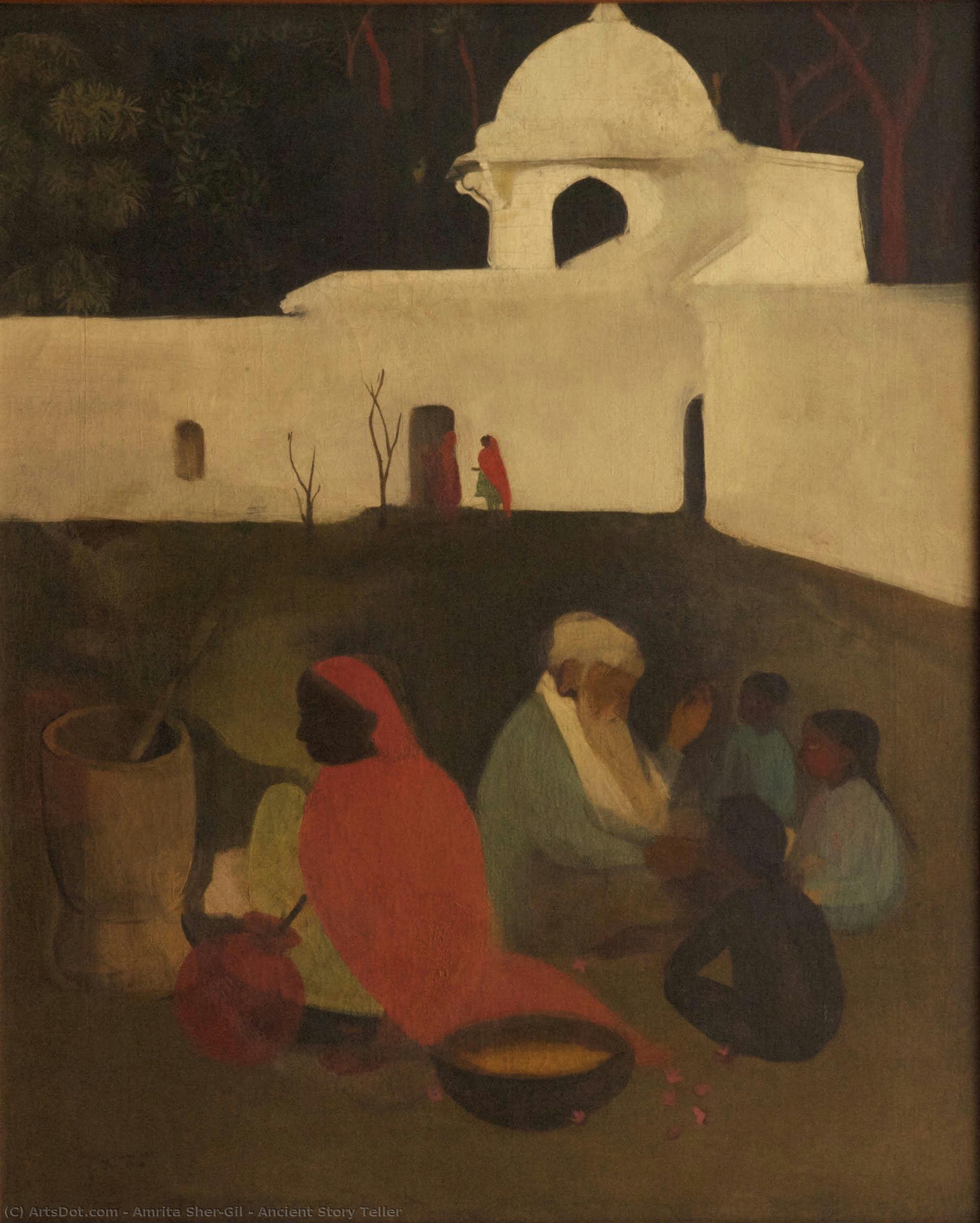
Ancient Story Teller
 Oil On Canvas
- WallArt
- Contemporary Realism
 1940
1940 72.0 x 89.0 cm
 National Gallery of Modern Art
 Read More
Hand Made Oil Reproduction
Hand-painted oil on canvas in your size and frame, made to order by our artists. ( Buy Print Buy Image)




P118B $10

P118H $10

P118W $10

P438Z $10

P508JH $12

P508YH $12

P805H $10

P805Z $10

P919BZ $10

P919G $10

P919XJ $10

P959ZH $10

P968JZ $12

W106C $8

W218G $10

W218JH $8

W218Y $10

W307PJ $10

W316G $10

W316PJ $8

W316Y $10

W398PJ $8

W4111J $10

W500HY $15

W500JH $15

W692G $12

W849H $8

W940BG $15

W953PJ $8




Pick from our preset sizes that match the artwork's original proportions.

You may enter your own dimensions to fit a specific frame or space. If your selected size does not match the original image's proportions, we will either crop the artwork or extend the painting with additional hand-painted elements. A digital mockup will be sent for your approval before production begins.
Please note that the on-screen preview does not reflect the actual cropping or extension. Only the mockup will accurately show the final composition.
While custom sizes are available, we recommend selecting a dimension from the predefined list to preserve the original proportions.
After order, ArtsDot.com team will email client for instructions and provide a mockup preview
Worldwide Delivery () in 3/4 weeks instead of standard 5 weeks. (17 August). No compromise on quality.

Free Worldwide Express Shipping

High-Quality Linen Canvas

Full Shipping Insurance

Customs Tax Refund Guarantee

True Color Matching Guarantee

60-Day Return Policy (Defects Only)

100% Money-Back Guarantee

Bulk Discount Offer
 Glass option is only available in size under 110 CM

Ancient Story Teller
Reproduction Medium
Reproduction Size
-


Total Price
$ 388
Artwork Description
Ancient Story Teller
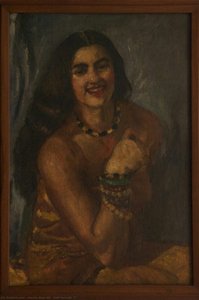
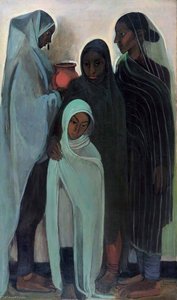
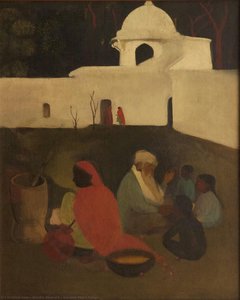
The artwork, titled “Ancient Story Teller,” is a poignant depiction of rural Indian life captured in 1940 by Hungarian-born Indian artist Amrita Sher-Gil. More than just a visual representation, it’s an embodiment of cultural heritage and a testament to the enduring power of oral tradition—themes that resonate deeply with viewers today. Sher-Gil's masterful blend of European modernist influences and traditional Pahari painting techniques elevates this seemingly simple scene into something profoundly evocative.- Subject Matter: The central focus is an elderly storyteller surrounded by women engaged in everyday activities – chewing betel nut, waving fans—creating a snapshot of domestic tranquility amidst the backdrop of a monumental tomb or monument.
- Style: Sher-Gil’s style leans heavily into early modernist Indian art, characterized by flattened perspectives and stylized forms reminiscent of European modernism alongside elements drawn from Pahari miniature painting traditions. This fusion reflects her artistic journey and intellectual curiosity.
- Technique: Executed in oil paint on canvas, the artwork showcases Sher-Gil’s meticulous brushwork—visible yet blended—resulting in a smooth surface that enhances the tonal richness of the palette. The artist skillfully utilizes soft lines and diffused lighting to create an atmosphere of serenity and contemplation.
- Historical Context: Painted during Sher-Gil's formative years in Paris, influenced by artists like Gauguin, “Ancient Story Teller” reflects her engagement with both European artistic currents and her deep appreciation for Indian cultural traditions.
- Emotional Impact: The artwork evokes feelings of nostalgia, tranquility, and contemplation—a desire to reconnect with simpler times and values. It invites viewers to consider the role of storytelling in shaping human experience and preserving cultural heritage.
Related Artworks

Artist Biography
A Life Bridging Worlds: The Story of Amrita Sher-Gil
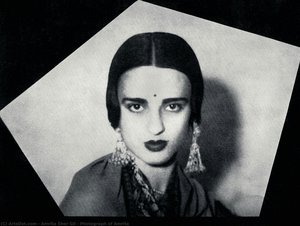
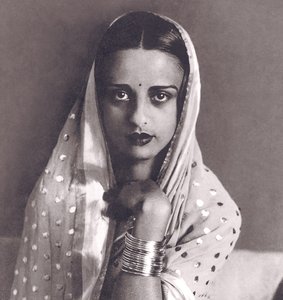
Amrita Sher-Gil, a name synonymous with the dawn of modern Indian art, was an artist whose brief but incandescent career left an indelible mark on the cultural landscape. Born in Budapest in 1913 to a fascinatingly diverse parentage – Umrao Singh Sher-Gil Majithia, a Sikh aristocrat and scholar, and Marie Antoinette Gottesmann, a Hungarian Jewish opera singer – her life was destined to be one of compelling contrasts. This unique heritage instilled within her a sensibility that would profoundly shape her artistic vision, allowing her to navigate the complexities of identity and belonging with remarkable depth. From an early age, Amrita displayed a precocious talent for painting, receiving formal lessons at eight years old. Her childhood in Budapest exposed her to the rich tapestry of European art and culture, while summers spent in India ignited a burgeoning fascination with its vibrant traditions and social realities. The guidance of her uncle, Ervin Baktay, an Indologist, proved pivotal; he recognized her potential and provided critical feedback, laying a strong foundation for her artistic development.From Parisian Studios to the Indian Soul
Amrita’s formal training led her to Paris in 1929, where she enrolled at the Académie de la Grande Chaumière under Pierre Vaillent and Lucien Simon, later attending the École des Beaux-Arts. Immersed in the bohemian atmosphere of the city, she absorbed the influences of European modernism, particularly the works of Paul Cézanne and Paul Gauguin. However, a profound shift occurred upon her return to India in 1934. This wasn’t merely a geographical relocation; it was an artistic homecoming. Inspired by the grandeur of Mughal paintings, the delicate lyricism of Pahari miniatures, and the ancient frescoes of Ajanta, Amrita began to explore Indian subjects with newfound fervor. She sought to capture the essence of everyday life – the quiet dignity of rural communities, the intimate moments shared between women, the raw beauty of the Indian landscape. This marked a turning point in her artistic journey, as she consciously moved away from purely Western styles and embarked on a quest to forge a uniquely Indian visual language.A Distinctive Style: Color, Form, and Psychological Depth
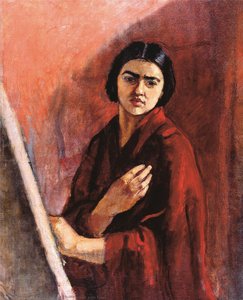
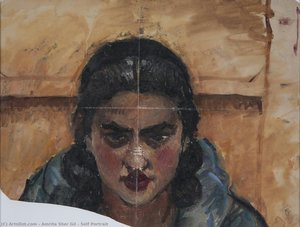
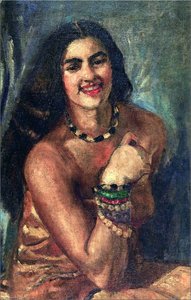
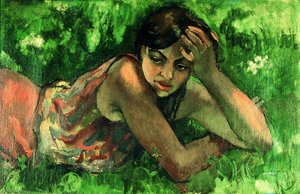
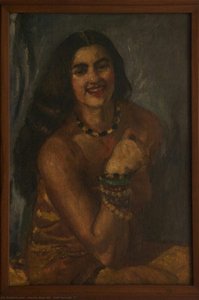
Amrita Sher-Gil’s style is instantly recognizable for its bold use of color, simplified forms, and expressive figures. She possessed an extraordinary ability to convey psychological depth in her portraits, capturing not just the physical likeness of her subjects but also their inner lives, their hopes, and their struggles. Her paintings are characterized by a sense of quiet intensity, a melancholic beauty that resonates with viewers even today. Works like “Young Girls” (1932), which garnered international acclaim – winning a gold medal and election as an associate of the Grand Salon in Paris – demonstrate her mastery of composition and color. “Self Portrait (7)” and "Sleep" further showcase her evolving artistic vision, revealing a willingness to experiment with form and explore themes of identity and sensuality. She didn’t merely depict what she saw; she imbued her paintings with emotion, creating works that are both visually stunning and deeply moving.Legacy and Lasting Impact
Amrita Sher-Gil's tragically short life – she died in 1941 at the age of 28 – belies the immense impact she had on Indian art. She is rightfully regarded as a pioneer of modern Indian painting, bridging Western artistic techniques with indigenous traditions and paving the way for future generations of artists. Her work subtly critiqued social inequalities and explored themes of identity, gender, and class in colonial India, making her an artist ahead of her time. Today, her paintings are among the most valuable by Indian women painters, a testament to their historical significance and artistic merit. Beyond her technical skill, Amrita Sher-Gil’s legacy lies in her ability to capture the soul of India – its beauty, its complexity, and its enduring spirit. Her personal letters, revealing complex relationships including same-sex affairs, offer further insight into the artist's life and perspective, adding another layer to the understanding of this remarkable woman and her art. She remains an icon, a symbol of artistic innovation and cultural fusion, whose work continues to inspire and captivate audiences around the world.Major Works
- Young Girls (1932): A pivotal early work that brought her international recognition.
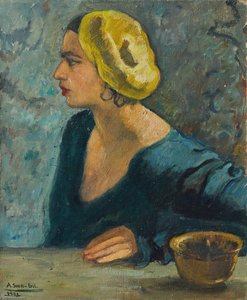
- Self Portrait (7): Demonstrates her evolving style and exploration of identity.
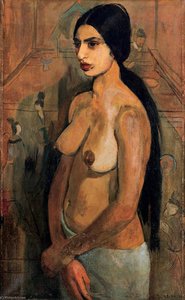
- Sleep (1933): A poignant nude portrait reflecting her unique artistic vision.
- Village Scene (1936-37): Captures the essence of rural Indian life with remarkable sensitivity.
- Three Women (1934): A powerful depiction of female companionship and resilience.
Amrita Sher-Gil
1913 - 1941 , Slovakia
Quick Facts
- Artistic Movement Or Style: Modern Indian art, Avant-garde
- Artists Or Movements Influenced By This Artist: Modern Indian artists
- Artists Who Influenced This Artist:
- Paul Cézanne
- Paul Gauguin
- Date Of Birth: January 30, 1913
- Date Of Death: December 5, 1941
- Full Name: Amrita Sher-Gil
- Nationality: Hungarian-Indian
- Notable Artworks:
- Young Girls
- Self Portrait (7)
- Sleep
- Place Of Birth: Budapest, Slovakia
Related Articles

Giclée Prints: Archival Quality & Aesthetic Nuances for the Discerning Collector
Explore the world of giclée prints with ArtsDot. Learn about archival quality, aesthetic nuances & investment potential. Expert guidance for discerning art collectors seeking museum-quality reproductions and lasting value.

The Enduring Legacy of Fine Art Prints: Technique, History & Aesthetic Impact
Explore the rich history & techniques of fine art prints. Discover investment potential, assess authenticity, and learn how to preserve your collection with expert guidance. Trusted insights for discerning collectors.

Echoes of Time: Exploring the Enduring Appeal & Historical Context of Vintage Art Prints
Explore the captivating world of vintage art prints! Discover their history, collecting tips & enduring appeal. Expert insights on chromolithography and building a legacy collection with ArtsDot.
The Enduring Legacy of Printmaking: Techniques, Themes & Artistic Innovation Across Centuries
Explore the rich history of printmaking with ArtsDot. Discover techniques from intaglio to lithography, learn about collecting valuable prints & find museum-quality reproductions. Expert insights for art enthusiasts and collectors.
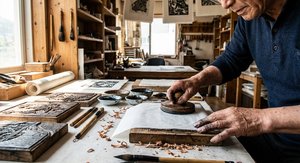
The Enduring Legacy of Woodblock Printmaking: Technique, History & Artistic Expression
Explore the rich history of woodblock printmaking – from ancient techniques to Ukiyo-e masterpieces. Discover expert insights on collecting, preserving & appreciating this enduring art form.