 Preview
 Send
Send Share
Share
 Details

 Download
 Similars
 X-Ray
X-Ray Diaporama
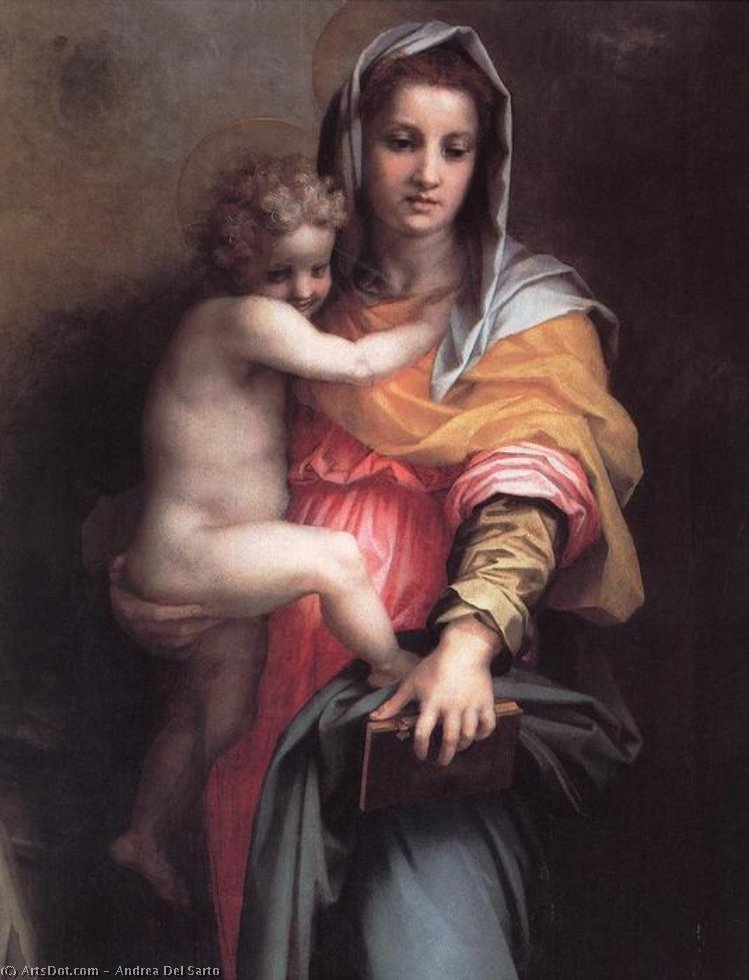
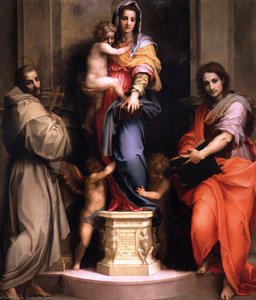
Madonna of the Harpies (detail)


 Read More
Giclée / Art Print
Museum-quality giclée or canvas print with fast production and flexible finish options. ( Buy Hand Made Painting Buy Image)




P118B $10

P118H $10

P118W $10

P438Z $10

P508JH $12

P508YH $12

P805H $10

P805Z $10

P919BZ $10

P919G $10

P919XJ $10

P959ZH $10

P968JZ $12

W106C $8

W218G $10

W218JH $8

W218Y $10

W307PJ $10

W316G $10

W316PJ $8

W316Y $10

W398PJ $8

W4111J $10

W500HY $15

W500JH $15

W692G $12

W849H $8

W940BG $15

W953PJ $8




Pick from our preset sizes that match the artwork's original proportions.

You may enter your own dimensions to fit a specific frame or space. If your selected size does not match the original image's proportions, we will either crop the artwork or extend the image with a mirrored or solid-fill edge. A digital mockup will be sent for your approval before production begins.
Please note that the on-screen preview does not reflect the actual cropping or extension. Only the mockup will accurately show the final composition.
While custom sizes are available, we recommend selecting a dimension from the predefined list to preserve the original proportions.
Worldwide Delivery () in 2 weeks instead of standard 4/5 weeks. (4 September)

Free Worldwide Express Shipping

High-Quality Linen Canvas

Full Shipping Insurance

Customs Tax Refund Guarantee

True Color Matching Guarantee

60-Day Return Policy (Defects Only)

100% Money-Back Guarantee

Bulk Discount Offer
 Glass option is only available in size under 110 CM

Madonna of the Harpies (detail)
Giclée / Art Print
Reproduction Size
-


Total Price
$ 63
A Divine Encounter: Andrea del Sarto’s ‘Madonna of the Harpies’
Andrea del Sarto's “Madonna of the Harpies,” painted in 1517, isn’t merely a depiction of the Virgin Mary and Child; it’s a carefully constructed dialogue between the sacred and the pagan, a testament to the artist’s profound understanding of both religious iconography and humanist ideals. This panel painting, originally residing within the Florentine church of San Francesco in Via de' Macci, now graces the collections of the Uffizi Gallery, offering viewers an intimate glimpse into the heart of Renaissance Florence. The work immediately draws the eye with its dramatic lighting – a strong light source originating from the upper left illuminates Mary and Christ, casting deep shadows that define their forms and imbue the scene with a palpable sense of depth. The composition itself is remarkably balanced, centering on the figures while the dark background serves to heighten their importance, creating an almost theatrical effect.
- Subject Matter: The iconic representation of the Madonna and Child remains at its core, symbolizing purity, faith, and divine love.
- Style: Firmly rooted in Renaissance realism, it prioritizes accurate depiction of human anatomy and naturalism – a hallmark of del Sarto’s approach.
Decoding the Symbolism: Harpies and Heavenly Guardians
The painting's title, “Madonna delle Arpie” (Madonna of the Harpies), immediately introduces an intriguing layer of complexity. The harpies – monstrous figures with the bodies of birds and the faces of humans – flanking the base of the Virgin’s pedestal are not simply decorative elements; they represent a deliberate juxtaposition of pagan mythology and Christian iconography. Traditionally, harpies were associated with chaos, theft, and destruction, yet here, they serve as guardians, supporting Mary and Christ. Giorgio Vasari, a contemporary art historian, famously struggled to decipher this symbolism, recognizing the painting’s layered meaning. Some scholars interpret them as alluding to the locusts of the Book of Revelation, suggesting a connection between earthly corruption and divine judgment. The inclusion of Saint John the Evangelist on Mary's right and Saint Francis of Assisi on her left further enriches the narrative, representing the Church and its patron saint respectively.
Symbolic Elements:- Book: Represents Mary’s role as a scholar and intermediary between God and humanity.
- Halo: Signifies Christ's divinity and grace.
- Harpies: A complex symbol representing both earthly chaos and divine protection.
The Art of Del Sarto: Technique and Detail
Andrea del Sarto’s mastery is evident in the meticulous detail and rich textures of “Madonna of the Harpies.” He employed a technique known as glazing, layering thin washes of translucent paint over one another to build up color and luminosity. This created a smooth, polished surface that reflects light beautifully – a characteristic often admired in his work. The artist’s attention to anatomical accuracy is remarkable, particularly in the rendering of Mary's drapery, which flows with an almost sculptural quality. The subtle variations in tone and overlapping forms create a convincing sense of depth, despite the painting’s relatively shallow perspective. The use of color is equally sophisticated, with a harmonious palette that evokes both serenity and drama.
A Legacy of Harmony: Del Sarto's Place in Renaissance Art
“Madonna of the Harpies” exemplifies Andrea del Sarto’s unique artistic vision – a synthesis of realism, symbolism, and humanist ideals. While he may not have achieved the same level of fame as Leonardo da Vinci or Michelangelo, his work demonstrates a profound understanding of color, composition, and human emotion. This painting stands as a testament to his skill and a captivating window into the world of Renaissance Florence. Today, reproductions of this masterpiece offer art lovers a chance to experience its beauty and complexity firsthand, bringing a touch of timeless elegance to any space.
Related Artworks
Artist Biography
early life and training
andrea del sarto, a prominent figure in italian high renaissance, was born on july 16, 1486, in gualfonda, near florence. his early life led him to become an apprentice to an orfèvre, followed by training under the painter and wood sculptor gian barile. later, he worked with piero di cosimo and raffaellino del garbo.artistic career
andrea's collaboration with franciabigio led to their first joint project, the baptism of christ, for the scalzo congregation in florence. this marked the beginning of a long series of monochromatic frescoes in grisaille. as time passed, andrea developed his unique style, eventually joining the arte dei medici e degli speziali in 1508.notable works and commissions
- the holy family, a painting commissioned by zanobi strozzi for the chapel at his villa of rovezzano, now housed in the pinacoteca of the gallerie nazionali di arte antica (palazzo barberini) in rome, italy.
- cenacolo di andrea del sarto, a fresco covering over 40 square meters, depicting jesus and his disciples during the last supper, located at the museo del cenacolo di andrea del sarto in florence.
- storie di miracoli di san filippo benizzi, a series of frescoes for the loggia dei servi di maria, showcasing his early skill with monochromatic grisaille.
legacy and influence
despite being overshadowed by contemporaries like leonardo da vinci, michelangelo, and raphael, andrea del sarto's work is characterized by its unique blend of high renaissance and mannerism. his legacy can be seen in the numerous artworks he left behind, each a testament to his skill as a painter, decorator, portraitist, and colorist. view more works by andrea del sarto on ArtsDot: [https://ArtsDot.com/@/andrea del sarto](https://ArtsDot.com/@/andrea-del-sarto) explore the pinacoteca of the gallerie nazionali di arte antica (palazzo barberini) on ArtsDot: /en/art/show/art-d3afwr-en/ read more about andrea del sarto's life and works on wikipedia: [https://fr.wikipedia.org/wiki/andrea_del_sarto](https://fr.wikipedia.org/wiki/andrea_del_sarto)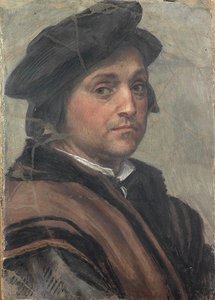
Andrea del Sarto
1486 - 1530 , Italy
Quick Facts
- Artistic Movement Or Style: High Renaissance & Mannerism
- Artists Or Movements Influenced By This Artist: ['Giorgio Vasari']
- Artists Who Influenced This Artist:
- Leonardo da Vinci
- Raphael
- Gian Barile
- Date Of Birth: July 16, 1486
- Date Of Death: September 29, 1530
- Full Name: Andrea d'Agnolo di Francesco di Luca
- Nationality: Italian
- Notable Artworks:
- The Last Supper
- Holy Family
- Saint John the Baptist
- Place Of Birth: Florence, Italy
Related Articles
Andrea del Sarto: Florentine Grace, Technical Mastery & Artistic Ambition
Explore the life & art of Andrea del Sarto, a Florentine Renaissance master renowned for harmonious compositions & technical brilliance. Discover his frescoes, portraits, and lasting influence on art history.
Raphael's Masterpieces: 25 Iconic Paintings & Renaissance Art for Your Home
Explore 25 breathtaking Raphael paintings! Journey through the Italian Renaissance with masterpieces like 'School of Athens' & iconic Madonnas. Find museum-quality art reproductions and elevate your home decor on ArtsDot.com.
Uffizi's 25 Masterpieces: Renaissance Art & Timeless Decor Inspiration
Journey through the Uffizi Gallery's 25 most iconic Renaissance artworks! Explore Botticelli, Leonardo da Vinci & Michelangelo’s masterpieces. Find museum-quality art reproductions and curated decor ideas to bring timeless Italian beauty into your home. Discover all masterpieces on ArtsDot.com
Cecco del Caravaggio: Rediscovering the Shadowy Genius of Francesco Buoneri
Explore the captivating world of Cecco del Caravaggio (Francesco Buoneri), a pivotal Baroque artist. Discover his dramatic realism, mysterious life, and lasting legacy with ArtsDot's expert analysis.
Prado Masterpieces: Explore 25 Iconic Artworks & Bring Spanish Beauty Home
Journey through 25 Prado Museum masterpieces! Explore Velázquez, Goya & El Greco's iconic Spanish art. Discover the stories behind these timeless paintings and find museum-quality reproductions for your home at ArtsDot.com.