 Preview
 Send
Send Share
Share
 Details

 Download
 Similars
 X-Ray
X-Ray Diaporama
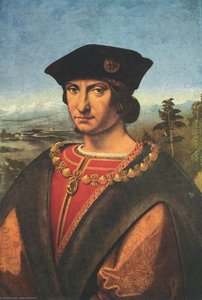
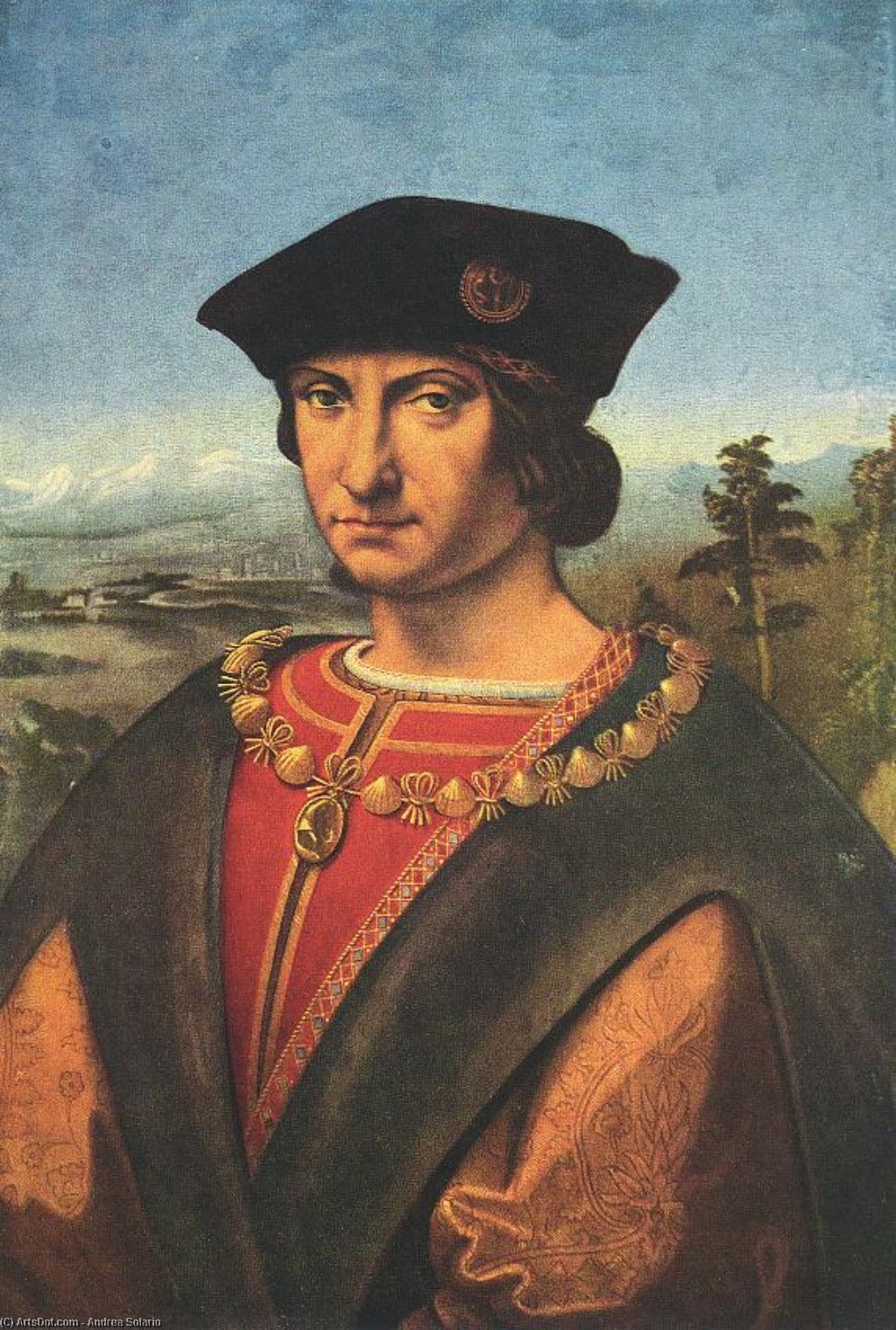
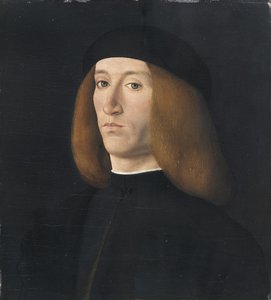
Charles d'Amboise
 Oil On Canvas
- WallArt
- Renaissance Mannerism
 1507
1507 75.0 x 52.0 cm
 The Louvre
 Read More
Hand Made Oil Reproduction
Hand-painted oil on canvas in your size and frame, made to order by our artists. ( Buy Print Buy Image)




P118B $10

P118H $10

P118W $10

P438Z $10

P508JH $12

P508YH $12

P805H $10

P805Z $10

P919BZ $10

P919G $10

P919XJ $10

P959ZH $10

P968JZ $12

W106C $8

W218G $10

W218JH $8

W218Y $10

W307PJ $10

W316G $10

W316PJ $8

W316Y $10

W398PJ $8

W4111J $10

W500HY $15

W500JH $15

W692G $12

W849H $8

W940BG $15

W953PJ $8




Pick from our preset sizes that match the artwork's original proportions.

You may enter your own dimensions to fit a specific frame or space. If your selected size does not match the original image's proportions, we will either crop the artwork or extend the painting with additional hand-painted elements. A digital mockup will be sent for your approval before production begins.
Please note that the on-screen preview does not reflect the actual cropping or extension. Only the mockup will accurately show the final composition.
While custom sizes are available, we recommend selecting a dimension from the predefined list to preserve the original proportions.
After order, ArtsDot.com team will email client for instructions and provide a mockup preview
Worldwide Delivery () in 3/4 weeks instead of standard 5 weeks. (16 August). No compromise on quality.

Free Worldwide Express Shipping

High-Quality Linen Canvas

Full Shipping Insurance

Customs Tax Refund Guarantee

True Color Matching Guarantee

60-Day Return Policy (Defects Only)

100% Money-Back Guarantee

Bulk Discount Offer
 Glass option is only available in size under 110 CM

Charles d'Amboise
Reproduction Medium
Reproduction Size
-


Total Price
$ 263
Artwork Description
A Renaissance Portrait of Noble Bearing – Charles d’Amboise by Andrea Solario
The portrait of Charles d’Amboise, painted in 1507 by the Florentine artist Andrea Solario, is more than a simple likeness; it's a meticulously crafted window into the world of Renaissance Italy. Held within the hallowed halls of the Louvre Museum in Paris, this oil-on-canvas masterpiece offers a captivating glimpse into the life and status of a prominent nobleman, revealing not just his appearance but also the artistic conventions and symbolic language of the era.
Solario’s skill lies in his ability to imbue the subject with both realism and an underlying sense of formality. Charles d’Amboise is depicted in a three-quarter pose, a favored technique during this period that allowed for a more intimate connection between the viewer and the sitter. His gaze is direct, unwavering, projecting an air of quiet authority and self-assuredness. The subtle furrow of his brow, the slight turn of his head – these small details contribute to a palpable sense of presence, as if he were truly observing the observer across time.
The Language of Dress and Status
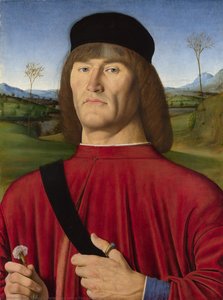
A careful examination of d’Amboise's attire immediately speaks volumes about his social standing. The deep crimson garment, richly adorned with gold embroidery – a hallmark of noble patronage – signifies wealth and power. The intricate patterns, reminiscent of heraldic designs, likely represent the crest or emblem of his family lineage, further solidifying his position within the Italian aristocracy. The black hat, topped with a distinctive crest, is another key indicator of nobility, a formal element signifying rank and allegiance.
Beyond mere decoration, these elements were carefully chosen to project an image of power and prestige. The red color itself was associated with royalty and leadership, while the gold symbolized wealth, divinity, and imperial authority. Solario’s understanding of visual symbolism demonstrates a keen awareness of how clothing could be used to communicate complex social messages.
A Masterclass in Renaissance Technique
Andrea Solario's artistic technique is equally impressive. The painting showcases his mastery of *sfumato*, the subtle blending of colors and tones that creates an atmospheric depth and softens sharp edges – a characteristic often associated with Leonardo da Vinci’s work, whom Solario greatly admired. Notice how the light gently illuminates d’Amboise's face, highlighting the contours of his features and casting delicate shadows beneath his eyes. This masterful use of light and shadow not only adds to the portrait’s realism but also imbues it with a sense of drama and emotion.
The artist’s attention to detail is remarkable. The texture of the fabric, the sheen of the gold embroidery, even the subtle wrinkles around d'Amboise's eyes – all are rendered with painstaking precision. This level of realism was achieved through careful observation and a deep understanding of anatomy and perspective.
Historical Context and Artistic Influence
Created in 1507 during the High Renaissance, this portrait reflects the period’s emphasis on humanism and classical ideals. Solario's work stands as a bridge between the artistic traditions of Florence and France, drawing inspiration from both Italian masters like Leonardo da Vinci and the emerging Mannerist style prevalent in the French court. The painting’s composition and subject matter align with the prevailing trends of the time, while also showcasing Solario’s unique artistic vision.
The portrait's presence within the Louvre Museum underscores its historical significance and enduring appeal. It serves as a testament to the artistry of Andrea Solario and offers a captivating glimpse into the world of Renaissance nobility. High-quality reproductions are now available through ArtsDot.com, allowing art lovers worldwide to experience this remarkable work of art firsthand.
Discover More Renaissance Masterpieces
For those seeking further exploration into the world of Renaissance art, we invite you to visit ArtsDot.com to discover a curated collection of reproductions and original works by renowned artists such as Andrea Solari and Johannes Stradanus. Explore the rich history and artistic legacy of this transformative era.
Related Artworks





Artist Biography
Andrea Solario: A Renaissance Bridging Italy and France
Andrea Solario (c. 1460 – 1524), a name often overshadowed by the giants of the Italian Renaissance, nevertheless represents a crucial link between the vibrant artistic currents of Milan and the burgeoning Mannerist style taking root in France. Born into a family steeped in artistic tradition—his father and brothers were sculptors and architects—Solario’s journey was one of constant movement and adaptation, ultimately shaping him into a distinctive painter whose work reflects both his Italian roots and the influences he encountered across Europe.
Early accounts of Solario's life are fragmented, relying heavily on the writings of Bernardo de’ Dominici, a Neapolitan art historian whose chronicles were often colored by conjecture. Despite this uncertainty, it is generally accepted that Solario received his initial training in Venice, a city renowned for its artistic innovation during the late 15th century. The presence of Antonello da Messina, a pivotal figure in Venetian painting known for his pioneering use of oil paint and his naturalistic approach to portraiture, undoubtedly shaped Solario’s early development. The influence is particularly evident in works like “A Man with a Pink Carnation,” a remarkably lifelike depiction that showcases Antonello's signature sculptural modeling and attention to detail.
Milanese Roots and Leonardo’s Shadow
Solario’s career truly took shape in Milan, the artistic heart of Lombardy. He quickly established himself as a sought-after painter, working for prominent families and religious institutions. His style during this period is often described as “Leonardesque,” reflecting his deep admiration for Leonardo da Vinci, who had spent several formative years in Florence. Solario’s paintings demonstrate a keen understanding of Leonardo's techniques—particularly his use of sfumato (the subtle blurring of outlines) to create atmospheric depth and psychological nuance—but he never simply imitated his master. Instead, Solario skillfully integrated these influences into a distinctly personal style.
Notable works from this Milanese phase include “Rest During the Flight to Egypt,” a stunning High Renaissance panel depicting the biblical scene with serene figures and a remarkably detailed landscape background. The composition’s harmony and balance, coupled with its masterful use of color and light, exemplify Solario's artistic maturity. Similarly, his portrait of Charles II d’Amboise, commissioned by the Cardinal, showcases his ability to capture both physical likeness and psychological character.
A Journey North: France and the Influence of Flemish Art
In 1507, Solario embarked on a significant chapter of his career when he was invited to France by Cardinal Georges I d’Amboise. This invitation marked a turning point in his artistic development, exposing him to the vibrant art scene of the Loire Valley and introducing him to the stylistic innovations of the Flemish masters. His time in France resulted in several important commissions, including frescoes for the chapel of Gaillon Castle, where he skillfully blended Italian Renaissance principles with elements of Northern European painting.
The influence of Flemish art is particularly evident in works like “The Lamentation,” a poignant depiction of mourning characterized by its rich colors, dramatic lighting, and expressive figures. Solario’s use of oil paint—a technique that was still relatively new in Italy at the time—allowed him to achieve unprecedented levels of detail and luminosity. This period also saw the creation of smaller panels like “Madonna and Child with a Donor,” demonstrating his continued ability to capture individual likenesses with remarkable accuracy.
Legacy and Historical Significance
Andrea Solario’s legacy is often underestimated, yet he played a vital role in transmitting Renaissance artistic ideas across Europe. He was not merely a follower of Leonardo da Vinci; he was an independent artist who synthesized diverse influences into a unique and compelling style. His work bridges the gap between the early Italian Renaissance and the Mannerist movement that would soon dominate European art. Solario’s paintings offer a valuable glimpse into the artistic exchange that characterized the 16th century, demonstrating how artists could learn from and adapt to the styles of their contemporaries across national boundaries.
Despite the challenges posed by fragmented historical records and the tendency to attribute his work to other painters, Andrea Solario remains a significant figure in Renaissance art. His paintings continue to captivate viewers with their beauty, technical skill, and emotional depth, reminding us of the rich artistic heritage that flourished during this transformative period.
andrea solario
1460 - 1524 , United Kingdom
Quick Facts
- Artistic Movement Or Style: Milanese School
- Artists Or Movements Influenced By This Artist:
- Early Renaissance
- Renaissance
- Artists Who Influenced This Artist:
- Leonardo da Vinci
- Antonello da Messina
- Date Of Birth: 1460 Milan, UK
- Date Of Death: 1524 Milan
- Full Name: Andrea Solario
- Nationality: Italian Renaissance
- Notable Artworks:
- Rest during the Flight to Egypt
- Female Portrait
- Madonna with Green Cushion
- Place Of Birth: Milan, Italy
Related Articles

The Enduring Legacy of Oil on Canvas: Technique, History & Aesthetic Impact
Explore the rich history & techniques of oil painting – from Renaissance masters to Impressionism. Discover pigments, layering methods, and why this timeless medium endures. Expert insights for artists & art enthusiasts.

Oil on Canvas: A Historical & Technical Exploration of a Timeless Artistic Medium
Explore the rich history & enduring techniques of oil painting on canvas. Discover the science behind its longevity, conservation practices, and contemporary relevance. Expert insights for art enthusiasts.

The Enduring Power of Painting: A Historical & Contemporary Exploration of Form and Emotion
Explore the rich history & enduring techniques of oil painting with ArtsDot. Discover masterpieces, learn about art collecting, and find authentic handmade reproductions crafted by skilled artists.

The Enduring Legacy of Oil on Canvas: Technique, History & Contemporary Practice
Explore the rich history & enduring techniques of oil painting on canvas. Discover the science behind its longevity, conservation practices, and contemporary relevance. Expert insights for art enthusiasts.
Oil on Board Masters: 10 Paintings That Redefined Art | ArtsDot
Explore 10 legendary 'Oil on Board' masterpieces by Van Gogh, Monet & more! Discover art history, iconic styles like Impressionism, and find museum-quality reproductions to elevate your home decor. Explore the full collection online at ArtsDot.com.