 Preview
 Send
Send Share
Share
 Details

 Download
 Similars
 X-Ray
X-Ray Diaporama
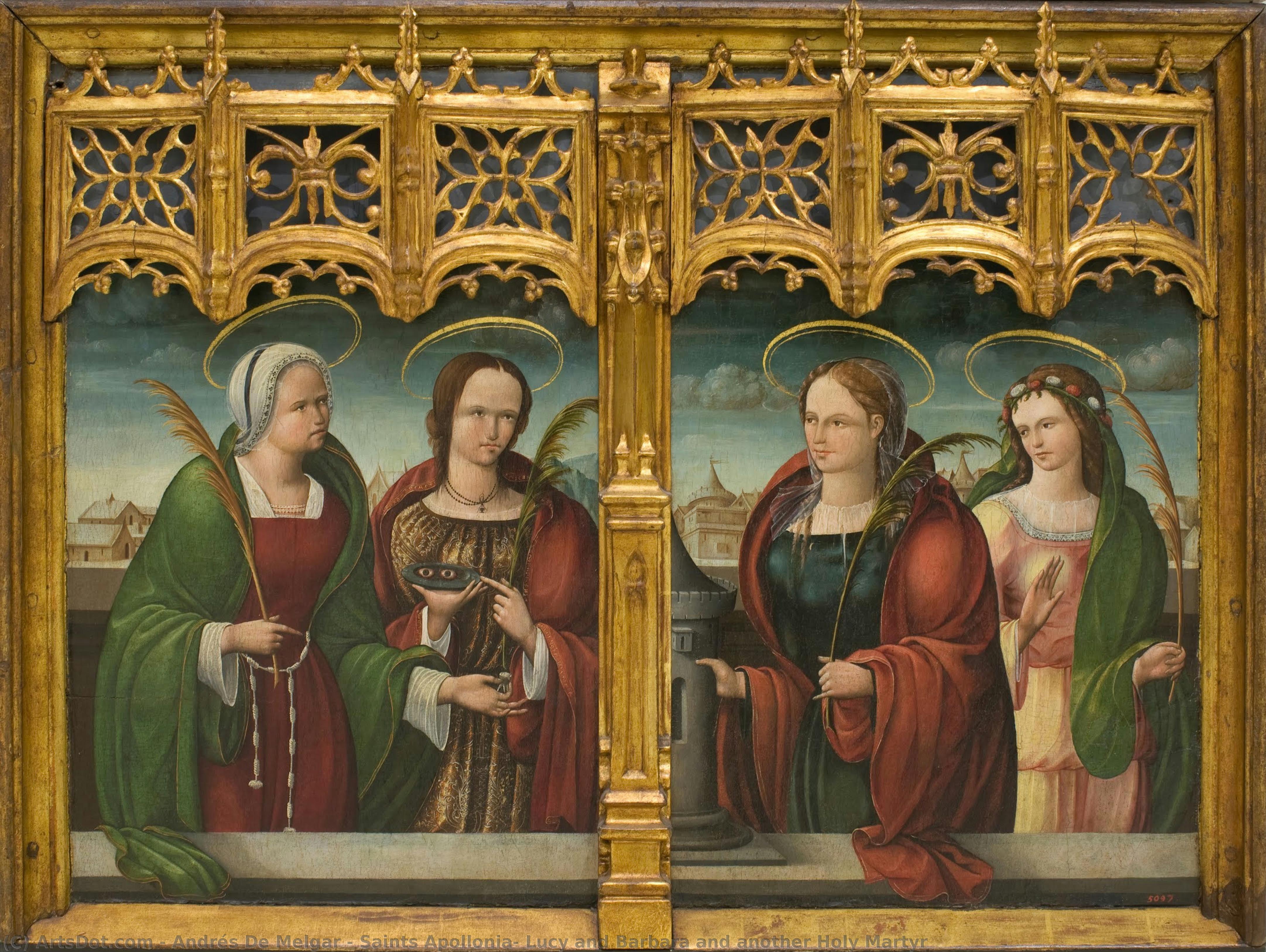
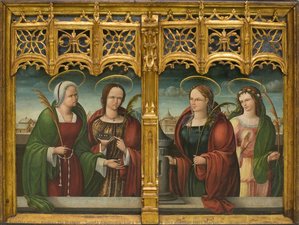
Saints Apollonia, Lucy and Barbara and another Holy Martyr
 Oil
Oil- WallArt
- Renaissance
 1537
1537- Renaissance
 945.0 x 720.0 cm
 Museu Nacional d'Art de Catalunya
 Read More
Giclée / Art Print
Museum-quality giclée or canvas print with fast production and flexible finish options. ( Buy Hand Made Painting Buy Image)




P118B $10

P118H $10

P118W $10

P438Z $10

P508JH $12

P508YH $12

P805H $10

P805Z $10

P919BZ $10

P919G $10

P919XJ $10

P959ZH $10

P968JZ $12

W106C $8

W218G $10

W218JH $8

W218Y $10

W307PJ $10

W316G $10

W316PJ $8

W316Y $10

W398PJ $8

W4111J $10

W500HY $15

W500JH $15

W692G $12

W849H $8

W940BG $15

W953PJ $8




Pick from our preset sizes that match the artwork's original proportions.

You may enter your own dimensions to fit a specific frame or space. If your selected size does not match the original image's proportions, we will either crop the artwork or extend the image with a mirrored or solid-fill edge. A digital mockup will be sent for your approval before production begins.
Please note that the on-screen preview does not reflect the actual cropping or extension. Only the mockup will accurately show the final composition.
While custom sizes are available, we recommend selecting a dimension from the predefined list to preserve the original proportions.
Worldwide Delivery () in 2 weeks instead of standard 4/5 weeks. (26 August)

Free Worldwide Express Shipping

High-Quality Linen Canvas

Full Shipping Insurance

Customs Tax Refund Guarantee

True Color Matching Guarantee

60-Day Return Policy (Defects Only)

100% Money-Back Guarantee

Bulk Discount Offer
 Glass option is only available in size under 110 CM

Saints Apollonia, Lucy and Barbara and another Holy Martyr
Giclée / Art Print
Reproduction Size
-


Total Price
$ 63
Collectible Description
A Divine Assembly: The Sacred Presence of Melgar’s Martyrs
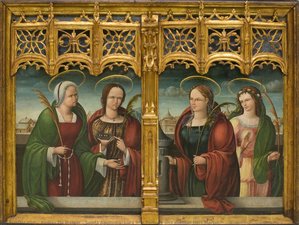
In the quiet, contemplative depths of 16th-century Spanish devotion, Andrés de Melgar captured a moment of profound spiritual communion in his masterpiece, Saints Apollonia, Lucy and Barbara and another Holy Martyr. This evocative work serves as a window into the Renaissance soul, presenting a solemn gathering of female saints that transcends the boundaries of time. The composition is anchored by four figures, their presence rendered with a dignity that commands the viewer's immediate reverence. Dressed in the rich, heavy textures of medieval attire, these women are not merely subjects of a painting but icons of endurance and faith. As they stand together, the weight of their shared martyrdom is palpable, yet it is balanced by an ethereal grace that suggests a celestial celebration rather than a mere historical record.
The visual narrative is intricately woven with symbols of sanctity and devotion. Each figure holds a book, a testament to the sacred wisdom and the liturgical traditions that defined their era. The presence of large crosses around their necks serves as a poignant reminder of their sacrifice, acting as luminous focal points amidst the more muted tones of their garments. Even the subtle inclusion of birds—one drifting near the upper periphery and another nestled toward the center—adds a layer of organic life to the structured religious scene, perhaps symbolizing the flight of the soul or the watchful eye of the divine. Through these delicate details, Melgar invites us to look beyond the surface and engage with the deeper theological mysteries embedded within the canvas.
Mastery of Light and the Grutesco Influence
To behold a work by Andrés de Melgar is to witness the masterful application of Spanish Renaissance technique. Known for his pioneering exploration of grutescos, Melgar brings a unique, fantastical sensibility to this religious scene, blending the structured reality of the saints with an atmosphere that feels almost otherworldly. The artist employs a sophisticated use of light and shadow to sculpt the forms of the women, giving their faces a soft, luminous quality that contrasts beautifully with the heavier, more opaque textures of their medieval clothing. This interplay of light does not merely illuminate the scene; it breathes life into the fabric, making the heavy folds of cloth feel tangible to the touch.
For the discerning collector or interior designer, this painting offers an unparalleled opportunity to introduce a sense of historical gravity and sophisticated elegance into a space. The palette, rich with deep, earthy tones and punctuated by the brilliance of sacred symbols, provides a grounding element that works harmoniously in both classical and contemporary settings. A high-quality reproduction of this work allows the profound emotional impact of Melgar’s vision—the tension between human suffering and divine triumph—to become a centerpiece of conversation. It is more than a decoration; it is an invitation to reflect, a piece of history that brings the quiet strength of the Spanish Old Masters into the modern home.
Related Artworks
Artist Biography
The Visionary of the Grotesque: The Life and Legacy of Andrés de Melgar
In the vibrant, transformative landscape of the 16th-century Spanish Renaissance, few artists dared to wander as far into the realms of the imagination as Andrés de Melgar. Born in the historic town of Sahagún, León, around 1501, Melgar emerged as a singular voice among the Spanish Old Masters. While many of his contemporaries sought to capture the serene perfection of religious devotion or the rigid dignity of portraiture, Melgar became a pioneer of the grutescos—a fantastical and often unsettling style that blended the monstrous with the magnificent. His work stands as a testament to a period when the boundaries between the earthly and the supernatural were being explored through a lens of profound psychological depth and sculptural intensity.
The formative years of Melgar’s life remain shrouded in the mists of history, yet the echoes of his training are clearly audible in the textures of his canvases. It is widely believed by scholars that he refined his craft under the guidance of prominent masters active in the León region during the early 1500s. This education provided him with a unique stylistic duality; he absorbed the structured, humanistic ideals of the Italian Renaissance alongside the lingering, emotive shadows of the Iberian Gothic tradition. This confluence of influences allowed him to master the ability to depict both idealized beauty and an unsettling, visceral reality, creating a tension that would become the hallmark of his entire oeuvre.
A Mastery of the Fantastic and the Sacred
Melgar’s artistic reputation is inextricably linked to his unwavering commitment to the grutescos technique. This approach was far more than a mere decorative flourish; it was a deliberate exploration of the sublime. By utilizing exaggerated sculptural reliefs, Melgar populated his compositions with demonic figures, monstrous entities, and intricate floral motifs that seemed to writhe within architectural frameworks. Much like the works of Andrea Mantegna, Melgar’s imagery sought to evoke a sense of awe that bordered on terror, inviting the viewer to contemplate the grandeur of a world where the organic and the impossible are inextricably intertwined.
Yet, despite his fascination with the grotesque, Melgar possessed a profound capacity for spiritual tenderness. This duality is perhaps most exquisitely captured in his masterpiece, Saints Apollonia, Lucy and Barbara and another Holy Martyr. In this work, the artist moves away from the unsettling to embrace a moment of quiet, divine communion. The composition is anchored by four female saints, rendered with a dignity that commands immediate reverence. Through the use of rich, heavy textures reminiscent of medieval attire and the careful placement of symbolic elements—such as sacred books and luminous crosses—Melgar creates a window into the Renaissance soul. Even within this sacred assembly, his signature touch remains visible; subtle details, like the presence of birds drifting through the periphery, suggest an organic vitality that bridges the gap between the celestial and the terrestrial.
Historical Significance and Artistic Impact
The legacy of Andrés de Melgar is defined by his courage to deviate from the conventional. At a time when religious art often adhered to strict iconographic rules, Melgar’s willingness to integrate the fantastical provided a new vocabulary for Spanish painters. His ability to manipulate light and shadow to create depth, combined with his mastery of complex, multi-layered narratives, left an indelible mark on the trajectory of Spanish art history. He did not merely document the religious fervor of his era; he expanded its visual boundaries, proving that the sacred could coexist with the strange.
Today, Melgar is remembered as a visionary who navigated the delicate balance between the known and the unknown. His contributions to the development of the grutescos style helped pave the way for future generations of artists to explore themes of psychological complexity and the sublime. Through his work, we gain insight into a period of intense cultural shift, where the shadows of the Gothic past met the bright, inquisitive light of the Renaissance, leaving behind a body of work that continues to captivate and unsettle the modern imagination.
andrés de melgar
Spain
Quick Facts
- Artistic Movement Or Style: Grutescos
- Artists Or Movements Influenced By This Artist: Italian Renaissance
- Artists Who Influenced This Artist: Andrea Mantegna
- Date Of Birth: Sahagún, Spain ()
- Date Of Death: Living
- Full Name: andrés de melgar
- Nationality: Spanish
- Notable Artworks: ['The Forge']
- Place Of Birth: Sahagún (León)
Related Articles

The Golden Age Reforged: Dramatic Realism & Religious Zeal in Spanish Baroque Art
Explore the dramatic world of Spanish Baroque art! Discover masters like Zurbarán & the powerful influence of religious zeal on painting techniques – a guide for collectors and enthusiasts.

High Medieval Art: 10 Masterpieces That Shaped an Era | ArtsDot
Journey through High Medieval Art! Explore 10 iconic masterpieces – from Giotto's frescoes to stunning Gothic cathedrals. Discover the stories behind these timeless paintings, sculptures & illuminated manuscripts. Find museum-quality art reproductions at ArtsDot.com.
Late Medieval Masterpieces: 10 Artworks That Defined an Era | ArtsDot
Journey through 10 defining Late Medieval masterpieces – from Giotto's frescoes to Jan van Eyck’s realism. Explore the stories, techniques & vibrant colors of Gothic art. Find museum-quality reproductions and elevate your home decor with ArtsDot.com! Discover all masterpieces on ArtsDot.com
Francisco de Zurbarán: Mysticism, Realism & the Golden Age of Spanish Painting
Explore the captivating world of Francisco de Zurbarán, a master of Spanish Baroque painting. Discover his dramatic tenebrism, religious masterpieces like 'La Porciúncula,' and lasting influence on art history.
Sacred Narratives on Canvas: Exploring Religious Painting Through History
Explore the rich history of religious painting with ArtsDot.com! Discover iconic artworks, symbolism & techniques from antiquity to the Renaissance. Enhance your art appreciation today.