 Preview
 Send
Send Share
Share
 Details

 Download
 Similars
 X-Ray
X-Ray Diaporama
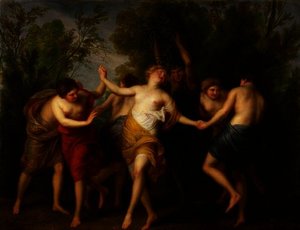
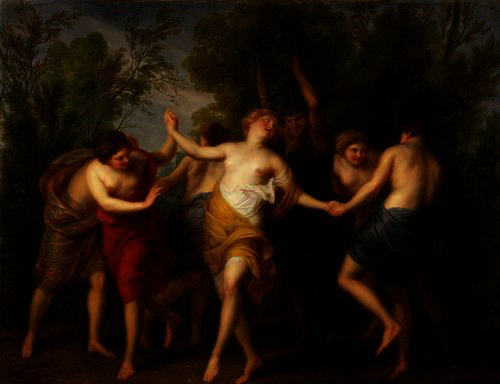
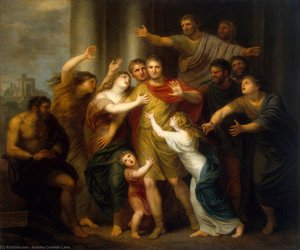
Dance of the Maenad
 Read More
Hand Made Oil Reproduction
Hand-painted oil on canvas in your size and frame, made to order by our artists. ( Buy Print Buy Image)




































Pick from our preset sizes that match the artwork's original proportions.

You may enter your own dimensions to fit a specific frame or space. If your selected size does not match the original image's proportions, we will either crop the artwork or extend the painting with additional hand-painted elements. A digital mockup will be sent for your approval before production begins.
Please note that the on-screen preview does not reflect the actual cropping or extension. Only the mockup will accurately show the final composition.
While custom sizes are available, we recommend selecting a dimension from the predefined list to preserve the original proportions.
After order, ArtsDot.com team will email client for instructions and provide a mockup preview
Worldwide Delivery () in 3/4 weeks instead of standard 5 weeks. (21 August). No compromise on quality.

Free Worldwide Express Shipping

High-Quality Linen Canvas

Full Shipping Insurance

Customs Tax Refund Guarantee

True Color Matching Guarantee

60-Day Return Policy (Defects Only)

100% Money-Back Guarantee

Bulk Discount Offer
 Glass option is only available in size under 110 CM

Dance of the Maenad
Reproduction Medium
Reproduction Size
-


Total Price
$ 263
Related Artworks
Artist Biography
The Neoclassical Vision of Andries Cornelis Lens
In the vibrant intellectual landscape of late 18th-century Flanders, few figures loomed as large in the realm of academic tradition as Andries Cornelis Lens. Born in Antwerp in 1739, Lens emerged during the Enlightenment, a period defined by a profound yearning to reconnect with the clarity and moral gravity of antiquity. While the era was often characterized by the swirling, emotive energy of preceding movements, Lens sought a different path—one of intellectual rigor, balance, and a disciplined return to classical ideals. His life’s work was not merely an exercise in painting, but a dedicated mission to revive the prestige of Flemish art through the lens of Neoclassicism.
The foundations of his mastery were laid in the storied streets of Antwerp, where he absorbed the rich artistic heritage of his homeland. Though history often places him alongside giants like Rembrandt, Lens’s true inspiration was found in the timeless elegance of the 16th century and the divine proportions of Raphael. He possessed a unique ability to marry the technical precision of the Flemish tradition with the structural nobility of Greek and Roman aesthetics. This synthesis allowed him to move beyond mere decoration, creating works that functioned as visual treatises on virtue, history, and the human condition.
A Legacy of Instruction and Art Theory
Beyond the canvas, Lens was a pivotal architect of artistic education. His influence extended far beyond his own studio through his long-standing tenure at the Antwerp Academy. As a professor and later as director, he did not simply teach students how to apply pigment; he taught them how to think. He was a formidable art theoretician, disseminating influential ideas on aesthetics that championed clarity over the flamboyant excesses of the Rococo style. His pedagogical approach emphasized the importance of meticulous observation and the study of classical sculpture, shaping generations of Flemish painters who would carry his Neoclassical torch into the 19th century.
His role as a court painter to the governor-general further solidified his status within the social and political fabric of the era. This position granted him access to prestigious commissions that allowed him to explore grander, more complex narratives. Whether through portraiture or large-scale history paintings, Lens utilized his technical prowess—achieved through the painstaking layering of glazes—to imbue his subjects with a sense of permanence and dignity.
Masterworks of Narrative and Symbolism
The true essence of Lens’s genius is perhaps most visible in his ability to transform historical and mythological scenes into profound emotional experiences. His works often serve as windows into the past, where every gesture and shadow is imbued with symbolic weight:
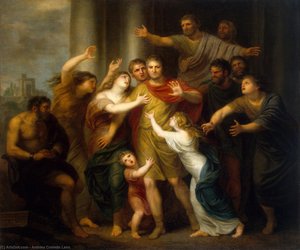
- Regulus Returning to Carthage: A magnificent display of dramatic composition, this work captures a moment of intense human connection and political gravity, utilizing a richly appointed setting to heighten the tension of the historical narrative.
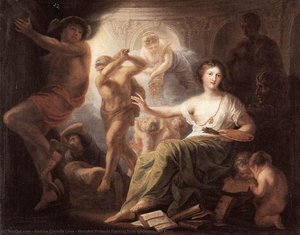
- Hercules Protects Painting from Ignorance and Envy: In this powerful Neoclassical allegory, Lens uses the strength of the mythological hero to represent the triumph of intellect and art over the dark forces of destruction, perfectly mirroring the Enlightenment values he championed.
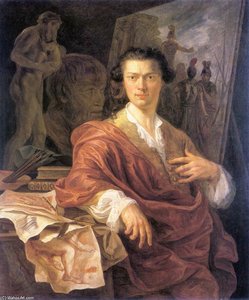
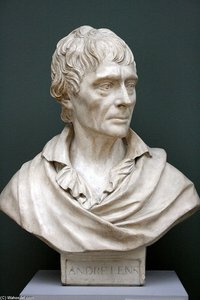
- Portrait Of Artist A. C. Lens: This intimate self-representation offers a rare glimpse into the artist's own psyche, showcasing his ability to capture human sensitivity and character with remarkable psychological depth.
Through these works, Andries Cornelis Lens achieved much more than aesthetic beauty; he provided a visual language for an age seeking order and meaning. His commitment to the revival of Flemish painting through classical discipline ensures that his name remains etched in the annals of art history as a true pioneer of the Neoclassical spirit.
andries cornelis lens
1739 - 1822 , Belgium
Quick Facts
- Artistic Movement Or Style: Neoclassical Art
- Artists Or Movements Influenced By This Artist: ['Classical Flemish Art']
- Artists Who Influenced This Artist: ['Jacob van Strij']
- Date Of Birth: 1739 Antwerp, Belgium
- Date Of Death: 1822
- Full Name: Andries Cornelis Lens
- Nationality: Flemish
- Notable Artworks:
- Regulus Returning to Carthage
- Portrait Of Artist A. C. Lens
- Place Of Birth: Antwerp