 Preview
 Send
Send Share
Share
 Details

 Download
 Similars
 X-Ray
X-Ray Diaporama
Waterlily


 Read More
Giclée / Art Print
Museum-quality giclée or canvas print with fast production and flexible finish options. ( Buy Hand Made Painting Buy Image)




P118B $10

P118H $10

P118W $10

P438Z $10

P508JH $12

P508YH $12

P805H $10

P805Z $10

P919BZ $10

P919G $10

P919XJ $10

P959ZH $10

P968JZ $12

W106C $8

W218G $10

W218JH $8

W218Y $10

W307PJ $10

W316G $10

W316PJ $8

W316Y $10

W398PJ $8

W4111J $10

W500HY $15

W500JH $15

W692G $12

W849H $8

W940BG $15

W953PJ $8




Pick from our preset sizes that match the artwork's original proportions.

You may enter your own dimensions to fit a specific frame or space. If your selected size does not match the original image's proportions, we will either crop the artwork or extend the image with a mirrored or solid-fill edge. A digital mockup will be sent for your approval before production begins.
Please note that the on-screen preview does not reflect the actual cropping or extension. Only the mockup will accurately show the final composition.
While custom sizes are available, we recommend selecting a dimension from the predefined list to preserve the original proportions.
Worldwide Delivery () in 2 weeks instead of standard 4/5 weeks. (17 August)

Free Worldwide Express Shipping

High-Quality Linen Canvas

Full Shipping Insurance

Customs Tax Refund Guarantee

True Color Matching Guarantee

60-Day Return Policy (Defects Only)

100% Money-Back Guarantee

Bulk Discount Offer
 Glass option is only available in size under 110 CM

Waterlily
Giclée / Art Print
Reproduction Size
-


Total Price
$ 63
Collectible Description
A Dreamscape of Petals and Flight
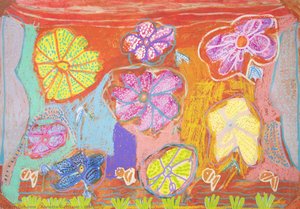
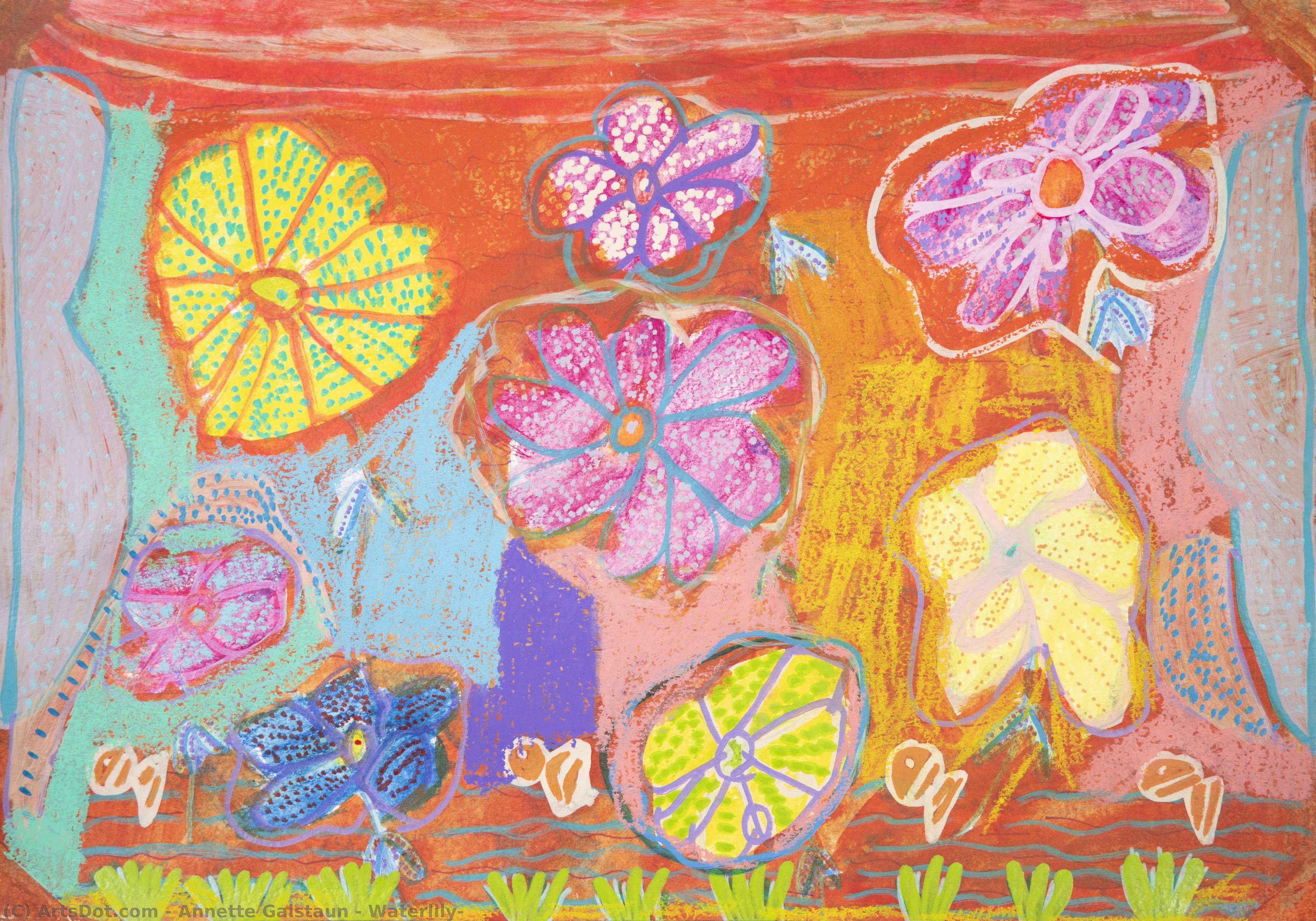
In the delicate dance of Waterlily, the viewer is invited into a realm where the boundaries between reality and memory begin to dissolve. Created by the Australian artist Annette Galstaun, this captivating work serves as a window into a world that feels both intimately familiar and hauntingly otherworldly. The painting presents a lush, vibrant tapestry of flora, where water lilies take center stage, their petals unfurling in a rhythmic display of color and form. Interspersed among these aquatic blooms are daisies and soft purple blossoms, creating a dense, patterned garden that pulses with life. This is not merely a depiction of nature, but a curated dreamscape where every stroke of the brush contributes to a sense of serene enchantment.
The composition is brought to life by the presence of two birds, positioned strategically within the frame. One bird drifts toward the left while another finds its place on the right, their silhouettes suggesting a gentle movement that breaks the stillness of the water. These avian figures act as messengers between the terrestrial and the ethereal, adding a layer of kinetic energy to an otherwise tranquil scene. For the collector or interior designer, this piece offers a profound sense of motion and vitality, making it an ideal focal point for spaces that require a touch of organic elegance and a breath of fresh, imaginative air.
Technique and the Art of Impressionistic Nostalgia
Executed with a masterful command of color, Waterlily utilizes a palette that celebrates the brilliance of the natural world. The technique evokes the spirit of early 20th-century impressionism, where light and texture are prioritized to evoke emotion rather than mere anatomical accuracy. Through the use of gouache, Galstaun achieves a rich, opaque quality that allows colors to sit boldly upon the surface, creating a layered effect that mimics the depth of a sunlit pond. The interplay of light across the petals and the subtle shadows beneath the leaves creates a tactile sensation, inviting the eye to wander through the thicket of blooms.
The artist’s style is deeply rooted in the concept of nostalgia, reminiscent of a lingering dream or a cherished childhood memory. There is a deliberate softness to the edges of the flowers and birds, a stylistic choice that prevents the scene from feeling static. Instead, the artwork breathes with a rhythmic pattern, where color and shape coalesce into a singular, harmonious vision. This approach makes the piece exceptionally versatile for high-end decor; it possesses the sophistication required for a formal gallery setting while maintaining a warmth that integrates seamlessly into a cozy, lived-in residential sanctuary.
Symbolism and Emotional Resonance
Beyond its aesthetic splendor, Waterlily carries a deeper symbolic weight. The water lily itself has long been a symbol of purity, rebirth, and the cyclical nature of life, emerging from murky depths to bloom in radiant light. By placing these flowers alongside free-roaming birds, Galstaun explores themes of coexistence and the harmony found within the wild. The painting suggests a sanctuary where different elements of the natural world—the aquatic, the floral, and the avian—can exist in a state of perfect, unbothered peace.
For those seeking to adorn their homes with art that inspires tranquility, this work offers an emotional refuge. It is a piece that does not demand attention through aggression, but rather captures it through beauty and grace. Owning a high-quality reproduction of this masterpiece allows one to bring a fragment of this peaceful, patterned universe into the modern home, providing a constant source of inspiration and a quiet reminder of the magic that exists in the natural world.
Related Artworks

Artist Biography
Jean-Michel Basquiat: A Voice of the Streets and a Revolutionary Artist
Born in Brooklyn, New York City, on December 22, 1960, Jean-Michel Basquiat emerged from the vibrant, chaotic crucible of the Lower East Side during the late 1970s and early 1980s. His life was tragically cut short at the age of 27 in August 1988 due to a heroin overdose, but within those brief years, he left an indelible mark on the art world – a legacy defined by raw emotion, social critique, and a unique visual language that continues to resonate today.
Basquiat’s early life was shaped by his Haitian-American heritage. His father, Gerard Basquiat, was a Dominican immigrant who worked as a licensed practical nurse, while his mother, Laurinda Banks, was an African American schoolteacher. This complex background instilled in him a deep awareness of racial identity and social injustice – themes that would become central to his artistic explorations. Initially involved with the graffiti duo SAMO alongside Al Diaz, Basquiat began tagging subway cars with cryptic epigrams under the pseudonym “SAMO,” quickly gaining notoriety for their provocative and often politically charged messages. This early street art experience provided a crucial foundation for his later work, imbuing it with an immediacy and directness that distinguished him from many of his contemporaries.
The Rise of Neo-Expressionism and Basquiat’s Unique Style
By the early 1980s, Basquiat transitioned from graffiti to painting, quickly establishing himself as a leading figure in the burgeoning neo-expressionist movement. This style, characterized by its bold colors, expressive brushstrokes, and often raw emotionality, represented a reaction against the perceived coldness of minimalism and conceptual art. Unlike many of his peers who embraced slick commercialism, Basquiat’s work retained an intensely personal and confrontational quality.
His canvases became a collage of references – historical figures, anatomical studies, musical lyrics, poetry fragments, and symbols drawn from African tribal art and Haitian folklore. He frequently incorporated text into his paintings, layering words and phrases alongside images to create complex narratives that explored themes of race, power, poverty, and identity. His distinctive style was instantly recognizable: a chaotic blend of meticulous detail and spontaneous scribbles, often utilizing found objects like cardboard, aluminum foil, and Xerox copies within the composition. His use of crowns – a recurring motif – symbolized royalty, authority, and the assertion of black identity in a society riddled with systemic inequality.
Themes of Race, Power, and Social Commentary
Basquiat’s art was deeply rooted in social commentary. He confronted issues of racism, police brutality, and economic disparity with unflinching honesty. Works like *Irony of Negro Policeman* (1981) and *Defacement* (1982), depicting a black policeman wearing a crown and holding a skull, directly challenged the established power structures and exposed the hypocrisy inherent in American society. His paintings weren’t simply aesthetically pleasing; they were urgent calls to action, demanding recognition of marginalized voices and challenging viewers to confront uncomfortable truths.
Furthermore, Basquiat explored themes of cultural appropriation and the commodification of art. He was acutely aware of how his work was being interpreted and marketed within the commercial art world, often using irony and self-deprecation to critique the system itself. His collaboration with Andy Warhol, a symbol of mainstream art success, highlighted this tension – a pairing that simultaneously celebrated and questioned the dynamics of the art market.
Legacy and Historical Significance
Despite his tragically short life, Jean-Michel Basquiat’s impact on contemporary art is undeniable. His work continues to be exhibited in major museums around the world, and his paintings command staggering prices at auction. He is remembered not only for his artistic brilliance but also for his courage in speaking out against injustice and challenging conventional notions of beauty and value.
Basquiat’s legacy extends beyond the art world; he became a symbol of black creativity and cultural pride, inspiring generations of artists to use their voices to address social issues. His work remains a powerful reminder of the importance of confronting uncomfortable truths and advocating for a more just and equitable society. His influence can be seen in countless contemporary artists who continue to grapple with themes of identity, power, and representation – solidifying his place as one of the most important and influential figures of the late 20th century.

annette galstaun
1980 - , Australia
Quick Facts
- Artistic Movement Or Style: Neo-expressionism
- Artists Or Movements Influenced By This Artist:
- Graffiti art
- Hip-hop culture
- Artists Who Influenced This Artist:
- Andy Warhol
- Keith Haring
- Date Of Birth: December 22, 1960
- Date Of Death: August 12, 1988
- Full Name: Jean-Michel Basquiat
- Nationality: American
- Notable Artworks:
- Irony of Negro Policeman
- Skull of Doom
- Untitled
- Boy and Dog in a Johnnypump
- Defacement
- Hollywood Africans
- Place Of Birth: New York City, U.S.
Related Articles
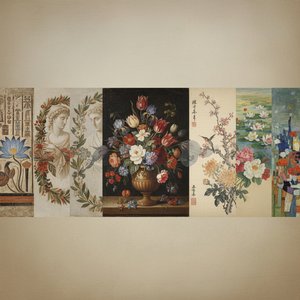
Blossoms of Time: A Historical & Aesthetic Exploration of Floral Painting Across Cultures
Explore the rich history of floral painting! Discover symbolism, techniques & masterpieces from Van Huysum to O'Keeffe. Expert insights for art lovers & collectors at ArtsDot.
Blossoming Symbolism: A Historical Journey Through Flowers in Western Painting
Explore the rich history of flower symbolism in Western painting! Discover how artists from the Renaissance to Modernism used blossoms to convey meaning, emotion & beauty. Learn about iconic artworks and movements.
Blossoms of Time: A Historical Journey Through Flower Painting
Explore the captivating history of flower painting! Discover Dutch masters, symbolic meanings, & botanical art. Expert insights & high-quality reproductions at ArtsDot.
Echoes of Time: Nostalgia, Technique & Cultural Significance in Vintage Paintings
Explore the captivating world of vintage paintings! Discover key styles, cultural significance & collecting tips from art experts at ArtsDot. Find authentic reproductions and elevate your home décor.
Echoes of Time: Exploring the Enduring Appeal of Vintage Artwork
Explore the captivating world of vintage art! Discover its history, enduring appeal, & how to build your own collection. Expert advice, custom reproductions & museum-quality prints at ArtsDot.