 Preview
 Send
Send Share
Share
 Details

 Download
 Similars
 X-Ray
X-Ray Diaporama
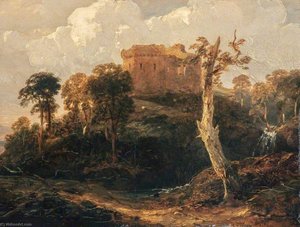
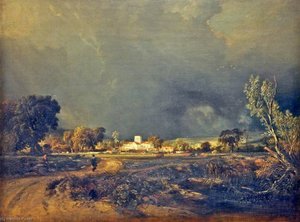
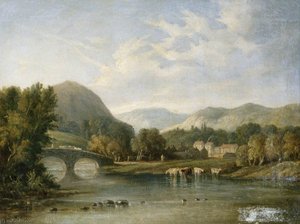
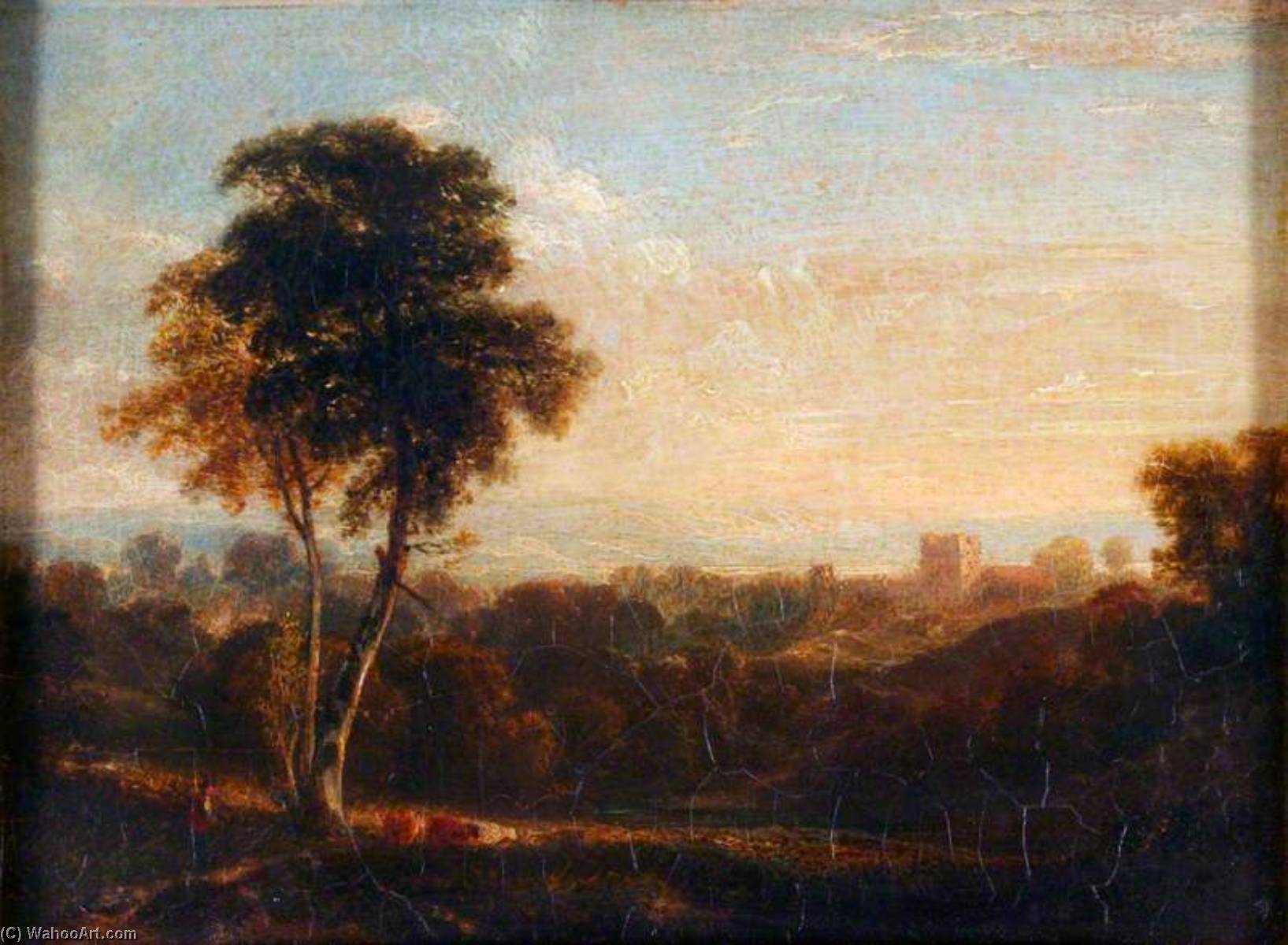
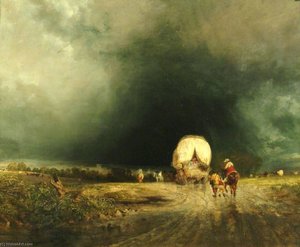
Yanwath Hall, on the Eamont, Westmorland
 Romanticism
 19.0 x 26.0 cm
 Read More
Hand Made Oil Reproduction
Hand-painted oil on canvas in your size and frame, made to order by our artists. ( Buy Print Buy Image)




































Pick from our preset sizes that match the artwork's original proportions.

You may enter your own dimensions to fit a specific frame or space. If your selected size does not match the original image's proportions, we will either crop the artwork or extend the painting with additional hand-painted elements. A digital mockup will be sent for your approval before production begins.
Please note that the on-screen preview does not reflect the actual cropping or extension. Only the mockup will accurately show the final composition.
While custom sizes are available, we recommend selecting a dimension from the predefined list to preserve the original proportions.
After order, ArtsDot.com team will email client for instructions and provide a mockup preview
Worldwide Delivery () in 3/4 weeks instead of standard 5 weeks. (17 August). No compromise on quality.

Free Worldwide Express Shipping

High-Quality Linen Canvas

Full Shipping Insurance

Customs Tax Refund Guarantee

True Color Matching Guarantee

60-Day Return Policy (Defects Only)

100% Money-Back Guarantee

Bulk Discount Offer
 Glass option is only available in size under 110 CM

Yanwath Hall, on the Eamont, Westmorland
Reproduction Medium
Reproduction Size
-


Total Price
$ 263
Related Artworks
Artist Biography
A Life Immersed in the Maritime World: The Story of Anthony V. C. Fielding
Anthony Vandyke Copley Fielding, known as Anthony V. C. Fielding (1787-1855), was a quintessential English artist whose career unfolded against the backdrop of Britain’s naval dominance and burgeoning industrial age. Born into an artistic family – his father, William Fielding, was a notable landscape painter – young Anthony inherited not only a talent for capturing light and form but also a deep connection to the natural world. However, unlike his father's broader pastoral scenes, Anthony gravitated towards the drama and precision of maritime subjects, becoming one of the most prolific and respected marine painters of his time. His early life was steeped in observation; growing up near the coast instilled within him an intimate understanding of ships, seascapes, and the lives of those who braved the ocean’s depths. This foundational experience would become the defining characteristic of his artistic output.From Watercolour Sketches to Detailed Engravings
Fielding's initial training focused on watercolour painting, a medium he mastered with remarkable skill. He quickly gained recognition for his ability to depict atmospheric effects and the subtle nuances of light reflecting on water. However, it was through engraving that Fielding truly established his reputation and reached a wider audience. Recognizing the growing demand for visual documentation of naval battles, ship designs, and coastal scenes, he turned his watercolour sketches into meticulously detailed engravings. This transition proved pivotal; while many artists relied on engravers to reproduce their work, Fielding controlled the entire process, ensuring fidelity to his original vision. His engravings weren’t merely reproductions – they were works of art in themselves, celebrated for their accuracy, technical brilliance, and evocative power. He became particularly renowned for his series of engravings depicting ships of the Royal Navy, a testament to Britain's maritime strength during the Napoleonic Wars and beyond.Influences and Artistic Development
While Fielding’s style was distinctly his own, it wasn’t formed in isolation. He absorbed influences from earlier marine painters like William Hodges and Dominic Serres, admiring their ability to convey both the grandeur and the peril of the sea. However, he moved beyond their more romanticized depictions, striving for a greater degree of realism and historical accuracy. The work of J.M.W. Turner also exerted an impact, particularly in Fielding’s use of atmospheric perspective and dramatic lighting effects. Yet, where Turner often prioritized emotional expression over precise detail, Fielding remained committed to capturing the tangible reality of ships and seafaring life. His artistic development can be seen as a synthesis of these influences – a blend of romantic sensibility with meticulous observation and technical skill. He wasn’t interested in simply *representing* the sea; he sought to *document* it, preserving its beauty and power for posterity.A Legacy Etched in History: Major Achievements & Significance
Fielding's prolific output spanned decades, encompassing a vast range of subjects – naval battles, portraits of admirals and ship captains, coastal views, and detailed depictions of individual vessels. His engravings were widely published in periodicals and books, becoming essential resources for naval historians and enthusiasts. He contributed significantly to the visual record of the Napoleonic Wars, providing a compelling glimpse into the realities of maritime conflict. Beyond his historical work, Fielding’s portraits are admired for their sensitivity and psychological depth, capturing not only the likenesses of his subjects but also their character and spirit. His dedication to accuracy and detail set him apart from many of his contemporaries, establishing him as a leading authority on naval art.- His series of engravings documenting ships of the Royal Navy remain invaluable historical resources.
- He successfully bridged the gap between watercolour painting and engraving, controlling every aspect of the creative process.
- Fielding’s portraits offer a compelling glimpse into the lives of prominent naval figures.
anthony v. c fielding
1787 - 1855
Quick Facts
- Artistic Movement Or Style: Romanticism
- Artists Or Movements Influenced By This Artist:
- Romanticism
- Victorian Art
- Artists Who Influenced This Artist:
- John Singleton Copley
- Anthony van Dyck
- Richard Parkes Bonington
- John Varley
- Date Of Birth: November 22, 1787
- Full Name: Anthony Vandyke Copley Fielding
- Nationality: English
- Notable Artworks:
- Stranded – morning after the wreck
- Victorian watercolours
- Off the Eddystone – effect of storm
- Amphion and Zethus Delivering their Mother Antiope from the Fury of Dirce and Lycus
- Hunting Scene
- School House at Kings Norton Near Birmingham
- View of Lucerne
- Magdalen College and Tower, Oxford
- Fishing Boats in Port
- Place Of Birth: Sowerby Bridge, West Yorkshire, England
Related Articles
Anthony Vandyke Copley Fielding: Rediscovering a Master of Romantic Landscape
Discover the captivating landscapes of Anthony Vandyke Copley Fielding, a master of Romantic watercolour painting. Explore his life, technique, and legacy with ArtsDot – your source for museum-quality art reproductions & expert appraisal.

Romantic Landscapes: 10 Masterpieces for Your Home | ArtsDot
Journey through 10 Romantic landscape masterpieces by Friedrich, Turner & Cole. Explore emotional art, sublime nature scenes & iconic 19th-century paintings. Find museum-quality reproductions for your home at ArtsDot.com – discover the full collection online!

Beyond the Horizon: 10 Landscape Masterpieces for Your Home Decor
Journey through 10 breathtaking landscape paintings by Monet, Van Gogh & more! Explore iconic artworks, artistic techniques & find inspiration for your home decor. Museum-quality reproductions at ArtsDot.com. Discover all masterpieces on ArtsDot.com

Evocations of Place: A Historical Journey Through Landscape Art
Explore the rich history of landscape art with ArtsDot. Discover renowned artists, movements like Impressionism & Romanticism, and expert guidance for collecting timeless pieces. Find your perfect serene escape today!
The Sublime and the Picturesque: Exploring Emotion & Nature in Romantic Landscape Painting
Explore the emotional power of Romantic landscape painting! Discover the sublime & picturesque traditions, key artists like Friedrich & Cole, and find your perfect artwork at ArtsDot.