 Preview
 Send
Send Share
Share
 Details

 Download
 Similars
 X-Ray
X-Ray Diaporama
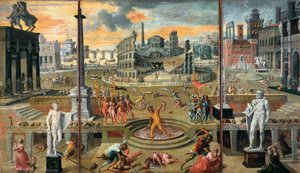
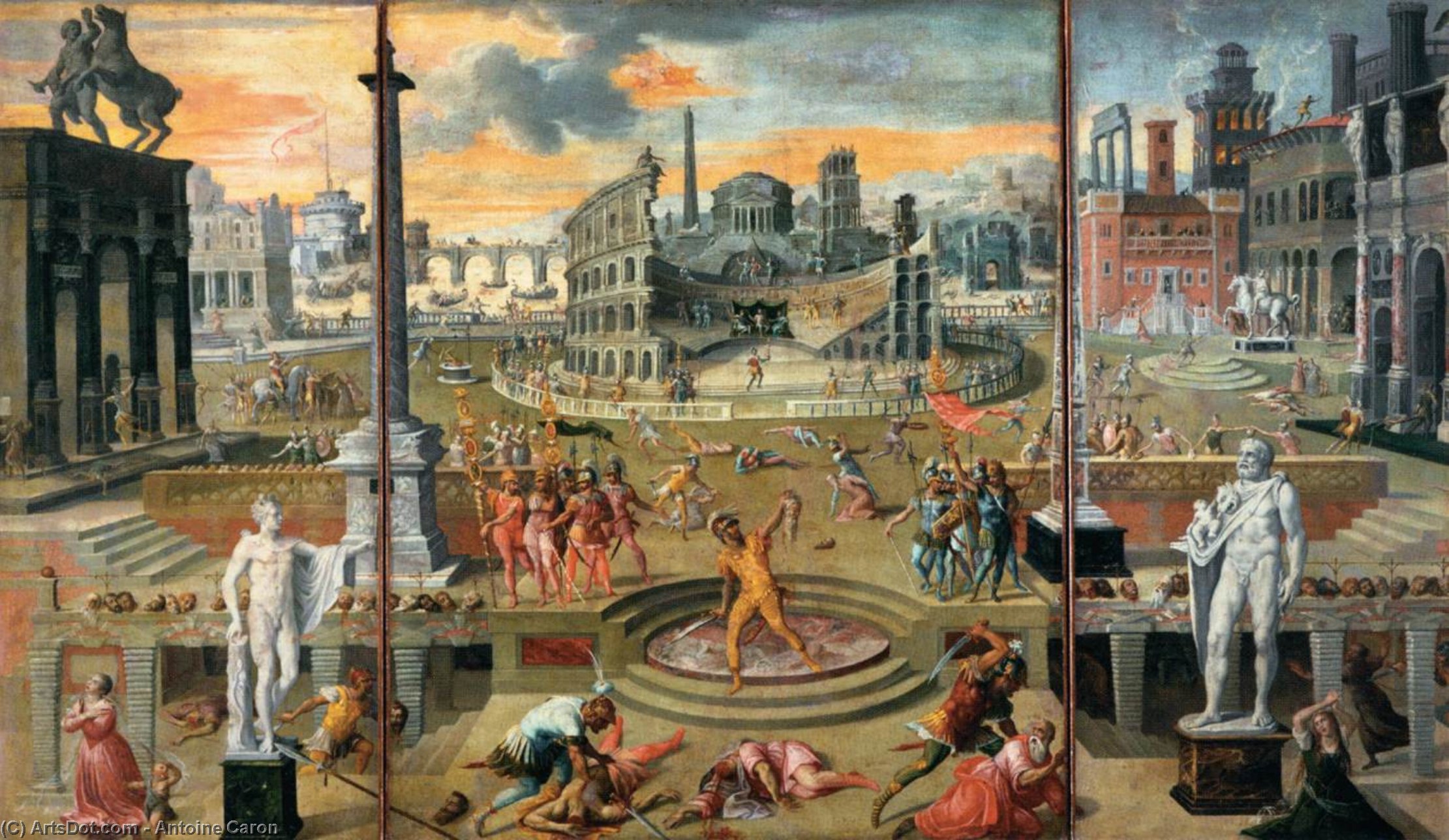
The Massacres of the Triumvirate
 Acrylic On Canvas
- WallArt
- Northern Mannerism
 1566
1566 116.0 x 195.0 cm
 The Louvre
 Read More
Hand Made Oil Reproduction
Hand-painted oil on canvas in your size and frame, made to order by our artists. ( Buy Print Buy Image)




P118B $10

P118H $10

P118W $10

P438Z $10

P508JH $12

P508YH $12

P805H $10

P805Z $10

P919BZ $10

P919G $10

P919XJ $10

P959ZH $10

P968JZ $12

W106C $8

W218G $10

W218JH $8

W218Y $10

W307PJ $10

W316G $10

W316PJ $8

W316Y $10

W398PJ $8

W4111J $10

W500HY $15

W500JH $15

W692G $12

W849H $8

W940BG $15

W953PJ $8




Pick from our preset sizes that match the artwork's original proportions.

You may enter your own dimensions to fit a specific frame or space. If your selected size does not match the original image's proportions, we will either crop the artwork or extend the painting with additional hand-painted elements. A digital mockup will be sent for your approval before production begins.
Please note that the on-screen preview does not reflect the actual cropping or extension. Only the mockup will accurately show the final composition.
While custom sizes are available, we recommend selecting a dimension from the predefined list to preserve the original proportions.
After order, ArtsDot.com team will email client for instructions and provide a mockup preview
Worldwide Delivery () in 3/4 weeks instead of standard 5 weeks. (16 August). No compromise on quality.

Free Worldwide Express Shipping

High-Quality Linen Canvas

Full Shipping Insurance

Customs Tax Refund Guarantee

True Color Matching Guarantee

60-Day Return Policy (Defects Only)

100% Money-Back Guarantee

Bulk Discount Offer
 Glass option is only available in size under 110 CM

The Massacres of the Triumvirate
Reproduction Medium
Reproduction Size
-


Total Price
$ 263
Artwork Description
A Descent into Chaos: Antoine Caron’s “The Massacres of the Triumvirate”
Antoine Caron's "The Massacres of the Triumvirate," painted in 1566, isn’t merely a depiction of historical violence; it’s a visceral plunge into the psychological landscape of a fractured Rome. This monumental canvas, now residing within the hallowed halls of the Louvre, captures a pivotal moment – the aftermath of the Second Triumvirate's brutal power struggles and the subsequent purges that stained the city crimson. Far removed from the idealized depictions of Roman grandeur favored by earlier Renaissance artists, Caron presents a scene of raw, unsettling immediacy, reflecting the turbulent political climate of his time.
The composition immediately assaults the viewer with its chaotic energy. A sprawling cityscape—a recognizable yet distorted version of ancient Rome, dominated by the imposing Colosseum and other iconic structures—serves as the stage for a horrifying tableau. The foreground is consumed by a brutal melee: two men locked in a desperate combat, their swords flashing under a harsh light, embodying the violent struggle for dominance that defined the era. Scattered around them are bodies – some sprawled lifelessly on the ground, others writhing in agony—a testament to the indiscriminate nature of the bloodshed. The sheer number of figures, rendered with a remarkable attention to detail despite the overwhelming chaos, underscores the scale of the tragedy.
The Shadow of Caesar and the Second Triumvirate
To understand “The Massacres,” one must delve into the tumultuous events that birthed it. The painting directly references the infamous actions of the Second Triumvirate – Mark Antony, Octavian (later Augustus), and Lepidus – who, in 43 BC, orchestrated a campaign of terror to consolidate their power. Following Julius Caesar’s assassination, they ruthlessly eliminated their political enemies, including senators, equestrians, and anyone perceived as a threat. The painting isn't a literal representation of a single massacre; rather, it synthesizes the various atrocities committed during this period – a deliberate attempt by Caron to convey the pervasive atmosphere of fear and violence that gripped Rome.
The figures in the painting are not simply victims; they represent the broader Roman populace caught in the crossfire of political ambition. The onlookers, depicted with varying degrees of apathy or horrified fascination, reflect the moral decay at the heart of the era. Even the architectural elements—the crumbling monuments and shadowed streets—seem to bear witness to Rome’s decline, mirroring the disintegration of its republican ideals.
A Mannerist Vision: Technique and Emotional Resonance
Caron's artistic style is firmly rooted in the Northern Mannerism movement, a reaction against the High Renaissance’s emphasis on harmony and idealized beauty. His brushwork is deliberately rough and uneven, creating a sense of immediacy and urgency. The figures are elongated and distorted, their poses dramatic and theatrical—a hallmark of Mannerist art. He employs stark contrasts of light and shadow to heighten the emotional impact of the scene, drawing the viewer’s eye to the most disturbing details.
The color palette is dominated by earthy tones – browns, ochres, and grays – reflecting the grim reality of death and decay. Flecks of crimson—the blood spilled on the ground and staining the clothing—serve as a potent visual reminder of the violence depicted. The overall effect is profoundly unsettling, evoking a sense of claustrophobia and despair.
Symbolism and Legacy
Beyond its historical context, “The Massacres” resonates with broader themes of power, corruption, and the consequences of political instability. It’s a cautionary tale about the dangers of unchecked ambition and the fragility of civilization. Caron's masterful use of composition, color, and technique transforms a specific historical event into a timeless meditation on human nature and the dark side of history. The painting continues to captivate viewers centuries later, serving as a powerful reminder of Rome’s violent past and its enduring relevance to our own time.
Related Artworks

Artist Biography
Antoine Caron: A Master of Turbulent Elegance
Antoine Caron (1521–1599) stands as a singular figure in French Renaissance art, a glassmaker by trade and an illustrator whose artistic vision transcended his craft. Born in Beauvais, France, he emerged from the School of Fontainebleau during its zenith—a period marked by fervent religious debate and royal instability—leaving behind a legacy of dramatic paintings that capture both grandeur and unsettling psychological depth. Unlike many artists of his era who adhered to established conventions, Caron possessed a distinctive artistic personality, reflecting the volatile atmosphere of the Valois court.
Caron’s formative years were spent honing skills beyond mere craftsmanship. He apprenticed as a glassmaker, gaining invaluable experience in manipulating materials and achieving precise visual effects—a skill that would subtly inform his later painting style. However, it was his involvement with the Fontainebleau School under Francesco Primaticcio and Niccolò dell'Abbate that truly cemented his artistic trajectory. Here, he absorbed the influences of Mannerism, characterized by elongated figures, stylized drapery, and a deliberate rejection of naturalistic representation in favor of expressive symbolism. This exposure to dell’Abate’s masterful technique—particularly his use of dramatic chiaroscuro—would prove crucial to Caron's artistic development.
The Spectacle of the Valois Court
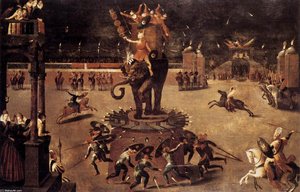
Caron swiftly ascended the ranks of royal patronage, becoming Catherine de' Medici’s court painter in 1561 and subsequently serving as an advisor to the crown. This position afforded him unparalleled access to the royal court and allowed him to participate actively in shaping its visual identity. He was not merely a painter of canvases but an architect of spectacle, orchestrating elaborate pageants commemorating significant events like the coronation of Charles IX and the wedding of Henry IV to Marguerite de Valoi. Through his meticulous drawings and designs for festival decor, he documented the splendor of the era, much of which served as the foundational inspiration for the legendary Valois Tapestries.
His role extended into the realm of the applied arts, where his background in glassmaking allowed him to contribute to the decorative embellishment of the Château de Fontainebleau. He worked alongside the great masters to restore and decorate royal apartments, blending the boundaries between fine art and ornamental design. This ability to navigate both the monumental and the minute—from massive fresco cycles to delicate illustrations for humanist manuscripts like L'Histoire d'Artemise—marked him as a versatile virtuoso of the late sixteenth century.
Allegory, Violence, and the Shadows of History
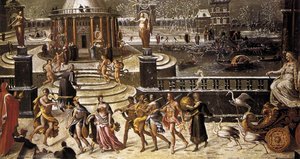
While much of Caron's work celebrated the refined elegance of courtly life, his art was deeply haunted by the political and religious bloodshed of the French Wars of Religion. His oeuvre is often categorized into three evocative themes that reflect the fractured psyche of his age: allegory, violence, and magic. In his allegorical works, such as the Triumph of the Seasons, one finds a world of picnics, orchestras, and idealized courtly gatherings. Yet, this veneer of peace was frequently punctured by the brutal reality of his time.
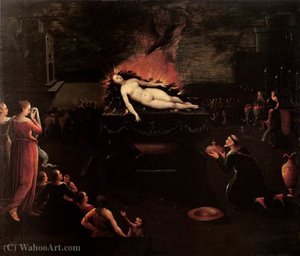
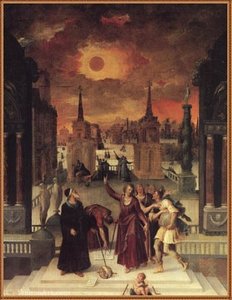
Caron’s "massacre" paintings, most notably his signed masterpiece The Massacres of the Triumvirate (1566), serve as harrowing chronicles of the era's instability. In these works, he utilized unusual architectural forms and bright, jarring colors to frame scenes of profound carnage, often placing human figures almost insignificantly against grand, sweeping stages. This technique created a sense of cosmic indifference to human suffering, a hallmark of his unique Northern Mannerist style. Alongside these grim chronicles, Caron explored the ethereal through themes of astrology and magic, as seen in Astrologers Studying an Eclipse, proving that his brush could capture both the terrifying reality of war and the mystical wonders of the unknown.
Ultimately, Antoine Caron remains a vital link in the history of French art. He was a painter who could navigate the delicate diplomacy of a queen mother while simultaneously capturing the visceral terror of a nation at war. His legacy is one of turbulent elegance, a testament to an artist who found beauty within the chaos of a changing world.
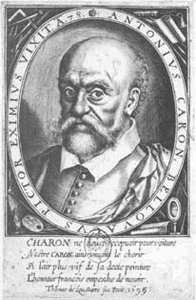
Antoine Caron
1521 - 1599 , France
Quick Facts
- Artistic Movement Or Style: Northern Mannerism
- Artists Or Movements Influenced By This Artist: ['Fontainebleau School']
- Artists Who Influenced This Artist: ["Niccolò dell'Abbate"]
- Date Of Birth: 1521 Beauvais France
- Date Of Death: 1599 Paris France
- Full Name: Antoine Caron
- Nationality: French
- Notable Artworks:
- Massacres under the triumvirate
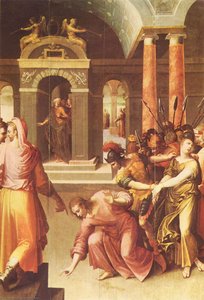
- Christ and the adulteress
- The Triumph of Winter
- Place Of Birth: Beauvais France
Related Articles
Antoine Blanchard (Marcel Masson): Parisian Abstraction & the Legacy of Automatism
Explore the captivating world of Antoine Blanchard (Marcel Masson) and his nostalgic Parisian scenes. Discover his artistic influences, unique style, and the challenges of authentication. Expert insights & art appraisal information.
The Fête Galante & Beyond: Exploring the Artistic World of Jean-Antoine Watteau
Discover the captivating world of Jean-Antoine Watteau, master of the Fête Galante! Explore his iconic paintings, symbolism, and lasting influence on Rococo art. A deep dive for classic art enthusiasts.
Giovanni Paolo Panini: Capturing Roman Grandeur – A Vedute Master's Legacy
Explore the captivating world of Giovanni Paolo Panini, master of Roman vedute painting. Discover his technique, iconic works, influence on art history & collecting advice from experts at ArtsDot.
Bartolomeo Pinelli: Neoclassical Linearity & Roman Topography of Memory
Explore the captivating world of Bartolomeo Pinelli, a master Italian engraver renowned for his evocative Roman scenes & historical narratives. Discover his art and legacy with ArtsDot.