 Preview
 Send
Send Share
Share
 Details

 Download
 Similars
 X-Ray
X-Ray Diaporama
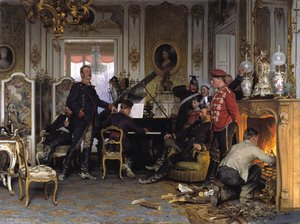
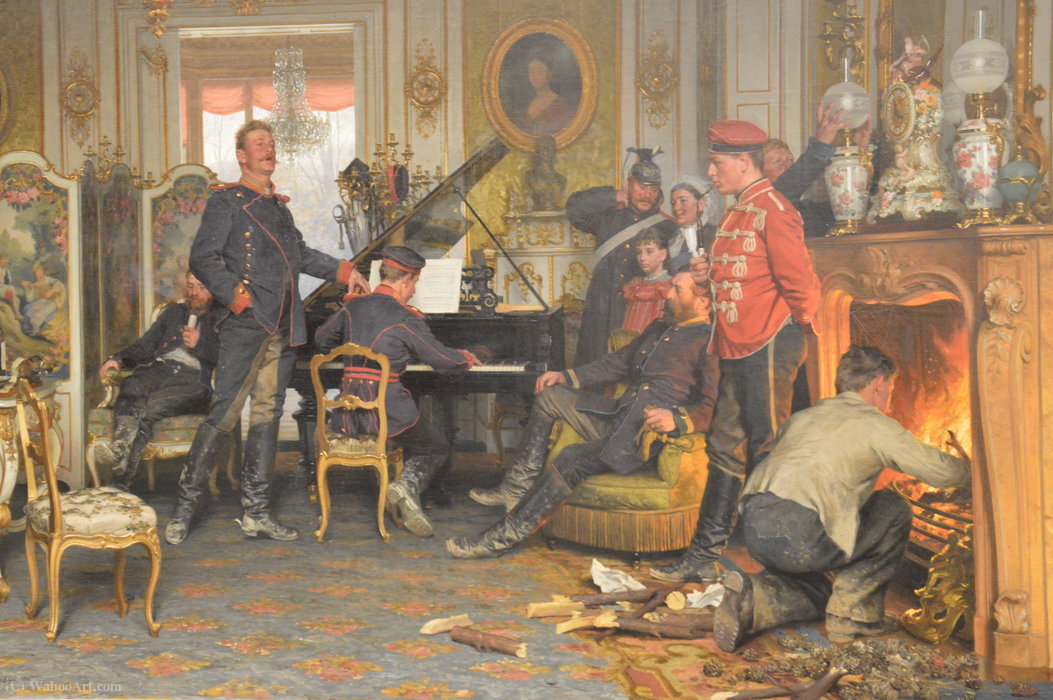
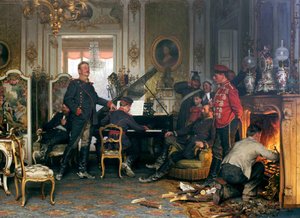
A Billet outside Paris (1894)

 Read More
Hand Made Oil Reproduction
Hand-painted oil on canvas in your size and frame, made to order by our artists. ( Buy Print Buy Image)




P118B $10

P118H $10

P118W $10

P438Z $10

P508JH $12

P508YH $12

P805H $10

P805Z $10

P919BZ $10

P919G $10

P919XJ $10

P959ZH $10

P968JZ $12

W106C $8

W218G $10

W218JH $8

W218Y $10

W307PJ $10

W316G $10

W316PJ $8

W316Y $10

W398PJ $8

W4111J $10

W500HY $15

W500JH $15

W692G $12

W849H $8

W940BG $15

W953PJ $8




Pick from our preset sizes that match the artwork's original proportions.

You may enter your own dimensions to fit a specific frame or space. If your selected size does not match the original image's proportions, we will either crop the artwork or extend the painting with additional hand-painted elements. A digital mockup will be sent for your approval before production begins.
Please note that the on-screen preview does not reflect the actual cropping or extension. Only the mockup will accurately show the final composition.
While custom sizes are available, we recommend selecting a dimension from the predefined list to preserve the original proportions.
After order, ArtsDot.com team will email client for instructions and provide a mockup preview
Worldwide Delivery () in 3/4 weeks instead of standard 5 weeks. (17 August). No compromise on quality.

Free Worldwide Express Shipping

High-Quality Linen Canvas

Full Shipping Insurance

Customs Tax Refund Guarantee

True Color Matching Guarantee

60-Day Return Policy (Defects Only)

100% Money-Back Guarantee

Bulk Discount Offer
 Glass option is only available in size under 110 CM

A Billet outside Paris (1894)
Reproduction Medium
Reproduction Size
-


Total Price
$ 263
Artwork Description
A Glimpse into Prussian Military Life
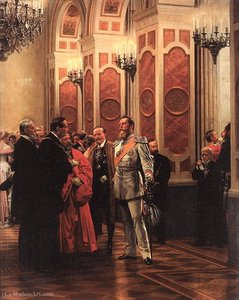
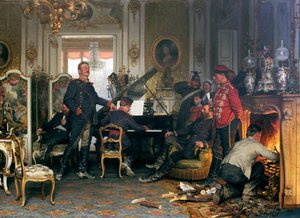
Anton von Werner’s *A Billet outside Paris* (1894) offers a fascinating and intimate look into the lives of Prussian officers during a moment of respite. The painting depicts a gathering within a modestly furnished room, likely commandeered for use by the military – a “billet” as the title suggests – following the Franco-Prussian War. Several uniformed men are shown in various states of relaxation: some seated comfortably, others standing and engaged in conversation, while one individual entertains the group at a piano. The focal point is undoubtedly the warm glow emanating from the fireplace, around which many have congregated, creating a sense of camaraderie and shared experience. Werner masterfully captures a scene that feels both staged and genuinely observed, offering a window into the social dynamics and psychological state of these soldiers after conflict.Naturalism & Historical Significance
Werner was a leading figure in German Naturalism, and this painting exemplifies his commitment to depicting scenes with meticulous detail and an almost photographic realism. He wasn’t interested in idealizing war or its participants; instead, he presented them as *human beings*, subject to the same emotions and vulnerabilities as anyone else. This approach aligns with the broader artistic trends of the late 19th century, which favored objective observation over romanticized narratives. The painting's historical context is crucial. Completed in 1894, it reflects a period of intense German nationalism following unification, and Werner was commissioned to create works that celebrated Prussian military victories. However, *A Billet outside Paris* moves beyond simple glorification; it hints at the complexities of occupation and the psychological toll of war on those who fought in it.Symbolism & Emotional Resonance
While seemingly a straightforward depiction of everyday life, subtle symbolism permeates the composition. The fireplace, as mentioned, represents warmth, comfort, and perhaps a longing for home. The presence of music – the piano player – suggests an attempt to create normalcy amidst unsettling circumstances. The red jacket worn by one figure stands out, potentially signifying rank or distinction, but also drawing the eye and adding a touch of visual drama. More broadly, the painting evokes a sense of quiet contemplation and subdued emotion. It’s not a scene of triumphant celebration, but rather one of weary reflection – a moment of peace snatched from the aftermath of conflict. The overall emotional impact is one of poignant realism, inviting viewers to consider the human cost of war beyond the battlefield.Aesthetic Appeal for Modern Interiors
The painting’s muted color palette and realistic style make it surprisingly versatile for contemporary interiors. Its historical subject matter adds a layer of intellectual depth, while its subdued tones prevent it from overwhelming a space. *A Billet outside Paris* would be particularly well-suited to studies, libraries, or dining rooms – spaces that encourage conversation and contemplation.- Its large scale (though unknown) suggests it was intended as a statement piece.
- The composition’s balance and symmetry create visual harmony.
- The painting's subject matter offers a unique alternative to more traditional historical scenes.
Related Artworks
Artist Biography
Early Life and Education
- Born: Frankfurt (Oder), Germany, May 9, 1843
- Died: Berlin, Germany, January 4, 1915
- Family Background: Son of a carpenter; his family was ennobled in 1701.
- Early Training: Began an apprenticeship as a decorative painter in 1857.
- Formal Education: Studied at the Prussian Academy of Arts in Berlin (1860-1862) and then at the Academy of Fine Arts in Karlsruhe (1862-1866).
- Karlsruhe Influences: Studied under Johann Wilhelm Schirmer, Ludwig des Coudres, Adolf Schroedter, and Karl Friedrich Lessing. Met with artists like Eduard Devrient, Johannes Brahms, Paul Heyse, and Hans Gude.
Artistic Development and Key Works
- Early Influences: Visited Paris in 1865 and 1867, influenced by the history paintings of Jean-Auguste-Dominique Ingres, Eugène Delacroix, Ernest Meissonier, and Léon Cogniet.
- Italian Period: Spent time in Rome (1868-1869) with Anselm Feuerbach.
- Franco-Prussian War Commissions: Witnessed and documented the Franco-Prussian War (1870-1871), receiving commissions to immortalize key events.
- Major Works:
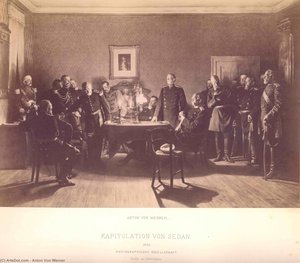
- Capitulation of Sedan
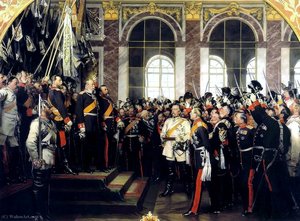
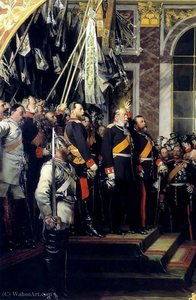
- Proclamation of the German Empire at Versailles – A pivotal work that established his fame.
- Moltke before Paris
- Moltke at Versailles
- The Meeting of Bismarck and Napoleon III
- Decorations for the Berlin Victory Column (including a large velarium and stained glass mosaics)
- Style: Primarily known for his history paintings depicting political and military events. His style is characterized by realism and attention to detail, reflecting the Naturalist movement.
Career and Recognition
- Professor at the Berlin Academy (1873).
- Director of the Prussian Academy of Arts (1875-1890).
- Tutor to Emperor William II: Mentored the emperor in painting.
- Director of the National Gallery in Berlin (1909-1915).
- Honors and Awards: Received numerous awards, including the Order of the Red Eagle First Class with ribbon and the title of Councillor First Class.
- Royal Patronage: Enjoyed close relationships with Kaiser Wilhelm I, Frederick III, and Wilhelm II, receiving significant patronage and commissions.
Historical Significance and Legacy
- Wilhelmine Period Protagonist: Considered a leading figure in Wilhelmine art, reflecting the era's focus on militarism, nationalism, and imperial grandeur.
- Documentation of Historical Events: His paintings provide valuable visual records of significant events in German history, particularly the Franco-Prussian War.
- Critical Reception: While popular during his lifetime, his work faced criticism later for its perceived lack of artistic depth and overly realistic style. Some critics viewed it as propagandistic rather than purely artistic.
- Post-War Reputation: His association with the monarchy led to a decline in popularity after World War I, particularly under National Socialist regimes.
Later Years and Death
- Continued Artistic Activity: Despite changing tastes, Werner remained active until his death.
- Retrospective Exhibition: A major retrospective exhibition was held in 1913 to celebrate his 70th birthday, though it was ultimately cancelled due to disagreements over the exhibition's content.
- Death: Died in Berlin on January 4, 1915, and was interred at the Alter Zwölf-Apostel-Kirchhof.
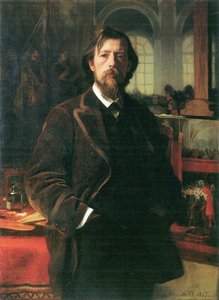
Anton von Werner
1843 - 1915 , Germany
Quick Facts
- Artistic Movement Or Style: Naturalism
- Artists Who Influenced This Artist:
- Jean-Auguste-Dominique Ingres
- Eugène Delacroix
- Ernest Meissonier
- Léon Cogniet
- Date Of Birth: May 9, 1843
- Date Of Death: January 4, 1915
- Full Name: Anton Alexander von Werner
- Nationality: German
- Notable Artworks:
- Capitulation of Sedan
- Proclamation at Versailles
- Moltke before Paris
- Im Etappenquartier vor Paris
- Place Of Birth: Frankfurt (Oder), Germany
Related Articles
Anton von Werner: Imperial Painter, Historical Witness & Shifting German Identity
Explore the life & work of Anton von Werner, Imperial Germany's leading painter. Discover his dramatic depictions of war, unification, and court life – a fascinating insight into 19th-century German history & art.
Adolph von Menzel: Realism, Prussian Society & the Painterly Chronicle of a Changing Era
Explore the life & work of Adolph von Menzel, a leading German Realist painter. Discover his detailed depictions of Prussian society, innovative techniques, and lasting influence on art history. Hand-painted reproductions available at ArtsDot.
German Expressionism's 10 Defining Masterpieces | Art for Your Home
Explore 10 defining German Expressionism masterpieces – from Munch's 'The Scream' to Kandinsky’s abstracts. Discover the artists, stories & bold colors behind this powerful art movement. Find museum-quality reproductions at ArtsDot.com.

William Owen: A Poetic Vision of War & Landscape in British Modernism
Explore the poignant war poetry of Wilfred Owen, a key figure in British Modernism. Discover his innovative style, themes of loss & camaraderie, and lasting impact on 20th-century literature. Analysis & historical context included.
Fritz von Uhde: Bridging Realism & Symbolism in Late 19th-Century German Painting
Explore the captivating world of Fritz von Uhde, a pivotal German painter bridging Realism & Symbolism. Discover his plein-air techniques, religious themes, and influence on modern art. Learn about this fascinating artist at ArtsDot.