 Preview
 Send
Send Share
Share
 Details

 Download
 Similars
 X-Ray
X-Ray Diaporama
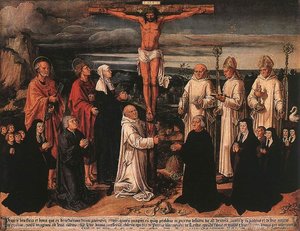
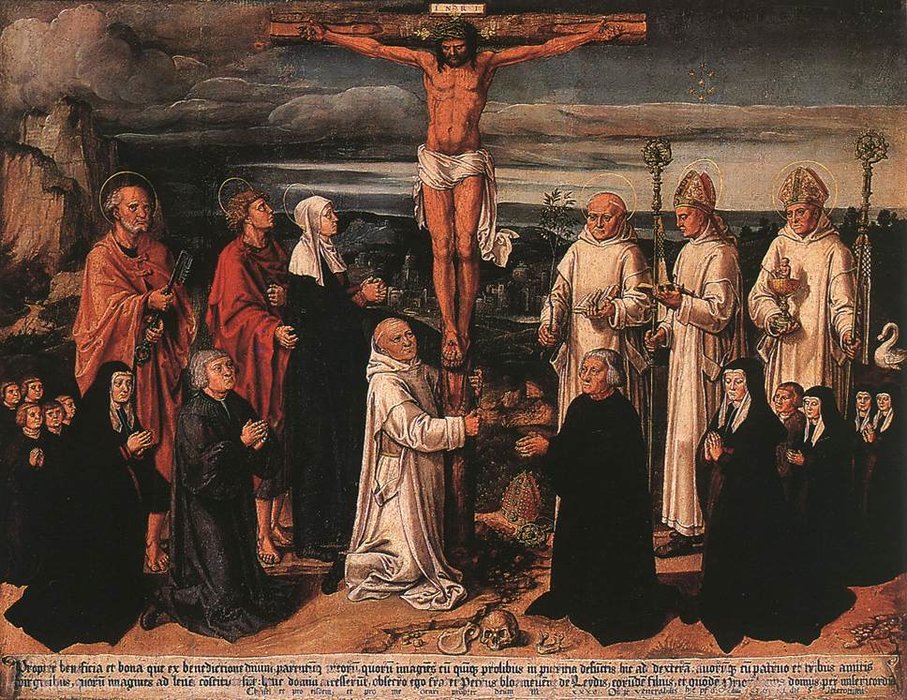
Christ on the Cross with Carthusian Saints
 Read More
Giclée / Art Print
Museum-quality giclée or canvas print with fast production and flexible finish options. ( Buy Hand Made Painting Buy Image)




































Pick from our preset sizes that match the artwork's original proportions.

You may enter your own dimensions to fit a specific frame or space. If your selected size does not match the original image's proportions, we will either crop the artwork or extend the image with a mirrored or solid-fill edge. A digital mockup will be sent for your approval before production begins.
Please note that the on-screen preview does not reflect the actual cropping or extension. Only the mockup will accurately show the final composition.
While custom sizes are available, we recommend selecting a dimension from the predefined list to preserve the original proportions.
Worldwide Delivery () in 2 weeks instead of standard 4/5 weeks. (1 September)

Free Worldwide Express Shipping

High-Quality Linen Canvas

Full Shipping Insurance

Customs Tax Refund Guarantee

True Color Matching Guarantee

60-Day Return Policy (Defects Only)

100% Money-Back Guarantee

Bulk Discount Offer
 Glass option is only available in size under 110 CM

Christ on the Cross with Carthusian Saints
Giclée / Art Print
Reproduction Size
-


Total Price
$ 63
Related Artworks
Artist Biography
Anton Woensam von Worms: A Quiet Master of Carthusian Devotion
Anton Woensam von Worms (c. 1500 – 1541) remains a figure shrouded in scholarly curiosity, largely due to the scarcity of biographical information surrounding his life and artistic output. Despite being recognized as one of the foremost painters active within the Carthusian Order during the Dutch Golden Age—a period characterized by unprecedented artistic innovation and patronage—Woensam’s personal history has proven elusive, leaving historians to reconstruct his career primarily through examination of his surviving paintings.Early Life and Artistic Training
Details concerning Woensam's birthdate and familial origins are scant. Records indicate he was born in Worms, Germany, though precise particulars remain unknown. His artistic training is equally obscure; unlike many prominent artists of the era who benefited from established academies or aristocratic mentorships, Woensam appears to have honed his skills independently, possibly through apprenticeship with a local craftsman. This self-taught approach undoubtedly fostered a distinctive visual language—one that would become synonymous with Carthusian piety and artistic excellence.The Art of Saint Edmund’s College
Woensam's reputation rests almost entirely upon his monumental altarpiece commissioned for St Edmund’s College, Cambridge University. Completed around 1530, this ambitious undertaking represents a pinnacle of Early Netherlandish painting technique and embodies the spiritual fervor of the Carthusian Order. The panel depicts Saint Benedict and Saint Augustine in contemplation amidst a richly ornamented chapel interior—a scene meticulously rendered with painstaking detail and imbued with symbolic resonance. The artist’s masterful use of perspective, chiaroscuro, and vibrant color palettes elevates the depiction beyond mere representation, conveying an overwhelming sense of solemn reverence.Technique and Style
Woensam's artistic style is characterized by a remarkable blend of realism and idealism—a hallmark of the Flemish tradition yet tempered with a profound sensitivity to Carthusian spirituality. Like Jan van Eyck and Rogier van der Weyden, Woensam employed oil paint on wood panels with exceptional precision, achieving astonishing textural fidelity and luminous color saturation. However, unlike his contemporaries who often prioritized anatomical accuracy above all else, Woensam subtly idealized the figures of Saint Benedict and Saint Augustine—emphasizing their serenity and spiritual contemplation rather than muscular physicality. This stylistic choice underscores the artist’s commitment to conveying not just visual likeness but also inner piety.Legacy and Significance
Anton Woensam von Worms's contribution to Early Netherlandish painting is undeniable, albeit understated due to the paucity of biographical data. His St Edmund’s College altarpiece stands as a testament to the artistic achievements of the Carthusian Order during its zenith—a masterpiece that continues to inspire admiration for its technical brilliance and spiritual depth. Although Woensam's oeuvre remains relatively small compared to other artists of his time, his singular focus on religious iconography cemented his place within art history as a quiet but profoundly influential voice of humanist piety. Further research into surviving documents and potentially uncovering previously unknown sketches or preparatory drawings could illuminate aspects of Woensam’s life and artistic process—enriching our understanding of this enigmatic figure and bolstering the scholarly appreciation for his enduring legacy.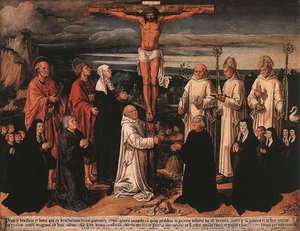
anton woensam von worms
1500 - 1541
Quick Facts
- Artistic Movement Or Style: Dutch Golden Age Painting
- Artists Or Movements Influenced By This Artist: ['Northern Renaissance']
- Artists Who Influenced This Artist: ['Pieter Bruegel the Elder']
- Date Of Death: 1541
- Full Name: Anton Woensam von Worms
- Nationality: Dutch
- Notable Artworks: ['Saint Benedict and Saint Augustine']
- Place Of Birth: Amsterdam, Netherlands