 Preview
 Send
Send Share
Share
 Details

 Download
 Similars
 X-Ray
X-Ray Diaporama
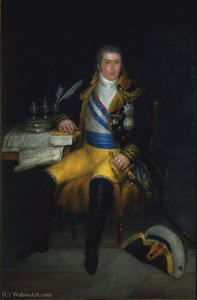
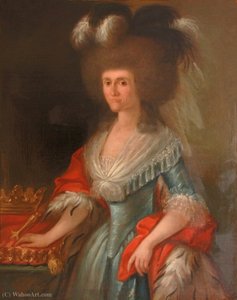
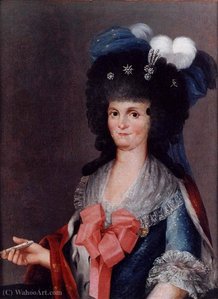
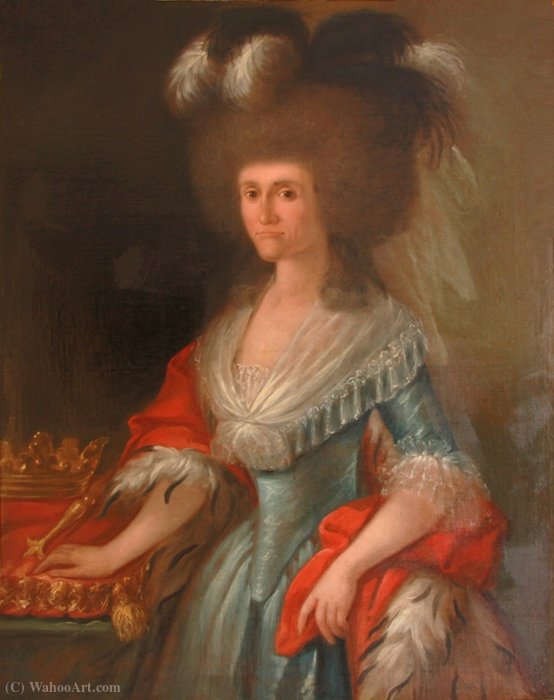
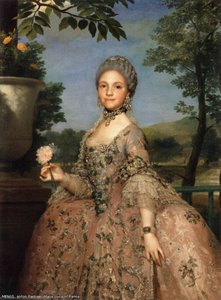
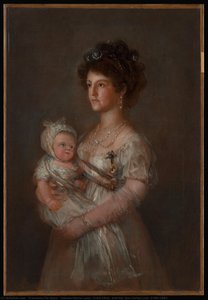
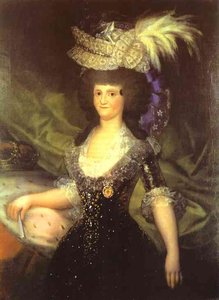
Portrait of María Luisa of Parma

 Read More
Hand Made Oil Reproduction
Hand-painted oil on canvas in your size and frame, made to order by our artists. ( Buy Print Buy Image)




P118B $10

P118H $10

P118W $10

P438Z $10

P508JH $12

P508YH $12

P805H $10

P805Z $10

P919BZ $10

P919G $10

P919XJ $10

P959ZH $10

P968JZ $12

W106C $8

W218G $10

W218JH $8

W218Y $10

W307PJ $10

W316G $10

W316PJ $8

W316Y $10

W398PJ $8

W4111J $10

W500HY $15

W500JH $15

W692G $12

W849H $8

W940BG $15

W953PJ $8




Pick from our preset sizes that match the artwork's original proportions.

You may enter your own dimensions to fit a specific frame or space. If your selected size does not match the original image's proportions, we will either crop the artwork or extend the painting with additional hand-painted elements. A digital mockup will be sent for your approval before production begins.
Please note that the on-screen preview does not reflect the actual cropping or extension. Only the mockup will accurately show the final composition.
While custom sizes are available, we recommend selecting a dimension from the predefined list to preserve the original proportions.
After order, ArtsDot.com team will email client for instructions and provide a mockup preview
Worldwide Delivery () in 3/4 weeks instead of standard 5 weeks. (16 August). No compromise on quality.

Free Worldwide Express Shipping

High-Quality Linen Canvas

Full Shipping Insurance

Customs Tax Refund Guarantee

True Color Matching Guarantee

60-Day Return Policy (Defects Only)

100% Money-Back Guarantee

Bulk Discount Offer
 Glass option is only available in size under 110 CM

Portrait of María Luisa of Parma
Reproduction Medium
Reproduction Size
-


Total Price
$ 263
Related Artworks
Artist Biography
A Neoclassical Voice of Enlightenment Spain
Antonio Carnicero y Mancio stands as a pivotal figure in Spanish art during the late Baroque and early neoclassical periods, embodying the intellectual fervor and artistic innovation characteristic of the Enlightenment. Born in Salamanca, Spain, in 1748, he descended from a family deeply steeped in artistic tradition. His father, Alejandro Carnicero, was a renowned sculptor who served the royal court of Charles III, fostering an environment that nurtured Antonio’s burgeoning talent from his earliest years. Alongside his brothers, Gregorio and Isidro—both accomplished artists in their own right—Antonio received an exceptional education that laid the groundwork for a prolific career spanning painting, printmaking, and theatrical design.
His formative training began at the Royal Academy of Fine Arts of San Fernando in Madrid, where he entered in 1758. It was here that he honed his technical skills under renowned instructors and absorbed the stylistic precepts of the neoclassical movement, which favored clarity, order, and classical ideals. Recognizing the necessity of an artistic pilgrimage to truly master his craft, Carnicero embarked on a transformative journey to Rome in 1766. Accompanied by his brother Isidro, he immersed himself in the vibrant artistic milieu of the papal city. Studying under masters such as Giovanni Battista Piranesi and Giuseppe Fabrizi profoundly shaped his aesthetic sensibilities, infusing his work with a sophisticated understanding of light, structure, and classical composition.
Mastery of Portraiture and Historical Narrative
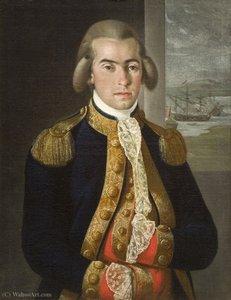
Upon returning to Madrid in 1766, Carnicero swiftly established himself as a respected artist, securing prestigious commissions for ecclesiastical institutions, aristocratic patrons, and the royal household. He possessed a remarkable ability to blend classical ideals with a distinct Spanish realism, producing works imbued with grace, elegance, and meticulous detail. His talent for portraiture is particularly noteworthy; he captured the essence of his subjects with a refined dignity that reflected the social hierarchies of the era. Notable examples include his Portrait of Teniente de Navío Emparan, which showcases naval authority through precise detail, and his Portrait of María Luisa of Parma, a work that exemplifies neoclassical elegance.
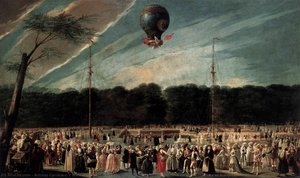
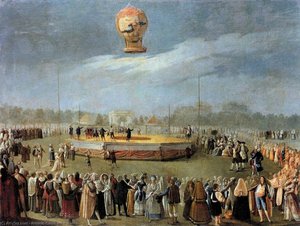
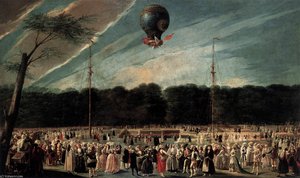
Beyond the intimate scale of portraiture, Carnicero demonstrated an extraordinary versatility in capturing the grander, more dynamic moments of his time. He was a master of visual storytelling, capable of documenting both the political figures of his day—such as Pedro Rodríguez de Campomanes—and the technological wonders of the age. One of his most captivating achievements is his depiction of the Ascent of the Monsieur Bouclé-s Montgolfier Balloon in the Gardens of Aranjuez. This oil painting serves as a breathtaking historical window, capturing the bustling energy and scientific wonder surrounding the early hot air balloon era, rendered with the rich textures and atmospheric depth characteristic of his mature style.
A Legacy of Versatility and Cultural Impact
The scope of Carnicero’s artistic output extended far beyond the confines of easel painting. He was a true polymath of the visual arts, contributing significantly to various decorative and illustrative disciplines. His career was marked by several key achievements that solidified his place in Spanish art history:
- Royal Collaborations: He worked on monumental tapestry cartoons commissioned by Charles IV for the royal palace, demonstrating his skill as a large-scale designer.
- Theatrical Innovation: As a decorator for Madrid's Teatro de la Cruz and Teatro del Principe, he helped shape the visual landscape of Spanish performing arts.
- Literary Illustration: Between 1780 and 1782, he provided exquisite illustrations for a deluxe printing of Don Quixote, bridging the gap between fine art and literature.
- Printmaking and Miniatures: He was recognized as an excellent miniaturist and engraver, showcasing a precision that allowed him to work across vastly different scales.
Ultimately, Antonio Carnicero y Mancio’s significance lies in his ability to act as a bridge between eras. His work captures the transition from the ornate flourishes of the Baroque to the disciplined clarity of Neoclassicism, all while documenting the profound societal shifts of 18th and 19th-century Spain. Through his portraits, genre scenes, and historical chronicles, he left behind a visual legacy that continues to offer invaluable insights into the spirit of the Enlightenment.
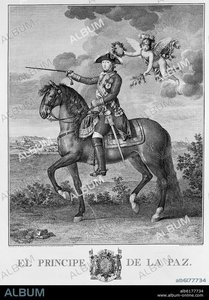
Antonio Carnicero y Mancio
1748 - 1814 , Spain
Quick Facts
- Artistic Movement Or Style: Neoclassical
- Artists Or Movements Influenced By This Artist: ['Romanticism']
- Artists Who Influenced This Artist:
- Alessandro Albacyni
- Francisco Bayeu
- Date Of Birth: January 10, 1748
- Date Of Death: 1814
- Full Name: Antonio Carnicero y Mancio
- Nationality: Spanish
- Notable Artworks:
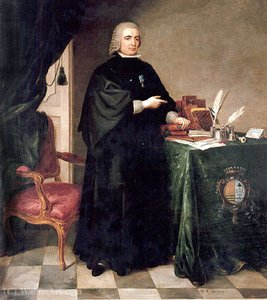
- Portrait of Pedro Rodríguez de Campomanes
- Ascent of the Monsieur Bouclé-s Montgolfier Balloon in the G....dens of Aranjuez
- Place Of Birth: Salamanca, Spain
Related Articles
18th Century Masters: 10 Artworks That Define an Era | ArtsDot
Journey through 18th century art! Explore 10 iconic paintings – from Rococo elegance to Neoclassical grandeur. Discover Fragonard, David & more. Find museum-quality reproductions and elevate your home decor on ArtsDot.com.
The Golden Age Reforged: Dramatic Realism & Religious Zeal in Spanish Baroque Art
Explore the dramatic world of Spanish Baroque art! Discover masters like Zurbarán & the powerful influence of religious zeal on painting techniques – a guide for collectors and enthusiasts.
Rafael de Penagos: A Study in Spanish Portraiture & Artistic Identity
Explore the life & art of Rafael de Penagos, a leading Spanish Art Deco illustrator. Discover his iconic 'Penagos Woman', commercial work, and lasting legacy. Learn about this pivotal figure in 20th-century Spanish art history.
Neoclassical Art: 10 Masterpieces That Shaped History |
Explore 10 defining Neoclassical masterpieces by David, Ingres & Canova. Discover the history, symbolism & artistry behind these iconic paintings and sculptures. Find museum-quality art reproductions at – elevate your home with timeless beauty.
José Gutiérrez Solana: A Chronicle of Spanish Society Through Expressionist Vision
Explore the captivating world of José Gutiérrez Solana, a pivotal Spanish Expressionist painter. Discover his haunting depictions of early 20th-century Spain, influenced by Goya & El Greco. Learn about his key works and lasting legacy.