 Preview
 Send
Send Share
Share
 Details

 Download
 Similars
 X-Ray
X-Ray Diaporama
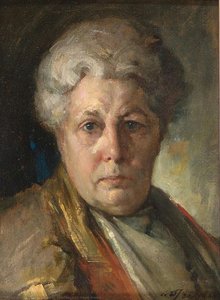
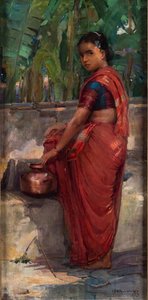
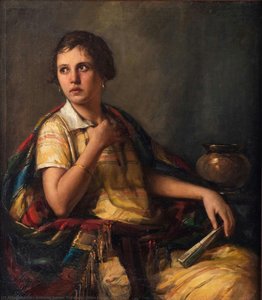
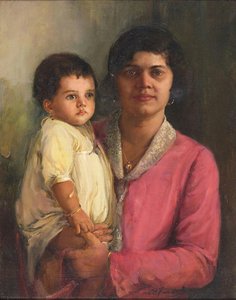
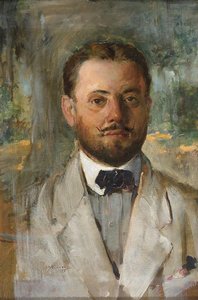
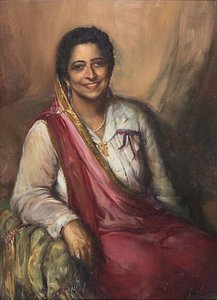
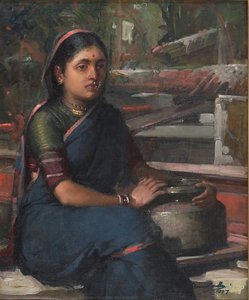
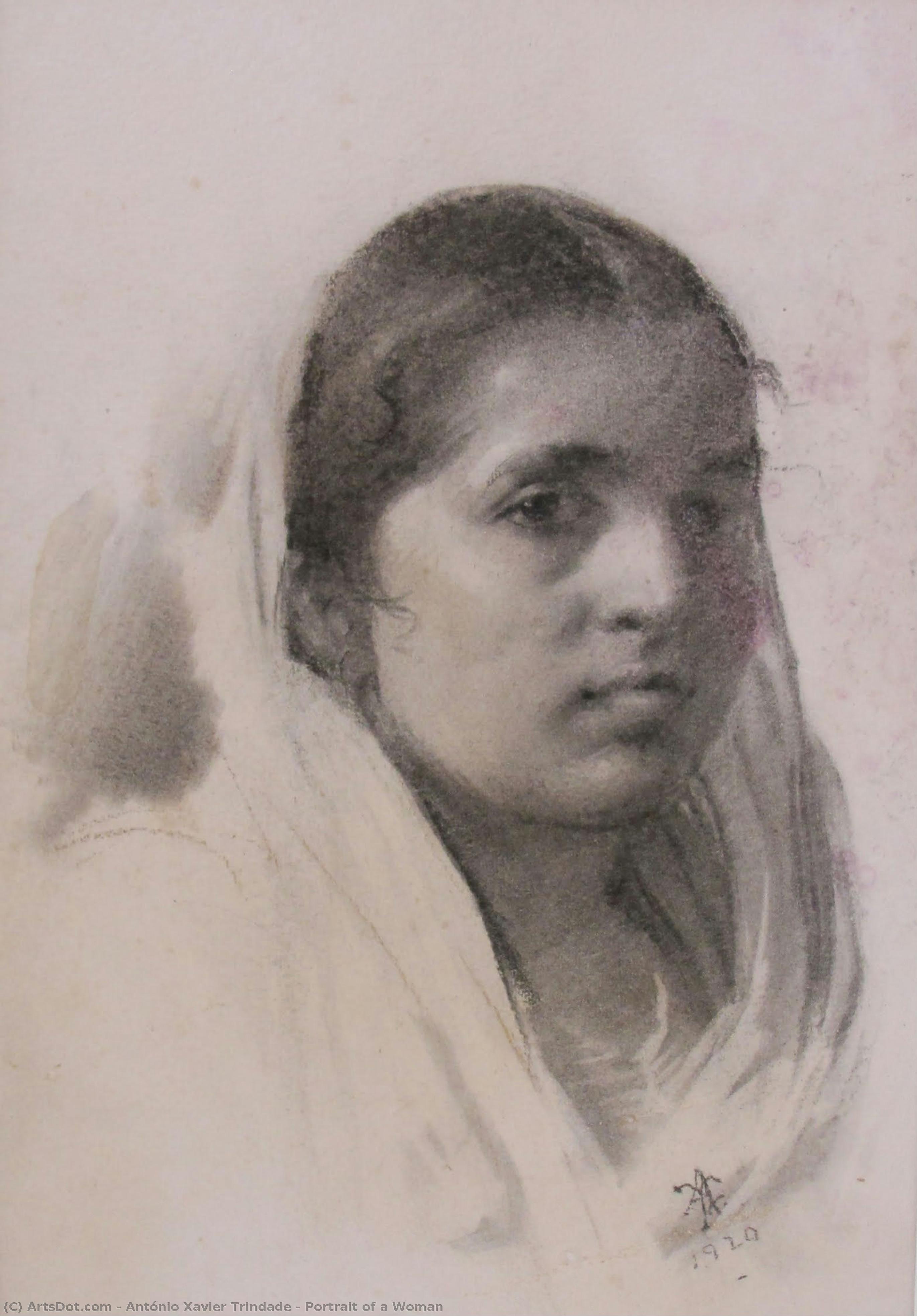
Portrait of a Woman
 Acrylic On Canvas
- WallArt
- Bombay School Realism
 1920
1920 63.0 x 50.0 cm
 Museu do Oriente
 Read More
Hand Made Oil Reproduction
Hand-painted oil on canvas in your size and frame, made to order by our artists. ( Buy Print Buy Image)




P118B $10

P118H $10

P118W $10

P438Z $10

P508JH $12

P508YH $12

P805H $10

P805Z $10

P919BZ $10

P919G $10

P919XJ $10

P959ZH $10

P968JZ $12

W106C $8

W218G $10

W218JH $8

W218Y $10

W307PJ $10

W316G $10

W316PJ $8

W316Y $10

W398PJ $8

W4111J $10

W500HY $15

W500JH $15

W692G $12

W849H $8

W940BG $15

W953PJ $8




Pick from our preset sizes that match the artwork's original proportions.

You may enter your own dimensions to fit a specific frame or space. If your selected size does not match the original image's proportions, we will either crop the artwork or extend the painting with additional hand-painted elements. A digital mockup will be sent for your approval before production begins.
Please note that the on-screen preview does not reflect the actual cropping or extension. Only the mockup will accurately show the final composition.
While custom sizes are available, we recommend selecting a dimension from the predefined list to preserve the original proportions.
After order, ArtsDot.com team will email client for instructions and provide a mockup preview
Worldwide Delivery () in 3/4 weeks instead of standard 5 weeks. (30 August). No compromise on quality.

Free Worldwide Express Shipping

High-Quality Linen Canvas

Full Shipping Insurance

Customs Tax Refund Guarantee

True Color Matching Guarantee

60-Day Return Policy (Defects Only)

100% Money-Back Guarantee

Bulk Discount Offer
 Glass option is only available in size under 110 CM

Portrait of a Woman
Reproduction Medium
Reproduction Size
-


Total Price
$ 263
Portrait of a Woman: A Study in Quiet Contemplation
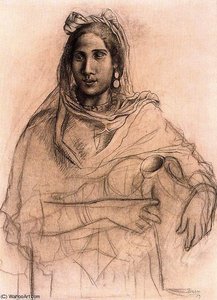
The artwork presents a striking monochrome portrait of a woman, executed with masterful charcoal technique on paper—a testament to António Xavier Trindade’s enduring legacy within the Bombay School movement. Dating back to 1920, this piece transcends mere representation; it embodies a profound exploration of emotion and psychological depth, reflecting the sensibilities of its time while retaining an arresting immediacy.- Composition & Framing: The portrait adheres to a classic bust format, centering the woman’s face within a carefully considered frame that subtly leans leftward—a compositional choice that lends a sense of balance yet invites contemplation.
- Line Work & Texture: Trindade's signature style is immediately recognizable through his expressive line work. Loose, gestural strokes delineate facial features and clothing with remarkable fluidity, punctuated by hatching and cross-hatching to build up tonal values and convincingly simulate the texture of skin and fabric—a technique honed during his formative years at Sir Jamsetjee Jeejeebhoy School of Art.
- Color Palette & Lighting: Stripped bare of color, the image relies entirely on shades of gray and white, creating a luminous atmosphere achieved through subtle gradations in tone. A gentle highlight illuminates the nose and cheekbones, suggesting a diffused light source from above—a deliberate artistic decision that enhances the portrait’s melancholic mood.
- Symbolism & Emotional Resonance: The woman's gaze holds an arresting stillness, conveying a palpable sense of introspection and quiet sadness. The draped scarf—likely symbolizing modesty or cultural heritage—further contributes to the artwork’s symbolic richness, prompting viewers to consider themes of identity and tradition.
Artist Biography & Context: António Xavier Trindade – A Pioneer of Bombay School Realism
António Xavier Trindade (1870-1935) emerged as a pivotal figure in Indian art history, marking the zenith of Bombay School realism. His early education at Sir Jamsetjee Jeejeebhoy School of Art instilled him with European naturalistic principles while simultaneously nurturing his innate understanding of Indian culture—a harmonious blend that would define his artistic vision for decades to come. Receiving the Mayo Silver Medal for artistic merit in 1892 solidified his reputation as a prodigious talent, establishing him as one of the foremost artists of his generation. His work consistently captured the essence of everyday life and human experience with remarkable sensitivity and precision.Technique & Materials: Charcoal on Paper – Mastering Light and Shadow
Trindade’s masterful execution is evident in his meticulous layering and blending of charcoal/graphite pencil strokes—a technique that allows for unparalleled control over tonal values and form. The artist skillfully utilizes varying line densities to convey textural nuances, differentiating between the smooth surface of skin and the denser weave of fabric. This dedication to craft speaks volumes about Trindade’s artistic philosophy: a commitment to capturing reality with unwavering honesty and emotional depth.Notable Reproductions & Artistic Influence
Reproductions of “Portrait of a Woman” are available at ArtsDot.com, offering collectors the opportunity to experience this iconic artwork firsthand. Its enduring appeal stems from Trindade’s ability to distill complex emotions into a deceptively simple composition—a testament to his artistic genius and a cornerstone of Bombay School aesthetics. Explore similar pieces by Trindade on our platform for inspiration!Related Artworks
![Stanze Vaticane - The School Of Athens (detail) [05] — Raphael, Renaissance](/media/artworks/images-thumb/ca/a9/caa9f9be8f76fbc617e906bfcb543fad.jpg)

![Festa Escolar No Ipiranga [school Festival At Ipiranga] — Agustín Salinas Y Teruel, Contemporary Realism](/media/artworks/images-thumb/ba/f8/baf818d408eaeb96cdda64ad06937b1b.jpg)
Artist Biography
A Life Etched in Light: The World of António Xavier Trindade
António Xavier Trindade, a name resonating with quiet power within the annals of Indian art history, was more than just a painter; he was a cultural bridge. Born in Sanguem, Goa, in 1870 to Catholic parents, his journey began amidst the lush landscapes and complex colonial tapestry of Portuguese India. This formative environment would indelibly shape his artistic vision, fostering a unique blend of Western academic training with an intrinsic understanding of Indian life and character. Trindade’s early promise led him to the prestigious Sir Jamsetjee Jeejeebhoy School of Art in Bombay, a pivotal institution that exposed him to European naturalism while simultaneously nurturing a growing generation of Indian artists. It was here, within those hallowed halls, that he honed his skills, mastering techniques that would later define his signature style and earn him accolades like the Mayo Silver Medal for artistic merit in 1892—a testament to his burgeoning talent.The Bombay School and a Rising Star
Trindade’s ascent within the Bombay art scene was swift and assured. Appointed as a teacher of drawing and painting at the Sir J.J. School of Art in 1898, he not only contributed to the education of future generations but also solidified his position as a leading figure in the burgeoning Bombay School. Later, assuming the role of Superintendent of the Reay Workshop of Art from 1914 to 1926, he further influenced artistic production and pedagogy. However, it wasn’t merely institutional recognition that marked his success; it was the captivating quality of his work itself. While initially embracing traditional portraiture and landscapes, Trindade gradually developed a style characterized by its realism, sensitivity to light, and an ability to capture the psychological depth of his subjects. He became known for portraying Indian women with a dignity and intimacy rarely seen in colonial-era art, offering glimpses into their lives beyond the confines of societal expectations. This earned him the affectionate title “Rembrandt of the East,” acknowledging both his technical mastery and his profound understanding of human emotion.Themes and Techniques: A Synthesis of Worlds
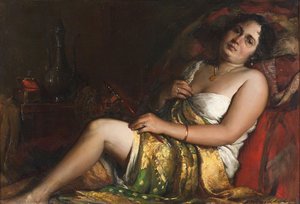
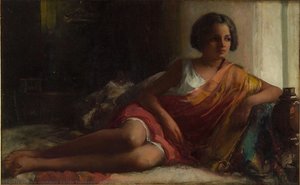
The 1920s witnessed a maturation in Trindade’s artistic expression, marked by an increasing focus on portraits, landscapes, and still lifes. His canvases became windows into the lives of his contemporaries—wealthy patrons, family members, and everyday individuals—each rendered with meticulous detail and a subtle yet powerful emotional resonance. Dolce Far Niente (Flora or Mother Reclining), awarded the Bombay Art Society’s gold medal in 1920, exemplifies this period; it is not merely a depiction of a woman at rest but an exploration of motherhood, serenity, and the quiet beauty of domestic life. Similarly, New Year’s Song (1928) and Hindu Girl (1930), recipients of the Governor’s prize, showcase his ability to capture cultural nuances and individual personalities with remarkable sensitivity. Trindade's technique was rooted in Western academic principles—a mastery of chiaroscuro, precise draftsmanship, and a sophisticated understanding of color theory—but he infused these elements with an Indian sensibility, creating a unique visual language that transcended stylistic boundaries. He wasn’t simply replicating what he had learned; he was transforming it, imbuing it with the spirit of his homeland.Legacy and Enduring Influence
Despite facing personal challenges—including declining health and eventual blindness in later life—Trindade continued to paint, supported by his daughter Ângela Trindade, herself a talented artist who carried on her father’s legacy. His work gained further recognition with an exhibition at the Festival of the Empire in Wembley, London, in 1934, bringing his art to an international audience. Today, António Xavier Trindade's paintings are treasured possessions of museums and private collectors alike, most notably represented by a significant collection held at the Fundação Oriente in Goa. The permanent exhibitions established there—including a dedicated showcase celebrating his 150th birthday in 2021—ensure that his artistic vision continues to inspire and captivate audiences for generations to come. His influence extends beyond mere aesthetic appreciation; he represents a pivotal moment in Indian art history, a time when artists began to forge their own identities, blending tradition with modernity and challenging the prevailing colonial gaze. Trindade’s life and work stand as a testament to the power of artistic expression to transcend cultural boundaries and illuminate the shared human experience.Notable Works
- Dolce Far Niente (Flora or Mother Reclining) – Bombay Art Society Gold Medal, 1920.
- New Year’s Song – Governor’s Prize, 1928.
- Hindu Girl – Governor’s Prize, 1930.
- Girl with a Vase - National Gallery of Modern Art, New Delhi.
- Self-portrait in Green- Fundação Oriente.
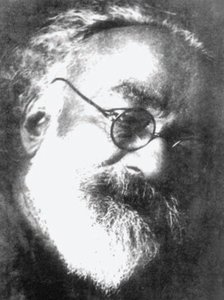
António Xavier Trindade
1870 - 1935 , India
Quick Facts
- Artistic Movement Or Style: Bombay School, Realism
- Date Of Birth: 1870
- Date Of Death: 1935
- Full Name: António Xavier Trindade
- Nationality: Portuguese
- Notable Artworks:
- Dolce Far Niente
- New Year’s Song
- Hindu Girl
- Girl with a vase
- Place Of Birth: Sanquém, India
Related Articles
Serene Masterpieces: 10 Artworks That Define Tranquility | ArtsDot
Find peace with 10 iconic artworks embodying tranquility! Explore Monet's water lilies, Van Gogh’s starry night & more. Discover the stories behind these serene masterpieces and bring calming art into your home with museum-quality reproductions from ArtsDot.com.
Raja Ravi Varma: Bridging Tradition & Modernity in 19th-Century Indian Art
Explore the life & art of Raja Ravi Varma, a pioneer who fused European techniques with Indian iconography. Discover his iconic paintings, lasting legacy, and influence on modern Indian art at ArtsDot.
The Nuances of Graphite: Exploring Emotional Depth & Technical Mastery in Pencil Drawing
Explore the captivating world of graphite drawing! Discover its rich history, master essential techniques like chiaroscuro, and learn how artists evoke emotion through this timeless medium. Expert insights for art enthusiasts.
Charcoal & Canvas: 10 Masterpieces of Shadow & Light |
Explore 10 iconic paintings dominated by charcoal tones – from Rembrandt's dramatic chiaroscuro to Goya’s expressive portraits. Discover the stories behind these masterpieces & find museum-quality art reproductions for your home at .
Tranquil Masterpieces: 10 Artworks for Serene Decor & Emotional Well-being |
Find serenity with our Top 10 tranquil artworks! Explore masterpieces by Monet, Van Gogh & more. Discover the stories behind calming Impressionist landscapes and peaceful Japanese art. Museum-quality reproductions at .