 Preview
 Send
Send Share
Share
 Details

 Download
 Similars
 X-Ray
X-Ray Diaporama
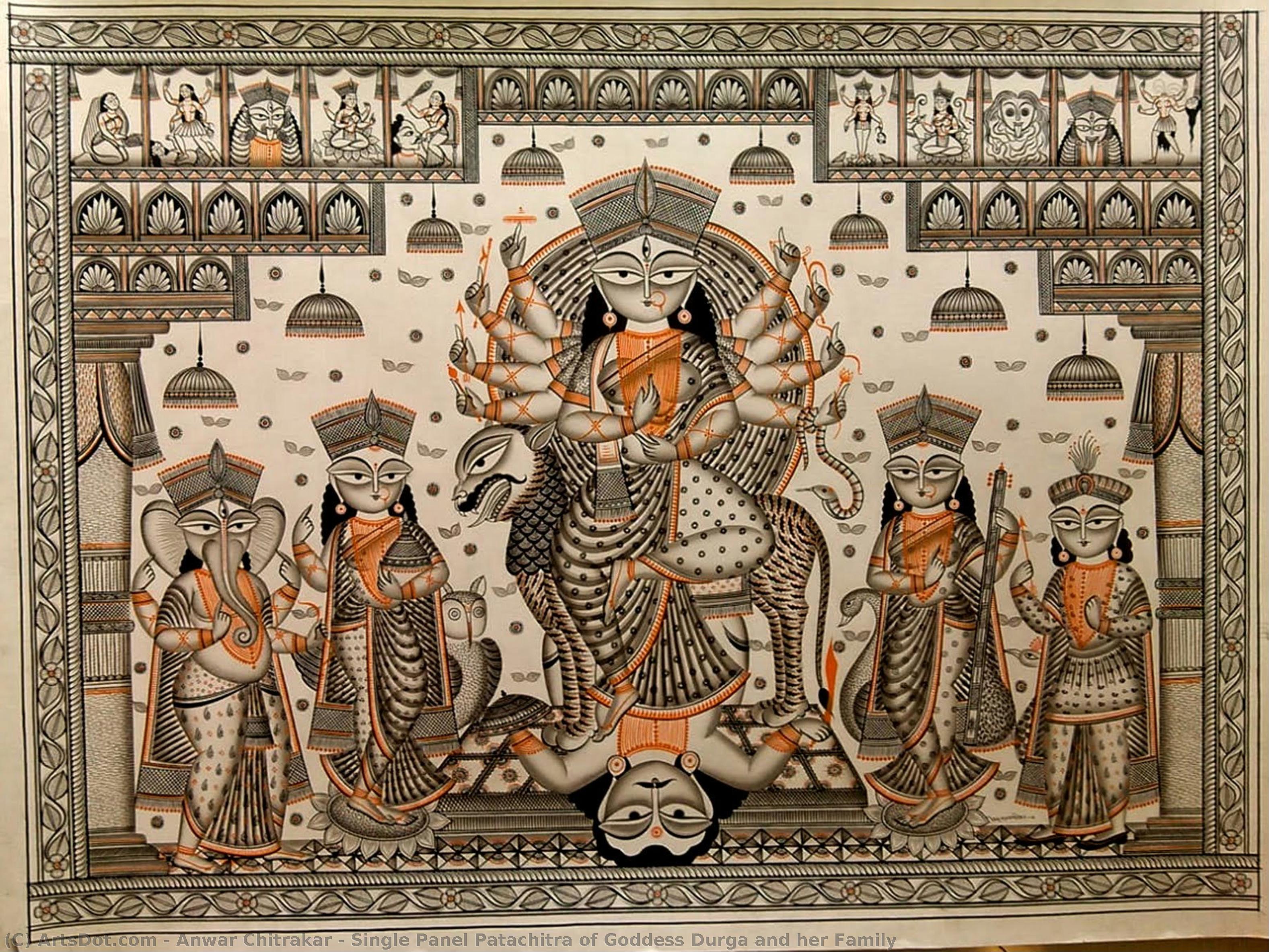
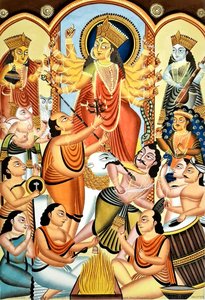
Single Panel Patachitra of Goddess Durga and her Family


 Read More
Hand Made Oil Reproduction
Hand-painted oil on canvas in your size and frame, made to order by our artists. ( Buy Print Buy Image)




P118B $10

P118H $10

P118W $10

P438Z $10

P508JH $12

P508YH $12

P805H $10

P805Z $10

P919BZ $10

P919G $10

P919XJ $10

P959ZH $10

P968JZ $12

W106C $8

W218G $10

W218JH $8

W218Y $10

W307PJ $10

W316G $10

W316PJ $8

W316Y $10

W398PJ $8

W4111J $10

W500HY $15

W500JH $15

W692G $12

W849H $8

W940BG $15

W953PJ $8




Pick from our preset sizes that match the artwork's original proportions.

You may enter your own dimensions to fit a specific frame or space. If your selected size does not match the original image's proportions, we will either crop the artwork or extend the painting with additional hand-painted elements. A digital mockup will be sent for your approval before production begins.
Please note that the on-screen preview does not reflect the actual cropping or extension. Only the mockup will accurately show the final composition.
While custom sizes are available, we recommend selecting a dimension from the predefined list to preserve the original proportions.
After order, ArtsDot.com team will email client for instructions and provide a mockup preview
Worldwide Delivery () in 3/4 weeks instead of standard 5 weeks. (22 August). No compromise on quality.

Free Worldwide Express Shipping

High-Quality Linen Canvas

Full Shipping Insurance

Customs Tax Refund Guarantee

True Color Matching Guarantee

60-Day Return Policy (Defects Only)

100% Money-Back Guarantee

Bulk Discount Offer
 Glass option is only available in size under 110 CM

Single Panel Patachitra of Goddess Durga and her Family
Reproduction Medium
Reproduction Size
-


Total Price
$ 263
Artwork Description
Anwar Chitrakar: Bridging Tradition and Contemporary Vision Through Pattachitra
The artwork "Single Panel Patachitra of Goddess Durga and her Family," created by Anwar Chitrakar in 2019, stands as a testament to the enduring power of Bengali folk art—specifically, the mesmerizing tradition of Pattachitra painting. More than just a depiction of Hindu iconography, this piece embodies a profound connection to centuries-old storytelling practices and devotional symbolism, reflecting Chitrakar’s commitment to preserving artistic heritage while injecting it with a vibrant contemporary sensibility.The Artistry of Tradition: Roots in Kalighat and Beyond
Chitrakar's artistic foundation rests firmly upon the influence of Kalighat painting, originating in Kolkata during the late 19th century. Like his predecessor Amar Chitrakar, he draws inspiration from this distinctive style characterized by simplified forms, bold outlines, and a deliberate rejection of academic realism. This stylistic choice isn’t merely aesthetic; it's rooted in the Kalighat tradition’s intention to communicate religious narratives directly to the masses—a practice that continues to inform Chitrakar’s approach. The artist skillfully employs natural pigments derived from local flora and fauna, mirroring the ethos of Pattachitra itself – a craft deeply intertwined with regional culture and ecological awareness.A Narrative Tapestry: Durga's Family Embodied
The central image portrays Goddess Durga—a formidable warrior deity revered for vanquishing evil—seated atop a majestic horse, symbolizing strength and divine dominion. Surrounding her are representations of Lakshmi (prosperity), Saraswati (knowledge), Kartik (time), and Ganesha (wisdom)—each accompanied by their respective mounts—creating a dynamic tableau that encapsulates the Hindu cosmos. The composition is executed with meticulous detail, highlighting Chitrakar’s mastery of traditional techniques. Each stroke contributes to the narrative unfolding across the scroll, inviting viewers into a realm of mythic grandeur and spiritual contemplation.Symbolism Illuminated: Colors, Lines, and Sacred Stories
The artwork's palette utilizes vibrant hues—primarily reds, yellows, and greens—reflecting the auspicious colors associated with Durga Puja celebrations in West Bengal. These colors aren’t merely decorative; they carry symbolic significance, representing courage, purity, and fertility – qualities central to Hindu beliefs. Furthermore, Chitrakar’s use of bold lines emphasizes the narrative urgency inherent in Pattachitra storytelling. The artist's deliberate simplification of forms ensures that the core message—the triumph of good over evil—resonates powerfully with audiences across generations.Emotional Resonance: A Window into Bengali Spirituality
Ultimately, “Single Panel Patachitra of Goddess Durga and her Family” transcends mere visual representation; it evokes a palpable sense of reverence and devotion. The artwork speaks to the enduring human desire for narratives that illuminate moral truths and inspire spiritual aspiration. Reproductions crafted by ArtsDot.com aim to capture this essence—allowing collectors and interior designers alike to experience the beauty and depth of Bengali folk art within their own spaces, fostering appreciation for a tradition that continues to thrive in the 21st century.Related Artworks


Artist Biography
The Living Lineage of Anwar Chitrakar
In the vibrant heart of West Bengal, where the air is thick with the scent of ancient stories and the rhythmic pulse of tradition, the art of Anwar Chitrakar breathes life into the past. Born in 1980 in the village of Naya, within the Pingla region, Chitrakar is far more than a contemporary painter; he is a custodian of a fading visual language. His journey began not in an academic studio, but under the watchful and guiding eyes of his father, the celebrated Amar Chitrakar. This early immersion into the world of Pattachitra—the traditional scroll painting of Bengal—provided him with a foundation rooted in the very soil of his heritage. As a member of the Patua community, an itinerant group of storytellers who use art to communicate through song and pigment, Chitrakar carries a lineage that transforms simple canvas into a stage for the divine and the mundane alike.
The essence of Chitrakar’s mastery lies in his seamless command over the Kalighat style, a tradition that emerged from the bustling environs of Kolkata's Kali temple. This technique demands a sophisticated reduction of detail, favoring bold, sweeping outlines and a symbolic economy of form that captures the soul of a subject rather than its mere physical likeness. While many artists struggle to bridge the gap between antiquity and modernity, Chitrakar thrives in this intersection. He possesses a unique ability to take the 19th-century aesthetic—characterized by its expressive color palettes and fluid strokes—and infuse it with a contemporary vitality. His work often utilizes natural pigments like turmeric and marigold, yet he is not afraid to experiment with modern mediums such as Italian paper or canvas, ensuring that the ancient pulse of Pattachitra beats strongly in a modern context.
Narrative Vision and Social Resonance
To gaze upon a Chitrakar painting is to enter a world where mythology and reality are inextricably entwined. His canvases serve as windows into the Hindu pantheon, featuring the fierce grace of Goddess Durga and the legendary tales of Krishna and Rama. Yet, his vision extends far beyond the celestial. One of the most profound aspects of his artistry is his commitment to social commentary. Drawing inspiration from the conversations he encounters while walking through village life, Chitrakar weaves contemporary struggles into his traditional framework. He addresses pressing global and local issues with a subtle, often satirical touch, exploring themes such as:
- Environmental degradation and the changing landscape of rural India.
- The complexities of social identity, including narratives surrounding transgender lives and surrogate motherhood.
- The intimate human condition, capturing the tender bonds of maternal love and the nuances of everyday village interactions.
- The intersection of faith and folklore, where religious iconography meets the lived experience of the community.
This duality—the ability to depict a deity with the same reverence and stylistic precision as a social critique—is what elevates his work from mere folk art to significant contemporary fine art. He does not merely replicate the past; he uses it as a lens to examine the present.
A Legacy of Global Recognition
The impact of Anwar Chitrakar’s work has resonated far beyond the borders of West Bengal, earning him a place on the international stage. His career is marked by a series of prestigious milestones that validate his role as a modern master of the Patua tradition. His ability to translate local Bengali narratives into a universal visual language has led to his works being featured in esteemed collections, most notably at the Victoria & Albert Museum in London and within the vibrant halls of the Mumbai International Airport. These placements signify that his art is not just a regional treasure, but a vital contribution to the global contemporary art dialogue.
Throughout his decades-long practice, Chitrakar has participated in significant international exhibitions, including the Berlin Festival and the Namaste India Festival in Japan. His accolades, such as receiving honors from the Rabindra Bharati University and winning a National Award in 2006, underscore his technical excellence and his importance to the preservation of Indian heritage. By signing his works—a rare practice among traditional Patua artists—he asserts his individual identity as an artist within a collective tradition, marking a definitive moment in the evolution of Kalighat painting. Through his hands, the ancient scrolls of the Patuas continue to unfurl, telling stories that are as much about our shared future as they are about our storied past.
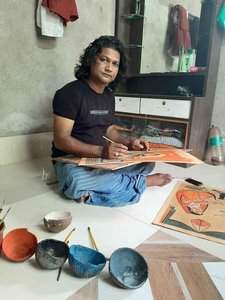
Anwar Chitrakar
1980 - , India
Quick Facts
- Artistic Movement Or Style: Pattachitra & Kalighat Painting
- Artists Who Influenced This Artist: ['Amar Chitrakar']
- Date Of Birth: 1980
- Full Name: Anwar Chitrakar
- Nationality: Indian
- Notable Artworks:
- Single Panel Patachitra of Goddess Durga and Worshippers
- Painting of Kamale Kamini
- Place Of Birth: Naya, India
Related Articles

Echoes of Tradition: Exploring the Enduring Legacy of Folk Art Movements
Explore the rich history of folk art movements worldwide! Discover definitions, notable artists, and the enduring legacy of this captivating tradition. Expert insights & high-quality reproductions at ArtsDot.
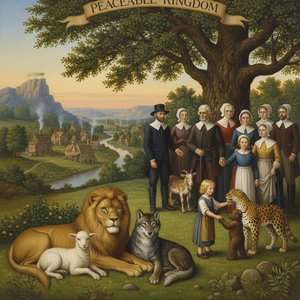
Edward Hicks’ ‘Peaceable Kingdom’: American Folk Art & the Shaping of a National Identity
Explore the profound symbolism & historical context of Edward Hicks’ ‘Peaceable Kingdom.’ Discover how this iconic American folk art masterpiece reflects Quaker values and shaped a nation's identity. Learn more at ArtsDot.
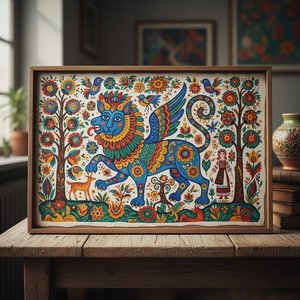
Maria Primachenko: A Legacy of Ukrainian Folk Art & Naive Expression
Discover the captivating world of Maria Primachenko, Ukraine's celebrated naive artist. Explore her vibrant paintings, unique style, and enduring legacy with ArtsDot – your source for authentic art insights & reproductions.
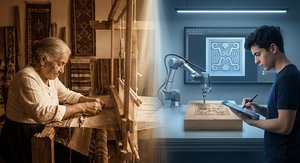
Echoes of Heritage: Continuity & Innovation in Traditional Art Forms
Explore the rich history of cultural heritage & folk art traditions worldwide! Discover inspiring artists, preservation efforts, and museum collections. Find handmade oil paintings & expert insights at ArtsDot.
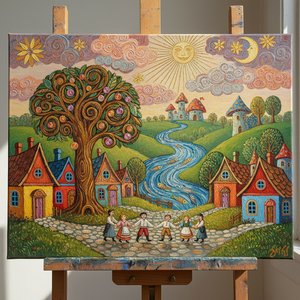
The Unconventional Vision: Exploring the Characteristics, History & Enduring Appeal of Naïve Art
Explore the captivating world of naïve art! Discover its history, characteristics, key artists & collecting tips from ArtsDot's experts. Find your perfect piece today.