 Preview
 Send
Send Share
Share
 Details

 Download
 Similars
 X-Ray
X-Ray Diaporama
Gentle Friend


 Read More
Hand Made Oil Reproduction
Hand-painted oil on canvas in your size and frame, made to order by our artists. ( Buy Print Buy Image)




P118B $10

P118H $10

P118W $10

P438Z $10

P508JH $12

P508YH $12

P805H $10

P805Z $10

P919BZ $10

P919G $10

P919XJ $10

P959ZH $10

P968JZ $12

W106C $8

W218G $10

W218JH $8

W218Y $10

W307PJ $10

W316G $10

W316PJ $8

W316Y $10

W398PJ $8

W4111J $10

W500HY $15

W500JH $15

W692G $12

W849H $8

W940BG $15

W953PJ $8




Pick from our preset sizes that match the artwork's original proportions.

You may enter your own dimensions to fit a specific frame or space. If your selected size does not match the original image's proportions, we will either crop the artwork or extend the painting with additional hand-painted elements. A digital mockup will be sent for your approval before production begins.
Please note that the on-screen preview does not reflect the actual cropping or extension. Only the mockup will accurately show the final composition.
While custom sizes are available, we recommend selecting a dimension from the predefined list to preserve the original proportions.
After order, ArtsDot.com team will email client for instructions and provide a mockup preview
Worldwide Delivery () in 3/4 weeks instead of standard 5 weeks. (27 August). No compromise on quality.

Free Worldwide Express Shipping

High-Quality Linen Canvas

Full Shipping Insurance

Customs Tax Refund Guarantee

True Color Matching Guarantee

60-Day Return Policy (Defects Only)

100% Money-Back Guarantee

Bulk Discount Offer
 Glass option is only available in size under 110 CM

Gentle Friend
Reproduction Medium
Reproduction Size
-


Total Price
$ 263
Artwork Description
Gentle Friend - A Dialogue Between Perception and Architecture
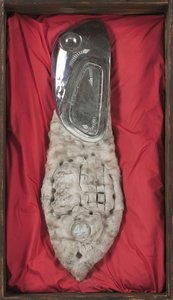
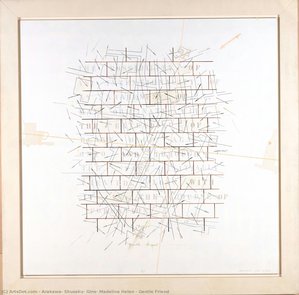
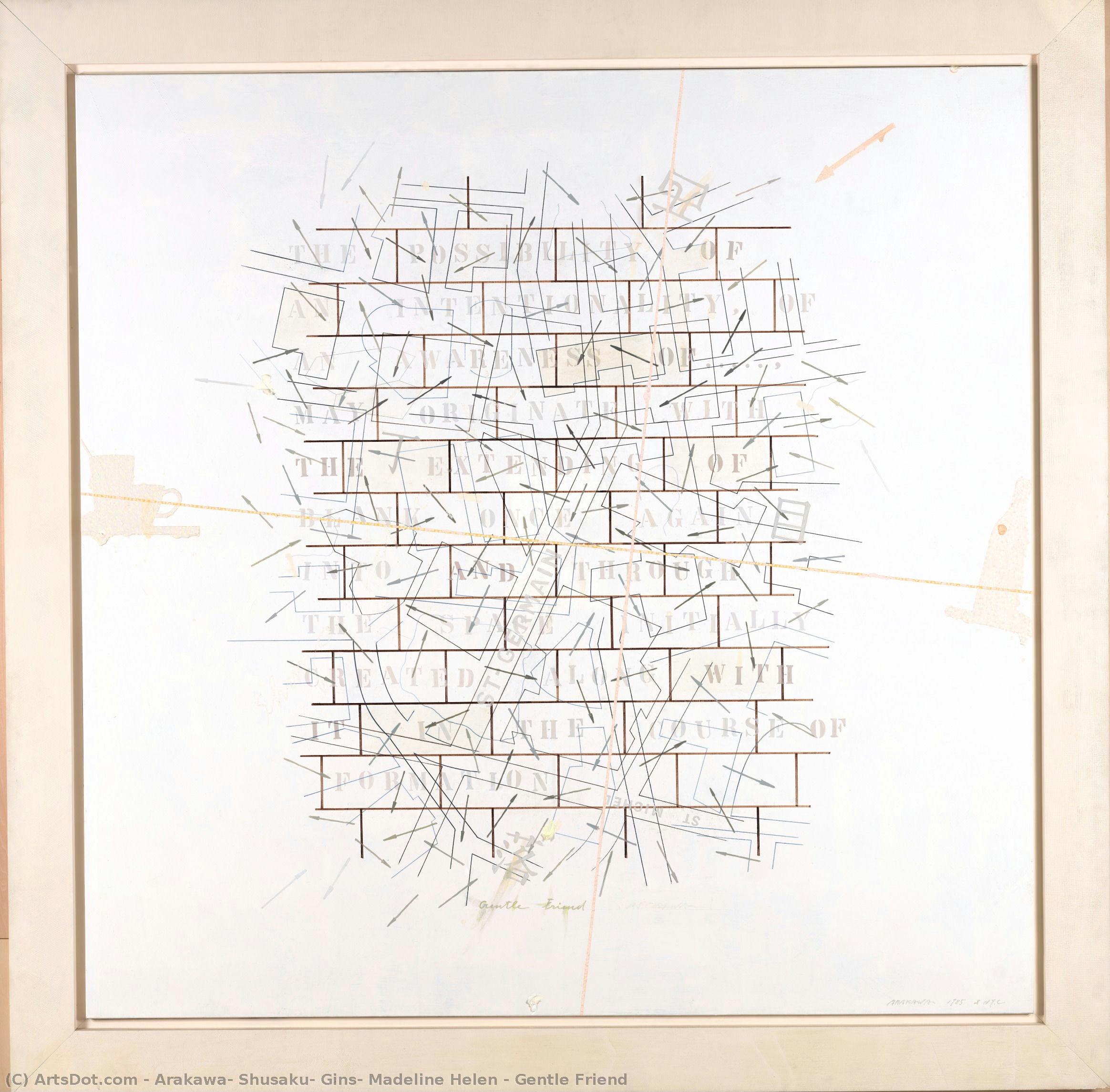
Born in Nagoya in 1936, Shusaku Arakawa was a leading contemporary artist in Japan. While participating in avant-garde movement Neo Dada Organizers in Tokyo in 1960, Arakawa released three-dimensional works in the shape of coffin. He emigrated to New York by himself in 1961 and met his life time partner Madeline Gins. Arakawa received attention through the Diagrammatic Paintings series, where words and signs were placed on the three-dimensional flat paintings, and earned an international reputation though the Mechanism of Meaning in the 1970s. In the 1990s, he embarked on architectural works with Gins as a test for Reversible Destiny, a concept experiment to reverse humans’ destiny of death, and completed Site of Reversible Destiny - Yoro in Gifu in 1995 and the Reversible Destiny Lofts - Mitaka in Tokyo in 2005. The title Gentle Friend refers to Shuzo Takiguchi, the poet and art critic who encouraged Arakawa to visit the United States and introduced Marcel Duchamp in New York. Viewers find complicated diagram and objects that look like alphabet and kanji characters under the black lines of rectangles. Arakawa drew the map showing locations where he and Takiguchi acted together on the painting.- Subject Matter & Conceptual Framework: “Gentle Friend” isn’t merely a visual composition; it's an exploration of fundamental questions concerning human perception and the potential for altering our understanding of existence. Inspired by Leonardo da Vinci’s scientific investigations, Arakawa and Gins sought to challenge conventional artistic representations, prioritizing conceptual depth over literal depiction.
- Style & Influences: The artwork embodies the spirit of Neo Dada and Diagrammatic Painting movements—a deliberate rejection of traditional aesthetics in favor of experimental forms. Its influence extends beyond visual art, drawing parallels with architectural endeavors aimed at reshaping human consciousness – a direct response to Gins’s fascination with Reversible Destiny.
- Technique & Material Considerations: Crafted primarily using acrylic paint on canvas, “Gentle Friend” showcases meticulous line drawing—a technique that emphasizes precision and contributes to the artwork's distinctive visual texture. The subtle incorporation of orange and light brown hues adds warmth and depth to the predominantly white background.
- Composition & Visual Elements: Dominating the canvas is a complex network of black lines arranged in irregular shapes, creating a sense of density and disrupting any semblance of geometric order. These lines intersect to form rectangular forms that subtly suggest fragmented text or symbols—a deliberate nod to linguistic exploration.
- Symbolic Resonance & Emotional Impact: The interwoven lines can be interpreted as representing a map charting the collaborative journey of Arakawa and Takiguchi, symbolizing interconnected ideas and fostering contemplation. Ultimately, “Gentle Friend” invites viewers to consider the profound implications of confronting mortality and reimagining our relationship with time.
Historical Context & Artistic Dialogue
The artwork’s genesis lies in a pivotal moment—Arakawa's invitation to Gins to explore New York and encounter Duchamp. This transatlantic exchange fueled their artistic vision, propelling them toward groundbreaking explorations of architectural design and conceptual art. The collaboration solidified Arakawa and Gins’s commitment to questioning established paradigms and pushing the boundaries of artistic expression.Detailed Analysis: Line Drawing & Spatial Illusion
The artwork's core is its masterful line drawing technique—a deliberate choice that prioritizes visual precision. The thin, continuous lines vary in direction, generating a dynamic effect that subtly disrupts spatial perception. These lines contribute to the overall illusion of depth, creating an immersive experience for the observer.Color Palette & Texture: Subtle Hints of Warmth
Despite its minimalist aesthetic, “Gentle Friend” benefits from carefully considered color choices—primarily white complemented by muted shades of orange and light brown. These hues introduce warmth into the composition, enhancing visual harmony and inviting contemplation.Related Artworks
Artist Biography
Shusaku Arakawa & Madeline Gins: A Collaborative Journey
Early Life and Background
- Shusaku Arakawa was born on July 6, 1936, in New York City. He initially pursued a career in medicine before turning to art.
- Madeline Gins (born Madeline Helen Gins) was an American poet, writer, and artist. Her diverse background significantly influenced her collaborative work with Arakawa.
Artistic Collaboration & Development
- Arakawa and Gins began their artistic collaboration in the 1960s, forging a unique partnership that spanned painting, sculpture, architecture, and performance art.
- Their early work challenged conventional notions of perception and representation, often incorporating linguistic puzzles and philosophical inquiries.
- They moved beyond traditional mediums to explore interactive environments and architectural designs intended to alter human consciousness.
Key Influences
- The pair drew inspiration from a wide range of sources including Leonardo da Vinci’s scientific investigations, Albert Einstein’s theories of relativity, and the philosophical writings of Ludwig Wittgenstein.
- They were also influenced by early 20th-century avant-garde movements like Dada and Surrealism, particularly their rejection of traditional artistic norms.
- The exploration of perception was a constant thread throughout their work, informed by studies in neuroscience and psychology.
Major Works & Artistic Style
- Notable works include the “Another Cemetery” series, which explores themes of mortality and memory through abstract imagery.
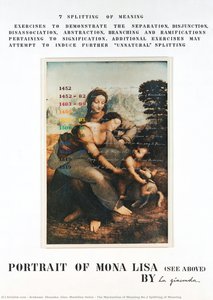
- “The Machanism of Meaning No. 2 Splitting of Meaning” exemplifies their interest in linguistic deconstruction and visual ambiguity.
- Their architectural projects, such as the “Reversible Destiny Lofts,” are designed to disrupt habitual patterns of movement and perception.
- Arakawa and Gins’ style is characterized by its conceptual rigor, intellectual depth, and willingness to challenge artistic boundaries.
The Reversible Destiny Foundation & Architectural Research
- In the 1990s, Arakawa and Gins founded the Reversible Destiny Foundation and the Architectural Body Research Foundation.
- These organizations facilitated interdisciplinary research involving biologists, neuroscientists, physicists, and medical professionals.
- Their goal was to investigate the relationship between the body, environment, and consciousness, leading to innovative architectural designs aimed at prolonging life and enhancing sensory experience.
Historical Significance & Legacy
- Arakawa and Gins’ work represents a significant contribution to conceptual art and experimental architecture.
- They challenged conventional notions of artistic authorship, creating a truly collaborative practice that blurred the boundaries between disciplines.
- Their exploration of perception, mortality, and the human condition continues to resonate with artists, architects, and thinkers today.
- Their legacy lies in their commitment to pushing the limits of art and using it as a tool for philosophical inquiry and social transformation.
Death & Remembrance
- Shusaku Arakawa passed away on May 19, 2010. Madeline Gins continued their collaborative projects until her own passing in 2014.
- Their work remains influential and is exhibited in galleries and museums worldwide.
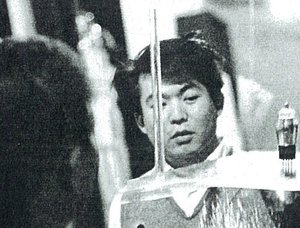
arakawa, shusaku; gins, madeline helen
1936 - 2010 , United States of America
Quick Facts
- Birth Date: July 6, 1936 (Arakawa)
- Birth Place: New York, United States of America
- Death Date: May 19, 2010 (Arakawa)
- Influenced By: Leonardo da Vinci, Albert Einstein, Ludwig Wittgenstein
- Movement: Conceptual Art, Neo-Dada, Reversible Destiny
- Name: Shusaku Arakawa & Madeline Gins
- Nationality: American/Japanese
- Notable Works: Another Cemetery (Series), The Machanism of Meaning No.2 Splitting of Meaning, Gentle Friend
Related Articles

Geometric Abstraction's 10 Defining Masterpieces | Art for Your Home - ArtsDot
Explore 10 defining masterpieces of Geometric Abstraction! Discover Kandinsky, Mondrian & Malevich’s iconic works. Find museum-quality art reproductions and curated decor ideas to elevate your home at ArtsDot.com.
Designing Your Forever Space: An Expert Guide to Elevating Your New Home with Neo-Abstract Art
Elevate your first home with the bold energy of Neo-Abstract Art. Our expert guide helps newlyweds master modern geometric compositions, textures, and color palettes. Discover how custom hand-painted oils and multi-panel designs can transform your new space into a curated masterpiece.

Kandinsky's Masterpieces: 25 Paintings That Define Abstract Art | ArtsDot
Journey through Wassily Kandinsky's 25 most iconic abstract paintings. Explore his revolutionary use of color, form & spiritual expressionism. Find museum-quality Kandinsky reproductions and elevate your home decor with ArtsDot.com. Discover all masterpieces on ArtsDot.com!
Beyond Form & Color: Geometric Abstraction's Evolution in 20th/21st Century Art
Explore the evolution of geometric abstraction from Cubism to contemporary art. Discover key artists like Malevich & Mondrian, investment insights, and expert collecting advice at ArtsDot.
Beyond Form & Color: Geometric Abstraction's Enduring Legacy in Art History
Explore the captivating world of geometric abstraction! Discover its origins, key artists like Malevich & Mondrian, and why this movement remains highly valued by art collectors today. Expert insights at ArtsDot.