 Preview
 Send
Send Share
Share
 Details

 Download
 Similars
 X-Ray
X-Ray Diaporama
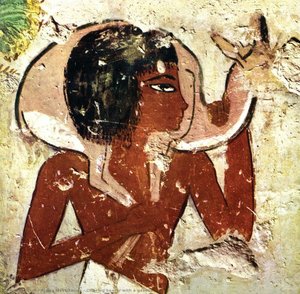
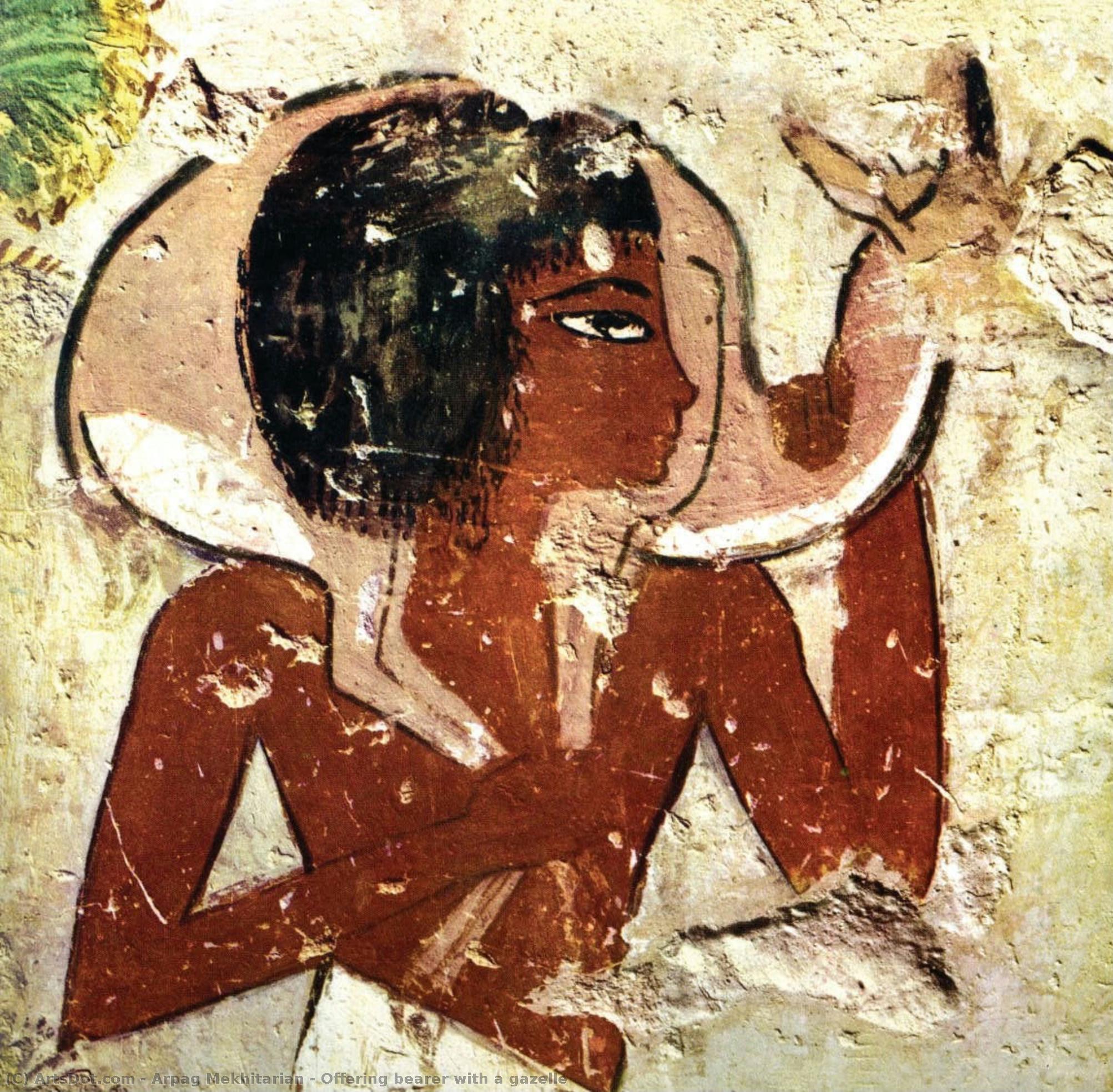
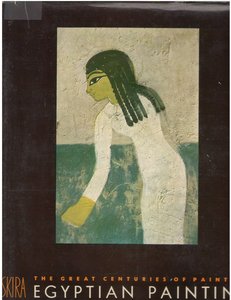
Offering bearer with a gazelle


 Read More
Hand Made Oil Reproduction
Hand-painted oil on canvas in your size and frame, made to order by our artists. ( Buy Print Buy Image)




P118B $10

P118H $10

P118W $10

P438Z $10

P508JH $12

P508YH $12

P805H $10

P805Z $10

P919BZ $10

P919G $10

P919XJ $10

P959ZH $10

P968JZ $12

W106C $8

W218G $10

W218JH $8

W218Y $10

W307PJ $10

W316G $10

W316PJ $8

W316Y $10

W398PJ $8

W4111J $10

W500HY $15

W500JH $15

W692G $12

W849H $8

W940BG $15

W953PJ $8




Pick from our preset sizes that match the artwork's original proportions.

You may enter your own dimensions to fit a specific frame or space. If your selected size does not match the original image's proportions, we will either crop the artwork or extend the painting with additional hand-painted elements. A digital mockup will be sent for your approval before production begins.
Please note that the on-screen preview does not reflect the actual cropping or extension. Only the mockup will accurately show the final composition.
While custom sizes are available, we recommend selecting a dimension from the predefined list to preserve the original proportions.
After order, ArtsDot.com team will email client for instructions and provide a mockup preview
Worldwide Delivery () in 3/4 weeks instead of standard 5 weeks. (17 August). No compromise on quality.

Free Worldwide Express Shipping

High-Quality Linen Canvas

Full Shipping Insurance

Customs Tax Refund Guarantee

True Color Matching Guarantee

60-Day Return Policy (Defects Only)

100% Money-Back Guarantee

Bulk Discount Offer
 Glass option is only available in size under 110 CM

Offering bearer with a gazelle
Reproduction Medium
Reproduction Size
-


Total Price
$ 263
Related Artworks
Artist Biography
A Life Bridging Continents and Eras
The story of Arpag Mekhitarian is one of profound cultural synthesis, a life shaped by the movement of peoples and the enduring echoes of ancient civilizations. Born in 1911 in Tanta, Egypt, to an Armenian family part of the vast diaspora, Mekhitarian’s early years were steeped in the vibrant atmosphere of the Nile. However, the tides of history pulled him toward Europe; following the passing of his father in 1925, he emigrated to Belgium with his mother and brothers. This transition from the sun-drenched landscapes of Egypt to the scholarly halls of Europe did not sever his connection to his birthplace but rather provided the intellectual distance necessary to study it with unparalleled precision. It was in Belgium that his destiny intertwined with the study of the Orient, as he began to weave together his innate familiarity with Arabic culture and his rigorous academic training.
His intellectual awakening was ignited by a chance encounter with the titans of Belgian Egyptology. As a young student, Mekhitarian’s burgeoning passion for the civilization of the Nile caught the attention of Maurice Stracmans, who encouraged him to master hieroglyphs. This path led him directly into the orbit of Jean Capart, the legendary director of the Queen Elizabeth Egyptological Foundation. Under Capart’s mentorship, Mekhitarian transitioned from a curious student to a vital collaborator, eventually rising through the ranks of the Foundation to serve as its Secretary-General. His life became a bridge between the archaeological reality of the Egyptian sands and the preservationist efforts of European institutions, making him a central figure in the dissemination of Pharaonic knowledge to the Western world.
The Scholar’s Eye: Artistry through Documentation
While often categorized as an Egyptologist and historian, Mekhitarian’s contribution to the art world was uniquely profound because he viewed ancient artifacts not merely as archaeological specimens, but as masterpieces of human expression. His work was characterized by a deep reverence for the aesthetic intent of the ancient creators. He possessed a rare ability to decode the symbolic language of funerary iconography and mural decoration, treating every pigment and line as a vital component of a larger theological narrative. This perspective allowed him to publish seminal works such as Egyptian Painting, a text that remains a cornerstone for anyone seeking to understand the visual vocabulary of the Old Kingdom and beyond.
His expertise was never confined to a single era or medium; rather, it expanded into a rich tapestry of Orientalist studies. As a curator of Islamic Art at the Musées Royaux d'Art et d'Histoire in Brussels, he applied the same meticulous scrutiny to the intricate patterns of Islamic motifs as he did to the rigid canons of Egyptian art. His scholarly reach extended to the study of papyrology and the complex histories of the Ilkhanid movement, demonstrating a versatile intellect capable of navigating the nuances of different cultural epochs. Through his research, he breathed life into the silent objects of the past, transforming them from museum relics into vibrant witnesses of human history.
A Lasting Legacy of Cultural Preservation
The historical significance of Arpag Mekhitarian lies in his role as a custodian of memory. Throughout his long career, which spanned much of the twentieth century, he worked tirelessly to ensure that the artistic achievements of Egypt and the broader Middle East were documented with both scientific accuracy and aesthetic appreciation. His involvement in Belgian excavations, particularly at sites like Elkab, provided the raw material for his profound insights into the lives and beliefs of ancient peoples. He did not merely record history; he interpreted it, providing a voice to the artisans of antiquity whose names had long been lost to time.
Mekhitarian’s legacy is found in the enduring authority of his publications and the continued relevance of his research in modern Egyptology. His life work stands as a testament to the power of interdisciplinary study—where the skills of a linguist, the precision of a historian, and the soul of an art lover converge. By bridging the gap between the Armenian diaspora, Egyptian heritage, and Belgian academia, he created a unique intellectual space where the ancient and the modern could meet, ensuring that the splendor of the Nile’s artistic legacy would continue to inspire generations of scholars and art enthusiasts alike.
Arpag Mekhitarian
1911 - 2004 , Egypt
Quick Facts
- Artistic Movement Or Style: Orientalism & Egyptian Art
- Artists Or Movements Influenced By This Artist: ['Frederick Arthur Bridgman']
- Artists Who Influenced This Artist:
- Jean Capart
- Marcelle Werbrouck
- Date Of Birth: 1911
- Date Of Death: 2004
- Full Name: Arpag Mekhitarian
- Nationality: Egyptian-Belgian
- Notable Artworks: ['Offering Bearer with Gazelle']
- Place Of Birth: Ṭanṭā, Egypt
Related Articles

The Fresco as Family Legacy: Preserving Heritage Through Wall Art
Explore the rich history & enduring legacy of fresco painting. Discover how to preserve family heritage through stunning wall art. Expert insights & restoration guidance.
The Enduring Legacy of Fresco: Technique, History & Artistic Expression Across Cultures
Explore the rich history & enduring legacy of fresco painting! Discover ancient techniques, Giotto's masterpieces, and modern applications. Expert insights for art lovers & professionals.

The Enduring Legacy of Fresco Painting: Techniques, History & Contemporary Relevance
Explore the rich history & enduring artistry of fresco painting – from Giotto to Michelangelo! Discover techniques, conservation efforts, & modern applications. Learn how ArtsDot brings this timeless art form to your home.
The Enduring Legacy of Fresco: Technique, History & Artistic Expression
Explore the rich history & enduring artistry of fresco painting. Discover techniques from Giotto to Michelangelo, conservation efforts, & modern applications. Learn how ArtsDot brings this timeless art form to your home.

Art That Lives With You: The Emotional Power of a Custom Interior Fresco
Discover the emotional power & timeless beauty of custom interior frescoes. Explore history, design tips & expert guidance from – creating lasting legacies.