 Send
Send Share
Share
 Details

 Download
 Similars
 Diaporama
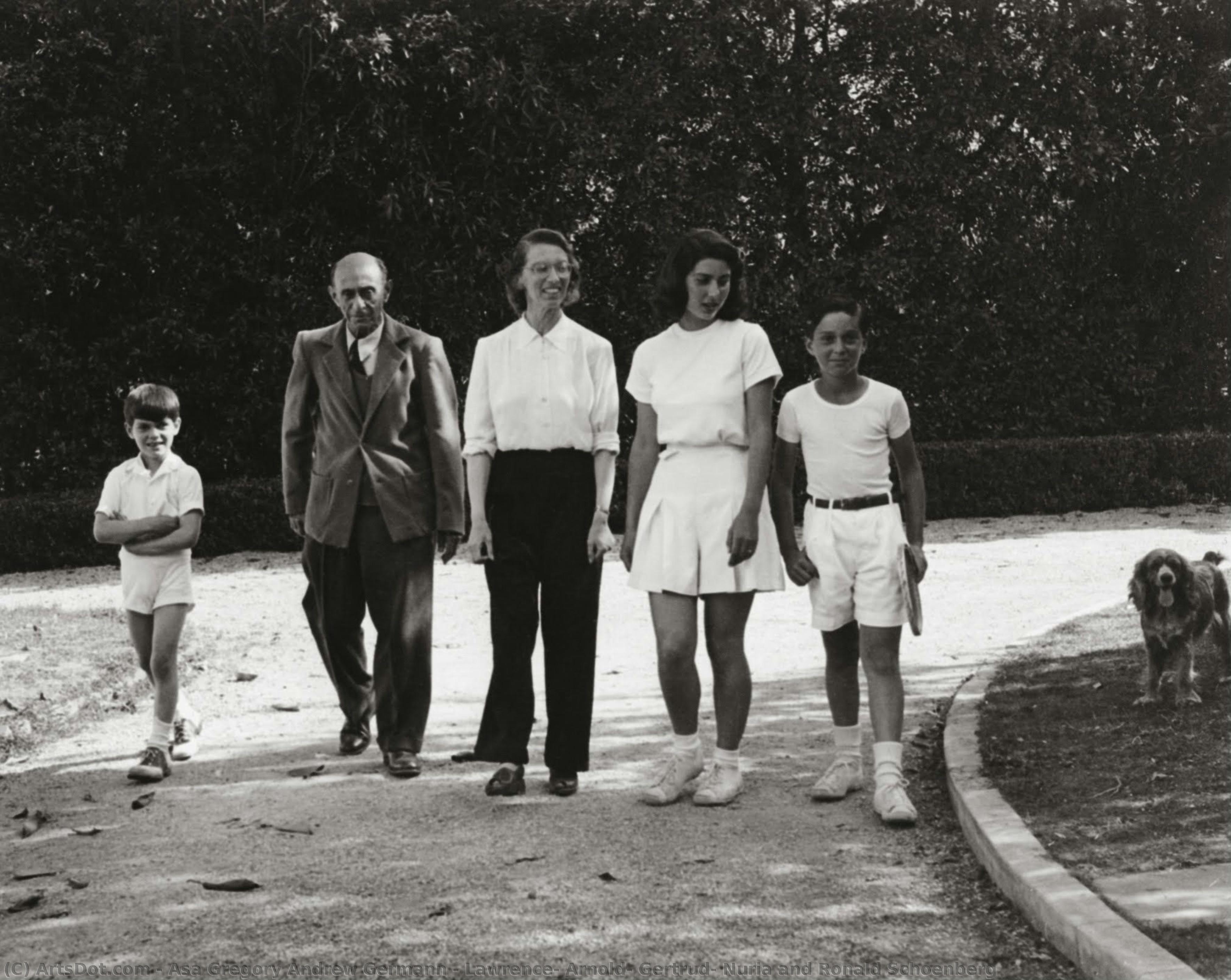
Lawrence, Arnold, Gertrud, Nuria and Ronald Schoenberg
 Digital
- Digital
- Documentary Photography
 1948
1948- Modern
 24.0 x 20.0 cm
 Arnold Schönberg Center
 Read More
Hand Made Oil Reproduction
Hand-painted oil on canvas in your size and frame, made to order by our artists. ( Buy Print Buy Image)




































Pick from our preset sizes that match the artwork's original proportions.

You may enter your own dimensions to fit a specific frame or space. If your selected size does not match the original image's proportions, we will either crop the artwork or extend the painting with additional hand-painted elements. A digital mockup will be sent for your approval before production begins.
Please note that the on-screen preview does not reflect the actual cropping or extension. Only the mockup will accurately show the final composition.
While custom sizes are available, we recommend selecting a dimension from the predefined list to preserve the original proportions.
After order, ArtsDot.com team will email client for instructions and provide a mockup preview
Worldwide Delivery () in 3/4 weeks instead of standard 5 weeks. (25 August). No compromise on quality.

Free Worldwide Express Shipping

High-Quality Linen Canvas

Full Shipping Insurance

Customs Tax Refund Guarantee

True Color Matching Guarantee

60-Day Return Policy (Defects Only)

100% Money-Back Guarantee

Bulk Discount Offer
 Glass option is only available in size under 110 CM

Lawrence, Arnold, Gertrud, Nuria and Ronald Schoenberg
Reproduction Medium
Reproduction Size
-


Total Price
$ 338
Artwork Description
A Moment Preserved: Arnold Schönberg's Family in 1948
- Captured by Asa Gregory Andrew Germann in the summer of 1948, this evocative black and white photograph offers a rare glimpse into the private life of composer Arnold Schönberg. The image documents a candid scene – Schönberg alongside his wife, Gertrud, and their children, Lawrence, Nuria, and Ronald – as they stroll along a paved path within what appears to be a tranquil park or garden setting. The photograph’s power lies not in grand pronouncements of artistic genius, but in the quiet intimacy of a family moment, meticulously recorded by Germann's observant eye.
- Richard Fish commissioned the photographs for an article that ultimately never materialized, yet the resulting documentation stands as a testament to Germann’s dedication. These images provide a particularly poignant and coherent portrayal of Schönberg during his later years – a composer, teacher, and devoted father navigating the complexities of family life.
Technical Details: A Documentary Approach
- The photograph is executed in traditional film photography style, evidenced by the subtle graininess and nuanced tonal range. Germann skillfully employs soft, diffused lighting, suggesting overcast conditions that contribute to the image’s serene atmosphere. The composition utilizes a straightforward perspective, emphasizing depth through the receding path and the backdrop of mature trees – elements carefully arranged to guide the viewer's eye towards the central subject: the Schönberg family.
- The materials used—photographic paper and film—speak to the deliberate craftsmanship involved in creating this piece. The lines are predominantly straight, reflecting a focus on clarity and realism, while organic shapes – human forms, leaves, and branches – add a touch of naturalism to the scene. Texture is subtly rendered through the black and white format, allowing for an appreciation of details within the clothing fabric and pavement surface.
Historical Context & Artistic Influences
- Created in 1948, this photograph reflects a pivotal moment in Arnold Schönberg’s life – a period marked by his continued musical innovation and the nurturing of his family. The image resonates with the broader artistic landscape of the mid-20th century, drawing parallels to documentary photography's rise as a means of capturing everyday life. Germann’s approach aligns with the realism championed by artists seeking to portray authentic experiences rather than idealized representations.
- Interestingly, Asa Gregory Andrew Germann (born 1958) is a contemporary artist whose work often explores themes of family and memory. His background in photography and his keen eye for detail are evident in this remarkable image, demonstrating a connection across generations of artistic visionaries.
Symbolism & Emotional Resonance
- Beyond the simple depiction of familial connection, the photograph evokes a profound sense of nostalgia and quiet domesticity. The figures’ relaxed posture and the gentle lighting contribute to an atmosphere of tranquility and warmth. The image invites contemplation on themes of family, legacy, and the enduring power of human relationships – timeless subjects that resonate deeply with viewers.
- This reproduction offers a unique opportunity to own a piece of art history, capturing a fleeting moment in the life of one of 20th-century’s most influential composers. Its understated elegance and poignant subject matter make it an ideal addition to any collection or interior space, fostering reflection and appreciation for the beauty of everyday moments.
Related Artworks
Artist Biography
Keith Haring: A Revolutionary Voice in Pop Art
Born on May 4, 1958, in Reading, Pennsylvania, and raised in the quiet town of Kutztown, Keith Allen Haring’s artistic journey began not with formal training but with a profound connection to the vibrant energy of New York City. From an early age, he possessed an innate ability to draw, nurtured by his father's cartooning skills and fueled by the iconic imagery of childhood favorites like Dr. Seuss and Walt Disney. This foundational talent blossomed during his teenage years as he explored counter-culture movements and developed a keen interest in art, ultimately leading him to enroll at the School of Visual Arts in New York City.
It was within the crucible of the city’s burgeoning alternative art scene – encompassing graffiti, performance art, and underground music – that Haring truly found his voice. He immersed himself in the creative chaos of Club 57 and connected with fellow artists like Kenny Scharf and Jean-Michel Basquiat, absorbing their innovative approaches and forging a collaborative spirit. Crucially, he was deeply influenced by the work of figures like Jean Dubuffet, Pierre Alechinsky, and Andy Warhol, whose explorations of accessibility, social commentary, and blurring the lines between high art and popular culture resonated profoundly with Haring’s own artistic vision. The philosophy of William Henry Emerson's *The Art Spirit*, advocating for the independence of the artist from commercial constraints, further solidified his commitment to creating work that was both deeply personal and universally accessible.
Haring’s breakthrough came unexpectedly in 1980 with his distinctive subway drawings. Utilizing the blank spaces on black advertising panels beneath the New York City elevated trains, he began producing a rapid succession of bold, energetic images – figures dancing, dogs running, hands reaching out – rendered in stark white chalk. These spontaneous creations quickly gained recognition from commuters and the wider public, transforming the subway into Haring’s laboratory for experimentation and a platform for his burgeoning artistic ideas. This practice not only honed his technique but also established his signature style: simple lines, vibrant colors, and instantly recognizable iconography.
The success of his subway drawings propelled Haring into the mainstream art world. His first solo exhibition at the Westbeth Painters Space in 1981 garnered critical acclaim and cemented his status as a rising star. Throughout the 1980s, he continued to push boundaries, exploring themes of sexuality, social activism, safe sex, and AIDS awareness through his work. He created large-scale murals for hospitals, schools, and community centers, often incorporating messages about prevention and support. Notable works from this period include “Crack is Wack” (1986), a powerful indictment of drug addiction, and “Tuttomondo” (1989), a collaborative mural celebrating unity and diversity. Haring’s art was exhibited internationally at prestigious venues such as Documenta in Kassel, the Whitney Biennial in New York, and the São Paulo Biennial, solidifying his position as a leading figure in contemporary art.
The Pop Shop and Commercial Success
Recognizing the potential to democratize access to his work, Haring established “The Pop Shop” in 1986 – a retail space in Soho that sold T-shirts, posters, toys, and other merchandise bearing his iconic images. This venture was met with mixed reactions within the art world, some viewing it as a commercial compromise of his artistic integrity. However, Haring defended his decision, arguing that art should be available to everyone, regardless of their financial means. The Pop Shop proved remarkably successful, generating significant revenue and further amplifying Haring’s visibility.
Beyond the Pop Shop, Haring embraced opportunities for collaboration and licensing agreements, working with brands like Swatch and Absolut Vodka. These ventures allowed him to reach a wider audience while maintaining creative control over his imagery. He understood that art could be a powerful tool for social change and used his platform to advocate for important causes, including LGBTQ+ rights, anti-apartheid movements, and AIDS awareness. His work became synonymous with these issues, transforming the visual landscape of the 1980s and beyond.
Themes and Iconography
Haring’s art is characterized by a distinctive blend of pop art aesthetics, graffiti influences, and social commentary. He frequently employed simple lines and bold colors to create dynamic compositions that captured movement, energy, and emotion. His iconic figures – often depicted dancing, reaching out, or embracing – are instantly recognizable and convey a sense of joy, connection, and hope. Haring’s work is not simply decorative; it carries profound social and political messages.
Throughout his career, he used his imagery to address issues such as drug addiction (“Crack is Wack”), AIDS awareness, homophobia, and racial injustice. His murals often featured diverse figures engaged in communal activities, symbolizing unity and solidarity. Haring’s use of repetition, layering, and vibrant color palettes created a visually arresting effect that drew viewers in and encouraged them to contemplate the messages embedded within his work. He deliberately avoided complex symbolism, preferring to communicate directly with the viewer through simple, accessible imagery.
Legacy and Recognition
Keith Haring’s untimely death from AIDS-related complications on February 16, 1990, at the age of 31, left a profound void in the art world. However, his legacy continues to thrive through the Keith Haring Foundation, which supports organizations dedicated to combating HIV/AIDS and promoting arts education for children. The foundation also oversees the preservation and exhibition of Haring’s artwork, ensuring that his vision remains accessible to future generations.
In 2014, Haring was honored with a place on the Rainbow Honor Walk in San Francisco, recognizing his contributions to LGBTQ+ rights. His work has been celebrated through retrospectives at major museums around the world, including the Whitney Museum of American Art and the Brooklyn Museum. Keith Haring’s art continues to resonate deeply with audiences today, reminding us of the power of art to inspire, challenge, and connect us all.
Key Works
- “Untitled” Series (with Sean Kalish): A series of collaborative works exploring themes of identity and community.
- “Crack is Wack” (1986): A powerful anti-drug mural that brought attention to the devastating effects of crack cocaine.
- “Tower” (1987): An iconic image representing aspiration, hope, and the challenges of reaching for one’s dreams.
- “Todos Juntos Podemos Parar el SIDA” (1989): A collaborative mural promoting AIDS awareness and solidarity.
- “Tuttomondo” (1989): A vibrant mural celebrating unity, diversity, and the power of music.

asa gregory andrew germann
1958 - , United States of America
Quick Facts
- Artistic Movement Or Style: Pop art, graffiti art
- Artists Or Movements Influenced By This Artist:
- Graffiti art
- Pop Art
- Artists Who Influenced This Artist:
- Jean Dubuffet
- Pierre Alechinsky
- Andy Warhol
- Date Of Birth: May 4, 1958
- Date Of Death: February 16, 1990
- Full Name: Keith Allen Haring
- Nationality: American
- Notable Artworks:
- Crack Is Wack
- Tower
- Untitled Series
- Todos Juntos Podemos Parar el SIDA
- Place Of Birth: Reading, Pennsylvania, USA
Related Articles

White on Canvas: 10 Masterpieces & Timeless Elegance for Your Home Decor
Explore 10 iconic white paintings by Monet, Whistler & Rothko! Discover the stories behind these serene masterpieces and their impact on art history. Find museum-quality reproductions for your home decor at .

Dark Masterpieces: 10 Iconic Paintings Dominated by Black Tones |
Explore 10 iconic paintings dominated by black tones, from Rembrandt’s chiaroscuro to Goya's dark expressions. Discover the stories behind these masterpieces & find museum-quality art reproductions for your home at .
From Snapshot to Statement: Elevating Personal Photography Through Black & White Fine Art Reproduction
Transform cherished photos into timeless black & white fine art with ArtsDot. Our expert artists create museum-quality reproductions – a lasting legacy for your home and family. Discover the artistry today.

Monochrome Visions: Exploring the Aesthetic & Historical Significance of Black & White Photography
Explore the rich history & artistic power of black and white photography. From early techniques to iconic masters like Ansel Adams, discover why monochrome continues to captivate art lovers today. Expert insights for collectors.

Mars Black Masterpieces: 10 Iconic Paintings & Timeless Art Decor Ideas
Delve into the power of 'Mars Black' with 10 iconic paintings by masters like Rembrandt & Caravaggio. Explore dramatic chiaroscuro, gothic art, and timeless beauty. Find museum-quality reproductions & elevate your home decor on .