

 Preview
 Send
Send Share
Share
 Details

 Download
 Similars
 X-Ray
X-Ray Diaporama
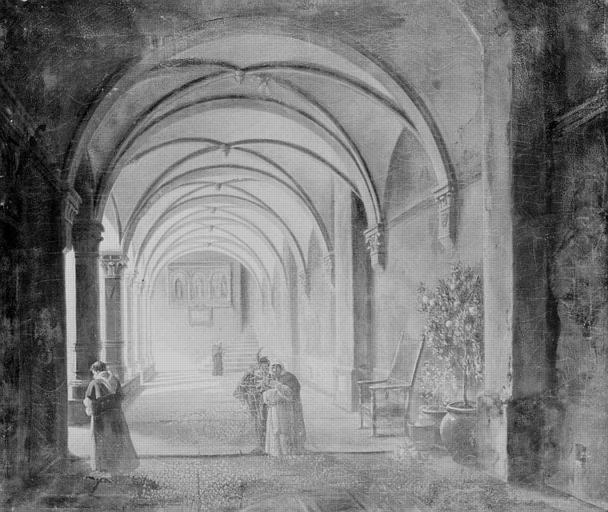
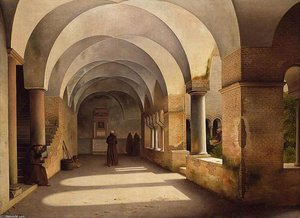
VUE INTERIEURE DU CLOITRE DE SANTA MARIA NOVELLA A FLORENCE


 Read More
Purchase a high-resolution, enhanced digital image, far superior to the online preview.
Each file is meticulously prepared by our in-house specialists using advanced tools and expert manual retouching. We ensure every image has exceptional clarity, precise color accuracy, and fine detail.
The final file is delivered via email within 72 hours, optimized for immediate use in professional, editorial, and print environments. This is the same quality trusted by top-tier design studios, publishers, and galleries.
Digital Image
Download a high-resolution file for personal display, printing, and creative projects. ( Buy Print Buy Hand Made Painting)
Included in Every Digital Image Order
Expert Digital Delivery, Guaranteed
When you choose ArtsDot.com, you're not just getting an image - you're receiving a professionally enhanced digital artwork, crafted with precision and backed by a satisfaction guarantee. Here's everything that comes with your order, automatically:

Fast Email Delivery
Your high-resolution digital image file will be emailed to you within 72 hours of ordering - ready for immediate use.

AI-Enhanced Digital File
Your artwork is professionally optimized using advanced AI tools and manual editing, ensuring maximum detail, clarity, and color accuracy.

Free Lifetime Re-Delivery
Accidentally deleted or lost your file? No worries - we'll resend it to you anytime, free of charge.

No Import Fees - Ever
Enjoy your artwork instantly with zero customs, duties, or delivery fees - digital downloads are always tax-free.

Color Accuracy Guarantee
We ensure your digital image reflects the original colors as closely as possible using professional tools and color management.

60-Day Satisfaction Guarantee
If you're not satisfied with your digital image, we'll revise it or refund 100% within 60 days - no questions asked.

100% Money-Back Guarantee
Not satisfied? Get a full refund within 60 days of receiving your digital file - no questions asked.

Bulk Order Discounts
Buy 3 images, save 10% - Buy 5, save 15% - Buy 10+, save 20%. Great for creative projects, galleries, and agencies.
Collectible Description
Auguste de Forbin’s Serene Reflection: An Exploration of Florentine Cloister Light
The artwork presented here—a monochrome depiction of the cloister at Santa Maria Novella in Florence—offers more than just a visual record; it embodies the spirit of Romanticism, capturing a moment suspended between observation and emotion. Executed around 1825-1850 during the second quarter of the nineteenth century, this piece exemplifies Forbin’s meticulous approach to topographical drawing, blending scientific accuracy with artistic sensitivity—a hallmark of his oeuvre.- Subject Matter & Context: Santa Maria Novella, a Franciscan church founded in 1246, stands as a testament to Florentine architectural grandeur and spiritual devotion. Forbin’s depiction isn't merely an illustration; it seeks to convey the atmosphere of contemplation fostered within its walls—a space designed for prayer and reflection during a period grappling with societal reform and artistic experimentation.
- Style & Technique: The artwork adheres closely to Romantic principles, prioritizing mood and tonal gradation over precise representation. Forbin employed graphite or charcoal on paper, layering delicate washes of pigment – likely watercolor – to achieve subtle nuances in shading that illuminate the architectural forms with remarkable realism. This technique prioritizes capturing the interplay of light and shadow, mirroring the Romantic fascination with sublime landscapes.
- Composition & Perspective: The composition draws the viewer’s eye inward through repeating arched lines converging towards a distant staircase and altar—a deliberate strategy to emphasize depth and create an illusion of vastness. Linear perspective skillfully renders the cloister's spatial dimensions, mirroring the Romantic preoccupation with capturing the grandeur of nature and architectural spaces.
- Color Palette & Texture: Remarkably devoid of color, the artwork’s grayscale palette underscores its focus on form and texture. The artist meticulously rendered stone surfaces, tiled floors, draped fabrics, and foliage—suggesting a tactile experience akin to encountering the space firsthand. These textural details contribute significantly to the overall impression of serenity.
- Symbolism & Emotional Impact: Beyond its formal qualities, the artwork speaks to themes of spirituality and timelessness. The quiet stillness of the cloister reflects the Romantic yearning for communion with the divine—a sentiment powerfully conveyed through Forbin’s masterful rendering of light and shadow. It invites contemplation and evokes a feeling of profound peace.
Related Artworks
Artist Biography
Auguste de Forbin: A Painter Caught Between Romantic Idealism and Napoleonic Pragmatism
Auguste de Forbin (1777 – 1841) stands as a fascinating figure in French art history, embodying the complexities of his era—a period marked by turbulent political upheaval and burgeoning artistic innovation. Born into a noble family at Château La Roque-d’Anthéron, Provence, he possessed an innate talent for drawing from a young age, nurtured by a formative friendship with François Marius Granet, a relationship that would endure throughout their lives. This early training instilled in him a sensitivity to observation and detail, qualities that would characterize his artistic endeavors. His artistic journey began amidst the fervor of the French Revolution, where he witnessed firsthand the dramatic shifts reshaping French society. The assassination of his father, Marquis de Pont-à-Mousson, during the Lyon insurrection profoundly impacted Forbin’s life, highlighting the dangers inherent in political instability. Remarkably resilient, he escaped unscathed thanks to his youth and continued his artistic pursuits alongside Granet, honing their skills in the tranquil countryside—a deliberate contrast to the tumultuous urban landscape of Paris. David's Studio: The Crucible of Style The Directory offered Forbin a crucial opportunity for artistic advancement – access to Jacques-Louis David’s prestigious studio, a bastion of neoclassical ideals. Here, he collaborated closely with Granet, absorbing the stylistic influences of David and establishing himself firmly within the dominant artistic movement. This association proved invaluable in shaping his aesthetic sensibilities and propelling him toward mastery of technique. From Rome to Napoleon: Artistic Pilgrimage and Imperial Patronage Forbin’s travels to Rome in 1804 solidified his commitment to classical art principles, immersing him in the vibrant intellectual atmosphere of francophile Roman society. He embraced a carefree lifestyle, indulging in leisure pursuits alongside Granet—a period marked by considerable artistic experimentation. Notably, he secured the patronage of Princess Pauline Borghese, Napoleon’s sister, forging a romantic relationship that lasted until 1807 and produced a celebrated villa at Aix-en-Provence. His military service during the Napoleonic Wars – Portugal and Austria – earned him recognition and honors, including the Croix d'honneur. He returned to Italy, producing monumental history paintings that showcased his ambition and artistic prowess. Notable Works & Legacy Forbin’s oeuvre comprises a diverse range of subjects—primarily landscapes and historical scenes—characterized by meticulous realism combined with subtle expressive qualities. “Vue de Jérusalem” exemplifies his masterful depiction of architectural grandeur and atmospheric perspective, while "Vue de Cazzafani" presents a hauntingly beautiful portrayal of ruin—a poignant reflection on the passage of time and decay. His exploration of color palettes and brushwork demonstrates an evolving artistic style that anticipates elements of Impressionism. Auguste de Forbin’s contribution to French art is significant not only for his technical skill but also for representing the intellectual currents of his era, bridging the gap between Romantic idealism and Napoleonic pragmatism—a testament to a painter who navigated the complexities of history with unwavering dedication and artistic vision.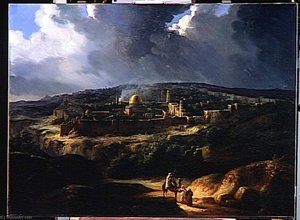
Auguste de Forbin
1777 - 1841
Quick Facts
- Artistic Movement Or Style: Romanticism
- Artists Or Movements Influenced By This Artist: ['Neoclassicism']
- Artists Who Influenced This Artist: ['François Marius Granet']
- Date Of Birth: 1777
- Date Of Death: 1841
- Full Name: Auguste de Forbin
- Nationality: French
- Notable Artworks:
- Vue de Jérusalem, prise de la vallée de Josaphat
- Vue de Cazzafani, dans l’île de Chypre
- Vue d’un cloître sur les bords de la Méditerranée, près de Carrère
- Place Of Birth: Laroched'antheron, France

