Send
Send Share
Share
 Details

 Download
 Similars
 Diaporama
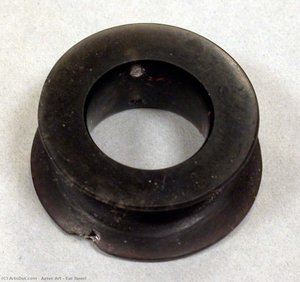
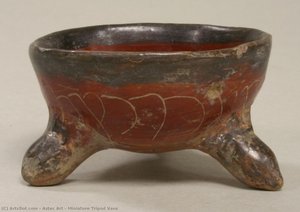
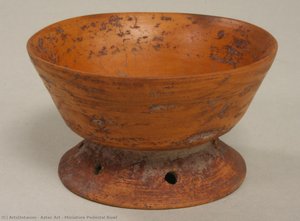
Miniature Pedestal Bowl


 Read More
Hand Made Oil Reproduction
Hand-painted oil on canvas in your size and frame, made to order by our artists. ( Buy Print Buy Image)




































Pick from our preset sizes that match the artwork's original proportions.

You may enter your own dimensions to fit a specific frame or space. If your selected size does not match the original image's proportions, we will either crop the artwork or extend the painting with additional hand-painted elements. A digital mockup will be sent for your approval before production begins.
Please note that the on-screen preview does not reflect the actual cropping or extension. Only the mockup will accurately show the final composition.
While custom sizes are available, we recommend selecting a dimension from the predefined list to preserve the original proportions.
After order, ArtsDot.com team will email client for instructions and provide a mockup preview
Worldwide Delivery () in 3/4 weeks instead of standard 5 weeks. (16 August). No compromise on quality.

Free Worldwide Express Shipping

High-Quality Linen Canvas

Full Shipping Insurance

Customs Tax Refund Guarantee

True Color Matching Guarantee

60-Day Return Policy (Defects Only)

100% Money-Back Guarantee

Bulk Discount Offer
 Glass option is only available in size under 110 CM

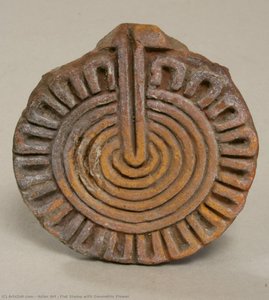
Miniature Pedestal Bowl
Reproduction Medium
Reproduction Size
-


Total Price
$ 263
Artwork Description
Echoes of Tenochtitlan: The Miniature Pedestal Bowl
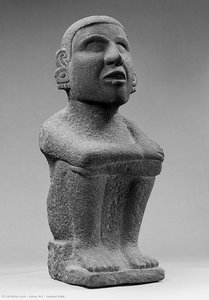
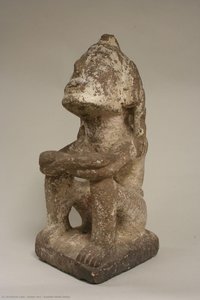
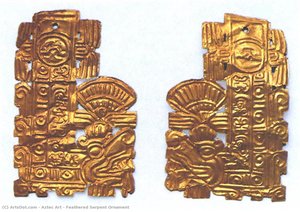
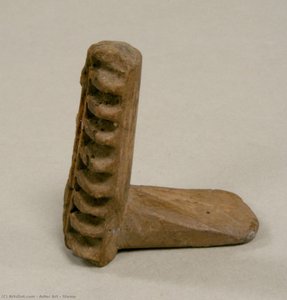
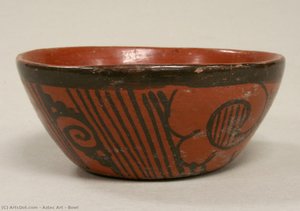
To gaze upon this miniature pedestal bowl is to reach across the vast expanse of time, to hold in one's hands a tangible whisper from the heart of the Aztec Empire. It is not merely an object; it is a preserved moment of profound cultural life, crafted by artisans whose skill wove daily utility with sacred meaning. The piece, rendered in earthy terracotta or earthenware, immediately commands attention through its palpable sense of antiquity. One can almost feel the weight of centuries resting upon its porous surface, visible in the delicate tracery of cracks that map the passage of time itself.
Materiality and Form: A Study in Organic Contrast
The composition is masterfully balanced between the fluid grace of the bowl's curved rim and the grounded stability offered by its pedestal base. The artist, working with materials indigenous to their vibrant civilization, utilized clay—a medium both humble and enduring. This interplay of form is key: the soft, organic flow suggested by the bowl’s silhouette contrasts beautifully with the more deliberate, angular structure supporting it. The color palette itself speaks volumes, dominated by muted tones of tan, deep brown, and warm terracotta, punctuated only by subtle hints of reddish-orange that catch the light. This naturalistic coloring anchors the piece in a profound connection to the earth from which it sprang.
Symbolism Woven into Clay
For the Aztec people, nothing was purely decorative; every object held narrative weight. This bowl, therefore, transcends simple function. Its small scale suggests delicacy, perhaps indicating its use in intimate, ritualistic settings—a vessel for offerings or ceremonial adornment. The very act of creating such an artifact speaks to a sophisticated cosmology, where the physical world and the spiritual realm were inextricably linked. Owning a reproduction allows one to incorporate this deep sense of cultural heritage into a modern space, transforming a mere accent piece into a potent conversation starter about history and belief.
A Touch of Ancient Craftsmanship for Modern Interiors
Whether you are curating an ethnographic display, designing a richly textured living area, or seeking a unique focal point for your collection, this bowl offers unparalleled depth. The documentary style captured in its photographic presentation emphasizes the object's raw beauty—the visible wear, the subtle sheen on high points, and the deep patina of age. It invites contemplation, encouraging the viewer to slow down and appreciate the meticulous labor that went into every curve and imperfection. It is a piece that does not shout for attention but rather whispers its profound story to those who pause long enough to listen.
Artist Biography
The Echoes of Stone: Exploring the Art and Legacy of the Aztec Empire
The name “Aztec” – derived from the Nahuatl word *ātl-ce-tlācati–tlān*, meaning "people of many forms" – conjures images of a vast, complex empire that dominated Mesoamerica for centuries. More than just warriors and conquerors, the Aztecs were profoundly artistic individuals, weaving intricate beauty into every facet of their lives—from monumental architecture to delicate featherwork, from sacred rituals to daily objects. Their art wasn’t merely decorative; it was a vibrant language, communicating religious beliefs, political power, historical narratives, and social hierarchies within a society both rigidly structured and remarkably innovative.
Born in the early 14th century in Tenochtitlan, the heart of the Aztec Empire, the artistic traditions of the Aztecs were deeply rooted in the legacies of earlier Mesoamerican civilizations. The Olmecs, with their colossal heads and sophisticated calendar systems, the Teotihuacans, renowned for their massive pyramids and urban planning, and the Toltecs, masters of metalworking and sculpture, all contributed to the rich artistic tapestry that the Aztecs inherited. However, the Aztecs weren’t simply imitators; they synthesized these influences with their own unique aesthetic sensibilities, developing a distinctive style characterized by bold colors, intricate geometric patterns, and symbolic representations.
A Palette of Power: Materials and Techniques
Aztec art was remarkably diverse, employing an astonishing range of materials and techniques. Stone carving held a prominent place, exemplified by monumental sculptures depicting deities, rulers, and mythical creatures. The massive Sun Stone (Calendar Stone), discovered in 1946, stands as a testament to their mastery of this medium—a complex, layered stone relief that combined calendrical information with cosmological symbolism. Skilled artisans also worked with wood, clay, feathers – particularly the vibrant quetzal plumes – jade, turquoise, obsidian, and gold, reflecting both wealth and status.
Featherwork was perhaps the most visually arresting aspect of Aztec art. Intricately crafted headdresses, cloaks, shields, and other decorative items were created using thousands of meticulously arranged feathers—a process requiring immense skill and patience. These objects weren’t merely beautiful; they served as potent symbols of authority, religious devotion, and social rank. The colors themselves held specific meanings: blue represented the heavens, green symbolized fertility, red signified warfare, and yellow represented the sun.
Furthermore, Aztec artists were masters of mosaic work, creating stunning decorative panels using small, precisely cut stone tiles. These mosaics adorned temples, palaces, and private residences, adding a layer of visual richness to the built environment. Their pottery was equally impressive, featuring intricate geometric designs and depictions of animals and deities.
The Language of Symbols: Themes and Motifs
Aztec art is replete with symbolism, each image carrying layers of meaning that required careful interpretation by priests, scribes, and rulers. The central deity, Huitzilopochtli, the god of war and sun, was frequently depicted in elaborate headdresses adorned with feathers and precious stones. Quetzalcoatl, the feathered serpent god associated with knowledge, wisdom, and creation, held a prominent place in their pantheon and appeared in numerous artistic representations.
The calendar system—a remarkably sophisticated combination of solar and ritual cycles—was another recurring motif. Images of calendars, glyphs, and astronomical symbols were incorporated into sculptures, mosaics, and codices (illustrated books), reflecting the Aztecs’ deep understanding of time and cosmology. Representations of maize, the staple crop of their diet, symbolized sustenance and fertility. Animal imagery—particularly jaguars, eagles, snakes, and hummingbirds—carried symbolic significance related to power, courage, and divinity.
A Legacy in Fragments: Art and Historical Significance
The Aztec Empire’s sudden collapse at the hands of Spanish conquistadors in 1521 resulted in a devastating loss for Mesoamerican culture. Tragically, much of their artistic heritage was destroyed during the conquest—temples were razed, sculptures smashed, and codices burned. However, despite these losses, fragments of Aztec art survive today, offering invaluable insights into this remarkable civilization.
Notable examples include the Sun Stone, a monumental sculpture that showcases the Aztecs’ advanced knowledge of astronomy and mathematics; intricate featherwork headdresses and cloaks preserved in museums around the world; and surviving codices—handwritten books containing historical accounts, religious beliefs, and calendrical information. The *Colección Andrés Blaisten* in Mexico houses a significant collection of Latin American art, including examples that illuminate Aztec artistic traditions.
The influence of the Aztec Empire’s artistic legacy can still be seen today, inspiring contemporary artists and designers alike. Their innovative techniques, symbolic imagery, and profound connection to nature continue to resonate with audiences worldwide. Exploring the art of the Aztecs is not merely an exercise in historical appreciation; it's a journey into the heart of a complex and captivating civilization—a testament to human creativity, ingenuity, and spiritual depth.
To explore more artworks from the Aztec Empire and other notable artists, visit ArtsDot.com.

aztec empire
1300 - 1521 , Mexico
Quick Facts
- Artistic Movement Or Style: Mesoamerican art
- Artists Or Movements Influenced By This Artist: ['Modern art']
- Artists Who Influenced This Artist:
- Olmec
- Teotihuacan
- Toltec
- Date Of Birth: 1300 (Tenochtitlan)
- Date Of Death: 1521
- Full Name: Aztec Empire
- Nationality: Mexican
- Notable Artworks:
- Aztec calendar
- Pyramid of sun
- Mexica featherwork
- Place Of Birth: Tenochtitlan, Mexico
Related Articles
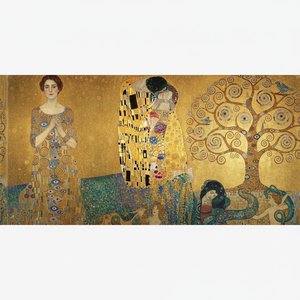
25 Klimt Masterpieces: A Journey Through Iconic Art & Decor
Delve into the world of Gustav Klimt with our top 25 masterpieces! Explore his iconic paintings – 'The Kiss,' 'Portrait of Adele,' and more. Discover museum-quality reproductions & curated decor ideas. Explore the full collection online at ArtsDot.com.

Top 10 Masterpieces for Your Living Room: Iconic Paintings & Art Decor Ideas |
Transform your living room with iconic art! Explore our guide to the Top 10 most famous paintings – from Van Gogh's Starry Night to Mona Lisa. Discover artist stories, techniques & find museum-quality reproductions for timeless decor. Explore the full collection on
The Enduring Appeal of Decorative Art: A Historical Survey of Ornamentation, Functionality & Cultural Significance
Explore the rich history of decorative arts with ArtsDot.com. Discover key movements, influential artists, and expert guidance for building a discerning collection. Learn about ornamentation, functionality & cultural significance.

Tactile Maximalism: The Expert Guide to Styling Bold Pop Art for Dopamine Decor Interiors
Master the art of Dopamine Decor with our expert guide to Tactile Maximalism. Learn how to professionally style bold Pop Art through texture, color theory, and curated layers to create a joyful, high-end interior that inspires.
Marianne North's Masterpieces: 25 Botanical Paintings That Bloom With Adventure | ArtsDot
Journey through the vibrant world of Marianne North’s botanical paintings! Explore 25 iconic artworks from this Victorian artist, celebrating exotic flora & travel. Find museum-quality reproductions and curated decor ideas at ArtsDot.com.