 Preview
 Send
Send Share
Share
 Details

 Download
 Similars
 X-Ray
X-Ray Diaporama
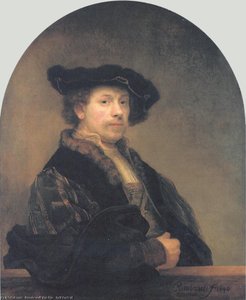
Self-Portrait
 Oil On Canvas
- WallArt
- Renaissance Humanism
 1530
1530 147.0 x 112.0 cm
 Isabella Stewart Gardner Museum
 Read More
Hand Made Oil Reproduction
Hand-painted oil on canvas in your size and frame, made to order by our artists. ( Buy Print Buy Image)




P118B $10

P118H $10

P118W $10

P438Z $10

P508JH $12

P508YH $12

P805H $10

P805Z $10

P919BZ $10

P919G $10

P919XJ $10

P959ZH $10

P968JZ $12

W106C $8

W218G $10

W218JH $8

W218Y $10

W307PJ $10

W316G $10

W316PJ $8

W316Y $10

W398PJ $8

W4111J $10

W500HY $15

W500JH $15

W692G $12

W849H $8

W940BG $15

W953PJ $8




Pick from our preset sizes that match the artwork's original proportions.

You may enter your own dimensions to fit a specific frame or space. If your selected size does not match the original image's proportions, we will either crop the artwork or extend the painting with additional hand-painted elements. A digital mockup will be sent for your approval before production begins.
Please note that the on-screen preview does not reflect the actual cropping or extension. Only the mockup will accurately show the final composition.
While custom sizes are available, we recommend selecting a dimension from the predefined list to preserve the original proportions.
After order, ArtsDot.com team will email client for instructions and provide a mockup preview
Worldwide Delivery () in 3/4 weeks instead of standard 5 weeks. (17 August). No compromise on quality.

Free Worldwide Express Shipping

High-Quality Linen Canvas

Full Shipping Insurance

Customs Tax Refund Guarantee

True Color Matching Guarantee

60-Day Return Policy (Defects Only)

100% Money-Back Guarantee

Bulk Discount Offer
 Glass option is only available in size under 110 CM

Self-Portrait
Reproduction Medium
Reproduction Size
-


Total Price
$ 263
Artwork Description
Bartolommeo Brandini’s ‘Self-Portrait’: A Renaissance Masterpiece of Interior Drama
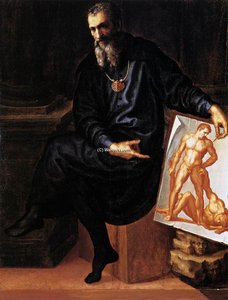
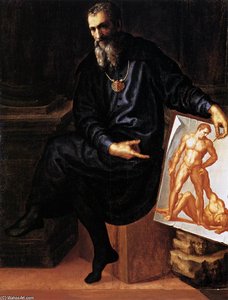
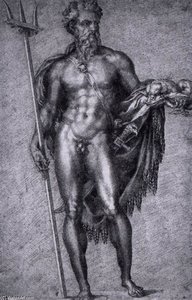
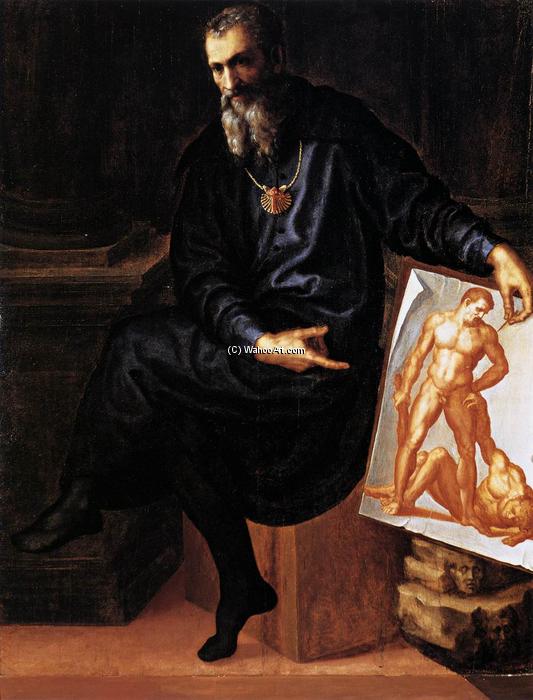
The “Self-Portrait” by Bartolommeo Brandini (Baccio Bandinelli), painted in 1530, is more than a simple depiction of an artist; it's a meticulously constructed meditation on identity, skill, and the very nature of representation. Executed in oil on canvas with exacting detail, this work – currently housed at the Isabella Stewart Gardner Museum – offers a rare glimpse into the mind of a pivotal figure of the High Renaissance. Measuring 147 x 112 cm, the painting immediately draws the viewer into its complex narrative through Brandini’s masterful use of chiaroscuro and his audacious inclusion of a secondary scene within a scene.
- Subject & Composition: The central figure, Bartolommeo Brandini himself, is presented in a dark robe, his long beard adding to an air of contemplative seriousness. He holds aloft a painting depicting two figures engaged in what appears to be a dramatic struggle or dance – a scene brimming with energy and movement that contrasts sharply with the stillness of the portrait itself. The crossed legs and necklace suggest a deliberate pose, inviting the viewer into a dialogue about artistic intention.
- Technical Brilliance: Brandini’s technical skill is immediately apparent in the rendering of both figures. The inner painting showcases an astonishing understanding of anatomy and musculature, reflecting the influence of his mentor, Michelangelo Buonarroti. The use of chiaroscuro – the dramatic interplay of light and shadow – creates a powerful sense of depth and volume, pulling the viewer into the scene and emphasizing the textures of the fabrics and flesh.
A Window into Renaissance Humanism
Created during a period of intense intellectual and artistic ferment, Brandini’s “Self-Portrait” embodies the core tenets of Renaissance humanism. The focus on the individual – here, the artist himself – and his capacity for skill, intellect, and emotional expression aligns perfectly with this movement's emphasis on earthly achievement and rational thought. The inclusion of a dynamic inner scene isn’t merely decorative; it’s a symbolic assertion of Brandini’s mastery over both form and narrative. It speaks to the Renaissance ideal of the ‘uomo universale,’ the well-rounded individual capable of excelling in multiple disciplines – in this case, sculpture, painting, and the art of self-representation.
- Historical Context: Born in Chianti, Italy, in 1493, Brandini lived during a time when Florence was at the heart of artistic innovation. His association with Michelangelo Buonarroti provided him with invaluable training and exposed him to the revolutionary ideas shaping the era’s art. The painting reflects the confidence and ambition characteristic of Florentine artists seeking to surpass the limitations of medieval art.
- Symbolism: The struggle or dance depicted within the inner painting could be interpreted as a metaphor for the artist's own creative process – a constant battle between control and inspiration, order and chaos. The nude figures, while potentially referencing classical ideals, also represent the vulnerability and passion inherent in artistic creation.
The Art of Reproduction: Capturing Brandini’s Vision
ArtsDot offers meticulously crafted hand-painted reproductions of Bartolommeo Brandini's “Self-Portrait,” allowing you to bring this Renaissance masterpiece into your home or office. Our skilled artisans employ the same techniques as Brandini himself – oil on canvas, precise detailing, and masterful use of chiaroscuro – to faithfully recreate every nuance of the original. Each reproduction is a testament to our commitment to preserving artistic heritage and providing collectors with exceptional works of art.
- Size & Materials: Available in 147 x 112 cm, our reproductions are created on high-quality canvas using archival pigments for lasting vibrancy.
- Investment & Legacy: Owning a ArtsDot reproduction is more than just acquiring a beautiful piece of art; it’s investing in a legacy – preserving the work of a true Renaissance master for generations to come.
Explore the Collection
Discover other works by Bartolommeo Brandini (Baccio Bandinelli) and explore our extensive collection of Renaissance masterpieces at ArtsDot: Painting by ‘Bartolommeo Brandini (Baccio Bandinelli)’
Related Artworks

Artist Biography
The Sculptor of Florentine Grandeur
In the vibrant, sun-drenched heart of the Italian Renaissance, few names evoke the monumental ambition of Florence quite like Bartolommeo Brandini, known to history as Baccio Bandinelli. Born in the rolling landscapes of Chianti around 1493, Brandini emerged from a period of profound artistic transformation, stepping into a world where the revival of classical antiquity was not merely an academic pursuit but a living, breathing force. His journey from a promising apprentice to a titan of Florentine sculpture and painting is a testament to the era's relentless pursuit of perfection and the dramatic tension between individual genius and the weight of tradition.
The trajectory of Brandini’s career was irrevocably shaped by his proximity to the giants of his age. Most significantly, his relationship with Michelangelo Buonarroti served as both a profound inspiration and a formidable shadow. By absorbing the master's dedication to anatomical precision and the expressive potential of the human form, Brandini developed a style that sought to capture the very essence of muscular tension and spiritual struggle. This mentorship instilled in him an unwavering belief in the power of large-scale works to convey deep, often turbulent, narratives, allowing him to navigate the complex social and political landscapes of Medici-era Florence with both technical prowess and artistic authority.
Mastery of Form and the Dramatic Narrative
Brandini’s artistic output was characterized by a remarkable versatility that bridged the gap between the tactile permanence of stone and the ethereal light of oil on canvas. As a sculptor, he achieved legendary status through his ability to execute monumental commissions that demanded both immense physical labor and delicate finesse. His work often centered on themes of biblical struggle and classical heroism, utilizing chiaroscuro-like contrasts in stone to create depth and movement. One of his most significant achievements remains his contribution to the colossal projects of Rome, including his involvement in the creation of the statue of Saint Peter in St. Peter's Basilica, a feat that solidified his reputation as one of the premier executors of large-scale religious iconography.
Beyond the heavy marble and bronze, Brandini’s prowess as a painter allowed him to explore more intimate, psychological territories. His Self-Portrait from 1530 stands as a breathtaking example of this duality; in it, he utilizes masterful light and shadow to depict himself not merely as a craftsman, but as a visionary artist. The painting captures a sense of dramatic struggle within the composition, mirroring the very themes found in his sculptures. This ability to translate the monumental energy of sculpture into the nuanced language of painting allowed him to engage with patrons on both a public, civic level and a private, intellectual one.
Legacy and Historical Significance
The historical significance of Baccio Bandinelli lies in his role as a bridge between the High Renaissance and the burgeoning complexities of Mannerism. While often discussed in the context of his rivalry with Michelangelo, Brandini’s true legacy is found in his ability to synthesize classical ideals with a new, more expressive tension. His works served as vital landmarks in the Florentine landscape, adorning churches and public squares with stories of faith and fortitude.
To reflect on the breadth of his impact, one might consider these defining elements of his career:
- Technical Innovation: The seamless integration of anatomical accuracy with dramatic, emotive composition.
- Patronage and Presence: His ability to secure high-profile commissions from the most influential figures in Italy, from the Medici to the Papacy.
- Artistic Versatility: A rare mastery over both the permanence of sculpture and the atmospheric depth of oil painting.
- Cultural Influence: His role in shaping the visual identity of Florence during one of its most transformative historical epochs.
Ultimately, Bartolommeo Brandini remains a figure of immense fascination—a sculptor whose hands shaped the very stone of history and a painter who captured the flickering light of the human soul.

bartolommeo brandini (baccio bandinelli)
1493 - 1560 , Italy
Quick Facts
- Artistic Movement Or Style: Renaissance Sculpture
- Artists Or Movements Influenced By This Artist: ['Renaissance']
- Artists Who Influenced This Artist: ['Michelangelo']
- Date Of Birth: Chianti, Italy (1493)
- Date Of Death: 1560
- Full Name: Bartolommeo Brandini (Baccio Bandinelli)
- Nationality: Italian
- Notable Artworks:
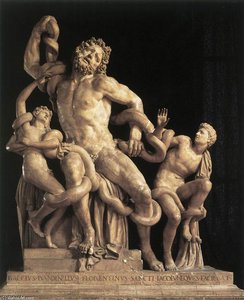
- Laocoön
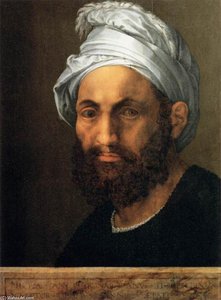
- Portrait of Michelangelo
- Self-Portrait
- Place Of Birth: Florence
Related Articles

The Enduring Legacy of Oil on Canvas: Technique, History & Aesthetic Impact
Explore the rich history & techniques of oil painting – from Renaissance masters to Impressionism. Discover pigments, layering methods, and why this timeless medium endures. Expert insights for artists & art enthusiasts.

Oil on Canvas: A Historical & Technical Exploration of a Timeless Artistic Medium
Explore the rich history & enduring techniques of oil painting on canvas. Discover the science behind its longevity, conservation practices, and contemporary relevance. Expert insights for art enthusiasts.

Reflecting the Self: A History of Portraiture & Psychological Insight
Explore the fascinating history of self-portraiture from Renaissance masters like Dürer & Rembrandt to modern interpretations. Discover the psychological insights and artistic techniques behind these iconic works. Expert analysis for art enthusiasts.

The Enduring Power of Painting: A Historical & Contemporary Exploration of Form and Emotion
Explore the rich history & enduring techniques of oil painting with ArtsDot. Discover masterpieces, learn about art collecting, and find authentic handmade reproductions crafted by skilled artists.

The Enduring Legacy of Oil on Canvas: Technique, History & Contemporary Practice
Explore the rich history & enduring techniques of oil painting on canvas. Discover the science behind its longevity, conservation practices, and contemporary relevance. Expert insights for art enthusiasts.