 Preview
 Send
Send Share
Share
 Details

 Download
 Similars
 X-Ray
X-Ray Diaporama
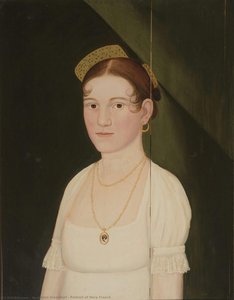
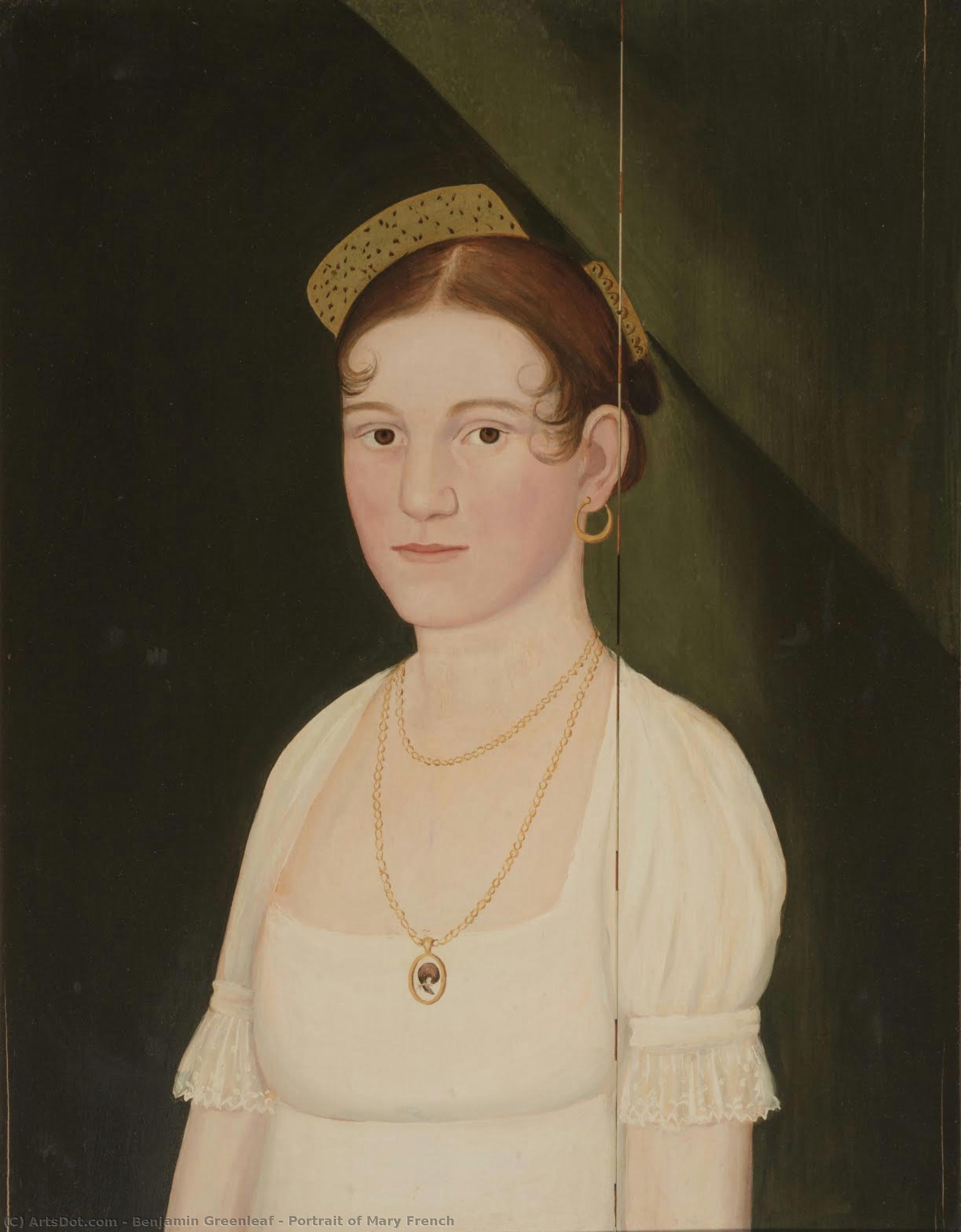
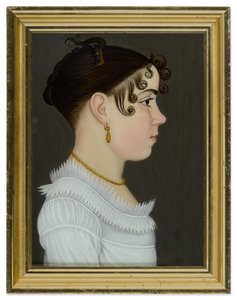
Portrait of Mary French
 1812
1812 57.0 x 72.0 cm
 Marsh-Billings-Rockefeller National Historical Park
 Read More
Hand Made Oil Reproduction
Hand-painted oil on canvas in your size and frame, made to order by our artists. ( Buy Print Buy Image)




































Pick from our preset sizes that match the artwork's original proportions.

You may enter your own dimensions to fit a specific frame or space. If your selected size does not match the original image's proportions, we will either crop the artwork or extend the painting with additional hand-painted elements. A digital mockup will be sent for your approval before production begins.
Please note that the on-screen preview does not reflect the actual cropping or extension. Only the mockup will accurately show the final composition.
While custom sizes are available, we recommend selecting a dimension from the predefined list to preserve the original proportions.
After order, ArtsDot.com team will email client for instructions and provide a mockup preview
Worldwide Delivery () in 3/4 weeks instead of standard 5 weeks. (26 August). No compromise on quality.

Free Worldwide Express Shipping

High-Quality Linen Canvas

Full Shipping Insurance

Customs Tax Refund Guarantee

True Color Matching Guarantee

60-Day Return Policy (Defects Only)

100% Money-Back Guarantee

Bulk Discount Offer
 Glass option is only available in size under 110 CM

Portrait of Mary French
Reproduction Medium
Reproduction Size
-


Total Price
$ 263
Related Artworks






Artist Biography
A Life Rediscovered: The Quiet Portraits of Benjamin Greenleaf
For many years, the name Benjamin Greenleaf was associated with a prominent American educator and textbook author. It wasn’t until 1981 that art historians established him as a distinct individual – a largely self-taught portraitist who quietly documented the lives of New Englanders during the late 18th and early 19th centuries. Born in Hull, Massachusetts on January 13, 1769, to Mary and John Greenleaf, his life initially appeared unremarkable. He attended Dartmouth College for a time but left before completing a degree, embarking instead on a career that would lead him through the burgeoning communities of New England, leaving behind a legacy not of scholarship, but of intimate visual records. His story is one of rediscovery, a testament to the enduring power of art to reveal hidden narratives and connect us with the past.An Itinerant Artist: Travels Through New England
Greenleaf’s artistic journey was characterized by movement. Unlike artists anchored in major urban centers, he was an itinerant painter, traveling extensively throughout Massachusetts, New Hampshire, and Maine between 1803 and 1818. He worked in Weymouth, Hingham, Braintree, and Newton in his early years, before venturing north to Hanover and Hopkinton in New Hampshire. His travels culminated in Maine, where he painted portraits in Portland, Paris, Bath, Bridgton, and Phippsburg. This peripatetic lifestyle suggests a reliance on word-of-mouth for commissions rather than formal advertising – a testament to the close-knit nature of the communities he served. He married Abigail Greenleaf Rhoades of Dorchester, Massachusetts, in 1799, and while details about their personal life remain scarce, it’s likely her connections aided his travels and access to potential patrons. His subjects were often related through marriage or acquaintance, indicating a network built on trust and familiarity.Technique and Style: Reverse Glass Painting and Intimate Likenesses
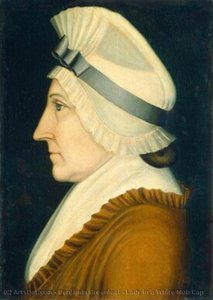
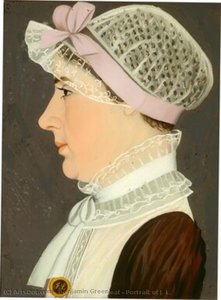
Greenleaf's artistic output is notable for its distinctive technique – reverse painting on glass. This demanding medium required the artist to work backwards, applying highlights first and building up layers of color from the back of the glass panel. The result is a luminous quality, with brushstrokes appearing remarkably smooth and colors possessing an unusual depth. While he occasionally worked in oil on canvas, the majority of his fifty-six documented works are executed on glass, often in profile format. His portraits aren’t grand statements; they are intimate likenesses, characterized by subtle coloring, well-proportioned features, and a keen attention to physiognomic accuracy. He possessed an ability to capture not just physical resemblance but also the personality of his sitters – their quiet dignity, their reserved composure, their individual character.Rediscovery and Historical Significance
For decades, Greenleaf remained largely unknown outside of a small circle of collectors and local historians. The 1985 article in *The Clarion*, a folk art publication by Arthur and Sybil Kern, was pivotal in bringing his work to wider attention. Their research disentangled him from the educator of the same name and began to piece together the story of his life and career. While he may not have achieved widespread fame during his lifetime, Greenleaf’s portraits offer a valuable glimpse into the lives of ordinary New Englanders during a period of significant social and economic change. His work provides a counterpoint to the more formal portraiture of established artists, offering a more accessible and relatable vision of early American society. The fragility of glass as a medium undoubtedly contributed to the loss of many paintings, making those that survive all the more precious. Today, his works are held in institutions like the National Gallery of Art and the American Folk Art Museum, ensuring his legacy endures for generations to come. He died unexpectedly on January 10, 1821, in Weymouth, Massachusetts, succumbing to apoplexy, leaving behind a collection of portraits that continue to resonate with viewers seeking connection to the past.A Lasting Impression
- Quiet Dignity: Greenleaf’s portraits are not about ostentation or grandeur; they celebrate the quiet dignity and individuality of his sitters.
- Reverse Glass Technique: His mastery of reverse glass painting sets him apart, creating a unique luminous quality in his work.
- Regional Focus: He documented the lives of people in New England communities often overlooked by more prominent artists.
- Intimate Records: His paintings offer valuable insights into the social and cultural landscape of early America.
benjamin greenleaf
1769 - 1821 , United States of America
Quick Facts
- Artistic Movement Or Style: Naive Portraiture
- Date Of Birth: January 13, 1769
- Date Of Death: January 10, 1821
- Full Name: Benjamin Greenleaf
- Nationality: American
- Notable Artworks:
- Jacob Goold (1803)
- Mrs. Benjamin Davis
- Hannah Moody
- Place Of Birth: Hull, Massachusetts