 Preview
 Send
Send Share
Share
 Details

 Download
 Similars
 X-Ray
X-Ray Diaporama
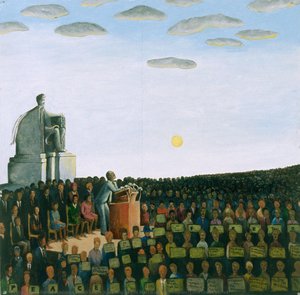
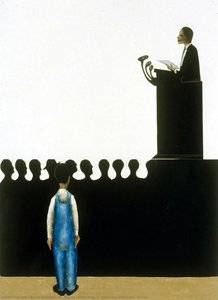
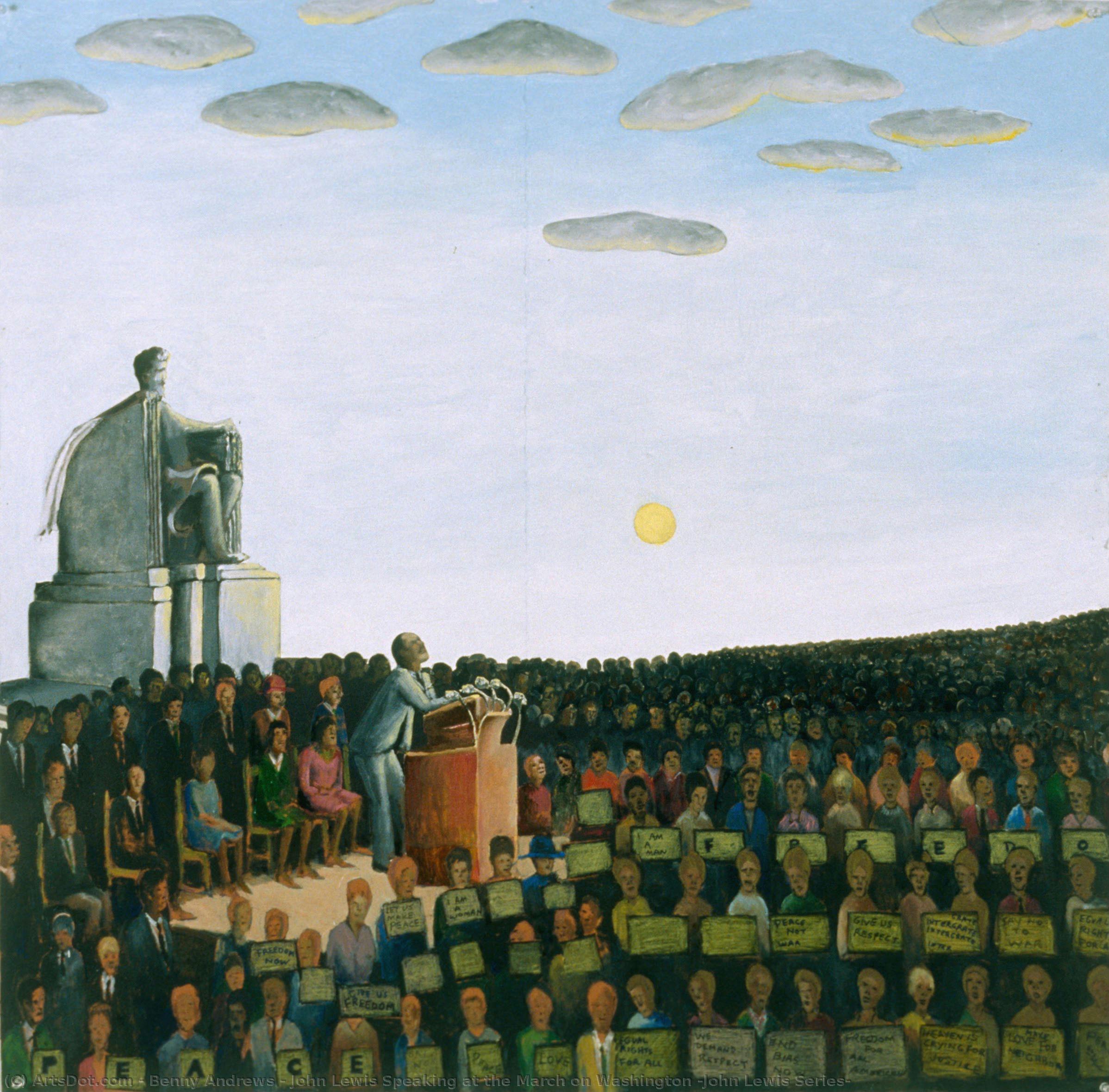
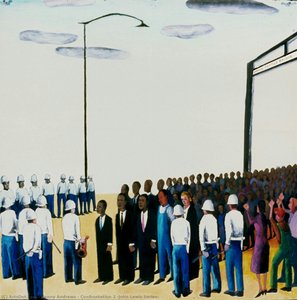
John Lewis Speaking at the March on Washington (John Lewis Series)
 Oil On Canvas
- WallArt
- Contemporary Realism
 2005
2005- Contemporary
 National Center for Civil and Human Rights
 Read More
Giclée / Art Print
Museum-quality giclée or canvas print with fast production and flexible finish options. ( Buy Hand Made Painting Buy Image)




P118B $10

P118H $10

P118W $10

P438Z $10

P508JH $12

P508YH $12

P805H $10

P805Z $10

P919BZ $10

P919G $10

P919XJ $10

P959ZH $10

P968JZ $12

W106C $8

W218G $10

W218JH $8

W218Y $10

W307PJ $10

W316G $10

W316PJ $8

W316Y $10

W398PJ $8

W4111J $10

W500HY $15

W500JH $15

W692G $12

W849H $8

W940BG $15

W953PJ $8




Pick from our preset sizes that match the artwork's original proportions.

You may enter your own dimensions to fit a specific frame or space. If your selected size does not match the original image's proportions, we will either crop the artwork or extend the image with a mirrored or solid-fill edge. A digital mockup will be sent for your approval before production begins.
Please note that the on-screen preview does not reflect the actual cropping or extension. Only the mockup will accurately show the final composition.
While custom sizes are available, we recommend selecting a dimension from the predefined list to preserve the original proportions.
Worldwide Delivery () in 2 weeks instead of standard 4/5 weeks. (26 August)

Free Worldwide Express Shipping

High-Quality Linen Canvas

Full Shipping Insurance

Customs Tax Refund Guarantee

True Color Matching Guarantee

60-Day Return Policy (Defects Only)

100% Money-Back Guarantee

Bulk Discount Offer
 Glass option is only available in size under 110 CM

John Lewis Speaking at the March on Washington (John Lewis Series)
Giclée / Art Print
Reproduction Size
-


Total Price
$ 63
Collectible Description
A Moment Frozen in Justice
In the profound depths of Benny Andrews' John Lewis Speaking at the March on Washington, we are not merely observing a historical reenactment; we are invited into the very heartbeat of the American Civil Rights Movement. This monumental mural, part of the evocative John Lewis Series, captures the electric atmosphere of 1963, a time when the air was thick with the scent of change and the weight of righteous demand. Andrews, an artist whose soul was deeply entwisted with the pursuit of social justice, masterfully portrays John Lewis at the height of his oratorical power. As Lewis delivers his passionate plea for equality, the canvas vibrates with the collective energy of a crowd gathered not just to listen, but to participate in the forging of a new destiny. The scene is a breathtaking testament to the strength found in unity and the courage required to stand against the tides of oppression.
The artist’s technical prowess serves to heighten this emotional resonance. Utilizing oil on canvas, Andrews employs sophisticated layering techniques that imbue the work with a palpable, sculptural texture. This depth allows the viewer to feel the physical presence of the crowd and the gravity of the moment. His style, rooted in a powerful Realism, is characterized by expressive brushstrokes that dance between solemnity and dynamism. The color palette is intentionally restrained—a soulful arrangement of earthy browns, deep reds, and warm yellows. This muted tonality does not diminish the scene; rather, it anchors it in a sense of earnest deliberation and resolute determination, ensuring that the focus remains on the profound gravity of the historical event being commemorated.
Symbolism and the Weight of Time
Beyond the immediate visual impact of the figures, Andrews weaves subtle layers of meaning into the composition that demand contemplative study. In the upper left corner, a solitary clock rests within the frame, acting as a poignant symbol for the relentless passage of time. It serves as a quiet reminder to the viewer that progress is rarely instantaneous; it requires persistent effort, unwavering vigilance, and the patience to endure through long seasons of struggle. This temporal element contrasts beautifully with the frozen, eternal moment of Lewis’s speech, suggesting that while the event was a singular point in history, its implications ripple infinitely into the future.
The composition itself is a study in collective identity. The arrangement of the crowd—some figures pressed close to the front, others receding into the background—creates a sense of vast, inclusive movement. The scattered chairs and the meticulous attention to the facial expressions of the listeners transform the painting from a portrait of a leader into a portrait of a people. For the collector or the interior designer, this piece offers more than just aesthetic beauty; it provides a profound narrative anchor for any space. It is an artwork that commands attention through its historical weight and inspires through its message of hope, making it a magnificent centerpiece for those who value art that speaks to the enduring human spirit.
Related Artworks

Artist Biography
Benny Andrews: Life & Legacy
Early Life and Education
- Born: November 13, 1930, in Plainview, Georgia.
- Andrews grew up in a large family of ten children. His mother, Viola, instilled the importance of education, religion, and freedom of expression.
- Early Influences: His father, George Andrews, was a self-taught artist known locally as the “Dot Man,” who sparked Benny’s initial interest in art.
- He attended Fort Valley College on a two-year scholarship but left due to financial constraints and academic struggles.
- Andrews served in the U.S. Air Force from 1950 before pursuing formal artistic training.
Artistic Development & Career
- Andrews received his BFA from the School of the Art Institute of Chicago.
- He held his first solo exhibition in New York City in 1962, marking a significant step in his career.
- From 1968 to 1997, Andrews dedicated himself to teaching at Queens College, City University of New York.
- Prison Arts Program: He founded and directed a groundbreaking prison arts program that became a national model for rehabilitation through artistic expression.
- His work evolved into an expressive style characterized by bold colors and forms used to convey powerful emotions and social commentary.
Themes & Influences
- Key Themes: Andrews’ art frequently addressed themes of suffering, injustice, racial inequality, and the African American experience.
- His work often served as a visual protest against social and political issues of his time.
- He drew inspiration from personal experiences, observations of everyday life, and historical events.
- Artistic Influences: While developing his unique style, Andrews was influenced by various artistic movements, including Expressionism and Social Realism.
Notable Works
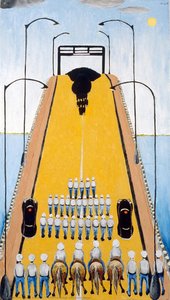
- Confrontation 2 (John Lewis Series): A powerful painting reflecting on the Civil Rights Movement and the struggles for equality.
- No More Games: A work that confronts issues of social injustice and inequality with raw emotion.
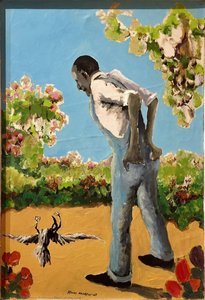
- Death of the Crow (1965): An early example of his expressive style, rendered in black and white oil on canvas.
Legacy & Historical Significance
- Benny Andrews’ work is featured in museum collections such as the Museum Collection Hugo Fischer (Bühl, Germany) and the Ogden Museum of Southern Art in New Orleans.
- Impact on Arts Education: His prison arts program demonstrated the transformative power of art for individuals facing incarceration.
- Andrews’ artistic contributions helped to raise awareness about social issues and promote dialogue around race, inequality, and justice.
- He passed away on November 10, 2006, leaving behind a lasting legacy as an artist, educator, and advocate for social change.
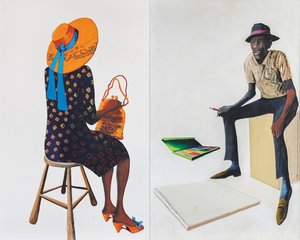
Benny Andrews
1930 - 2006 , United States of America
Quick Facts
- Dot Man')", 'Movement: Expressionism
- Birth Date: November 13, 1930
- Birth Place: Plainview, Georgia, USA
- Death Date: November 10, 2006
- Influenced: None, 'influenced by':
- Name: Benny Andrews
- Nationality: American
- Notable Works:
- Confrontation 2 (John Lewis Series)
- No More Games
- Death of the Crow
Related Articles
John Singer Sargent's 25 Masterpieces: Portraits & Beyond | ArtsDot
Explore 25 iconic John Singer Sargent paintings – from dazzling portraits to Impressionist landscapes. Discover the stories behind Madame X, El Jaleo & more! Find museum-quality art reproductions and elevate your home decor with ArtsDot.com.

John Constable's Masterpieces: Explore 25 Iconic Landscapes for Your Home
Journey through John Constable's 25 most celebrated landscapes. Explore Romanticism, Dedham Vale & his masterful use of light in iconic paintings like 'Hay Wain'. Find museum-quality art reproductions and elevate your home decor on ArtsDot.com.

John Frederick Lewis: Orientalism, Detail & Genre Painting in 19th-Century British Art
Explore the captivating Orientalist paintings of John Frederick Lewis! Discover his mastery of detail, genre scenes & influence on 19th-century British art. Learn about his life, techniques & legacy at ArtsDot.
Benny Andrews: A Life Painted in Layers – Narrative, Identity & the American Experience
Explore the powerful life & art of Benny Andrews – a pivotal figure in African American expressionism. Discover his unique collage style, activism, and poignant depictions of identity & social justice. A must-read for collectors.

Edward Morland Lewis: A Rising Star of Victorian Narrative Realism
Explore the captivating works of Edward Morland Lewis, a key figure in Victorian genre painting. Discover his realistic depictions of everyday life, artistic influences, and current market value with ArtsDot.