 Preview
 Send
Send Share
Share
 Details

 Download
 Similars
 X-Ray
X-Ray Diaporama
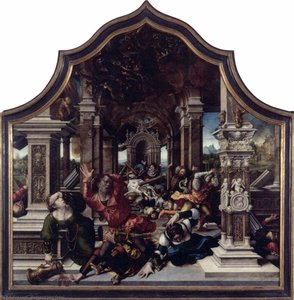
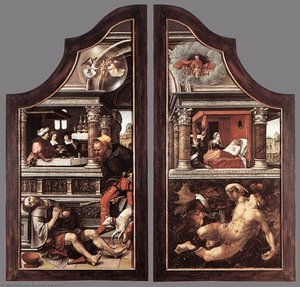
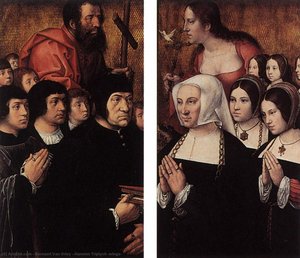
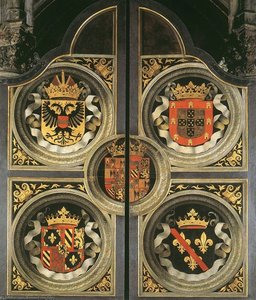
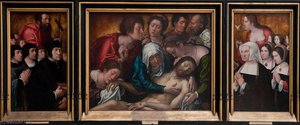
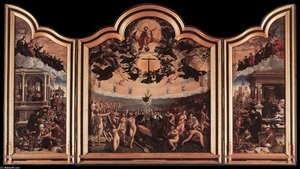
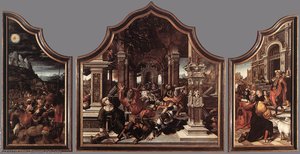
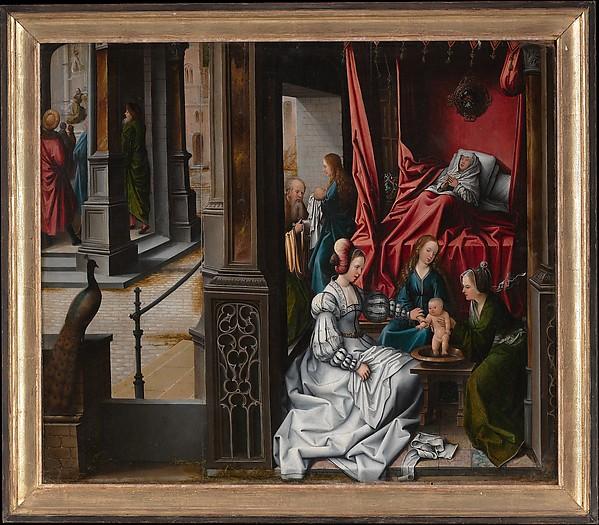
The Birth and Naming of Saint John the Baptist (reverse) Trompe l'oeil with Painting of The Man of Sorrows
 1514
1514 64.0 x 76.0 cm
 Read More
Hand Made Oil Reproduction
Hand-painted oil on canvas in your size and frame, made to order by our artists. ( Buy Print Buy Image)




































Pick from our preset sizes that match the artwork's original proportions.

You may enter your own dimensions to fit a specific frame or space. If your selected size does not match the original image's proportions, we will either crop the artwork or extend the painting with additional hand-painted elements. A digital mockup will be sent for your approval before production begins.
Please note that the on-screen preview does not reflect the actual cropping or extension. Only the mockup will accurately show the final composition.
While custom sizes are available, we recommend selecting a dimension from the predefined list to preserve the original proportions.
After order, ArtsDot.com team will email client for instructions and provide a mockup preview
Worldwide Delivery () in 3/4 weeks instead of standard 5 weeks. (16 August). No compromise on quality.

Free Worldwide Express Shipping

High-Quality Linen Canvas

Full Shipping Insurance

Customs Tax Refund Guarantee

True Color Matching Guarantee

60-Day Return Policy (Defects Only)

100% Money-Back Guarantee

Bulk Discount Offer
 Glass option is only available in size under 110 CM

The Birth and Naming of Saint John the Baptist (reverse) Trompe l'oeil with Painting of The Man of Sorrows
Reproduction Medium
Reproduction Size
-


Total Price
$ 263
Related Artworks
Artist Biography
Giovanni da Udine: A Pioneer of Stucco and Neoclassical Grace
Born in Udine, Italy, on October 27th, 1487, Giovanni da Udine emerged as a pivotal figure during the High Renaissance, leaving an indelible mark not just as a painter but as a master craftsman deeply invested in reviving classical aesthetics. His life spanned nearly seven decades, encompassing periods of intense artistic activity in Rome, Florence, Venice, and ultimately his lifelong residence in Udine. While often overshadowed by the towering figures of Raphael and Michelangelo, Giovanni’s contributions were crucial to shaping the visual language of the era, particularly through his innovative work with stucco and his influence on Neoclassical design.
Giovanni's early training remains somewhat shrouded in mystery, though he likely received instruction from local artists in Udine. However, it was his time in Rome during the 1510s that truly defined his career. He quickly established himself as a key assistant to Raphael, immersing himself in the burgeoning artistic environment of the Vatican and absorbing the master’s sophisticated techniques. This period witnessed a renewed fascination with antiquity, fueled by archaeological discoveries – particularly those unearthed by Cardinal Ippolito de' Medici – which sparked a desire to emulate the elegance and grandeur of ancient Roman art. Giovanni embraced this revival wholeheartedly, becoming a leading proponent of incorporating classical motifs into his work.
The Vatican Loggie: A Showcase of Innovation
Giovanni’s most celebrated achievement is undoubtedly his involvement in decorating the Vatican Loggie, a series of vaulted rooms within the Apostolic Palace. Between 1517 and 1519, he collaborated with Raphael on these monumental frescoes, creating intricate stucco panels that adorned the walls and ceilings. These works represent a remarkable synthesis of painting and sculpture, demonstrating Giovanni’s mastery of both mediums. The Loggie showcased his innovative approach to stucco decoration – a technique involving the application of plaster in relief, mimicking sculpted forms. He skillfully blended classical architectural elements with fantastical creatures, grotesque figures, and mythological scenes, creating a vibrant and dynamic visual narrative.
The style evident in the Vatican Loggie—characterized by its lightness, grace, and delicate detailing—quickly gained popularity throughout Europe. Giovanni’s work served as a model for Neoclassical designers, who sought to emulate the refined elegance of antiquity. The influence extended far beyond Italy, shaping decorative schemes in palaces and public buildings across France, England, and Germany. His ability to seamlessly integrate classical forms with imaginative embellishments established a new standard for ornamental design.
Beyond Stucco: A Painter of Subtle Beauty
While Giovanni is most renowned for his stucco work, he was also a skilled painter in his own right. His paintings often reflected the same principles of elegance and restraint that characterized his decorative panels. He favored muted colors, subtle gradations of tone, and a refined sense of composition. Unlike the bold, dramatic styles prevalent at the time, Giovanni’s paintings possessed a quiet beauty, imbued with an understated grace.
His subjects frequently included mythological scenes, portraits, and allegorical compositions. His depictions of figures were particularly notable for their delicate modeling and expressive gestures. He demonstrated a keen eye for detail, capturing the nuances of human expression and the textures of drapery. Though less prolific as a painter than he was as a stuccoist, his paintings stand as testaments to his artistic versatility and his commitment to classical ideals.
Legacy and Historical Significance
Giovanni da Udine died in Rome on 1561 or 1564. His legacy extends far beyond the immediate impact of his work on the Vatican Loggie. He played a crucial role in reviving interest in ancient techniques and aesthetics, shaping the visual vocabulary of the Neoclassical movement. His innovative use of stucco, combined with his refined painting style, established him as a pivotal figure in bridging the gap between the High Renaissance and the subsequent artistic developments of the 17th century.
Giovanni’s influence can be seen in countless buildings and decorative schemes throughout Europe, demonstrating the enduring power of his vision. He remains an important artist to study for anyone interested in understanding the complex interplay of art, architecture, and cultural revival during the Renaissance. His work serves as a reminder that even seemingly specialized techniques – like stucco decoration – can have profound and far-reaching consequences on the course of artistic history.
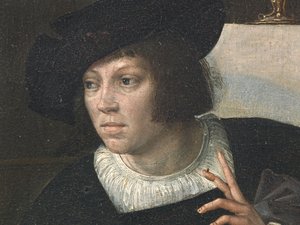
bernaert van orley
1487 - 1541 , Belgium
Quick Facts
- Artistic Movement Or Style: Neoclassicism, Stucco
- Artists Who Influenced This Artist: ['None],\n "Artists or movements influenced by this artist": [Raphael']
- Date Of Birth: Oct 27, 1487
- Date Of Death: 1561/4
- Full Name: Giovanni da Udine
- Nationality: Italian
- Notable Artworks: ['Vatican Loggie']
- Place Of Birth: Udine, Italy