 Preview
 Send
Send Share
Share
 Details

 Download
 Similars
 X-Ray
X-Ray Diaporama
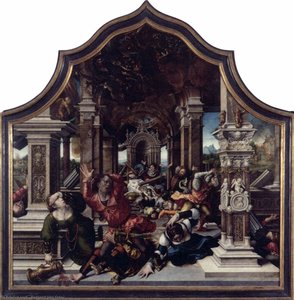
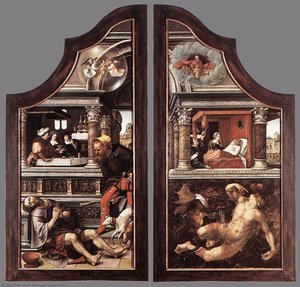
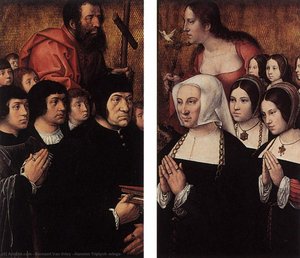
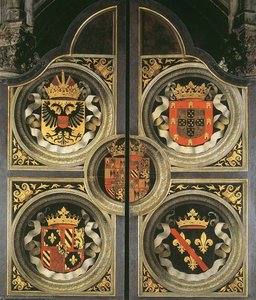
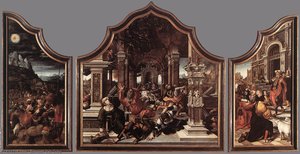
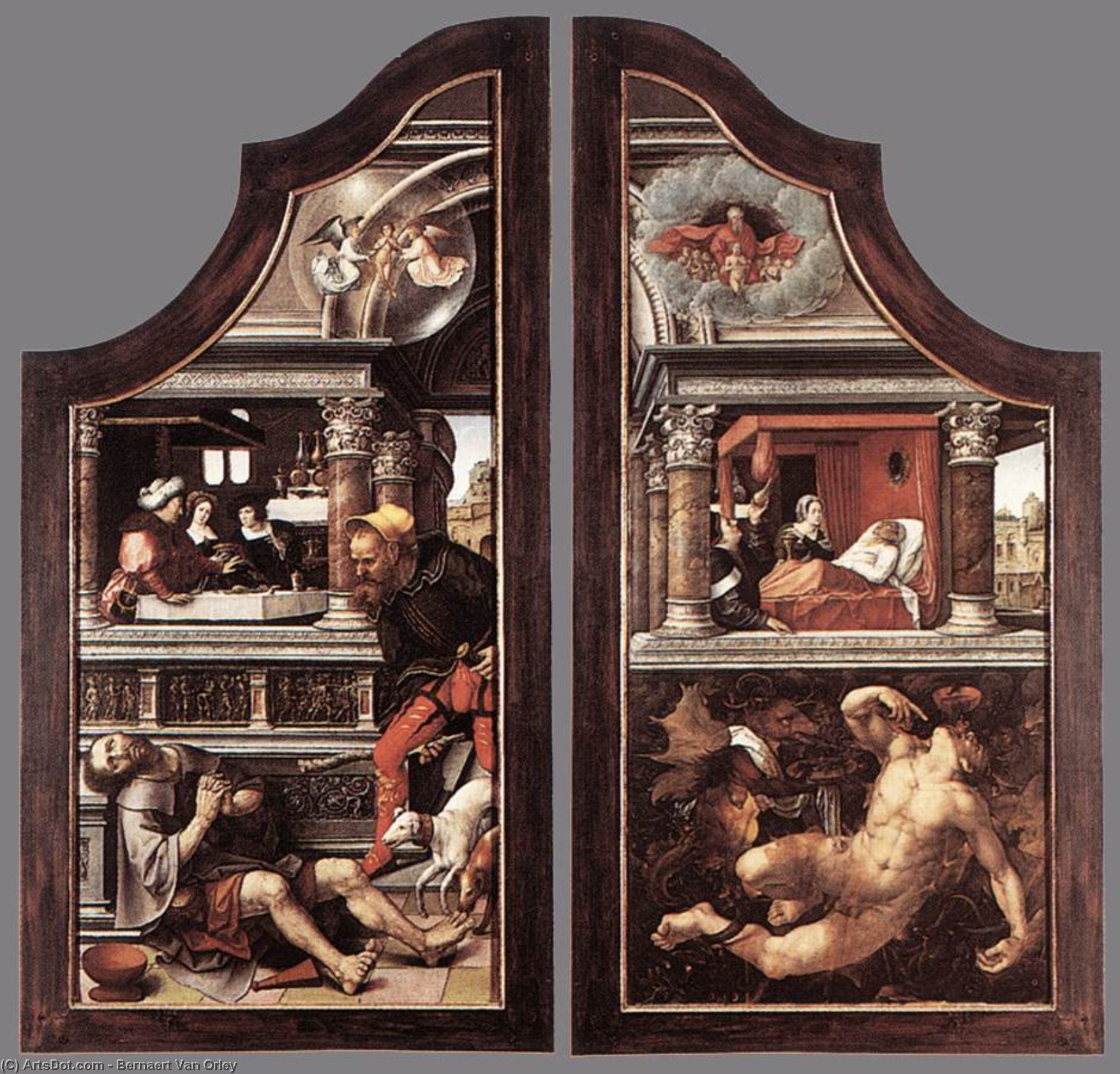
Triptych of Virtue of Patience (closed)
 Oil On Canvas
- WallArt
- Northern Renaissance
 1521
1521- Renaissance
 174.0 x 80.0 cm
 Musées Royaux des Beaux-Arts
 Read More
Hand Made Oil Reproduction
Hand-painted oil on canvas in your size and frame, made to order by our artists. ( Buy Print Buy Image)




P118B $10

P118H $10

P118W $10

P438Z $10

P508JH $12

P508YH $12

P805H $10

P805Z $10

P919BZ $10

P919G $10

P919XJ $10

P959ZH $10

P968JZ $12

W106C $8

W218G $10

W218JH $8

W218Y $10

W307PJ $10

W316G $10

W316PJ $8

W316Y $10

W398PJ $8

W4111J $10

W500HY $15

W500JH $15

W692G $12

W849H $8

W940BG $15

W953PJ $8




Pick from our preset sizes that match the artwork's original proportions.

You may enter your own dimensions to fit a specific frame or space. If your selected size does not match the original image's proportions, we will either crop the artwork or extend the painting with additional hand-painted elements. A digital mockup will be sent for your approval before production begins.
Please note that the on-screen preview does not reflect the actual cropping or extension. Only the mockup will accurately show the final composition.
While custom sizes are available, we recommend selecting a dimension from the predefined list to preserve the original proportions.
After order, ArtsDot.com team will email client for instructions and provide a mockup preview
Worldwide Delivery () in 3/4 weeks instead of standard 5 weeks. (22 August). No compromise on quality.

Free Worldwide Express Shipping

High-Quality Linen Canvas

Full Shipping Insurance

Customs Tax Refund Guarantee

True Color Matching Guarantee

60-Day Return Policy (Defects Only)

100% Money-Back Guarantee

Bulk Discount Offer
 Glass option is only available in size under 110 CM

Triptych of Virtue of Patience (closed)
Reproduction Medium
Reproduction Size
-


Total Price
$ 263
Artwork Description
A Devotional Journey Through Virtue
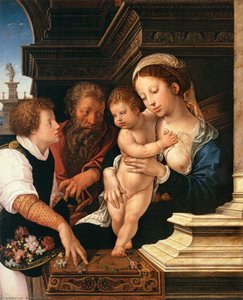
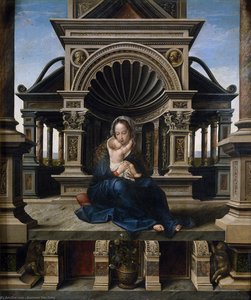
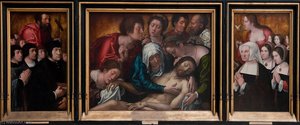
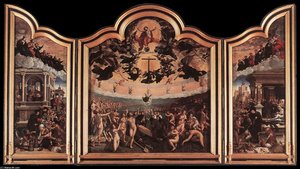
Before you stands a breathtaking testament to Renaissance piety, the Triptych of Virtue of Patience. Dating from 1521, this magnificent work by bernaert van orley invites the viewer into a deeply symbolic contemplation of the human spirit's highest ideals. The structure itself—a triptych—was not merely a display choice but an architectural device meant to guide the eye through a narrative progression of spiritual understanding. Van Orley masterfully employed this format to present three distinct, yet interconnected, virtues: patience, humility, and charity. The overall effect is one of profound solemnity, wrapped in the rich, enveloping grandeur suggested by its ornate frame.
Symbolism Woven in Red Drapery
Observe how the recurring motif of red clothing ties the disparate scenes together, acting as a visual thread binding the concepts of patience, humility, and charity into a single devotional tapestry. In the first panel, the kneeling man before the seated woman embodies the quiet endurance of Patience; his posture speaks volumes without uttering a word. The second scene offers a stark meditation on Humility, depicted by the bound figure lying supine—a physical representation of surrender to divine will. Finally, the third panel glows with the warmth of Charity, where the shared repose and the offering bowl suggest selfless giving. These are not just scenes from history; they are allegories for a life lived according to Christian virtue.
Mastery in Technique and Composition
Van Orley’s technique showcases a sophisticated handling of figures and drapery characteristic of the early sixteenth century. While the artist's biography mentions influences touching upon Neoclassical grace, here we see that influence channeled through a devotional lens. The composition is meticulously balanced; even with several background figures populating the space, the focus remains powerfully drawn to the central interactions. The richness of the pigments, particularly those deep reds against the skin tones and architectural backdrops, speaks to the expense and skill involved in its creation. It is an academic display of pictorial narrative, where every fold of cloth and gesture holds learned meaning.
An Echo for the Modern Sanctuary
For the collector or designer seeking art that transcends mere decoration, this triptych offers profound resonance. Its scale (174 x 80 cm) allows it to anchor a significant wall space, lending an immediate air of cultivated history and spiritual depth to any room. Owning a reproduction of this piece is not simply acquiring a painting; it is curating a focal point for contemplation. It serves as a constant, beautiful reminder that the greatest human achievements are often found in the quiet acts of enduring patience, accepting humility, and practicing boundless charity.
Related Artworks


Artist Biography
Giovanni da Udine: A Pioneer of Stucco and Neoclassical Grace
Born in Udine, Italy, on October 27th, 1487, Giovanni da Udine emerged as a pivotal figure during the High Renaissance, leaving an indelible mark not just as a painter but as a master craftsman deeply invested in reviving classical aesthetics. His life spanned nearly seven decades, encompassing periods of intense artistic activity in Rome, Florence, Venice, and ultimately his lifelong residence in Udine. While often overshadowed by the towering figures of Raphael and Michelangelo, Giovanni’s contributions were crucial to shaping the visual language of the era, particularly through his innovative work with stucco and his influence on Neoclassical design.
Giovanni's early training remains somewhat shrouded in mystery, though he likely received instruction from local artists in Udine. However, it was his time in Rome during the 1510s that truly defined his career. He quickly established himself as a key assistant to Raphael, immersing himself in the burgeoning artistic environment of the Vatican and absorbing the master’s sophisticated techniques. This period witnessed a renewed fascination with antiquity, fueled by archaeological discoveries – particularly those unearthed by Cardinal Ippolito de' Medici – which sparked a desire to emulate the elegance and grandeur of ancient Roman art. Giovanni embraced this revival wholeheartedly, becoming a leading proponent of incorporating classical motifs into his work.
The Vatican Loggie: A Showcase of Innovation
Giovanni’s most celebrated achievement is undoubtedly his involvement in decorating the Vatican Loggie, a series of vaulted rooms within the Apostolic Palace. Between 1517 and 1519, he collaborated with Raphael on these monumental frescoes, creating intricate stucco panels that adorned the walls and ceilings. These works represent a remarkable synthesis of painting and sculpture, demonstrating Giovanni’s mastery of both mediums. The Loggie showcased his innovative approach to stucco decoration – a technique involving the application of plaster in relief, mimicking sculpted forms. He skillfully blended classical architectural elements with fantastical creatures, grotesque figures, and mythological scenes, creating a vibrant and dynamic visual narrative.
The style evident in the Vatican Loggie—characterized by its lightness, grace, and delicate detailing—quickly gained popularity throughout Europe. Giovanni’s work served as a model for Neoclassical designers, who sought to emulate the refined elegance of antiquity. The influence extended far beyond Italy, shaping decorative schemes in palaces and public buildings across France, England, and Germany. His ability to seamlessly integrate classical forms with imaginative embellishments established a new standard for ornamental design.
Beyond Stucco: A Painter of Subtle Beauty
While Giovanni is most renowned for his stucco work, he was also a skilled painter in his own right. His paintings often reflected the same principles of elegance and restraint that characterized his decorative panels. He favored muted colors, subtle gradations of tone, and a refined sense of composition. Unlike the bold, dramatic styles prevalent at the time, Giovanni’s paintings possessed a quiet beauty, imbued with an understated grace.
His subjects frequently included mythological scenes, portraits, and allegorical compositions. His depictions of figures were particularly notable for their delicate modeling and expressive gestures. He demonstrated a keen eye for detail, capturing the nuances of human expression and the textures of drapery. Though less prolific as a painter than he was as a stuccoist, his paintings stand as testaments to his artistic versatility and his commitment to classical ideals.
Legacy and Historical Significance
Giovanni da Udine died in Rome on 1561 or 1564. His legacy extends far beyond the immediate impact of his work on the Vatican Loggie. He played a crucial role in reviving interest in ancient techniques and aesthetics, shaping the visual vocabulary of the Neoclassical movement. His innovative use of stucco, combined with his refined painting style, established him as a pivotal figure in bridging the gap between the High Renaissance and the subsequent artistic developments of the 17th century.
Giovanni’s influence can be seen in countless buildings and decorative schemes throughout Europe, demonstrating the enduring power of his vision. He remains an important artist to study for anyone interested in understanding the complex interplay of art, architecture, and cultural revival during the Renaissance. His work serves as a reminder that even seemingly specialized techniques – like stucco decoration – can have profound and far-reaching consequences on the course of artistic history.
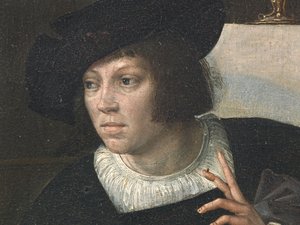
bernaert van orley
1487 - 1541 , Belgium
Quick Facts
- Artistic Movement Or Style: Neoclassicism, Stucco
- Artists Who Influenced This Artist: ['None],\n "Artists or movements influenced by this artist": [Raphael']
- Date Of Birth: Oct 27, 1487
- Date Of Death: 1561/4
- Full Name: Giovanni da Udine
- Nationality: Italian
- Notable Artworks: ['Vatican Loggie']
- Place Of Birth: Udine, Italy
Related Articles
25 Klimt Masterpieces: A Journey Through Iconic Art & Decor
Delve into the world of Gustav Klimt with our top 25 masterpieces! Explore his iconic paintings – 'The Kiss,' 'Portrait of Adele,' and more. Discover museum-quality reproductions & curated decor ideas. Explore the full collection online at ArtsDot.com.
The Weight of Virtue and Vice: Exploring Moral Themes in Art History
Explore the captivating world of moral allegory in art history! Discover how Renaissance masters like Bosch, Botticelli & Lotto depicted virtue & vice. Expert analysis and stunning reproductions at ArtsDot.
Northern Renaissance Masters: 10 Artworks That Shaped History |
Journey through the Northern Renaissance! Explore 10 iconic paintings by Jan van Eyck, Dürer & Bosch. Discover their stories, techniques & lasting impact. Find museum-quality art reproductions & elevate your home decor on .
Top 10 Masterpieces for Your Living Room: Iconic Paintings & Art Decor Ideas |
Transform your living room with iconic art! Explore our guide to the Top 10 most famous paintings – from Van Gogh's Starry Night to Mona Lisa. Discover artist stories, techniques & find museum-quality reproductions for timeless decor. Explore the full collection on
Unveiling Hidden Meanings: Allegory in Western Art History
Explore the rich history of allegory in Western art! Discover hidden meanings in masterpieces from Giotto to Bosch & beyond. Expert insights for collectors and enthusiasts at ArtsDot.