 Preview
 Send
Send Share
Share
 Details

 Download
 Similars
 X-Ray
X-Ray Diaporama
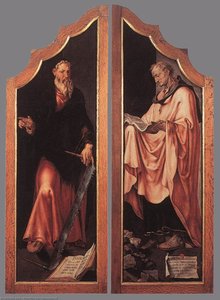
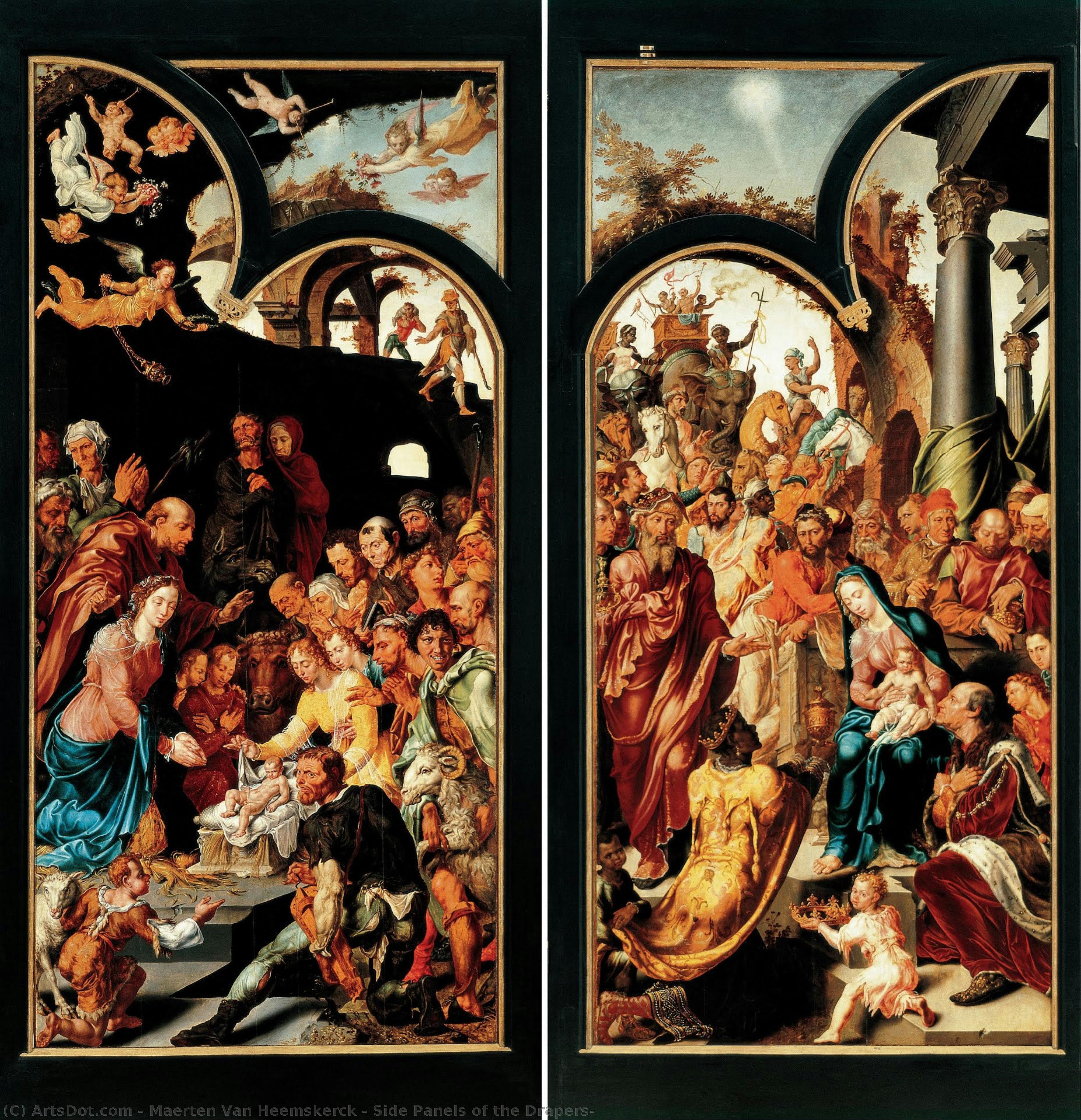
Side Panels of the Drapers


 Read More
Hand Made Oil Reproduction
Hand-painted oil on canvas in your size and frame, made to order by our artists. ( Buy Print Buy Image)




P118B $10

P118H $10

P118W $10

P438Z $10

P508JH $12

P508YH $12

P805H $10

P805Z $10

P919BZ $10

P919G $10

P919XJ $10

P959ZH $10

P968JZ $12

W106C $8

W218G $10

W218JH $8

W218Y $10

W307PJ $10

W316G $10

W316PJ $8

W316Y $10

W398PJ $8

W4111J $10

W500HY $15

W500JH $15

W692G $12

W849H $8

W940BG $15

W953PJ $8




Pick from our preset sizes that match the artwork's original proportions.

You may enter your own dimensions to fit a specific frame or space. If your selected size does not match the original image's proportions, we will either crop the artwork or extend the painting with additional hand-painted elements. A digital mockup will be sent for your approval before production begins.
Please note that the on-screen preview does not reflect the actual cropping or extension. Only the mockup will accurately show the final composition.
While custom sizes are available, we recommend selecting a dimension from the predefined list to preserve the original proportions.
After order, ArtsDot.com team will email client for instructions and provide a mockup preview
Worldwide Delivery () in 3/4 weeks instead of standard 5 weeks. (16 August). No compromise on quality.

Free Worldwide Express Shipping

High-Quality Linen Canvas

Full Shipping Insurance

Customs Tax Refund Guarantee

True Color Matching Guarantee

60-Day Return Policy (Defects Only)

100% Money-Back Guarantee

Bulk Discount Offer
 Glass option is only available in size under 110 CM

Side Panels of the Drapers
Reproduction Medium
Reproduction Size
-


Total Price
$ 263
Artwork Description
A Window into Haarlem Life: The Side Panels of the Drapers
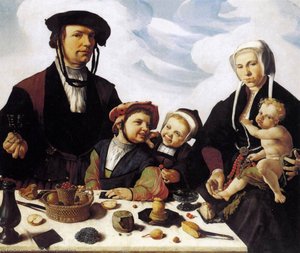
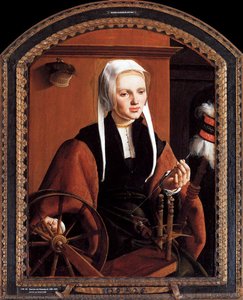
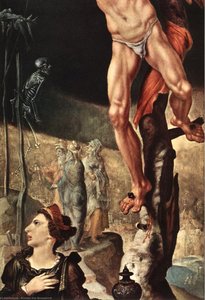
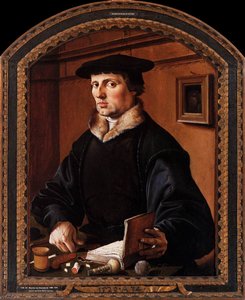
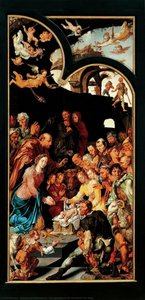
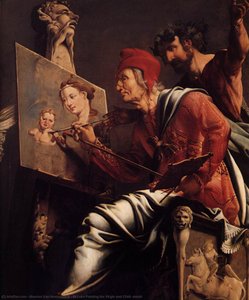
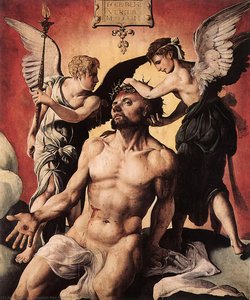
Maerten van Heemskerck’s “Side Panels of the Drapers,” created around 1547, offer a remarkably intimate glimpse into the daily rhythms and social dynamics of 16th-century Haarlem. More than mere decorative elements for the Guild of Drapers’ altar in St Bavo Church, these panels—each measuring nearly two and a half feet tall—are vibrant snapshots of ordinary life, rendered with an unprecedented level of realism and psychological depth for their time. They represent a pivotal shift in Dutch art, moving away from purely religious iconography towards depictions of secular subjects that reflected the burgeoning merchant class and their growing influence.
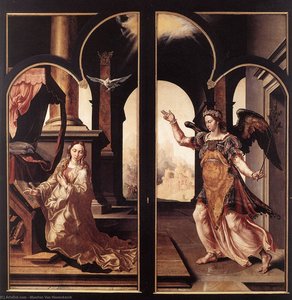
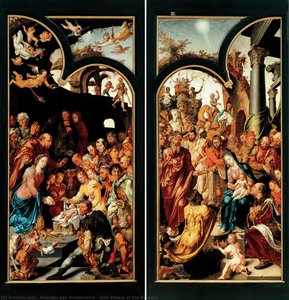
The panels themselves are constructed as diptychs, each side presenting a distinct scene. The left panel depicts an Annunciation, showcasing Mary kneeling in prayer before a Bible open to reveal scripture. Her serene expression and modest attire speak of piety and humility. Above her, the Archangel Gabriel delivers the momentous news of Christ’s birth, his gesture conveying both urgency and reverence. The dove descending from heaven symbolizes the Holy Spirit, completing this sacred narrative. However, it's the right panel that truly captivates – an Adoration scene brimming with human interaction.
The Drama of the Magi
The central focus of the right panel is a gathering of Magi—wise men from the East—adoring the infant Jesus. But Heemskerck doesn’t simply present them as static figures; he imbues each Magus with distinct personality and emotion. To the right, a prominent figure, identified by scholars as Maerten van Heemskerck himself, stands amongst the group, his beard flowing, his gaze directed towards the scene. This inclusion is significant – it suggests that the artist wasn’t merely documenting an event but actively participating in it, elevating the panel to a level of personal engagement and storytelling.
The composition is masterfully balanced, with the figures arranged in a dynamic pyramid shape. Each Magus carries gifts—gold, frankincense, and myrrh—reflecting their status and devotion. The details are exquisite: the folds of their robes, the expressions on their faces, the textures of their garments – all rendered with meticulous precision using oil paint on panel. Heemskerck’s use of smalt, a vibrant blue pigment derived from cobalt glass, is particularly noteworthy, especially in Mary's robe, though centuries of fading have dulled its original brilliance.
A Renaissance Innovation
“Side Panels of the Drapers” are considered groundbreaking for their time. Prior to Heemskerck, depictions of everyday life were rare in Northern European art. His ability to capture not just the physical appearance but also the emotional nuances of his subjects—their gestures, expressions, and interactions—marked a significant departure from traditional religious iconography. This focus on human psychology and social interaction anticipated the rise of portraiture and genre painting that would characterize the Dutch Golden Age.
The panel’s acquisition by the city of Haarlem in 1581 underscores its importance as a symbol of civic pride and artistic achievement. It speaks to the guild's commitment to supporting the arts and celebrating their own heritage. The commission for a new centre panel, depicting the Massacre of the Innocents, further highlights the panel’s significance within the Guild’s visual narrative.
Collecting the Essence of Haarlem
Today, “Side Panels of the Drapers” offer a tangible connection to 16th-century Haarlem. They are not just beautiful paintings; they are windows into a bygone era, revealing the values, beliefs, and social dynamics of a thriving merchant city. Reproductions capture much of the original’s charm, but nothing truly replicates the depth of emotion and the meticulous detail that make this work so compelling. Consider a high-quality reproduction to bring this remarkable piece of Dutch art into your home – a testament to Heemskerck's innovative spirit and his profound understanding of the human condition.
Related Artworks
Artist Biography
early life and training
maerten van heemskerck, a prominent dutch portrait and religious painter, was born on june 1, 1498, in the village of heemskerk, north holland. his artistic journey began under the guidance of cornelius willemsz in haarlem, followed by a brief stint in delft with jan lucasz. eventually, he became a pupil of jan van scorel, adopting his teacher's italian-influenced style.career highlights
- maerten van heemskerck's work is characterized by its innovative blend of dutch and italian influences, as seen in his famous family portrait, considered the first of its kind in a long line of dutch family paintings.
- his collaboration with antonio da sangallo the younger, battista franco, and francesco de' rossi (il salviati) on the redecoration of the porta san sebastiano in rome, a triumphal arch in honor of charles v, showcases his rapid execution as a scene-painter.
- heemskerck's drawings of classical sculpture and architecture, now preserved in two sketchbooks at the kupferstichkabinett berlin, demonstrate his skill in capturing the essence of italian art.
notable works and legacy
- the donor and saint mary magdalene (view at ArtsDot)
- the virgin and saint john the evangelist (view at ArtsDot)
- samson shattering the pillars of the temple, maarten van heemskerck (view at ArtsDot)
conclusion
maerten van heemskerck's profound impact on the art world is undeniable. his works, now a part of various museum collections, including the rijksmuseum, continue to inspire artists and art enthusiasts alike. to explore more of his masterpieces, visit maerten van heemskerck's page on ArtsDot. for a deeper understanding of his life and works, refer to his biography on wikipedia.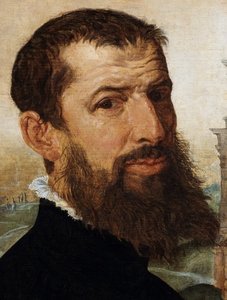
maerten van heemskerck
1498 - 1574
Quick Facts
- Artistic Movement Or Style: Mannerism
- Artists Who Influenced This Artist:
- Jan van Scorel
- Antonio da Sangallo the Younger
- Date Of Birth: June 1, 1498
- Date Of Death: October 1, 1574
- Full Name: Maerten Jacobsz van Heemskerck
- Nationality: Dutch
- Notable Artworks:
- Lamentation on the Dead Christ
- Pieter Jan Foppeszoon and his Family
- Christ as the Man of Sorrows
- Place Of Birth: Heemskerk, Netherlands
Related Articles
Van Gogh's Masterpieces: Explore 25 Iconic Paintings & Art for Your Home
Journey through Vincent van Gogh's 25 most iconic paintings! Explore 'Starry Night', 'Sunflowers,' and more—discover the stories, techniques & emotions behind these Post-Impressionist masterpieces. Find museum-quality art reproductions for your home at ArtsDot.com.
Maerten van Heemskerck: Bridging Mannerism & Renaissance Ideals
Explore the captivating world of Maerten van Heemskerck, a pivotal Dutch Renaissance painter bridging Mannerism & Italian influence. Discover his masterpieces and legacy with ArtsDot.

Rembrandt's Masterpieces: Explore 25 Iconic Paintings & Prints | ArtsDot
Journey through Rembrandt van Rijn's 25 most iconic paintings & etchings. Explore Dutch Golden Age masterpieces, dramatic chiaroscuro, and timeless portraits. Find museum-quality art reproductions to elevate your home decor on ArtsDot.com.
Adriaen van Ostade: A Master of Dutch Genre Painting & Social Commentary
Explore the life & work of Adriaen van Ostade, a leading Dutch Golden Age painter. Discover his realistic genre scenes, social commentary, and lasting influence on art history. Learn more at ArtsDot.
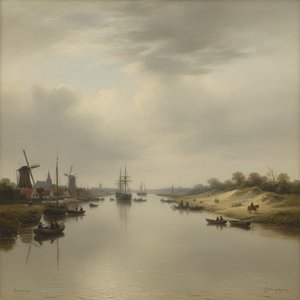
Jan van Goyen: Master of Dutch Landscape & Atmospheric Perspective
Discover Jan van Goyen, the master of Dutch landscape painting. Explore his subtle technique, atmospheric realism & lasting influence on art history. Learn about this 17th-century pioneer at ArtsDot.