 Preview
 Send
Send Share
Share
 Details

 Download
 Similars
 X-Ray
X-Ray Diaporama
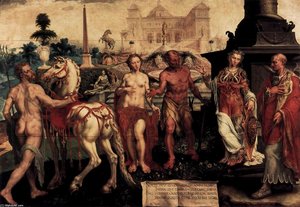
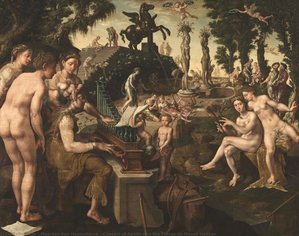
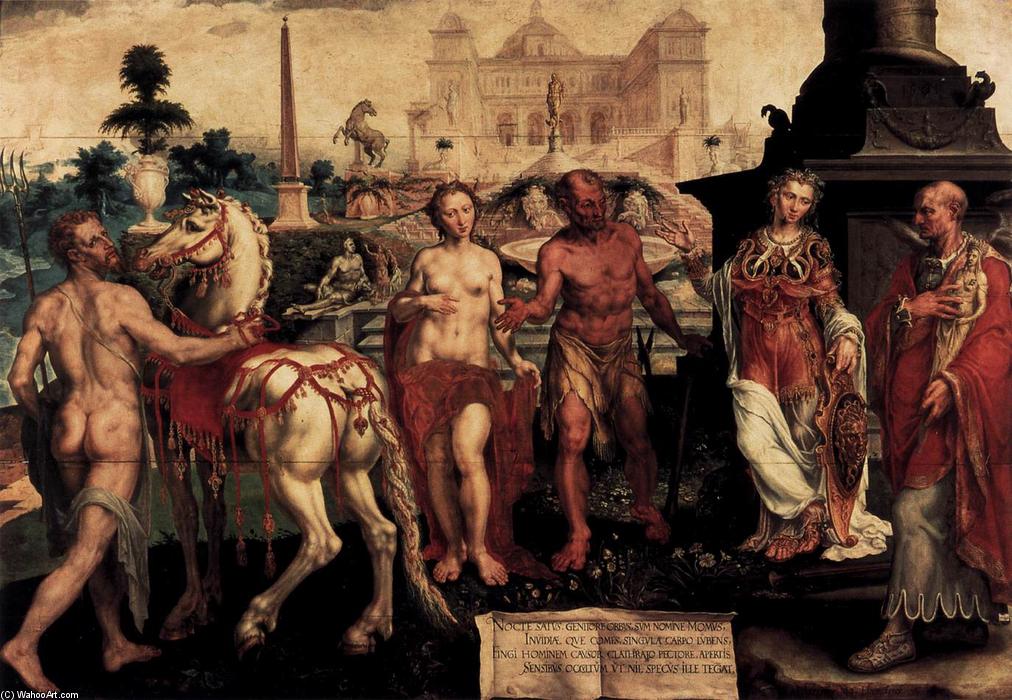
Momus Criticizes the Gods' Creations
 Oil On Canvas
- WallArt
- Mannerism (Late Renaissance)
 1561
1561 120.0 x 174.0 cm
 Staatliche Museen
 Read More
Hand Made Oil Reproduction
Hand-painted oil on canvas in your size and frame, made to order by our artists. ( Buy Print Buy Image)




P118B $10

P118H $10

P118W $10

P438Z $10

P508JH $12

P508YH $12

P805H $10

P805Z $10

P919BZ $10

P919G $10

P919XJ $10

P959ZH $10

P968JZ $12

W106C $8

W218G $10

W218JH $8

W218Y $10

W307PJ $10

W316G $10

W316PJ $8

W316Y $10

W398PJ $8

W4111J $10

W500HY $15

W500JH $15

W692G $12

W849H $8

W940BG $15

W953PJ $8




Pick from our preset sizes that match the artwork's original proportions.

You may enter your own dimensions to fit a specific frame or space. If your selected size does not match the original image's proportions, we will either crop the artwork or extend the painting with additional hand-painted elements. A digital mockup will be sent for your approval before production begins.
Please note that the on-screen preview does not reflect the actual cropping or extension. Only the mockup will accurately show the final composition.
While custom sizes are available, we recommend selecting a dimension from the predefined list to preserve the original proportions.
After order, ArtsDot.com team will email client for instructions and provide a mockup preview
Worldwide Delivery () in 3/4 weeks instead of standard 5 weeks. (16 August). No compromise on quality.

Free Worldwide Express Shipping

High-Quality Linen Canvas

Full Shipping Insurance

Customs Tax Refund Guarantee

True Color Matching Guarantee

60-Day Return Policy (Defects Only)

100% Money-Back Guarantee

Bulk Discount Offer
 Glass option is only available in size under 110 CM

Momus Criticizes the Gods' Creations
Reproduction Medium
Reproduction Size
-


Total Price
$ 263
Artwork Description
A Moment of Critical Divinity: Maerten van Heemskerck’s “Momus Criticizes the Gods’ Creations”
Maerten van Heemskerck’s 1561 painting, "Momus Criticizes the Gods' Creations," isn’t merely a depiction of mythological figures; it’s a vibrant tableau of intellectual and moral judgment. Housed within the Staatliche Museen in Berlin, this oil-on-canvas masterpiece transcends its historical context to resonate with a timeless exploration of critique, authority, and the inherent flaws within even divine creation. Van Heemskerck, a master of the Dutch Renaissance, skillfully blends the influence of Italian Mannerism – particularly evident in his use of perspective and dramatic lighting – with the grounded realism characteristic of his homeland. The painting pulsates with life, not through idealized beauty, but through a shrewd observation of human nature reflected within the divine realm.
The scene unfolds within a bustling gathering of Greek gods, each engaged in a carefully orchestrated display of their respective crafts. At the heart of this lively assembly stands Momus, the god of mockery and criticism, his posture radiating an almost palpable sense of dissatisfaction. He’s not wielding a weapon or commanding armies; instead, he holds a horse by its reins – a potent symbol of control and the power to evaluate. The presence of two horses, one positioned centrally and another slightly off-center on the left, adds a dynamic element to the composition, suggesting movement and an ongoing process of assessment. A book rests prominently on the right side of Momus, representing knowledge, wisdom, and the very foundation upon which judgment is built. The careful arrangement of these elements speaks volumes about Van Heemskerck’s deliberate construction of meaning.
The Renaissance Echoes: Context and Influences
To fully appreciate “Momus Criticizes the Gods' Creations,” it’s crucial to understand its historical context within the burgeoning Renaissance. The period witnessed a fervent revival of interest in classical Greek mythology, fueled by rediscovered texts and a renewed emphasis on humanism – an intellectual movement that celebrated human potential and valued reason alongside faith. Van Heemskerck, deeply immersed in this cultural shift, skillfully incorporates these themes into his work. The painting’s subject matter directly reflects the humanist desire to question established norms and challenge traditional authority. The gods themselves are not presented as infallible or untouchable; rather, they are subjected to Momus's critical gaze, mirroring the Renaissance spirit of inquiry and skepticism.
Furthermore, the painting draws parallels with earlier artistic traditions, particularly those depicting moral allegories. The composition echoes similar scenes found in medieval illuminated manuscripts and early Renaissance prints, where figures representing virtues and vices engaged in symbolic debates. However, Van Heemskerck elevates this tradition by imbuing it with a distinctly humanistic sensibility. The gods are not simply abstract concepts; they are portrayed as individuals with flaws and vulnerabilities, making their imperfections all the more relatable to the viewer.
Symbolism and Emotional Resonance
Beyond its historical context, “Momus Criticizes the Gods’ Creations” is rich in symbolic meaning. Momus himself embodies the spirit of critical inquiry – a reminder that even those in positions of power are subject to scrutiny. The horse he holds represents his ability to exert control over the narrative and expose flaws. The two horses symbolize the dual nature of judgment: one representing the central, focused assessment, while the other suggests the broader context within which it occurs. The book signifies the importance of knowledge and reason in discerning truth from falsehood.
The painting’s emotional impact is equally compelling. It evokes a sense of playful irony and subtle satire, inviting viewers to contemplate the nature of authority, the limitations of human judgment, and the inherent contradictions within even the most revered figures. The lively composition and vibrant colors contribute to an atmosphere of intellectual engagement, while the underlying critique serves as a poignant reminder that no one is exempt from scrutiny.
A Masterpiece in Reproduction: Bringing Van Heemskerck’s Vision to Life
As a handmade oil painting reproduction, “Momus Criticizes the Gods' Creations” offers a unique opportunity to experience the artistry and detail of this iconic work. Each brushstroke meticulously recreates Van Heemskerck’s masterful technique, capturing the nuances of light, shadow, and color that define his distinctive style. The reproduction faithfully preserves the painting’s dynamic composition, inviting viewers to immerse themselves in its world of critical divinity. Whether displayed as a statement piece in a contemporary interior or studied as an historical artifact, this reproduction serves as a lasting tribute to Van Heemskerck's artistic genius and enduring legacy.
Related Artworks

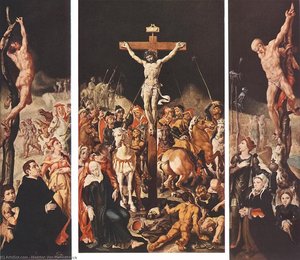
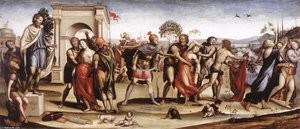
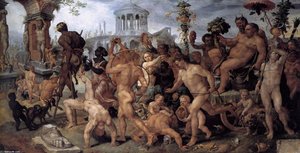
Artist Biography
early life and training
maerten van heemskerck, a prominent dutch portrait and religious painter, was born on june 1, 1498, in the village of heemskerk, north holland. his artistic journey began under the guidance of cornelius willemsz in haarlem, followed by a brief stint in delft with jan lucasz. eventually, he became a pupil of jan van scorel, adopting his teacher's italian-influenced style.career highlights
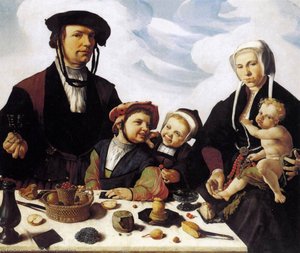
- maerten van heemskerck's work is characterized by its innovative blend of dutch and italian influences, as seen in his famous family portrait, considered the first of its kind in a long line of dutch family paintings.
- his collaboration with antonio da sangallo the younger, battista franco, and francesco de' rossi (il salviati) on the redecoration of the porta san sebastiano in rome, a triumphal arch in honor of charles v, showcases his rapid execution as a scene-painter.
- heemskerck's drawings of classical sculpture and architecture, now preserved in two sketchbooks at the kupferstichkabinett berlin, demonstrate his skill in capturing the essence of italian art.
notable works and legacy
- the donor and saint mary magdalene (view at ArtsDot)
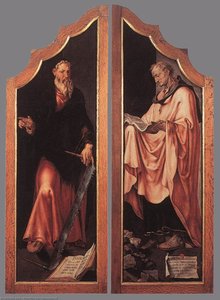
- the virgin and saint john the evangelist (view at ArtsDot)
- samson shattering the pillars of the temple, maarten van heemskerck (view at ArtsDot)
conclusion
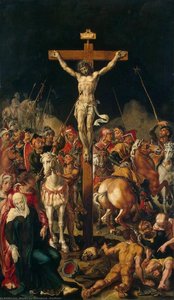
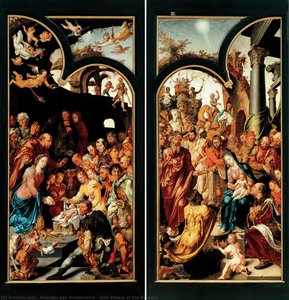
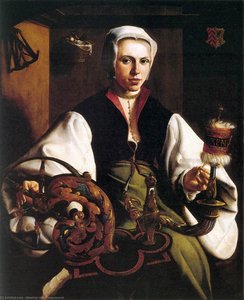
maerten van heemskerck's profound impact on the art world is undeniable. his works, now a part of various museum collections, including the rijksmuseum, continue to inspire artists and art enthusiasts alike. to explore more of his masterpieces, visit maerten van heemskerck's page on ArtsDot. for a deeper understanding of his life and works, refer to his biography on wikipedia.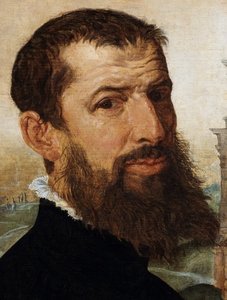
maerten van heemskerck
1498 - 1574
Quick Facts
- Artistic Movement Or Style: Mannerism
- Artists Who Influenced This Artist:
- Jan van Scorel
- Antonio da Sangallo the Younger
- Date Of Birth: June 1, 1498
- Date Of Death: October 1, 1574
- Full Name: Maerten Jacobsz van Heemskerck
- Nationality: Dutch
- Notable Artworks:
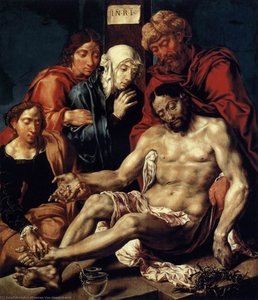
- Lamentation on the Dead Christ
- Pieter Jan Foppeszoon and his Family
- Christ as the Man of Sorrows
- Place Of Birth: Heemskerk, Netherlands
Related Articles
Van Gogh's Masterpieces: Explore 25 Iconic Paintings & Art for Your Home
Journey through Vincent van Gogh's 25 most iconic paintings! Explore 'Starry Night', 'Sunflowers,' and more—discover the stories, techniques & emotions behind these Post-Impressionist masterpieces. Find museum-quality art reproductions for your home at ArtsDot.com.
Maerten van Heemskerck: Bridging Mannerism & Renaissance Ideals
Explore the captivating world of Maerten van Heemskerck, a pivotal Dutch Renaissance painter bridging Mannerism & Italian influence. Discover his masterpieces and legacy with ArtsDot.

Rembrandt's Masterpieces: Explore 25 Iconic Paintings & Prints | ArtsDot
Journey through Rembrandt van Rijn's 25 most iconic paintings & etchings. Explore Dutch Golden Age masterpieces, dramatic chiaroscuro, and timeless portraits. Find museum-quality art reproductions to elevate your home decor on ArtsDot.com.
Cornelis van Poelenburch: Bridging Mannerism & the Dutch Baroque Landscape
Discover Cornelis van Poelenburch, a pivotal Dutch Baroque landscape painter bridging Mannerism & Italianate styles. Explore his life, key works, and lasting influence on 17th-century art with ArtsDot.
Adriaen van Ostade: A Master of Dutch Genre Painting & Social Commentary
Explore the life & work of Adriaen van Ostade, a leading Dutch Golden Age painter. Discover his realistic genre scenes, social commentary, and lasting influence on art history. Learn more at ArtsDot.