 Preview
 Send
Send Share
Share
 Details

 Download
 Similars
 X-Ray
X-Ray Diaporama
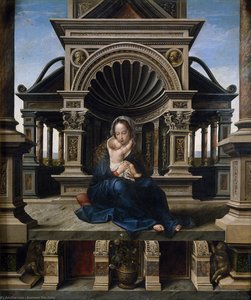
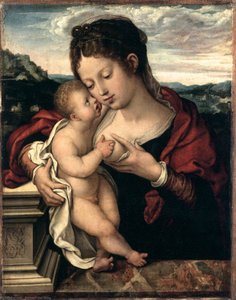
Virgin of Louvain
 Oil On Canvas
- WallArt
- Early Renaissance
 1520
1520 45.0 x 49.0 cm
 Museo del Prado
 Read More
Hand Made Oil Reproduction
Hand-painted oil on canvas in your size and frame, made to order by our artists. ( Buy Print Buy Image)




P118B $10

P118H $10

P118W $10

P438Z $10

P508JH $12

P508YH $12

P805H $10

P805Z $10

P919BZ $10

P919G $10

P919XJ $10

P959ZH $10

P968JZ $12

W106C $8

W218G $10

W218JH $8

W218Y $10

W307PJ $10

W316G $10

W316PJ $8

W316Y $10

W398PJ $8

W4111J $10

W500HY $15

W500JH $15

W692G $12

W849H $8

W940BG $15

W953PJ $8




Pick from our preset sizes that match the artwork's original proportions.

You may enter your own dimensions to fit a specific frame or space. If your selected size does not match the original image's proportions, we will either crop the artwork or extend the painting with additional hand-painted elements. A digital mockup will be sent for your approval before production begins.
Please note that the on-screen preview does not reflect the actual cropping or extension. Only the mockup will accurately show the final composition.
While custom sizes are available, we recommend selecting a dimension from the predefined list to preserve the original proportions.
After order, ArtsDot.com team will email client for instructions and provide a mockup preview
Worldwide Delivery () in 3/4 weeks instead of standard 5 weeks. (20 August). No compromise on quality.

Free Worldwide Express Shipping

High-Quality Linen Canvas

Full Shipping Insurance

Customs Tax Refund Guarantee

True Color Matching Guarantee

60-Day Return Policy (Defects Only)

100% Money-Back Guarantee

Bulk Discount Offer
 Glass option is only available in size under 110 CM

Virgin of Louvain
Reproduction Medium
Reproduction Size
-


Total Price
$ 288
Artwork Description
Virgin of Louvain: A Renaissance Masterpiece Illuminated
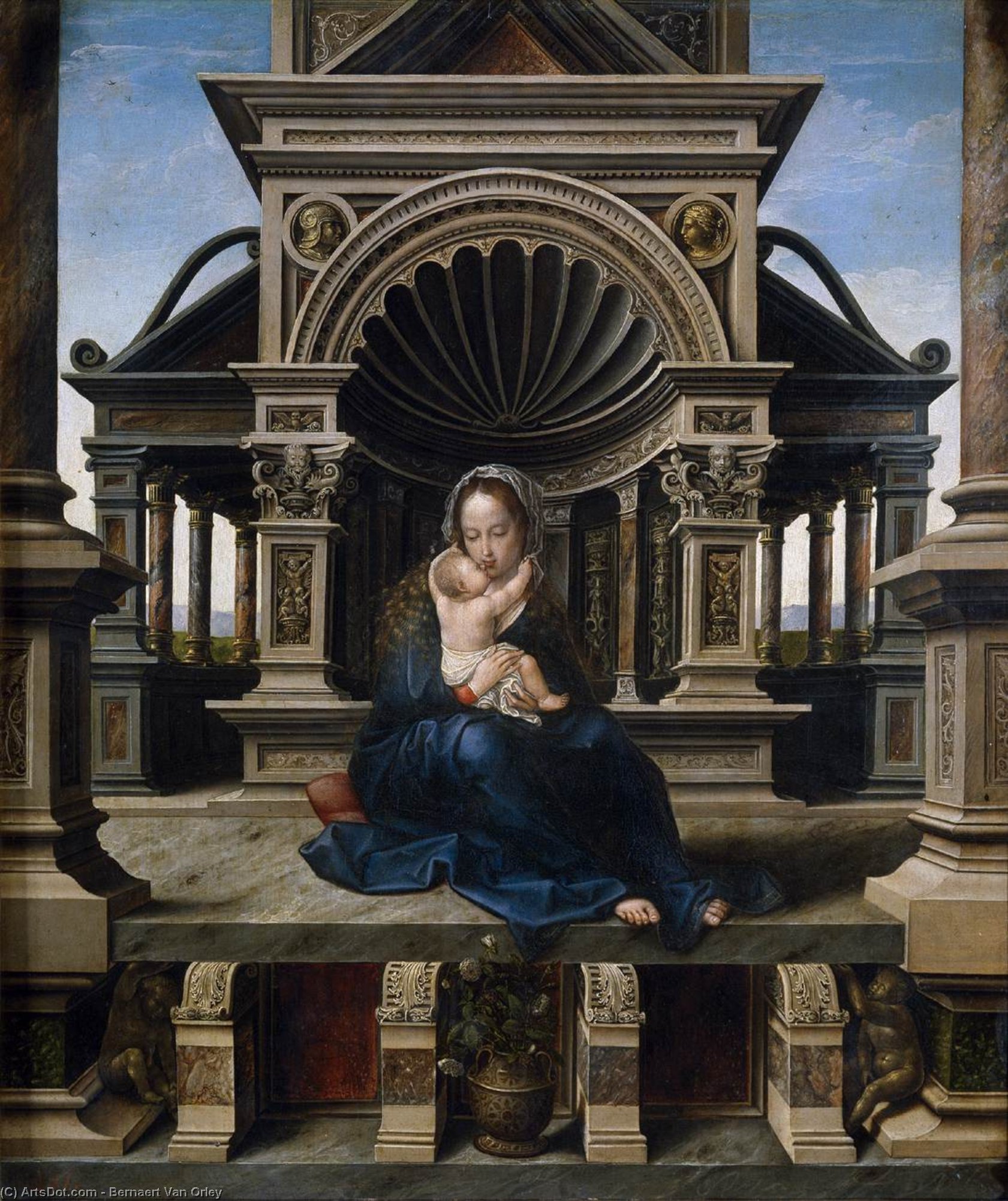
The Virgin of Louvain, attributed to Bernaert van Orley (1520), stands as a testament to the artistic fervor of the Early Renaissance in Flanders—a period marked by an unwavering devotion to humanist ideals and a renewed fascination with classical art forms. This oil painting transcends mere representation; it embodies a profound spiritual contemplation captured within a meticulously crafted visual language. Its enduring appeal lies not only in its aesthetic beauty but also in its ability to convey complex theological concepts through subtle stylistic choices and masterful execution.A Synthesis of Raphael’s Influence
Van Orley's work bears the unmistakable imprint of Raphael, whose influence permeated Flemish painting during this era. Like Raphael’s celebrated Madonna della Seggiola and Sistine Chapel frescoes, the Virgin of Louvain adheres to a pyramidal composition—a cornerstone of Renaissance artistic convention—designed to elevate the central figures and instill a sense of grandeur. The architectural setting, reminiscent of Roman basilicas, reinforces this impression of solemnity and divine authority. This deliberate stylistic mirroring underscores Raphael’s pivotal role in shaping the visual sensibilities of his contemporaries and establishing a dominant aesthetic paradigm.Technique and Material Considerations
The painting's execution demonstrates remarkable skill—a hallmark of Flemish ateliers during the period. Van Orley employed a technique known as glazing, layering thin translucent washes of pigment over underlying colors to achieve luminous effects and imbue the surface with rich hues. This meticulous process allowed for nuanced tonal gradations and subtle textural variations, particularly evident in the stonework of the dais upon which Mary rests—a deliberate gesture intended to evoke the grandeur of Roman temples and palaces. The canvas itself was primed with a preparatory layer of gesso, ensuring optimal adhesion of the paint and maximizing its vibrancy. Materials used were oil paints applied to canvas.Symbolism: Faith, Maternal Grace, Divine Revelation
Beyond its formal beauty, the Virgin of Louvain is laden with symbolic significance—a reflection of prevailing religious beliefs during the Renaissance. Mary’s serene posture conveys unwavering faith and humility before God, while her tender embrace of Jesus symbolizes maternal grace and divine compassion. The halo surrounding Mary's head signifies holiness and spiritual illumination, emphasizing her role as intermediary between heaven and earth. Furthermore, the depiction of Jesus nestled securely in Mary’s arms embodies the promise of salvation—a central theme within Christian theology.Emotional Resonance: Tranquility and Reverence
The painting’s overall emotional impact is one of tranquility and profound reverence—qualities that continue to captivate viewers centuries after its creation. The soft, diffused lighting emanating from an unseen source contributes to this atmosphere of serenity, highlighting Mary's face and clothing with gentle radiance. Lines define the architectural elements – arches, columns, and moldings – providing structure and stability. Shapes are predominantly geometric: squares, rectangles, circles, and ovals in the architecture, alongside organic shapes within the drapery and facial features. Textures appear smooth in the painted surfaces of Mary’s robes and Jesus’ face, while the stonework has a more tactile quality due to brushwork. The Virgin of Louvain invites contemplation—encouraging viewers to immerse themselves in its timeless beauty and contemplate the profound mysteries of faith and divine grace.- Artist: Bernaert van Orley
- Date: 1520
- Medium: Oil on Canvas
- Location: Museo Nacional del Prado
Related Artworks
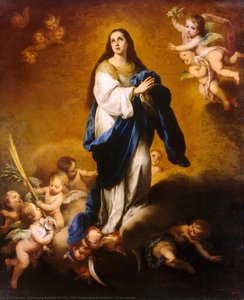
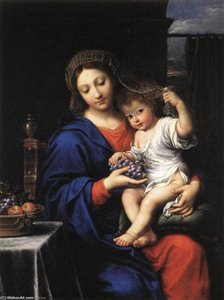
Artist Biography
Giovanni da Udine: A Pioneer of Stucco and Neoclassical Grace
Born in Udine, Italy, on October 27th, 1487, Giovanni da Udine emerged as a pivotal figure during the High Renaissance, leaving an indelible mark not just as a painter but as a master craftsman deeply invested in reviving classical aesthetics. His life spanned nearly seven decades, encompassing periods of intense artistic activity in Rome, Florence, Venice, and ultimately his lifelong residence in Udine. While often overshadowed by the towering figures of Raphael and Michelangelo, Giovanni’s contributions were crucial to shaping the visual language of the era, particularly through his innovative work with stucco and his influence on Neoclassical design.
Giovanni's early training remains somewhat shrouded in mystery, though he likely received instruction from local artists in Udine. However, it was his time in Rome during the 1510s that truly defined his career. He quickly established himself as a key assistant to Raphael, immersing himself in the burgeoning artistic environment of the Vatican and absorbing the master’s sophisticated techniques. This period witnessed a renewed fascination with antiquity, fueled by archaeological discoveries – particularly those unearthed by Cardinal Ippolito de' Medici – which sparked a desire to emulate the elegance and grandeur of ancient Roman art. Giovanni embraced this revival wholeheartedly, becoming a leading proponent of incorporating classical motifs into his work.
The Vatican Loggie: A Showcase of Innovation
Giovanni’s most celebrated achievement is undoubtedly his involvement in decorating the Vatican Loggie, a series of vaulted rooms within the Apostolic Palace. Between 1517 and 1519, he collaborated with Raphael on these monumental frescoes, creating intricate stucco panels that adorned the walls and ceilings. These works represent a remarkable synthesis of painting and sculpture, demonstrating Giovanni’s mastery of both mediums. The Loggie showcased his innovative approach to stucco decoration – a technique involving the application of plaster in relief, mimicking sculpted forms. He skillfully blended classical architectural elements with fantastical creatures, grotesque figures, and mythological scenes, creating a vibrant and dynamic visual narrative.
The style evident in the Vatican Loggie—characterized by its lightness, grace, and delicate detailing—quickly gained popularity throughout Europe. Giovanni’s work served as a model for Neoclassical designers, who sought to emulate the refined elegance of antiquity. The influence extended far beyond Italy, shaping decorative schemes in palaces and public buildings across France, England, and Germany. His ability to seamlessly integrate classical forms with imaginative embellishments established a new standard for ornamental design.
Beyond Stucco: A Painter of Subtle Beauty
While Giovanni is most renowned for his stucco work, he was also a skilled painter in his own right. His paintings often reflected the same principles of elegance and restraint that characterized his decorative panels. He favored muted colors, subtle gradations of tone, and a refined sense of composition. Unlike the bold, dramatic styles prevalent at the time, Giovanni’s paintings possessed a quiet beauty, imbued with an understated grace.
His subjects frequently included mythological scenes, portraits, and allegorical compositions. His depictions of figures were particularly notable for their delicate modeling and expressive gestures. He demonstrated a keen eye for detail, capturing the nuances of human expression and the textures of drapery. Though less prolific as a painter than he was as a stuccoist, his paintings stand as testaments to his artistic versatility and his commitment to classical ideals.
Legacy and Historical Significance
Giovanni da Udine died in Rome on 1561 or 1564. His legacy extends far beyond the immediate impact of his work on the Vatican Loggie. He played a crucial role in reviving interest in ancient techniques and aesthetics, shaping the visual vocabulary of the Neoclassical movement. His innovative use of stucco, combined with his refined painting style, established him as a pivotal figure in bridging the gap between the High Renaissance and the subsequent artistic developments of the 17th century.
Giovanni’s influence can be seen in countless buildings and decorative schemes throughout Europe, demonstrating the enduring power of his vision. He remains an important artist to study for anyone interested in understanding the complex interplay of art, architecture, and cultural revival during the Renaissance. His work serves as a reminder that even seemingly specialized techniques – like stucco decoration – can have profound and far-reaching consequences on the course of artistic history.
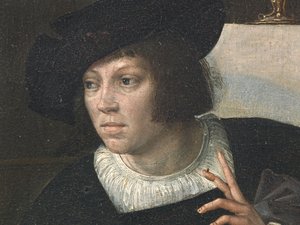
bernaert van orley
1487 - 1541 , Belgium
Quick Facts
- Artistic Movement Or Style: Neoclassicism, Stucco
- Artists Who Influenced This Artist: ['None],\n "Artists or movements influenced by this artist": [Raphael']
- Date Of Birth: Oct 27, 1487
- Date Of Death: 1561/4
- Full Name: Giovanni da Udine
- Nationality: Italian
- Notable Artworks: ['Vatican Loggie']
- Place Of Birth: Udine, Italy
Related Articles
Van Gogh's Masterpieces: Explore 25 Iconic Paintings & Art for Your Home
Journey through Vincent van Gogh's 25 most iconic paintings! Explore 'Starry Night', 'Sunflowers,' and more—discover the stories, techniques & emotions behind these Post-Impressionist masterpieces. Find museum-quality art reproductions for your home at ArtsDot.com.

Early Netherlandish Masters: 10 Paintings That Revolutionized Art & Decor
Journey into the world of Early Netherlandish painting! Explore 10 masterpieces by Jan van Eyck, Rogier van der Weyden & more. Discover stunning detail, symbolism & Renaissance art for your home decor. Find museum-quality reproductions on ArtsDot.com

Rembrandt's Masterpieces: Explore 25 Iconic Paintings & Prints | ArtsDot
Journey through Rembrandt van Rijn's 25 most iconic paintings & etchings. Explore Dutch Golden Age masterpieces, dramatic chiaroscuro, and timeless portraits. Find museum-quality art reproductions to elevate your home decor on ArtsDot.com.

Oil on Canvas: A Historical & Technical Exploration of a Timeless Artistic Medium
Explore the rich history & enduring techniques of oil painting on canvas. Discover the science behind its longevity, conservation practices, and contemporary relevance. Expert insights for art enthusiasts.
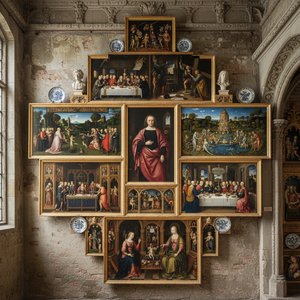
Early Netherlandish Masters: 10 Paintings That Revolutionized Art & Decor
Journey into the Early Netherlandish Renaissance! Explore 10 iconic paintings by Jan van Eyck, Rogier van der Weyden & more. Discover stunning detail, symbolism, and oil painting techniques. Find museum-quality art reproductions for your home at ArtsDot.com.