 Preview
 Send
Send Share
Share
 Details

 Download
 Similars
 X-Ray
X-Ray Diaporama
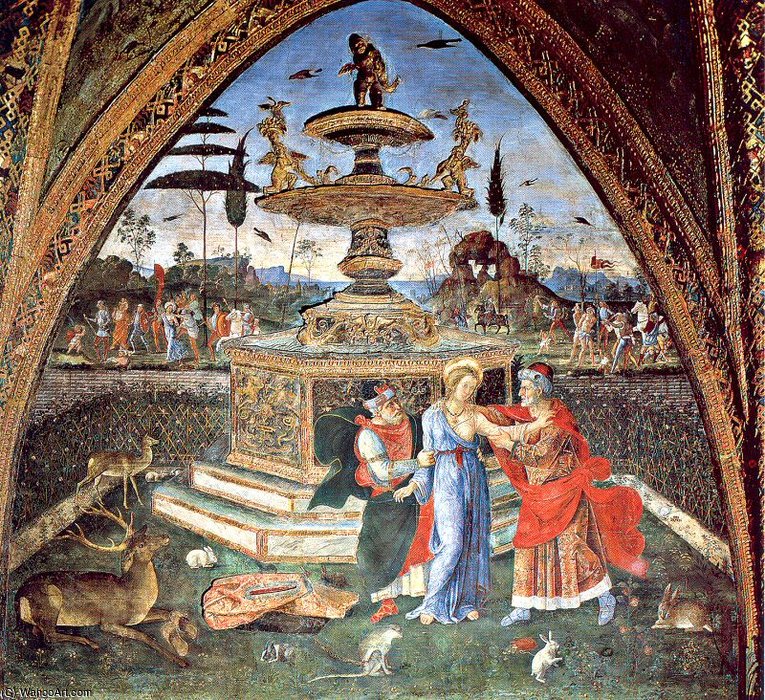
Untitled (435)

 Read More
Hand Made Oil Reproduction
Hand-painted oil on canvas in your size and frame, made to order by our artists. ( Buy Print Buy Image)




































Pick from our preset sizes that match the artwork's original proportions.

You may enter your own dimensions to fit a specific frame or space. If your selected size does not match the original image's proportions, we will either crop the artwork or extend the painting with additional hand-painted elements. A digital mockup will be sent for your approval before production begins.
Please note that the on-screen preview does not reflect the actual cropping or extension. Only the mockup will accurately show the final composition.
While custom sizes are available, we recommend selecting a dimension from the predefined list to preserve the original proportions.
After order, ArtsDot.com team will email client for instructions and provide a mockup preview
Worldwide Delivery () in 3/4 weeks instead of standard 5 weeks. (16 August). No compromise on quality.

Free Worldwide Express Shipping

High-Quality Linen Canvas

Full Shipping Insurance

Customs Tax Refund Guarantee

True Color Matching Guarantee

60-Day Return Policy (Defects Only)

100% Money-Back Guarantee

Bulk Discount Offer
 Glass option is only available in size under 110 CM

Untitled (435)
Reproduction Medium
Reproduction Size
-


Total Price
$ 313
Related Artworks
Artist Biography
Bernardino di Betto (Pinturicchio): A Master of Umbrian Decoration
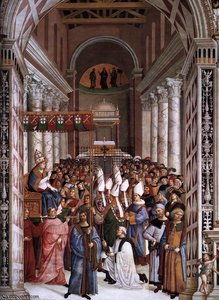
Bernardino di Betto, more widely known as Pinturicchio – a name that translates to “Little Painter” – stands as one of the most distinctive and visually arresting figures of the Italian Renaissance. Born around 1454 in Perugia, the heart of Umbria, his life was inextricably linked to the artistic currents flowing from Florence and Rome, yet he forged a uniquely personal style characterized by opulent color palettes, intricate detail, and a profound sense of narrative drama. His career spanned nearly six decades, during which he left an indelible mark on the decoration of churches, palaces, and private residences across Italy, most notably in the Vatican and Siena.
Pinturicchio’s early life offered little indication of his future artistic prowess. He was born into a family of artisans – his father a cloth tanner – and initially apprenticed to Giapeco Caporali, a renowned miniaturist operating from a workshop near Perugia's Porta Sant’Angelo. This formative experience exposed him to the meticulous techniques of manuscript illumination, skills that would later inform his fresco work with their emphasis on delicate detail and vibrant color. A significant turning point came in 1481 when he joined forces with Perugino, one of the leading artists of the Umbrian Renaissance, a collaboration that profoundly shaped his artistic development. Perugino’s influence is readily apparent in Pinturicchio's early works, particularly in the frescoes depicting the Journey of Moses and the Baptism of Christ within the Sistine Chapel – paintings where the artist skillfully absorbed Perugino’s refined figure style while gradually developing his own distinctive approach.
The Borgia Apartments: A Symphony of Color and Narrative
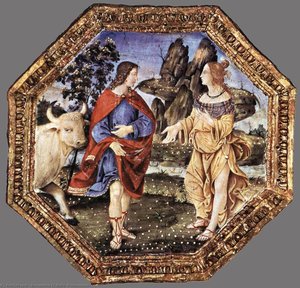
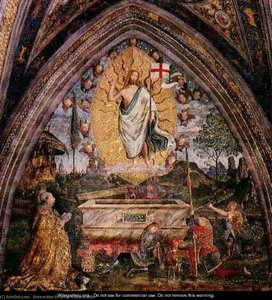
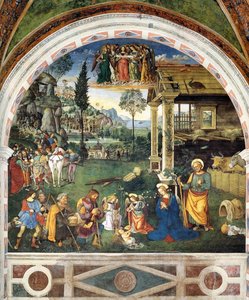
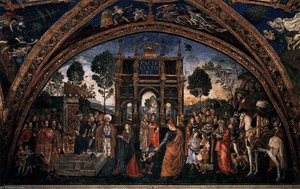
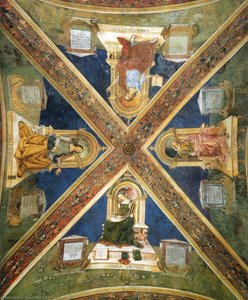
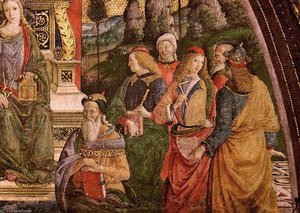
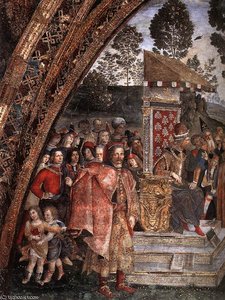
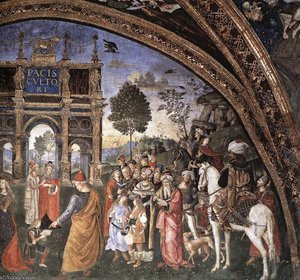
Pinturicchio's most celebrated achievement undoubtedly lies in the decoration of the Borgia Apartments within the Vatican. Commissioned by Pope Alexander VI between 1492 and 1494, this ambitious project comprised six lavishly decorated rooms, each dedicated to a specific theme from the life of Christ and the Virgin Mary. These frescoes represent a culmination of Pinturicchio’s artistic explorations, showcasing his mastery of color, composition, and narrative storytelling. Unlike Perugino's more restrained style, Pinturicchio embraced bold, often jarring colors – reds, blues, greens – creating a visually arresting and emotionally charged atmosphere. He also incorporated elements of Mannerism, evident in the elongated figures, exaggerated poses, and dreamlike quality of the scenes. The frescoes are not merely decorative; they are complex allegorical narratives designed to glorify the papacy and project an image of power and piety.
Beyond Rome: Siena and a Legacy of Detail
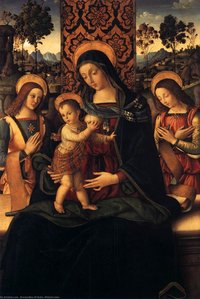
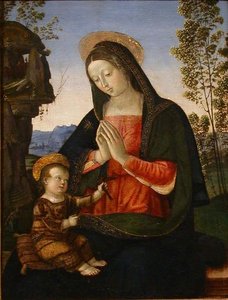
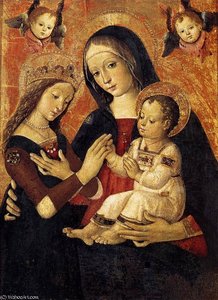
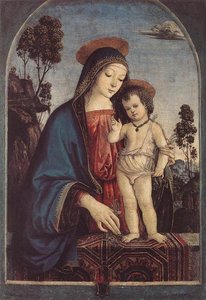
Following his success in Rome, Pinturicchio continued to work throughout Italy, accepting commissions in various cities. He spent time in Siena, where he decorated the Capponi Chapel in the Duomo, demonstrating his ability to adapt his style to different contexts and patrons. His later works often retained a strong emphasis on detail and decorative elements, reflecting his roots in manuscript illumination. He also produced numerous altarpieces and devotional panels, showcasing his skill in portraying religious figures with remarkable expressiveness. Notably, he worked extensively for the Medici family in Florence, contributing to the decoration of their villas and palaces.
A Unique Vision: Symbolism and Artistic Innovation
Pinturicchio’s artistic legacy extends beyond mere technical proficiency; it resides in his unique vision and innovative approach to fresco painting. He was a master of illusionistic space, creating the impression of depth and perspective through subtle variations in color and detail. His use of gold leaf – lavishly applied throughout his works – added an ethereal quality and heightened the sense of luxury and grandeur. Furthermore, Pinturicchio’s work is replete with symbolic imagery, reflecting the intellectual currents of the Renaissance. He frequently employed classical motifs and allegorical figures to convey complex theological ideas. While often considered a follower of Perugino, Pinturicchio ultimately developed a distinct artistic identity—a vibrant, imaginative voice within the broader context of Italian Renaissance art.
A Lasting Influence
Bernardino di Betto (Pinturicchio) died in Siena in 1513. His work continued to be admired and studied for centuries, influencing generations of artists. His decorative frescoes remain a testament to the power of color, narrative, and meticulous detail—a vibrant reminder of the richness and complexity of the Italian Renaissance.
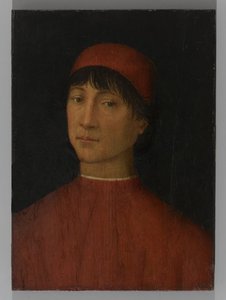
bernardino di betto (pintoricchio)
1454 - 1513 , Italy
Quick Facts
- Artistic Movement Or Style: Renaissance
- Artists Or Movements Influenced By This Artist: ['Perugino']
- Artists Who Influenced This Artist: ['Perugino']
- Date Of Birth: c. 1454
- Date Of Death: Dec. 11, 1513
- Full Name: Bernardino di Betto di Biago
- Nationality: Italian
- Notable Artworks:
- Journey of Moses
- Baptism of Christ
- Borgia Apartments
- Place Of Birth: Perugia, Romagna
Related Articles

Giotto's Masterpieces: 25 Renaissance Artworks for Your Home | ArtsDot
Explore 25 breathtaking artworks by Giotto di Bondone, a Renaissance master. Discover the stories behind iconic frescoes & paintings like the Scrovegni Chapel cycle. Find museum-quality Giotto reproductions and elevate your home decor with ArtsDot.com.
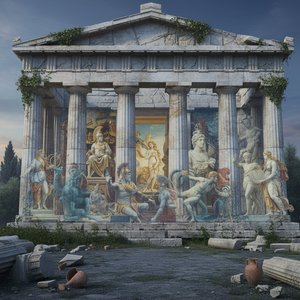
Echoes of Olympus: Mythological Narratives in Western Art Through the Ages
Explore the captivating history of mythological narratives in Western art! From ancient Greece to modern masterpieces, discover iconic artworks & symbolism. Expert analysis and high-quality reproductions at ArtsDot.
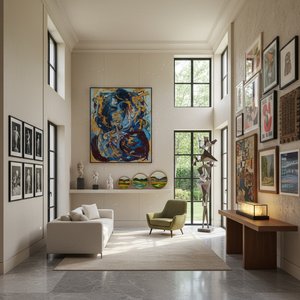
La Biennale's Masterpieces: 25 Artworks to Inspire Your Home | ArtsDot
Explore 25 iconic artworks from La Biennale di Venezia! Discover the stories behind masterpieces of Italian art, modernism & Renaissance paintings. Find museum-quality reproductions and elevate your home decor with ArtsDot.com. Explore the full collection online.
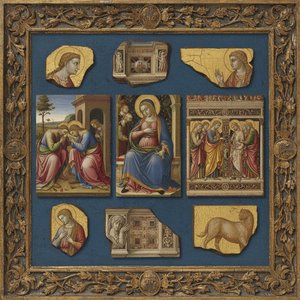
Proto-Renaissance Masters: 10 Artworks That Changed History | ArtsDot
Journey back to the dawn of Renaissance art! Explore 10 iconic Proto-Renaissance masterpieces by Giotto, Cimabue & Duccio. Discover their stories, techniques & lasting impact. Find museum-quality reproductions for your home at ArtsDot.com
Weaving Personal Narratives into Symbolic Form: Commissioning Oil Paintings as Expressions of Individual Mythology
Transform your story into an enduring masterpiece. Commission a bespoke oil painting with ArtsDot – blending personal narrative, symbolic depth & expert artistry. Explore the power of art to express your unique mythology.