 Preview
 Send
Send Share
Share
 Details

 Download
 Similars
 X-Ray
X-Ray Diaporama
Armchair
 Acrylic On Canvas
- WallArt
- Modern Design
 1961
1961- Renaissance
 68.0 x 68.0 cm
 The Museum of Arts and Crafts
 Read More
Giclée / Art Print
Museum-quality giclée or canvas print with fast production and flexible finish options. ( Buy Hand Made Painting Buy Image)




P118B $10

P118H $10

P118W $10

P438Z $10

P508JH $12

P508YH $12

P805H $10

P805Z $10

P919BZ $10

P919G $10

P919XJ $10

P959ZH $10

P968JZ $12

W106C $8

W218G $10

W218JH $8

W218Y $10

W307PJ $10

W316G $10

W316PJ $8

W316Y $10

W398PJ $8

W4111J $10

W500HY $15

W500JH $15

W692G $12

W849H $8

W940BG $15

W953PJ $8




Pick from our preset sizes that match the artwork's original proportions.

You may enter your own dimensions to fit a specific frame or space. If your selected size does not match the original image's proportions, we will either crop the artwork or extend the image with a mirrored or solid-fill edge. A digital mockup will be sent for your approval before production begins.
Please note that the on-screen preview does not reflect the actual cropping or extension. Only the mockup will accurately show the final composition.
While custom sizes are available, we recommend selecting a dimension from the predefined list to preserve the original proportions.
Worldwide Delivery () in 2 weeks instead of standard 4/5 weeks. (18 August)

Free Worldwide Express Shipping

High-Quality Linen Canvas

Full Shipping Insurance

Customs Tax Refund Guarantee

True Color Matching Guarantee

60-Day Return Policy (Defects Only)

100% Money-Back Guarantee

Bulk Discount Offer
 Glass option is only available in size under 110 CM

Armchair
Giclée / Art Print
Reproduction Size
-


Total Price
$ 63
Collectible Description
A Testament to Functional Modernism: Bernardo Bernardi’s “Armchair”
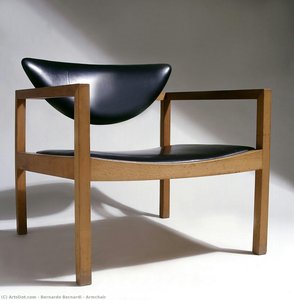
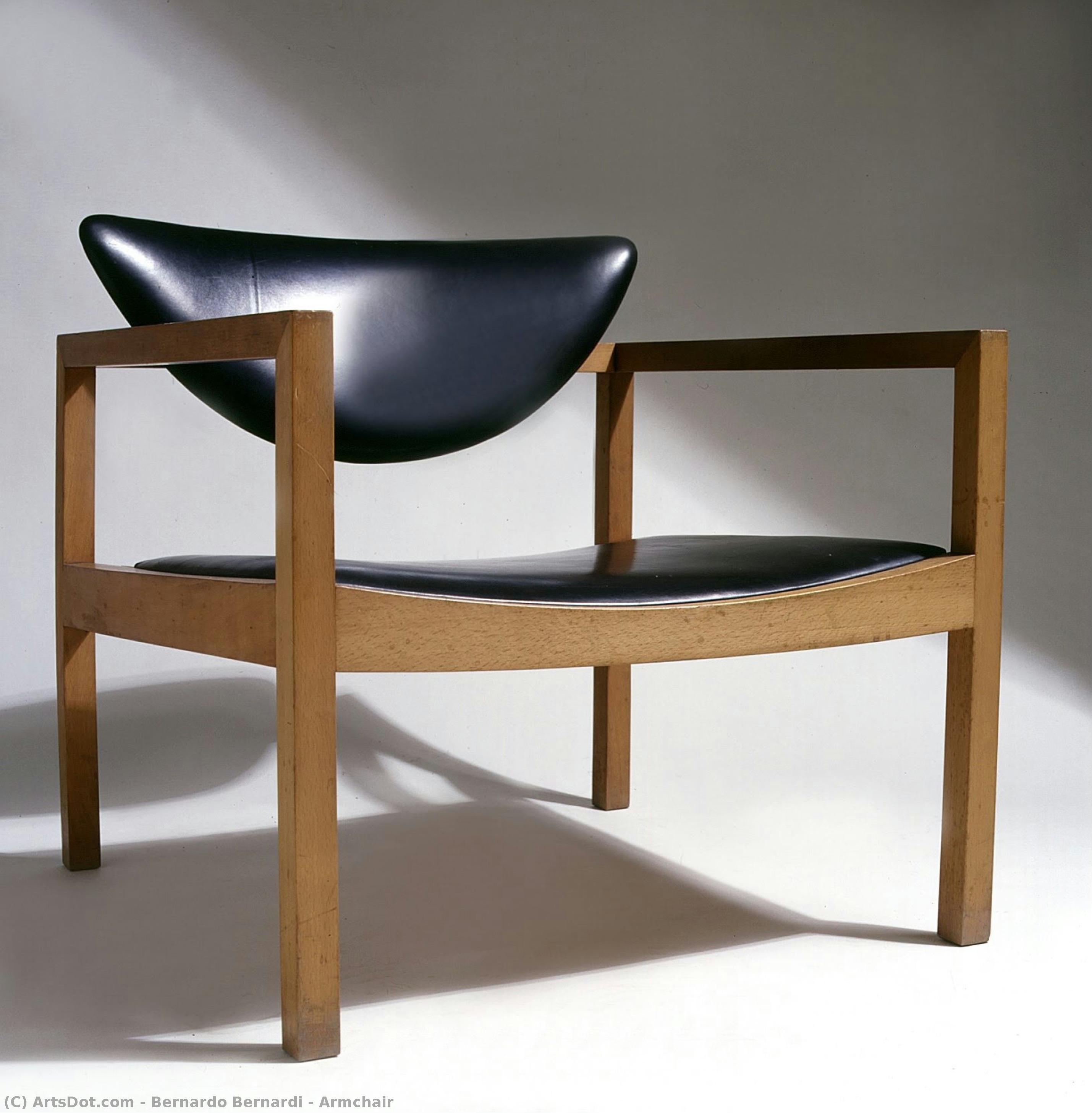
Bernardo Bernardi's "Armchair," meticulously reproduced here in a generous 68 x 68 cm format, represents more than just a piece of furniture; it embodies a pivotal moment in Croatian design history and the burgeoning ideals of functional modernism. Crafted in 1961 for the “Moša Pijade” Workers’ University – now the Open University – this chair was conceived by Bernardi himself, reflecting his deep commitment to accessible design and the transformative potential of tertiary education. The work speaks volumes about a period defined by social reform, architectural innovation, and a conscious effort to reshape public spaces with thoughtful, utilitarian forms.
- Architectural Roots: Designed by R. Nikšić and N. Kučan, the chair’s form is intrinsically linked to the university's ethos – a space intended for intellectual exploration and social engagement.
- Bernardi’s Vision: Bernardi, a leading figure in Croatian architecture and furniture design, championed standardization and quality production, collaborating extensively with factories like TVIN in Virovitica.
- Contextual Significance: The creation of this armchair occurred during a period of significant social and political change in Yugoslavia, reflecting the nation’s ambition to modernize its education system and foster a more egalitarian society.
Form and Materiality – A Study in Austerity
The chair's aesthetic is strikingly austere, dominated by clean lines and a deliberately unadorned form. The primary material—black leather—conveys an immediate sense of sophistication and durability, while the wooden frame provides a grounding element, anchoring the piece to its functional purpose. Bernardi’s design eschews superfluous ornamentation in favor of pure geometric shapes, aligning with the principles of modernism that prioritized clarity and simplicity. The bowl-like silhouette, reminiscent of a shell or perhaps even a stylized echo of classical forms, introduces an unexpected layer of visual interest – a subtle nod to enduring artistic traditions within a decidedly contemporary context.
- Leather’s Significance: Black leather was a popular choice for high-end furniture in the mid-20th century, signifying status and durability.
- Wood as Foundation: The use of wood speaks to the craftsmanship and quality associated with traditional furniture making, blending seamlessly with the modern aesthetic.
- Geometric Harmony: The chair’s form is a testament to Bernardi's mastery of geometric principles, creating a visually balanced and harmonious composition.
Symbolism and Emotional Impact
Beyond its purely functional role, “Armchair” carries a subtle symbolic weight. As the piece was designed for an institution dedicated to learning and social progress, it can be interpreted as representing comfort, contemplation, and the potential for intellectual growth. The chair’s starkness invites introspection, encouraging viewers to consider their own place within the broader context of knowledge and society. The presence of two additional chairs in the photograph further emphasizes this theme – a collective space designed for dialogue and shared experience.
- Representation of Progress: The chair embodies the optimism and forward-thinking spirit of the 1960s, reflecting a desire to create a better future through education and design.
- Intimate Space: The armchair evokes feelings of comfort, relaxation, and personal reflection – qualities highly valued in modern interior design.
A Collector’s Piece – Reproduction Quality
This meticulously hand-painted reproduction captures the essence of Bernardi's original design with exceptional detail and fidelity. Utilizing archival quality materials and employing skilled artisans, ArtsDot.com ensures that this artwork faithfully replicates the chair’s form, texture, and color palette. It is a perfect addition to any collection of modern design or a statement piece for contemporary interiors.
Related Artworks

Artist Biography
Marina Abramović: The Body as Battlefield
Born in Belgrade, Yugoslavia – now Serbia – in 1946, Marina Abramović’s life has been a relentless exploration of the boundaries between self and audience, body and mind. Raised within a complex family history intertwined with both partisan resistance during World War II and subsequent involvement in the communist regime, her early experiences instilled a profound awareness of societal constraints and the potential for individual agency. This backdrop profoundly shaped her artistic trajectory, leading her to confront not just aesthetic challenges but also deeply rooted social and psychological ones.
Her formal training at the Academy of Fine Arts in Belgrade and Zagreb laid the groundwork for her later work, yet it was a deliberate rejection of traditional painting that truly defined her path. Abramović’s artistic awakening occurred in the early 1970s, coinciding with the burgeoning field of performance art – a movement initially met with skepticism but rapidly gaining momentum as artists sought to break free from the confines of the gallery and engage directly with viewers. Early performances like *Rhythm 0* (1974), a deceptively simple act involving her standing motionless in a room surrounded by objects, immediately established her as a provocative force. The piece’s power lay not in its visual spectacle but in its unsettling invitation to the audience – a challenge to their own boundaries of empathy and restraint.
The Language of Endurance
Abramović quickly developed a distinctive vocabulary centered on endurance and physical limits. Her work frequently pushed her body to extremes, subjecting it to pain, discomfort, and even danger. *Rhythm 10* (1973), where she repeatedly stabbed herself with a knife, is a prime example of this approach. This wasn’t merely an act of self-harm; it was a deliberate attempt to expose the vulnerability inherent in the human condition and to force viewers to confront their own reactions – fear, fascination, or revulsion. The resulting dialogue between artist and audience became central to her practice.
Her collaboration with Ulay (Frank Uwe Laysiepen) from 1976 to 1988 proved particularly influential. Their performances, often deeply personal and emotionally charged, explored themes of gender, identity, and the complexities of relationships. *Imponderabilia* (1977), a piece in which they stood naked facing each other in a museum entrance, epitomized this approach – a seemingly passive encounter that demanded an uncomfortable level of engagement from the public. The act highlighted the inherent awkwardness and vulnerability of human interaction, revealing how our perceptions are shaped by proximity and circumstance.
Expanding the Scope: Rituals and Installations
As Abramović’s career progressed, her work expanded beyond purely physical endurance to encompass ritualistic practices and large-scale installations. *The Artist Is Present* (2010), arguably her most famous performance, involved sitting for eight hours a day in front of a blank canvas at the MoMA, silently engaging with museum visitors. This piece, documented in a widely acclaimed book and film, transformed the gallery space into a site of profound connection – a shared experience of stillness and vulnerability that transcended cultural and linguistic barriers.
Works like *Balkan Baroque* (1997) delved into her family history and the legacy of Yugoslavia’s tumultuous past. Utilizing video projections, live performance, and soundscapes, she created a multi-layered exploration of identity, memory, and trauma. Her later projects, such as *Seven Easy Pieces* (2005), involved inviting audiences to steal objects from a gallery setting, challenging notions of ownership and the role of the viewer in shaping artistic value.
Legacy and Influence
Marina Abramović’s impact on contemporary art is undeniable. She fundamentally shifted the boundaries of performance art, demonstrating its capacity for profound psychological and social engagement. Her willingness to expose her own vulnerability – both physical and emotional – has inspired countless artists to push their own limits and challenge conventional notions of artistic expression. She's not simply an artist; she’s a provocateur, a philosopher, and a pioneer who continues to redefine the relationship between art, body, and audience.
Her founding of the Marina Abramović Institute (MAI) in 2007 further solidified her legacy, establishing a non-profit organization dedicated to supporting and promoting performance art as a vital form of cultural expression. Abramović’s work remains relevant today, prompting us to consider our own boundaries, our capacity for empathy, and the power of art to transform both ourselves and the world around us.

bernardo bernardi
1974 - , Italy
Quick Facts
- Artistic Movement Or Style: Performance art
- Artists Or Movements Influenced By This Artist:
- Conceptual art
- Body art
- Endurance art
- Artists Who Influenced This Artist:
- Ulay
- Varnava, Serbian Patriarch
- Date Of Birth: November 30, 1946
- Full Name: Marina Abramović
- Nationality: Serbian
- Notable Artworks:
- Rhythm 0
- Balkan Baroque
- The Artist Is Present
- Place Of Birth: Belgrade, Serbia
Related Articles

Piet Mondrian: Deconstructing Reality – A Study of Neo-Plasticism & Universal Harmony
Explore the revolutionary art of Piet Mondrian and the principles of Neo-Plasticism. Discover De Stijl's influence, iconic compositions like 'Composition with Red, Yellow and Blue,' and Mondrian’s lasting legacy on modern design.

Hokusai's Masterpieces: 25 Iconic Prints & Paintings for Art Lovers | ArtsDot
Journey through Katsushika Hokusai’s 25 most iconic artworks, including *The Great Wave*. Explore the ukiyo-e master's history, style & timeless Japanese woodblock prints. Find museum-quality reproductions for your home at ArtsDot.com.
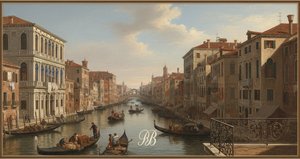
Bernardo Bellotto: Canaletto's Nephew & Master of Veduta Painting – A Comprehensive Exploration
Explore the life & art of Bernardo Bellotto, Canaletto’s nephew and a master of veduta painting. Discover his stunning cityscapes of Dresden & Warsaw, artistic techniques, and lasting legacy. Expert insights for collectors.

Geometric Abstraction's 10 Defining Masterpieces | Art for Your Home - ArtsDot
Explore 10 defining masterpieces of Geometric Abstraction! Discover Kandinsky, Mondrian & Malevich’s iconic works. Find museum-quality art reproductions and curated decor ideas to elevate your home at ArtsDot.com.

Masterpieces of Boston: Explore 25 Iconic Artworks | ArtsDot
Journey through 25 iconic artworks at Boston's MFA! Explore masterpieces by Monet, Sargent, Van Gogh & more. Discover art history, techniques & find museum-quality reproductions for your home on ArtsDot.com.