 Preview
 Send
Send Share
Share
 Details

 Download
 Similars
 X-Ray
X-Ray Diaporama
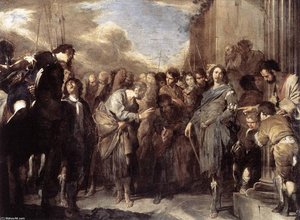
Martyrdom of St Stephen
 Oil On Canvas
- WallArt
- Baroque Drama
 Early Modern
 70.0 x 90.0 cm
 Museo del Prado
 Read More
Hand Made Oil Reproduction
Hand-painted oil on canvas in your size and frame, made to order by our artists. ( Buy Print Buy Image)




P118B $10

P118H $10

P118W $10

P438Z $10

P508JH $12

P508YH $12

P805H $10

P805Z $10

P919BZ $10

P919G $10

P919XJ $10

P959ZH $10

P968JZ $12

W106C $8

W218G $10

W218JH $8

W218Y $10

W307PJ $10

W316G $10

W316PJ $8

W316Y $10

W398PJ $8

W4111J $10

W500HY $15

W500JH $15

W692G $12

W849H $8

W940BG $15

W953PJ $8




Pick from our preset sizes that match the artwork's original proportions.

You may enter your own dimensions to fit a specific frame or space. If your selected size does not match the original image's proportions, we will either crop the artwork or extend the painting with additional hand-painted elements. A digital mockup will be sent for your approval before production begins.
Please note that the on-screen preview does not reflect the actual cropping or extension. Only the mockup will accurately show the final composition.
While custom sizes are available, we recommend selecting a dimension from the predefined list to preserve the original proportions.
After order, ArtsDot.com team will email client for instructions and provide a mockup preview
Worldwide Delivery () in 3/4 weeks instead of standard 5 weeks. (17 August). No compromise on quality.

Free Worldwide Express Shipping

High-Quality Linen Canvas

Full Shipping Insurance

Customs Tax Refund Guarantee

True Color Matching Guarantee

60-Day Return Policy (Defects Only)

100% Money-Back Guarantee

Bulk Discount Offer
 Glass option is only available in size under 110 CM

Martyrdom of St Stephen
Reproduction Medium
Reproduction Size
-


Total Price
$ 263
Artwork Description
The Dramatic Zenith of Faith: Martyrdom of St Stephen
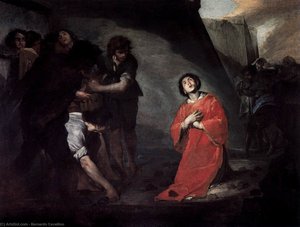
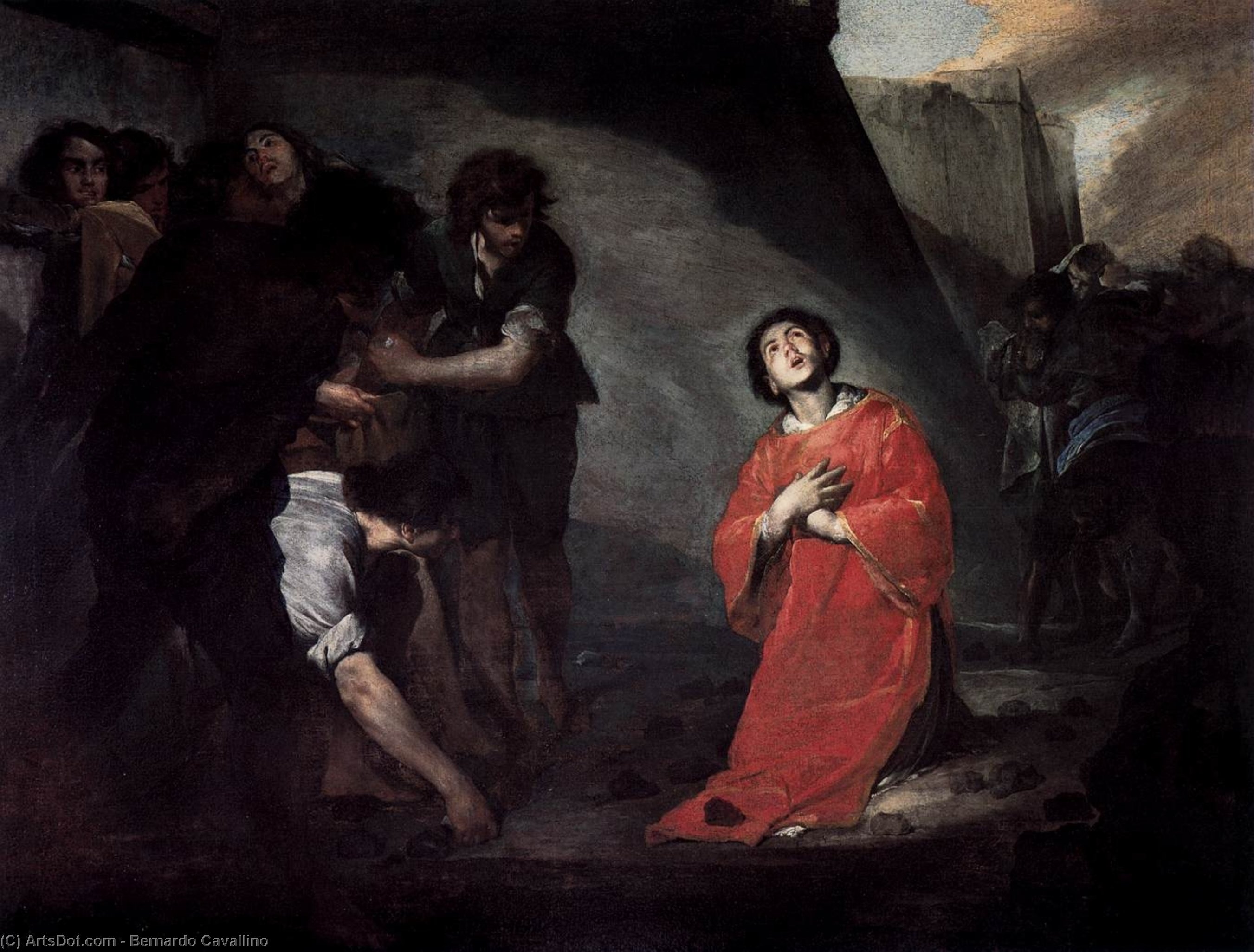
To stand before Bernardo Cavallino’s depiction of the Martyrdom of St Stephen is to be plunged headfirst into the raw, visceral heart of Baroque drama. This painting is not merely a historical record; it is an overwhelming sensory experience, capturing that agonizing, suspended moment when profound faith confronts brutal reality. The composition immediately arrests the viewer with its intense energy. At the core, we find St Stephen, rendered in poignant red drapery, kneeling—a posture suggesting both submission to fate and unwavering spiritual defiance. His hands, raised almost protectively toward his face, seem to shield not just his body, but perhaps the very sanctity of his soul against the onslaught surrounding him.
A Masterclass in Baroque Tenebrism
Cavallino, a painter deeply rooted in the vibrant artistic crucible of 17th-century Naples, masterfully employs techniques that speak directly to the dramatic sensibilities of the era. One can sense the palpable influence of Caravaggio’s dramatic tenebrism here; light does not simply illuminate—it carves. It slices through the surrounding gloom, spotlighting the central agony and the gestures of the onlookers. Yet, this stark drama is tempered by a touch of Murillo’s idealism, lending the scene an almost sublime quality despite its brutality. The interplay between deep shadow and sudden, brilliant highlight elevates the narrative from mere violence to profound spiritual allegory.
Symbolism and the Weight of Witness
The surrounding figures are as crucial to the painting's emotional architecture as St Stephen himself. They form a semicircle of witnesses—some recoiling in horror, others observing with detached curiosity. Scattered around the periphery, objects take on symbolic weight: the bowl, perhaps representing charity or sacrifice; the cup, hinting at ritual or final rites; and the pair of books near the left edge, symbolizing scripture and the enduring power of the Word. These elements ground the ethereal suffering in tangible reality, suggesting that Stephen’s death is not an isolated tragedy, but a moment deeply embedded within the continuum of Christian doctrine and history.
Creating Sacred Drama for Your Space
For collectors and designers seeking art with undeniable narrative power, this reproduction offers more than just decoration; it offers a focal point steeped in dramatic tension. The scale of 70 x 90 cm allows the emotional sweep of Cavallino’s vision to breathe within any grand hall or contemplative study. Owning this piece means inviting into your space the passionate fervor of the Baroque period—a dialogue between human suffering and divine endurance. It is a work that demands contemplation, promising viewers an immediate, emotionally resonant connection to themes of sacrifice, belief, and ultimate transcendence.
Related Artworks

Artist Biography
Bernardo Cavallino: Naples’ Baroque Visionary
Bernardo Cavallino remains one of the most enigmatic and captivating figures in the history of Italian Baroque art. Born in Naples on August 25, 1616, he emerged from a city brimming with artistic fervor under the Habsburg reign, yet his life remains shrouded in much of the same mystery that surrounds his canvases. While biographical details are frustratingly sparse—leaving scholars to reconstruct his journey through circumstantial evidence and stylistic analysis—his surviving works speak with an undeniable brilliance. Cavallino possessed a singular talent for capturing dramatic tension, creating a visual language that felt both intensely personal and profoundly epic. His output may be remarkably sparse compared to the prolific masters of his era, but every brushstroke carries a weight of expressive power that has allowed him to endure in the annals of art history.
The foundations of Cavallino’s mastery were laid within the vibrant Neapolitan school, likely under the tutelage of Massimo Stanzione. This association was pivotal, as Stanzione was a titan of religious commission known for his monumental use of chiaroscuro. From this training, Cavallino inherited a profound understanding of the dramatic interplay between light and shadow, a technique that would become a cornerstone of his identity. His visual vocabulary was further enriched by connections to artists like Andrea Vaccaro, fostering a collaborative spirit that expanded his technical range. Perhaps most transformative, however, was the influence of Anthony van Dyck. By absorbing the elegance and sophisticated portraiture of the Flemish master, Cavallical introduced a refined, almost lyrical aesthetic into the rugged Neapolitan tradition, creating a unique synthesis of styles.
A Synthesis of Light and Emotion
What distinguishes Cavallino from his contemporaries is his ability to bridge two seemingly opposing worlds: the gritty, shadow-drenched tenebrism of Caravaggio and the serene, luminous idealism found in the works of Murillo. This stylistic alchemy allowed him to depict scenes of profound spiritual ecstasy and harrowing human suffering with equal grace. His technique was never merely about imitation; it was about emotional resonance. In his hands, light does not just illuminate a scene—it sanctifies it or exposes the raw vulnerability of his subjects.
This mastery is perhaps most evident in his celebrated biblical and hagiographic compositions:
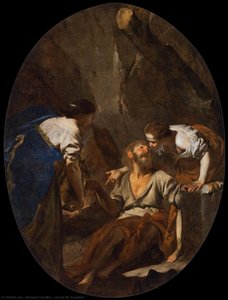
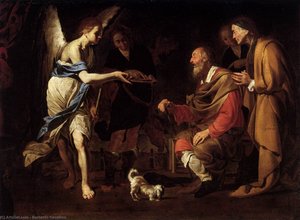
- The Curing of Tobias: Painted between 1640 and 1644, this work serves as a radiant example of his ability to use meticulous detail and masterful light to breathe life into sacred narratives.
- Lot and His Daughters: In this 1644 masterpiece, Cavallino presents a hauntingly desolate landscape, using the starkness of the cave setting to emphasize the psychological weight of the biblical tale.
- The Martyrdom of St. Stephen: Here, the artist reaches the height of Baroque drama, blending intense shadows with a sense of divine presence to explore the intersection of faith and mortal agony.
Legacy and Historical Significance
Though his life was cut short in 1656—a year marked by tragedy in Naples—Cavallino left behind a legacy that continues to fascinate art historians. He did not merely follow the trends of the Neapolitan Baroque; he refined them, injecting a sense of intimacy and poetic elegance into a genre often characterized by grandiosity. His ability to balance the heavy shadows of the Caravaggesque tradition with a delicate, almost ethereal light source created a bridge between the intense realism of the early 17th century and the more decorative, emotive styles that followed.
Today, Cavallino is remembered as an artist of profound sensitivity. His works, housed in prestigious institutions such as the Museo del Prado in Madrid, serve as windows into a period of intense spiritual and artistic transition. He remains a master of the "small-scale" masterpiece, proving that even within a limited body of work, an artist can capture the infinite complexities of the human soul through the careful manipulation of light, shadow, and grace.
Bernardo Cavallino
1616 - 1656 , Italy
Quick Facts
- Artistic Movement Or Style: Baroque Painting
- Artists Or Movements Influenced By This Artist:
- Caravaggio
- Bartolomé Esteban Murillo
- Artists Who Influenced This Artist:
- Massimo Stanzione
- Andrea Vaccaro
- Anthony van Dyck
- Date Of Birth: August 25, 1616
- Date Of Death: 1656
- Full Name: Bernardo Cavallino
- Nationality: Italian
- Notable Artworks:
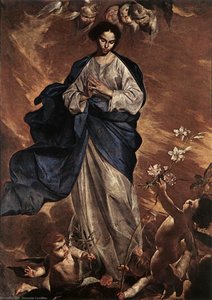
- The Blessed Virgin at the Brera Gallery
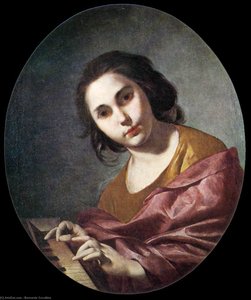
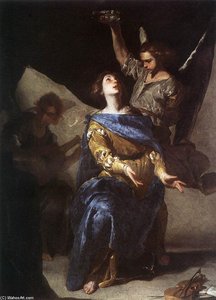
- St Cecilia Ecstasy
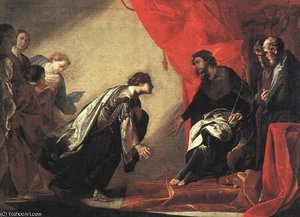
- Esther and Ahaseurus
- Place Of Birth: Naples, Italy
Related Articles

Baroque Masterpieces: 10 Paintings That Defined an Era |
Journey through the drama & grandeur of Baroque art! Explore 10 masterpieces by Caravaggio, Rembrandt, Rubens & more. Discover stunning oil paintings, rich colors & timeless stories. Find museum-quality reproductions at .

The Dramatic Flourish: Exploring the Baroque Movement's Enduring Legacy in Art History
Explore the dramatic world of Baroque art! Discover iconic artists like Caravaggio & Rubens, defining techniques, and its lasting impact on art history. Expert insights for collectors & enthusiasts at ArtsDot.

The Visceral Stage: Exploring Dramatic Narratives & Emotional Intensity in Baroque Art
Explore the dramatic world of Baroque art! Discover iconic masters like Caravaggio & Rembrandt, their techniques, and the movement's lasting impact. Expert insights for collectors & enthusiasts at ArtsDot.

Theatricality & Triumph: Baroque Drama in Painting & Sculpture
Explore the dramatic world of Baroque art! Discover its history, defining characteristics, & lasting influence on painting & sculpture. Expert insights into Caravaggio, Zurbarán, and Bernini – plus high-quality reproductions at ArtsDot.

Baroque Painting's Greatest Hits: 10 Masterpieces for Your Home | ArtsDot
Journey through Baroque painting's glory! Explore 10 masterpieces by Caravaggio, Rembrandt & Vermeer. Discover dramatic lighting, rich colors & timeless stories. Find museum-quality art reproductions for your home at ArtsDot.com.