 Preview
 Send
Send Share
Share
 Details

 Download
 Similars
 X-Ray
X-Ray Diaporama
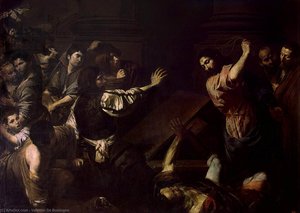
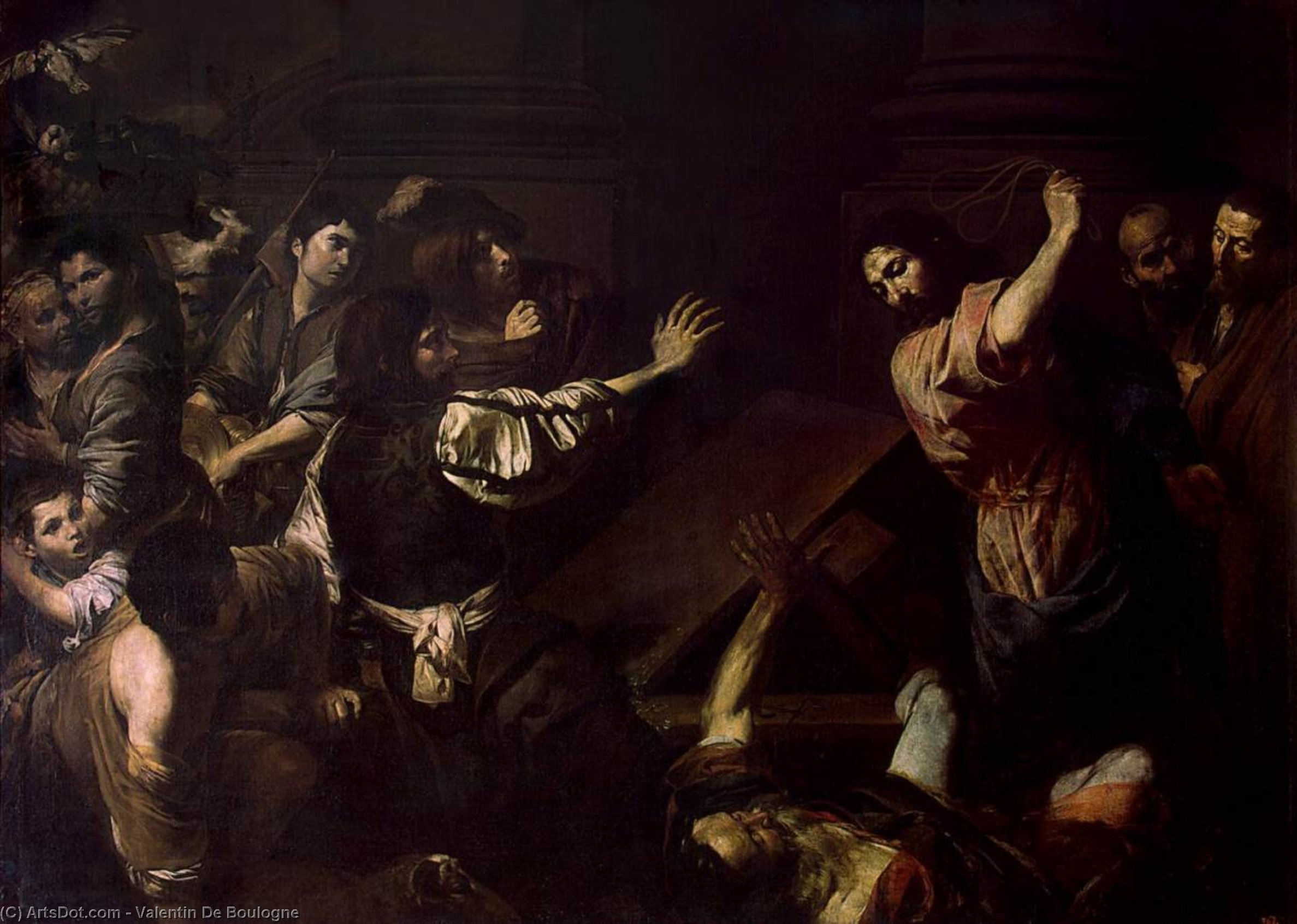
Expulsion of the Money-Changers from the Temple
 Oil On Canvas
- WallArt
- Baroque
 1620
1620- Renaissance
 192.0 x 267.0 cm
 Hermitage Museum
 Read More
Hand Made Oil Reproduction
Hand-painted oil on canvas in your size and frame, made to order by our artists. ( Buy Print Buy Image)




P118B $10

P118H $10

P118W $10

P438Z $10

P508JH $12

P508YH $12

P805H $10

P805Z $10

P919BZ $10

P919G $10

P919XJ $10

P959ZH $10

P968JZ $12

W106C $8

W218G $10

W218JH $8

W218Y $10

W307PJ $10

W316G $10

W316PJ $8

W316Y $10

W398PJ $8

W4111J $10

W500HY $15

W500JH $15

W692G $12

W849H $8

W940BG $15

W953PJ $8




Pick from our preset sizes that match the artwork's original proportions.

You may enter your own dimensions to fit a specific frame or space. If your selected size does not match the original image's proportions, we will either crop the artwork or extend the painting with additional hand-painted elements. A digital mockup will be sent for your approval before production begins.
Please note that the on-screen preview does not reflect the actual cropping or extension. Only the mockup will accurately show the final composition.
While custom sizes are available, we recommend selecting a dimension from the predefined list to preserve the original proportions.
After order, ArtsDot.com team will email client for instructions and provide a mockup preview
Worldwide Delivery () in 3/4 weeks instead of standard 5 weeks. (16 August). No compromise on quality.

Free Worldwide Express Shipping

High-Quality Linen Canvas

Full Shipping Insurance

Customs Tax Refund Guarantee

True Color Matching Guarantee

60-Day Return Policy (Defects Only)

100% Money-Back Guarantee

Bulk Discount Offer
 Glass option is only available in size under 110 CM

Expulsion of the Money-Changers from the Temple
Reproduction Medium
Reproduction Size
-


Total Price
$ 263
Artwork Description
Valentin de Boulogne’s Dramatic Depiction of Biblical Justice
The painting “Expulsion of the Money-Changers from the Temple,” attributed to Valentin de Boulogne, stands as a monumental testament to Baroque artistic fervor and religious conviction. Executed in 1620, this oil on canvas masterpiece resides within the Gemäldegalerie Alte Meister Dresden, offering viewers an unparalleled glimpse into the artist’s masterful command of chiaroscuro—the dramatic interplay between light and shadow—a technique championed by Caravaggio himself. Measuring a substantial 192 x 267 cm, the artwork immediately commands attention with its sheer scale and visceral energy.A Scene from Holy Scripture Brought to Life
De Boulogne’s depiction draws directly from John 2:13-17, recounting Jesus Christ's forceful rebuke of corrupt money changers obstructing access to the Temple in Jerusalem. The artist skillfully captures the urgency of the moment, portraying Christ as a figure radiating divine authority, wielding a whip of cords—a symbol of righteous indignation—to overturn tables laden with coins and disrupt the activities of those profiting from religious piety. Scattered gold coins underscore the moral outrage at the desecration of God’s house.Technical Brilliance: Caravaggio's Influence
The painting’s stylistic brilliance owes considerable debt to Michelangelo Buonarroti da Caravaggio, whose revolutionary approach to illumination profoundly impacted Baroque art. Like Caravaggio, De Boulogne employed tenebrismo—a technique characterized by extreme contrasts between light and dark—to heighten the dramatic impact of the scene. Light emanates from a single source, illuminating Christ’s face and torso with radiant luminosity, while plunging the surrounding figures into deep shadow. This masterful manipulation of light creates an illusionistic depth that draws the viewer into the narrative, fostering a palpable sense of tension and emotion. The artist's meticulous attention to anatomical detail—evident in the musculature of Christ’s body—further underscores his commitment to realism and expressive power.Symbolism and Emotional Resonance
Beyond its technical prowess, “Expulsion of the Money-Changers” resonates with profound symbolic significance. The overturned tables represent the dismantling of corrupt practices and the rejection of materialism within sacred spaces. The whip symbolizes divine justice and the forceful assertion of moral righteousness against wickedness. Most importantly, the painting conveys a powerful emotional response—a feeling of righteous indignation mingled with compassion for those misled by greed. De Boulogne’s depiction captures the essence of biblical drama, inviting contemplation on themes of faith, morality, and the confrontation between divine law and human folly.A Legacy Enduring Through Reproduction
Today, high-quality reproductions of this iconic artwork continue to inspire artists and collectors alike. Its dramatic composition, masterful technique, and evocative symbolism encapsulate the spirit of Baroque art—a period defined by its fervent religious devotion and its unwavering commitment to artistic innovation. Viewing a faithful rendition allows one to appreciate De Boulogne’s genius and experience the enduring power of Caravaggio's influence on Western painting history.Related Artworks
Artist Biography
The Shadow Painter of Rome: The Life and Legacy of Valentin de Boulogne
In the flickering candlelight of the early seventeenth century, a new kind of drama was being etched into the canvas of European art. At the heart of this movement stood Valentin de Boulogne, an artist whose brush possessed the rare ability to summon profound emotion from the deepest shadows. Born in Coulommiers, France, around 1590 or 1591, Valentin was destined for a life steeped in pigment and oil. He emerged from a lineage of creators, with both his father and uncle serving as painters, providing him with an early, intimate education in the mechanics of light and form. While his roots were firmly planted in French soil, his spirit was destined to wander the vibrant, tumultuous streets of Rome, where he would eventually become one of the most captivating figures of the Baroque era.
The trajectory of Valentin’s career was shaped by a restless pursuit of mastery that led him from the disciplined studios of Paris to the rebellious heart of Italy. His early training under the renowned Simon Vouet instilled in him a rigorous command of anatomical accuracy and classical perspective. Yet, the academic precision he learned in France could not contain the burgeoning naturalism that was beginning to sweep through Europe. When he arrived in Rome around 1620, he did not merely observe the existing art scene; he immersed himself in it, joining the Bentvueghels, a boisterous and often unruly collective of expatriate artists. Within this community, he earned the affectionate nickname “innamorato,” a testament to his passionate engagement with both the artistic struggles of his peers and the sensory delights of Roman life.
The Mastery of Tenebrism and Caravaggesque Drama
To understand the work of Valentin de Boulogne is to understand the language of Tenebrism. He was a profound heir to the legacy of Caravaggio, adopting and refining the technique of using extreme contrasts between light and dark to create a sense of theatrical urgency. In his hands, a single, piercing light source does more than illuminate a subject; it carves figures out of an impenetrable void, heightening the psychological tension of every scene. This mastery of chiaroscuro allowed him to transform ordinary moments into monumental dramas. Whether depicting the quiet intensity of a musician or the violent sanctity of a martyr, Valentin used shadow not as an absence of light, but as a physical presence that weighs upon the soul.
His repertoire was remarkably diverse, spanning from intimate genre scenes to grand religious commissions. He found particular success in capturing the gritty, lived-in reality of contemporary life, often portraying:
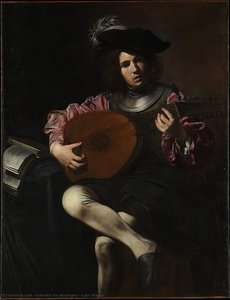
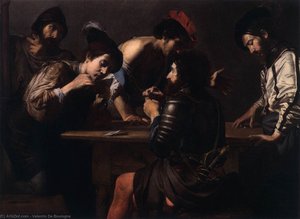
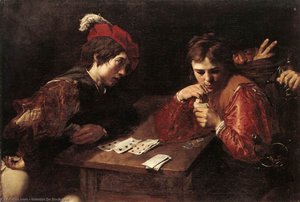
- Soldiers and Musicians: Works such as Lute Player and Soldiers playing Cards and Dice showcase his ability to render texture, from the sheen of polished armor to the soft resonance of a stringed instrument.
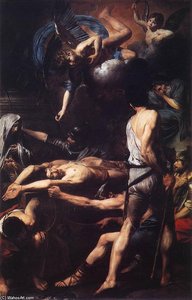
- Religious Martyrdom: His profound religious works, including the Martyrdom of St Processus and St Martinian, demonstrate how he applied his tenebrist style to convey the spiritual agony and unwavering faith of the saints.
- Biblical Narratives: In pieces like Moses, he utilized classical grandeur to breathe life into ancient prophets, blending historical weight with dramatic realism.
A Lasting Impression on the Baroque Era
The significance of Valentin de Boulogne extends far beyond his technical prowess; he was a bridge between the French academic tradition and the Italian revolutionary spirit. His ability to secure prestigious commissions from powerful patrons, such as the Barberini family and Cardinal Francesco Barberini, speaks to his standing within the highest echelons of Roman society. Even as he drew inspiration from the works of Bartolomeo Manfredi, Valentin maintained a distinct voice—one that was uniquely sensitive to the human condition and the fleeting nature of time.
Though his life was tragically short, ending in 1632 at the age of approximately forty-one, the impact of his "shadow painting" remains indelible. He left behind a body of work that continues to haunt and inspire, reminding viewers of the power of darkness to define the light. Through his canvases, we are invited to witness the triumphs and tribulations of humanity, captured in the eternal, dramatic dance of light and shadow. His legacy survives in every brushstroke that dares to find beauty in the gloom, ensuring that the name Le Valentin will forever be whispered in the halls of art history.
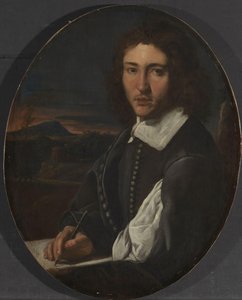
Valentin de Boulogne
1591 - 1632 , France
Quick Facts
- Artistic Movement Or Style: Tenebrism
- Artists Or Movements Influenced By This Artist:
- George de La Tour
- Paul Cézanne
- Artists Who Influenced This Artist:
- Simon Vouet
- Caravaggio
- Date Of Birth: Around 1590
- Full Name: Valentin de Boulogne
- Nationality: French
- Notable Artworks:
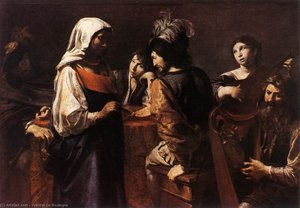
- Fortune Teller with Soldiers
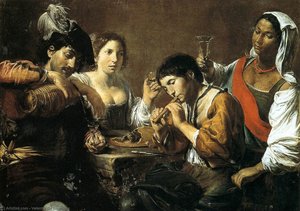
- The Concert
- Moses
- Place Of Birth: Coulommiers, France
Related Articles

Demandes Commerciales
APS ofrece reproducciones de bellas artes y encargos personalizados desde 2004. Confían en nosotros corporaciones, hoteles y coleccionistas selectos para obras de arte de calidad museística, servicio discreto y soluciones artísticas completas. ¡Póngase en contacto con nosotros para obtener un presupuesto personalizado!

Goya's Masterpieces: Explore 25 Iconic Paintings & Art Prints | ArtsDot
Delve into the world of Francisco Goya with ArtsDot. Explore 25 iconic paintings – from 'The Third of May' to his haunting Black Paintings. Discover the stories, techniques & emotions behind these Spanish masterpieces. Find museum-quality art reproductions for your home at ArtsDot.com!

The Dramatic Flourish: Exploring the Baroque Movement's Enduring Legacy in Art History
Explore the dramatic world of Baroque art! Discover iconic artists like Caravaggio & Rubens, defining techniques, and its lasting impact on art history. Expert insights for collectors & enthusiasts at ArtsDot.

Baroque Masterpieces: 10 Paintings That Defined an Era |
Journey through the drama & grandeur of Baroque art! Explore 10 masterpieces by Caravaggio, Rembrandt, Rubens & more. Discover stunning oil paintings, rich colors & timeless stories. Find museum-quality reproductions at .
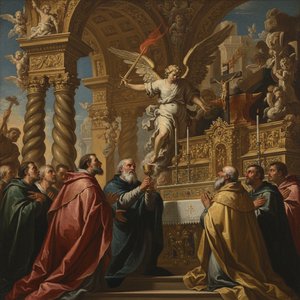
The Golden Age Reforged: Dramatic Realism & Religious Zeal in Spanish Baroque Art
Explore the dramatic world of Spanish Baroque art! Discover masters like Zurbarán & the powerful influence of religious zeal on painting techniques – a guide for collectors and enthusiasts.