 Preview
 Send
Send Share
Share
 Details

 Download
 Similars
 X-Ray
X-Ray Diaporama
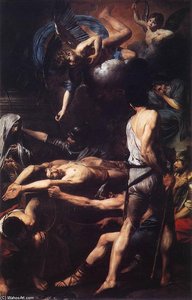
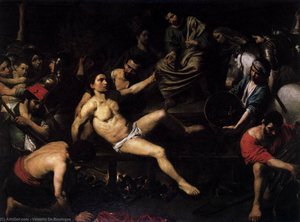
Martyrdom of St Processus and St Martinian
 Oil On Canvas
- WallArt
- Baroque
 1629
1629 308.0 x 165.0 cm
 Pinacoteca
 Read More
Hand Made Oil Reproduction
Hand-painted oil on canvas in your size and frame, made to order by our artists. ( Buy Print Buy Image)




P118B $10

P118H $10

P118W $10

P438Z $10

P508JH $12

P508YH $12

P805H $10

P805Z $10

P919BZ $10

P919G $10

P919XJ $10

P959ZH $10

P968JZ $12

W106C $8

W218G $10

W218JH $8

W218Y $10

W307PJ $10

W316G $10

W316PJ $8

W316Y $10

W398PJ $8

W4111J $10

W500HY $15

W500JH $15

W692G $12

W849H $8

W940BG $15

W953PJ $8




Pick from our preset sizes that match the artwork's original proportions.

You may enter your own dimensions to fit a specific frame or space. If your selected size does not match the original image's proportions, we will either crop the artwork or extend the painting with additional hand-painted elements. A digital mockup will be sent for your approval before production begins.
Please note that the on-screen preview does not reflect the actual cropping or extension. Only the mockup will accurately show the final composition.
While custom sizes are available, we recommend selecting a dimension from the predefined list to preserve the original proportions.
After order, ArtsDot.com team will email client for instructions and provide a mockup preview
Worldwide Delivery () in 3/4 weeks instead of standard 5 weeks. (24 August). No compromise on quality.

Free Worldwide Express Shipping

High-Quality Linen Canvas

Full Shipping Insurance

Customs Tax Refund Guarantee

True Color Matching Guarantee

60-Day Return Policy (Defects Only)

100% Money-Back Guarantee

Bulk Discount Offer
 Glass option is only available in size under 110 CM

Martyrdom of St Processus and St Martinian
Reproduction Medium
Reproduction Size
-


Total Price
$ 263
Artwork Description
A Drama of Faith: The Martyrdom of Saints Processus and Martinian
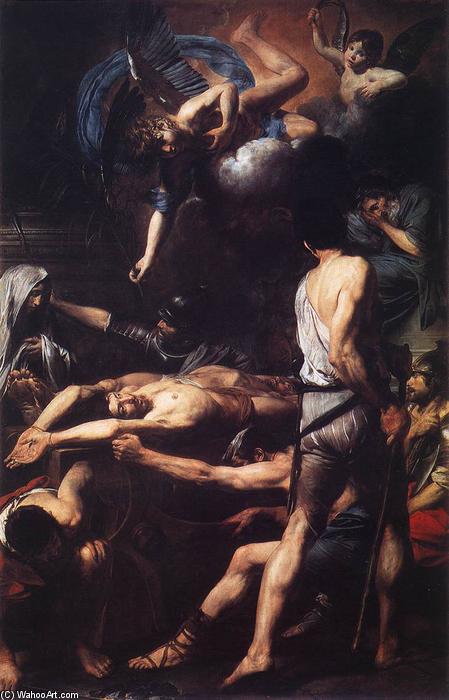
Valentin de Boulogne’s “Martyrdom of St. Processus and St. Martinian,” painted in 1629, isn't merely a religious scene; it’s a visceral embodiment of faith tested by brutal adversity. Emerging from the heart of the Baroque period, this monumental canvas transports us to a moment of profound sacrifice, capturing not just the physical torment but also the unwavering spiritual strength of two Roman saints. The painting pulsates with an arresting intensity – a carefully orchestrated dance of light and shadow that immediately draws the viewer into its dramatic narrative.
At first glance, the composition appears chaotic, yet it’s meticulously balanced. The figures are arranged within a shallow space, creating a sense of claustrophobia and immediacy. The central focus is undeniably the two martyrs, Processus and Martinian, caught in the throes of their ordeal. Processus, clad in crimson robes, fiercely resists his captors, his body contorted in a desperate struggle against the restraints. His face, etched with pain and defiance, speaks volumes about his unwavering commitment to his beliefs. Martinian, similarly bound, raises his hands in a gesture of supplication or perhaps quiet acceptance – a subtle contrast that highlights their individual responses to impending death.
The Caravaggist Influence: Light, Shadow, and Dramatic Realism
Valentin de Boulogne’s artistic lineage is inextricably linked to the revolutionary style pioneered by Michelangelo Merisi da Caravaggio. Like his predecessor, Valentin masterfully employs *tenebrism*, a technique characterized by stark contrasts between light and dark. A single, powerful beam of illumination cuts through the scene, highlighting the key figures and casting the surrounding figures in deep shadow. This dramatic lighting not only intensifies the emotional impact but also serves to emphasize the physicality of the martyrs’ suffering – every muscle strained, every vein pulsing with agony.
The artist's attention to anatomical detail is equally remarkable. Each figure is rendered with a startling realism, capturing the textures of skin, cloth, and metal. The rough-hewn ropes binding Processus are meticulously depicted, while the folds of Martinian’s robe ripple with movement. This commitment to naturalism was groundbreaking for its time, pushing the boundaries of religious painting and elevating it to a level of unprecedented emotional intensity.
A Historical Context: Rome in the Age of Persecution
To fully appreciate “Martyrdom of St. Processus and St. Martinian,” one must consider the historical context in which it was created – 17th-century Rome, a city rife with political intrigue, religious fervor, and relentless persecution. The Catholic Church was actively combating Protestantism, and countless Christians were being martyred for their faith. The painting serves as a potent reminder of this turbulent era, depicting the ultimate sacrifice made in defense of one’s beliefs.
Interestingly, the commission for this altarpiece reflects a deliberate engagement with contemporary artistic trends. The artist modified his style to suit the situation, incorporating elements from Poussin's "Capture of Jerusalem" which was previously commissioned for the same altar. This collaboration highlights the dynamic exchange of ideas within the Roman art world and demonstrates Valentin’s willingness to adapt his technique to meet the demands of a discerning patron.
Symbolism and Emotional Resonance: A Testament to Faith
Beyond its technical brilliance, “Martyrdom of St. Processus and St. Martinian” is rich in symbolism. The scene itself represents the core tenets of Christian faith – courage, resilience, and unwavering devotion. The martyrs’ willingness to face death rather than renounce their beliefs speaks volumes about the power of conviction. The statue of Hercules, looming in the background, serves as a subtle reminder of the earthly forces arrayed against them—a visual representation of paganism versus Christianity.
Ultimately, this painting transcends its historical and religious context to offer a timeless meditation on human suffering and spiritual fortitude. It’s a work that continues to resonate with viewers today, prompting reflection on the meaning of sacrifice, faith, and the enduring power of the human spirit. Reproductions capture only a fraction of the original's dramatic intensity, but they remain a compelling window into this extraordinary masterpiece.
Related Artworks
Artist Biography
The Shadow Painter of Rome: The Life and Legacy of Valentin de Boulogne
In the flickering candlelight of the early seventeenth century, a new kind of drama was being etched into the canvas of European art. At the heart of this movement stood Valentin de Boulogne, an artist whose brush possessed the rare ability to summon profound emotion from the deepest shadows. Born in Coulommiers, France, around 1590 or 1591, Valentin was destined for a life steeped in pigment and oil. He emerged from a lineage of creators, with both his father and uncle serving as painters, providing him with an early, intimate education in the mechanics of light and form. While his roots were firmly planted in French soil, his spirit was destined to wander the vibrant, tumultuous streets of Rome, where he would eventually become one of the most captivating figures of the Baroque era.
The trajectory of Valentin’s career was shaped by a restless pursuit of mastery that led him from the disciplined studios of Paris to the rebellious heart of Italy. His early training under the renowned Simon Vouet instilled in him a rigorous command of anatomical accuracy and classical perspective. Yet, the academic precision he learned in France could not contain the burgeoning naturalism that was beginning to sweep through Europe. When he arrived in Rome around 1620, he did not merely observe the existing art scene; he immersed himself in it, joining the Bentvueghels, a boisterous and often unruly collective of expatriate artists. Within this community, he earned the affectionate nickname “innamorato,” a testament to his passionate engagement with both the artistic struggles of his peers and the sensory delights of Roman life.
The Mastery of Tenebrism and Caravaggesque Drama
To understand the work of Valentin de Boulogne is to understand the language of Tenebrism. He was a profound heir to the legacy of Caravaggio, adopting and refining the technique of using extreme contrasts between light and dark to create a sense of theatrical urgency. In his hands, a single, piercing light source does more than illuminate a subject; it carves figures out of an impenetrable void, heightening the psychological tension of every scene. This mastery of chiaroscuro allowed him to transform ordinary moments into monumental dramas. Whether depicting the quiet intensity of a musician or the violent sanctity of a martyr, Valentin used shadow not as an absence of light, but as a physical presence that weighs upon the soul.
His repertoire was remarkably diverse, spanning from intimate genre scenes to grand religious commissions. He found particular success in capturing the gritty, lived-in reality of contemporary life, often portraying:
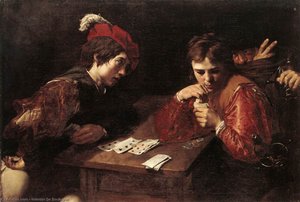
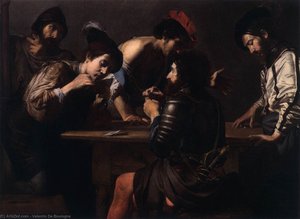
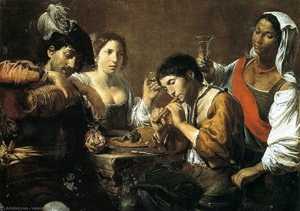
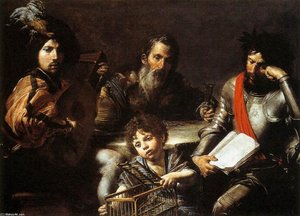
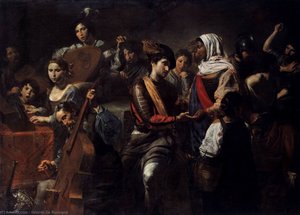
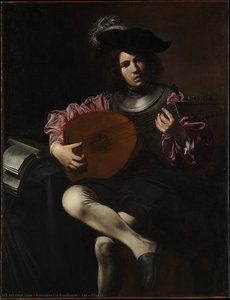
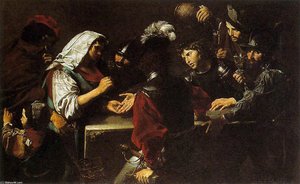
- Soldiers and Musicians: Works such as Lute Player and Soldiers playing Cards and Dice showcase his ability to render texture, from the sheen of polished armor to the soft resonance of a stringed instrument.
- Religious Martyrdom: His profound religious works, including the Martyrdom of St Processus and St Martinian, demonstrate how he applied his tenebrist style to convey the spiritual agony and unwavering faith of the saints.
- Biblical Narratives: In pieces like Moses, he utilized classical grandeur to breathe life into ancient prophets, blending historical weight with dramatic realism.
A Lasting Impression on the Baroque Era
The significance of Valentin de Boulogne extends far beyond his technical prowess; he was a bridge between the French academic tradition and the Italian revolutionary spirit. His ability to secure prestigious commissions from powerful patrons, such as the Barberini family and Cardinal Francesco Barberini, speaks to his standing within the highest echelons of Roman society. Even as he drew inspiration from the works of Bartolomeo Manfredi, Valentin maintained a distinct voice—one that was uniquely sensitive to the human condition and the fleeting nature of time.
Though his life was tragically short, ending in 1632 at the age of approximately forty-one, the impact of his "shadow painting" remains indelible. He left behind a body of work that continues to haunt and inspire, reminding viewers of the power of darkness to define the light. Through his canvases, we are invited to witness the triumphs and tribulations of humanity, captured in the eternal, dramatic dance of light and shadow. His legacy survives in every brushstroke that dares to find beauty in the gloom, ensuring that the name Le Valentin will forever be whispered in the halls of art history.
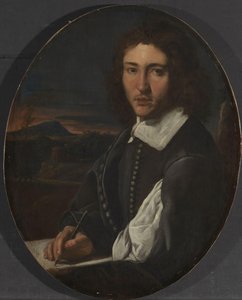
Valentin de Boulogne
1591 - 1632 , France
Quick Facts
- Artistic Movement Or Style: Tenebrism
- Artists Or Movements Influenced By This Artist:
- George de La Tour
- Paul Cézanne
- Artists Who Influenced This Artist:
- Simon Vouet
- Caravaggio
- Date Of Birth: Around 1590
- Full Name: Valentin de Boulogne
- Nationality: French
- Notable Artworks:
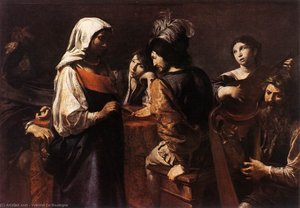
- Fortune Teller with Soldiers
- The Concert
- Moses
- Place Of Birth: Coulommiers, France
Related Articles

Goya's Masterpieces: Explore 25 Iconic Paintings & Art Prints | ArtsDot
Delve into the world of Francisco Goya with ArtsDot. Explore 25 iconic paintings – from 'The Third of May' to his haunting Black Paintings. Discover the stories, techniques & emotions behind these Spanish masterpieces. Find museum-quality art reproductions for your home at ArtsDot.com!

About Us
Discover our story! We bring world-class art into your life through expert curation, personalized creations, and free previews. Trusted by individuals and businesses since 2000.
El Greco's Masterpieces: Explore 25 Iconic Paintings & Spiritual Visions | ArtsDot
Journey through El Greco's 25 most iconic paintings! Explore the spiritual depth & dramatic beauty of this Spanish Renaissance master. Discover art history, techniques & find museum-quality reproductions for your home at ArtsDot.com.
Georges de La Tour: Luminosity, Spirituality & Realism in Baroque Painting
Discover the captivating world of Georges de La Tour, a Baroque master renowned for his dramatic chiaroscuro & spiritual realism. Explore key works, influences, and his remarkable rediscovery. Learn more at ArtsDot.
Pieter de Hooch: Illuminating Dutch Domestic Life & Golden Age Charm
Explore the captivating world of Pieter de Hooch, a master of Dutch Golden Age painting. Discover his innovative use of light, intimate domestic scenes, and lasting influence on art history. Learn more at ArtsDot.