

 Preview
 Send
Send Share
Share
 Details

 Download
 Similars
 X-Ray
X-Ray Diaporama
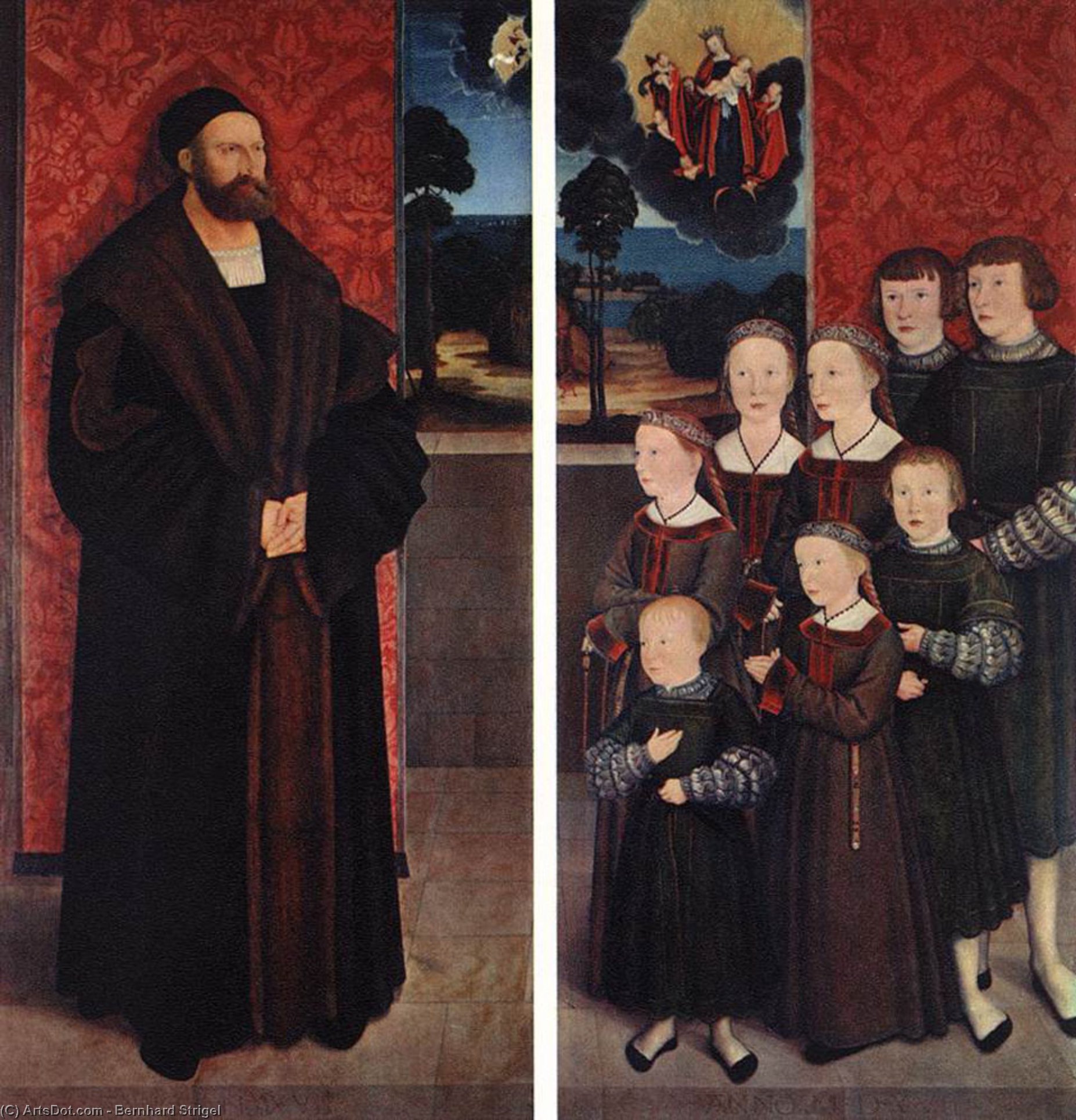
Portrait of Conrad Rehlinger and his Children
 Oil
Oil- WallArt
- Northern Renaissance
 1517
1517- Renaissance
 209.0 x 101.0 cm
 Alte Pinakothek
 Read More
Purchase a high-resolution, enhanced digital image, far superior to the online preview.
Each file is meticulously prepared by our in-house specialists using advanced tools and expert manual retouching. We ensure every image has exceptional clarity, precise color accuracy, and fine detail.
The final file is delivered via email within 72 hours, optimized for immediate use in professional, editorial, and print environments. This is the same quality trusted by top-tier design studios, publishers, and galleries.
Digital Image
Download a high-resolution file for personal display, printing, and creative projects. ( Buy Print Buy Hand Made Painting)
Included in Every Digital Image Order
Expert Digital Delivery, Guaranteed
When you choose ArtsDot.com, you're not just getting an image - you're receiving a professionally enhanced digital artwork, crafted with precision and backed by a satisfaction guarantee. Here's everything that comes with your order, automatically:

Fast Email Delivery
Your high-resolution digital image file will be emailed to you within 72 hours of ordering - ready for immediate use.

AI-Enhanced Digital File
Your artwork is professionally optimized using advanced AI tools and manual editing, ensuring maximum detail, clarity, and color accuracy.

Free Lifetime Re-Delivery
Accidentally deleted or lost your file? No worries - we'll resend it to you anytime, free of charge.

No Import Fees - Ever
Enjoy your artwork instantly with zero customs, duties, or delivery fees - digital downloads are always tax-free.

Color Accuracy Guarantee
We ensure your digital image reflects the original colors as closely as possible using professional tools and color management.

60-Day Satisfaction Guarantee
If you're not satisfied with your digital image, we'll revise it or refund 100% within 60 days - no questions asked.

100% Money-Back Guarantee
Not satisfied? Get a full refund within 60 days of receiving your digital file - no questions asked.

Bulk Order Discounts
Buy 3 images, save 10% - Buy 5, save 15% - Buy 10+, save 20%. Great for creative projects, galleries, and agencies.
A Legacy in Light: The Soul of the Swabian Renaissance
In the quiet, luminous depths of Bernhard Strigel’s 1517 masterpiece, Portrait of Conrad Rehlinger and His Children, we find more than a mere family record; we encounter a profound meditation on lineage, piety, and the dawn of a new era. Painted during the height of the German Renaissance, this work serves as a breathtaking window into the Bavarian soul. Strigel, a master of the Swabian School, moves beyond the rigid, flat traditions of the Gothic period to present a scene that breathes with life and dignity. The composition captures Conrad Rehlinger surrounded by his progeny, a grouping that transcends simple portraiture to become an idealized vision of familial unity and noble continuity.
The emotional resonance of the piece lies in its ability to balance solemnity with a tender, human warmth. As one gazes upon the faces of the children, there is a palpable sense of the artist's devotion to capturing individual spirit within a collective identity. For the discerning collector or interior designer, this painting offers a commanding presence that anchors a room, providing a sense of historical weight and timeless grace that modern works often struggle to replicate.
The Alchemy of Glaze and Shadow
To understand the allure of this portrait, one must look closely at Strigel’s extraordinary technical command. The artist utilized the medium of oil on wood to perform a kind of visual alchemy, employing a meticulous layering of translucent glazes. This technique allows light to penetrate the surface of the paint and reflect back from within, creating an ethereal, inner glow that seems to emanate from the very skin of the subjects. It is this luminosity that defines the work, casting a soft, divine radiance over the brown robes and the delicate features of the Rehlinger family.
Strigel’s mastery of chiaroscuro—the dramatic interplay between light and shadow—sculpts the figures with remarkable three-dimensionality. Notice how the subtle gradations of shade define the contours of Conrad's face and the soft folds of the drapery, lending a sculptural permanence to the subjects. The way light filters through an unseen window, casting gentle shadows that accentuate expression, creates a sense of atmospheric depth. This sophisticated handling of light does not merely illuminate the scene; it directs the viewer's eye, guiding us through the complex emotional landscape of the family unit.
A Mirror of Imperial Ambition and Humanist Virtue
The historical tapestry woven into this painting is as rich as its pigments. Created during the reign of Emperor Maximilian I, the work reflects the burgeoning humanist ideals that were reshaping Europe. This was a period where the study of classical antiquity and the celebration of human reason began to merge with traditional religious devotion. Strigel, who moved within the influential circles of the Emperor’s court, infused this portrait with the values of his time: the importance of virtuous lineage, the sanctity of the family, and the dignity of the individual.
Every element within the frame serves a symbolic purpose. The presence of the birds, positioned subtly within the composition, adds a layer of naturalistic detail that speaks to the Renaissance fascination with the observed world. For those seeking to adorn a space with art that tells a story, this reproduction offers an opportunity to possess a piece of history—a fragment of a time when art was used to bridge the gap between the earthly and the divine, and where every brushstroke was an act of devotion to both family and faith.
Related Artworks
Artist Biography
The Luminous Legacy of Bernhard Strigel
In the heart of the Swabian landscape, during a period when the medieval world was beginning to yield to the dawn of the Renaissance, Bernhard Strigel emerged as a master of light and human presence. Born in Memmingen around 1461, Strigel did not merely paint figures; he breathed life into them through a meticulous command of color and form. His journey was one of profound artistic evolution, moving from the structured traditions of the Gothic era toward a more nuanced, observational style that would define the German Renaissance. As a pivotal figure of the Swabian School, his work serves as a vital bridge between the spiritual intensity of the Middle Ages and the humanistic clarity of the sixteenth century.
The foundations of Strigel’s genius were laid within the intimate confines of a familial workshop. Under the guidance of his father, Hans Strigel, and influenced by the esteemed master Zeitblom of Ulm, the young artist developed an eye for the minute details that characterize Northern Renaissance art. This early training instilled in him a reverence for the textures of reality—the heavy fold of a velvet robe, the subtle sheen of a pearl, and the soft glow of skin under candlelight. One can trace the echoes of masters like Rogier van der der Weyden and Dieric Bouts in his early compositions, where a sense of profound devotion meets an almost scientific precision in detail.
Imperial Favor and the Art of the Portrait
Strigel’s ascent from a regional talent to a celebrated figure of European importance was propelled by the most powerful patronage of his age: that of Emperor Maximilian I. The Emperor, a man with an insatiable appetite for imagery and historical documentation, recognized in Strigel a unique ability to capture not just the likeness, but the very essence of authority and nobility. This relationship transformed Strigel’s career, leading him on grand artistic expeditions through the cultural hubs of Augsburg, Innsbruck, and Vienna. His presence in the imperial courts allowed him to participate in the most significant political and social narratives of his time.
Perhaps his most enduring contribution to the history of portraiture lies in his role during the momentous Habsburg-Jagellon marriage negotiations. In 1515, summoned specifically to Vienna, Strigel was tasked with capturing the faces of a changing Europe. His portraits from this era are characterized by an extraordinary clarity and a psychological depth that transcends mere documentation. Through his brush, the subjects possess a quiet dignity and a luminous quality that suggests a soul peering out from behind the pigment. These works do more than record history; they humanize it, offering us an intimate window into the faces of the Renaissance elite.
A Masterpiece of Technique and Tradition
The technical brilliance of Bernhard Strigel is most evident in his mastery of luminosity. He possessed a rare ability to manipulate light so that it seemed to emanate from within the painting itself, rather than merely reflecting off its surface. This technique, combined with a sophisticated use of color palettes, allowed him to create works that felt both physically tangible and spiritually elevated. Whether he was working on large-scale historical compositions or intimate individual portraits, his commitment to precision remained unwavering.
His artistic achievements can be summarized through several key pillars of his career:
- The Synthesis of Styles: Successfully merging the meticulous detail of the Ulm school with the burgeoning naturalism of the Renaissance.
- Imperial Documentation: Serving as a primary visual chronicler for Emperor Maximilian I, capturing the faces of European royalty.
- Mastery of Color: Utilizing a vibrant and luminous palette that brought a sense of life and movement to static forms.
- Historical Significance: Acting as a crucial link in the evolution of German painting, transitioning from Gothic symbolism to Renaissance humanism.
Today, the works of Bernhard Strigel remain a testament to an era of profound transformation. His ability to capture the fleeting light of a moment and preserve it within the permanence of oil and tempera ensures that his legacy continues to resonate. To look upon a Strigel portrait is to encounter the very spirit of the Swabian Renaissance—a world where every brushstroke is an act of devotion to the beauty of the visible world.
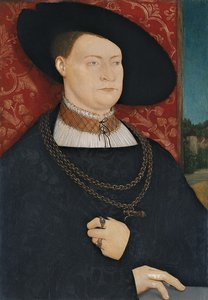
Bernhard Strigel
1461 - 1528 , Germany
Quick Facts
- Artistic Movement Or Style: Swabian School
- Artists Or Movements Influenced By This Artist:
- Danube School
- Renaissance Painting
- Artists Who Influenced This Artist:
- Zeitblom
- Hans Strigel
- Rogier van der Weyden
- Dürer
- Hans Holbein
- Date Of Birth: Memmingen, Germany (1461)
- Date Of Death: 1528
- Full Name: Bernhard Strigel
- Nationality: German
- Notable Artworks:
- Mary & Joseph with Jesus
- Emperor Maximilian I
- Portrait of Louis II of Hungary
- Saint Catherine and Dorothy
- Altarpiece of the Virgin
- Place Of Birth: Memmingen

