 Preview
 Send
Send Share
Share
 Details

 Download
 Similars
 X-Ray
X-Ray Diaporama
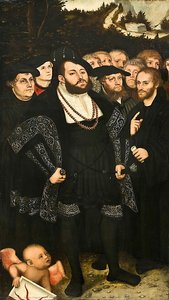
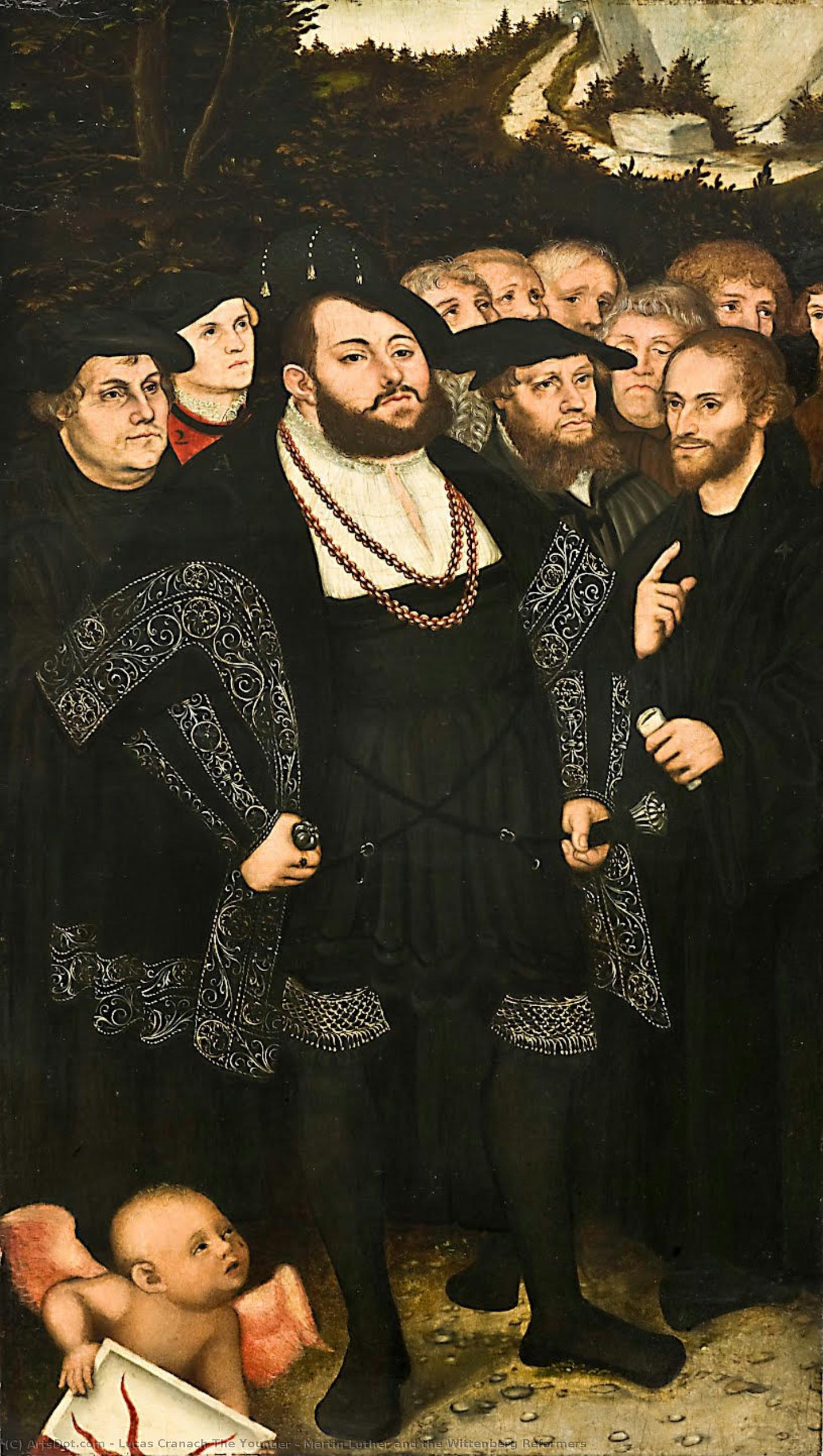
Martin Luther and the Wittenberg Reformers
 Oil On Canvas
- WallArt
- German Renaissance
 1543
1543- Renaissance
 970.0 x 728.0 cm
 Toledo Museum of Art
 Read More
Hand Made Oil Reproduction
Hand-painted oil on canvas in your size and frame, made to order by our artists. ( Buy Print Buy Image)




P118B $10

P118H $10

P118W $10

P438Z $10

P508JH $12

P508YH $12

P805H $10

P805Z $10

P919BZ $10

P919G $10

P919XJ $10

P959ZH $10

P968JZ $12

W106C $8

W218G $10

W218JH $8

W218Y $10

W307PJ $10

W316G $10

W316PJ $8

W316Y $10

W398PJ $8

W4111J $10

W500HY $15

W500JH $15

W692G $12

W849H $8

W940BG $15

W953PJ $8




Pick from our preset sizes that match the artwork's original proportions.

You may enter your own dimensions to fit a specific frame or space. If your selected size does not match the original image's proportions, we will either crop the artwork or extend the painting with additional hand-painted elements. A digital mockup will be sent for your approval before production begins.
Please note that the on-screen preview does not reflect the actual cropping or extension. Only the mockup will accurately show the final composition.
While custom sizes are available, we recommend selecting a dimension from the predefined list to preserve the original proportions.
After order, ArtsDot.com team will email client for instructions and provide a mockup preview
Worldwide Delivery () in 3/4 weeks instead of standard 5 weeks. (17 August). No compromise on quality.

Free Worldwide Express Shipping

High-Quality Linen Canvas

Full Shipping Insurance

Customs Tax Refund Guarantee

True Color Matching Guarantee

60-Day Return Policy (Defects Only)

100% Money-Back Guarantee

Bulk Discount Offer
 Glass option is only available in size under 110 CM

Martin Luther and the Wittenberg Reformers
Reproduction Medium
Reproduction Size
-


Total Price
$ 263
Artwork Description
A Gathering of Conviction: Martin Luther and the Wittenberg Reformers
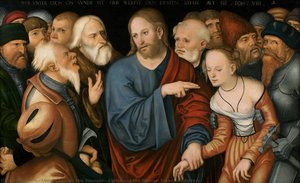
To stand before this depiction of Martin Luther and the Wittenberg Reformers is to step directly into the charged atmosphere of a pivotal moment in Western history. This painting, executed by Lucas Cranach the Younger around 1543, is far more than a mere portrait; it is a visual manifesto. The composition buzzes with intellectual energy, capturing not just a group of men, but an entire movement—the seismic shift that would redefine Christianity and reshape the map of Europe. One can almost feel the weight of conviction emanating from the figures as they gather, their presence solidifying the revolutionary ideas being debated in the halls of Wittenberg.
The Hand of Cranach: Style and Technique
Lucas Cranach the Younger masterfully employs the characteristic vibrancy and narrative clarity associated with German Renaissance painting. His technique allows for a remarkable balance between detailed portraiture and sweeping historical scope. Observe the rendering of the garments; while some figures wear recognizable religious vestments, others sport contemporary attire, grounding the momentous event in the reality of 16th-century life. Cranach’s brushwork lends an immediacy to the scene, making the gathering feel both monumental and deeply personal. The artist excels at capturing individual character within a collective narrative, ensuring that no single face is lost in the crowd's energy.
Symbolism Woven into the Composition
The symbolism here is rich and multifaceted. At the heart of the group stands Martin Luther, the intellectual engine of the Reformation. Yet, the inclusion of figures like the man holding a baby adds layers of profound meaning—suggesting that this reformation was not just an academic debate, but a deeply human, life-affirming renewal. The crowd surrounding them acts as both witness and participant; they represent the populace ready to embrace change, drawn by the powerful rhetoric emanating from the reformers. Every gesture, every grouping of figures, speaks to the tension between established dogma and burgeoning individual conscience.
Historical Resonance for the Modern Collector
Owning a reproduction of this work is to invite a piece of intellectual history into your own space. For the collector or designer, it serves as a powerful focal point that speaks to themes of belief, revolution, and enduring thought. The drama captured here—the clash between old certainties and new truths—is timeless. It suggests that profound change often begins with a small gathering of dedicated minds. This painting does not merely decorate; it prompts contemplation on the power of ideas to move mountains.
Related Artworks

Artist Biography
The Legacy of Lucas Cranach the Younger: A Renaissance Vision
In the heart of the German Renaissance, a period defined by profound theological shifts and intellectual rebirth, Lucas Cranach the Younger emerged as a master of visual storytelling. Born in 1515 in Kronach, Bavaria, he was destined to inherit more than just a name; he inherited a monumental artistic legacy. As the son of the legendary Lucas Cranach the Elder, the younger Cranach stepped into a world where art and ideology were inextricably linked. His life’s work would become a bridge between the established traditions of his father’s workshop and the burgeoning, often turbulent, spirit of the Protestant Reformation.
The foundations of his talent were laid through rigorous training, notably under the influence of the great Albrecht Dürer in Nuremberg. This early exposure to Dürer’s meticulous precision instilled in him a lifelong devotion to technical mastery and an acute attention to detail. Yet, while he respected the classical forms passed down through his lineage, Cranach the Younger possessed a distinct creative impulse. He sought to move beyond mere imitation, experimenting with chiaroscuro and a more nuanced use of color to breathe life into his subjects, creating a sense of depth and psychological presence that was remarkably modern for his era.
The Painter of the Reformation
To understand the work of Cranach the Younger is to understand the pulse of 16th-century Wittenberg. As the Reformation swept through Europe, the artist found himself at the epicenter of a religious revolution. Supported by powerful Protestant patrons, most notably Frederick III of Saxony, his brush became a tool for conveying the theological convictions of the age. His altarpieces were not merely decorative; they were profound instruments of faith, depicting biblical narratives with a dramatic realism that resonated with the fervor of the time.
Perhaps his most enduring contribution to history lies in his ability to immortalize the faces of the Reformation. Through his portraits, he captured the likenesses of Martin Luther and other pivotal reformers, imbuing them with a sense of dignity, conviction, and human vulnerability. These works did more than record physical features; they conveyed the very essence of a movement. His ability to blend idealized beauty with deep psychological insight allowed him to create icons that served both as personal tributes and as powerful symbols of a new religious identity.
Artistic Mastery and Historical Significance
Beyond his religious fervor, Cranach the Younger was a prolific portraitist of the nobility, capable of capturing the opulence and status of the European elite with grace and sophistication. His workshop, which he continued to lead with distinction after 1550, remained a vital center of artistic production in Germany. His versatility allowed him to navigate the complexities of secular and sacred commissions, ensuring that his influence permeated both the halls of power and the sanctuaries of worship.
The historical significance of Lucas Cranach the Younger lies in his role as a custodian of tradition and an agent of change. He successfully navigated the transition from the late Gothic sensibilities of his father to the more humanistic, light-filled approaches of the high Renaissance. His life remains a testament to the power of art to document, shape, and endure through periods of immense social upheaval. Today, his works stand as vibrant windows into a transformative era, reminding us of a time when every brushstroke carried the weight of profound belief.
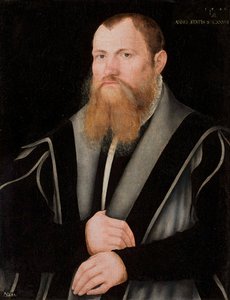
Lucas Cranach the Younger
1515 - 1586 , Germany
Quick Facts
- Artistic Movement Or Style: Renaissance painting
- Artists Or Movements Influenced By This Artist: ['German Renaissance']
- Artists Who Influenced This Artist: ['Lucas Cranach the Elder']
- Date Of Birth: 1515
- Full Name: Lucas Cranach the Younger
- Nationality: German
- Notable Artworks:
- Venus and Amor
- Portrait of a Man
- Portrait of Johannes Cuspinian
- Place Of Birth: Kronach, Germany
Related Articles

The Enduring Legacy of Oil on Canvas: Technique, History & Aesthetic Impact
Explore the rich history & techniques of oil painting – from Renaissance masters to Impressionism. Discover pigments, layering methods, and why this timeless medium endures. Expert insights for artists & art enthusiasts.
The Northern Awakening: Artistic Innovation & Cultural Transformation in the German Renaissance
Explore the artistic innovation of the German Renaissance! Discover Dürer, the Danube School & Reformation art. Learn about techniques, materials & lasting influence. Find museum-quality reproductions at ArtsDot.

Oil on Canvas: A Historical & Technical Exploration of a Timeless Artistic Medium
Explore the rich history & enduring techniques of oil painting on canvas. Discover the science behind its longevity, conservation practices, and contemporary relevance. Expert insights for art enthusiasts.

The Enduring Power of Painting: A Historical & Contemporary Exploration of Form and Emotion
Explore the rich history & enduring techniques of oil painting with ArtsDot. Discover masterpieces, learn about art collecting, and find authentic handmade reproductions crafted by skilled artists.

The Enduring Legacy of Oil on Canvas: Technique, History & Contemporary Practice
Explore the rich history & enduring techniques of oil painting on canvas. Discover the science behind its longevity, conservation practices, and contemporary relevance. Expert insights for art enthusiasts.