 Preview
 Send
Send Share
Share
 Details

 Download
 Similars
 X-Ray
X-Ray Diaporama
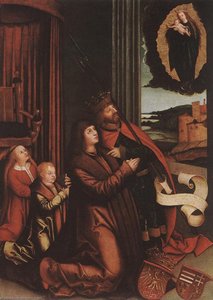
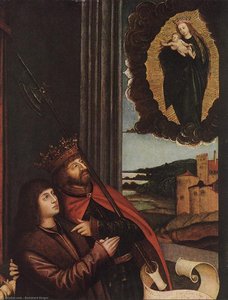
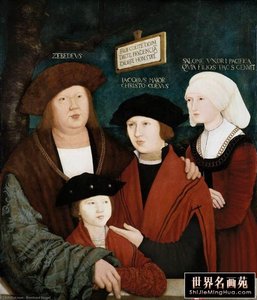
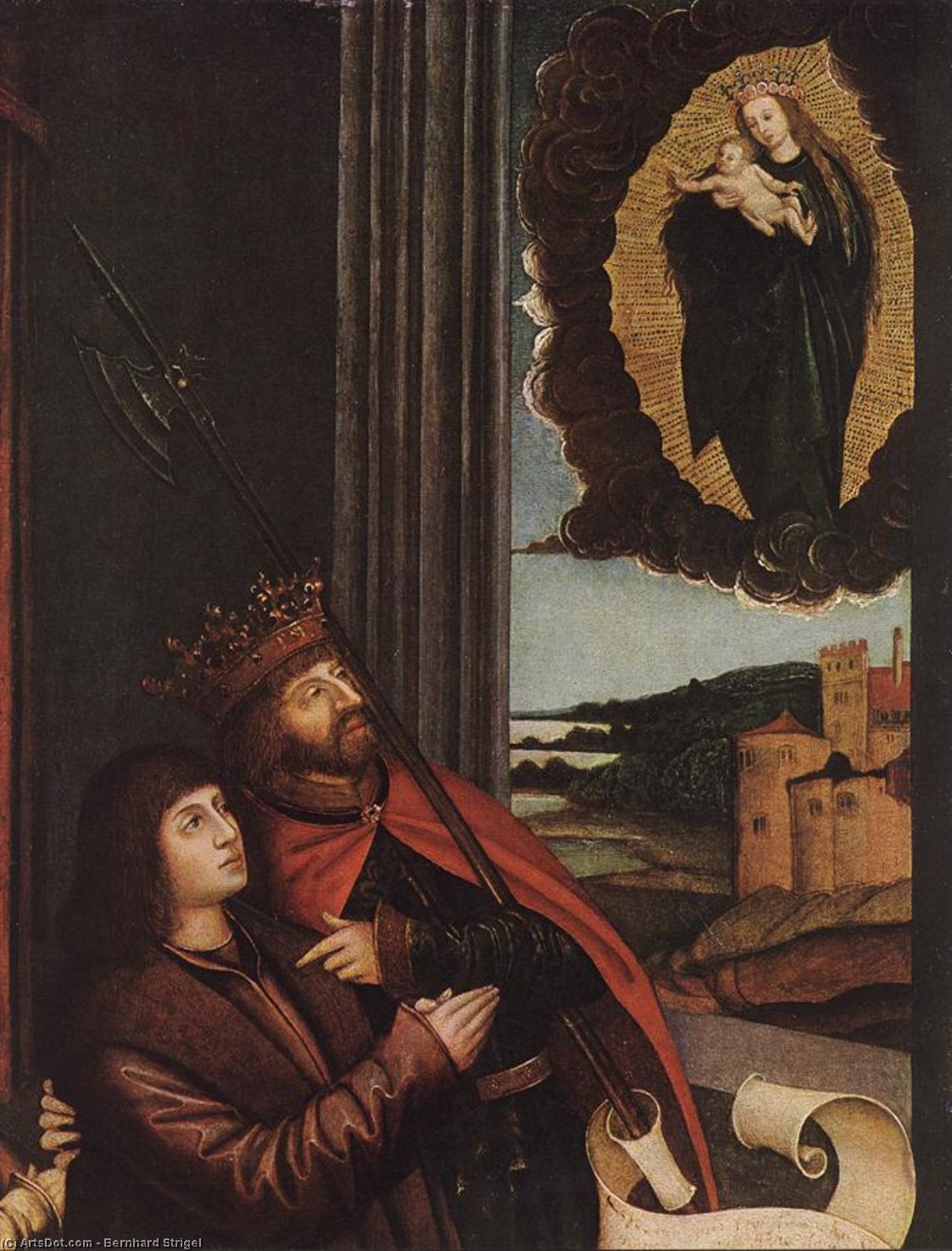
St Ladislas Presents Wladislav II and his Sons to the Virgin (detail)
 Acrylic On Canvas
- WallArt
- Renaissance Bavaria
 1511
1511 43.0 x 30.0 cm
 Szépmûvészeti Múzeum
 Read More
Hand Made Oil Reproduction
Hand-painted oil on canvas in your size and frame, made to order by our artists. ( Buy Print Buy Image)




P118B $10

P118H $10

P118W $10

P438Z $10

P508JH $12

P508YH $12

P805H $10

P805Z $10

P919BZ $10

P919G $10

P919XJ $10

P959ZH $10

P968JZ $12

W106C $8

W218G $10

W218JH $8

W218Y $10

W307PJ $10

W316G $10

W316PJ $8

W316Y $10

W398PJ $8

W4111J $10

W500HY $15

W500JH $15

W692G $12

W849H $8

W940BG $15

W953PJ $8




Pick from our preset sizes that match the artwork's original proportions.

You may enter your own dimensions to fit a specific frame or space. If your selected size does not match the original image's proportions, we will either crop the artwork or extend the painting with additional hand-painted elements. A digital mockup will be sent for your approval before production begins.
Please note that the on-screen preview does not reflect the actual cropping or extension. Only the mockup will accurately show the final composition.
While custom sizes are available, we recommend selecting a dimension from the predefined list to preserve the original proportions.
After order, ArtsDot.com team will email client for instructions and provide a mockup preview
Worldwide Delivery () in 3/4 weeks instead of standard 5 weeks. (25 August). No compromise on quality.

Free Worldwide Express Shipping

High-Quality Linen Canvas

Full Shipping Insurance

Customs Tax Refund Guarantee

True Color Matching Guarantee

60-Day Return Policy (Defects Only)

100% Money-Back Guarantee

Bulk Discount Offer
 Glass option is only available in size under 110 CM

St Ladislas Presents Wladislav II and his Sons to the Virgin (detail)
Reproduction Medium
Reproduction Size
-


Total Price
$ 263
Artwork Description
Bernhard Strigel: Illuminating Bavaria’s Renaissance Spirit
Bernhard Strigel (c. 1461 – 4 May 1528) represents a cornerstone of the Swabian School of painting, marking a significant transition from Gothic formalism to the humanist ideals blossoming across Europe during the sixteenth century. Born in Memmingen, Germany—likely nurtured under the tutelage of Zeitblom at Ulm—Strigel swiftly ascended to prominence thanks to imperial patronage, undertaking ambitious artistic expeditions to Augsburg, Innsbruck, and Vienna, establishing himself as one of Bavaria’s foremost artists.
His enduring fame rests primarily on his portraits and historical canvases, distinguished by an unparalleled clarity of form achieved through meticulous observation and a masterful command of color. Strigel's approach wasn’t merely about depicting subjects accurately; it was about conveying emotion and narrative—a hallmark of Renaissance art that continues to resonate with viewers today.
A Portrait of Faith: Analyzing “St Ladislas Presents Wladislav II and his Sons to the Virgin”
The painting, titled “St Ladislas Presents Władysław II and His Sons to The Virgin,” offers a captivating glimpse into the religious fervor of its time. Executed in 1511, this detail from Strigel’s oeuvre exemplifies the stylistic characteristics that define the Swabian School: luminous color palettes combined with painstaking realism. Observe how Strigel captures the solemn grandeur of the scene—a depiction of Saint Ladislas offering Władysław II and his sons to Mary, highlighting the importance of royal lineage and piety.
- Subject Matter: The artwork portrays a pivotal moment in Bohemian history, illustrating the veneration for the Virgin Mary and the Holy Family within the context of medieval European spirituality.
- Style: Strigel’s style aligns perfectly with the Renaissance aesthetic—characterized by balanced compositions, idealized figures, and an emphasis on naturalistic detail.
- Technique: Employing oil paint on panel, Strigel utilized glazing techniques to achieve remarkable luminosity and depth of color, creating a visual experience that transcends mere representation. The artist’s meticulous attention to texture contributes to the painting's palpable sense of realism.
Historical Context & Imperial Influence
Strigel’s artistic career flourished under Emperor Maximilian I—a fervent supporter of the arts who recognized Strigel’s talent and commissioned numerous projects, propelling him to international acclaim. This patronage fostered an environment conducive to innovation and experimentation, allowing Strigel to explore ambitious themes and refine his technique.
The painting's setting – a castle – symbolizes authority and stability, mirroring Maximilian I’s ambition to consolidate Habsburg dominion. Furthermore, the inclusion of books underscores the Renaissance preoccupation with knowledge and learning—values central to humanist thought and shaping intellectual discourse during the period.
Symbolism & Emotional Resonance
"St Ladislas Presents Władysław II and His Sons to The Virgin" transcends mere visual depiction; it communicates profound spiritual ideas. Mary’s crown symbolizes her divine dignity, while the gesture of offering represents humility and devotion—themes prevalent throughout Christian iconography.
The painting evokes a feeling of reverence and contemplation, inviting viewers to consider the enduring significance of faith and familial piety. Strigel's masterful execution ensures that this emotional impact persists across centuries, cementing his place as one of Bavaria’s most influential artists and a testament to the transformative power of Renaissance art.
Related Artworks
Artist Biography
The Luminous Legacy of Bernhard Strigel
In the heart of the Swabian landscape, during a period when the medieval world was beginning to yield to the dawn of the Renaissance, Bernhard Strigel emerged as a master of light and human presence. Born in Memmingen around 1461, Strigel did not merely paint figures; he breathed life into them through a meticulous command of color and form. His journey was one of profound artistic evolution, moving from the structured traditions of the Gothic era toward a more nuanced, observational style that would define the German Renaissance. As a pivotal figure of the Swabian School, his work serves as a vital bridge between the spiritual intensity of the Middle Ages and the humanistic clarity of the sixteenth century.
The foundations of Strigel’s genius were laid within the intimate confines of a familial workshop. Under the guidance of his father, Hans Strigel, and influenced by the esteemed master Zeitblom of Ulm, the young artist developed an eye for the minute details that characterize Northern Renaissance art. This early training instilled in him a reverence for the textures of reality—the heavy fold of a velvet robe, the subtle sheen of a pearl, and the soft glow of skin under candlelight. One can trace the echoes of masters like Rogier van der der Weyden and Dieric Bouts in his early compositions, where a sense of profound devotion meets an almost scientific precision in detail.
Imperial Favor and the Art of the Portrait
Strigel’s ascent from a regional talent to a celebrated figure of European importance was propelled by the most powerful patronage of his age: that of Emperor Maximilian I. The Emperor, a man with an insatiable appetite for imagery and historical documentation, recognized in Strigel a unique ability to capture not just the likeness, but the very essence of authority and nobility. This relationship transformed Strigel’s career, leading him on grand artistic expeditions through the cultural hubs of Augsburg, Innsbruck, and Vienna. His presence in the imperial courts allowed him to participate in the most significant political and social narratives of his time.
Perhaps his most enduring contribution to the history of portraiture lies in his role during the momentous Habsburg-Jagellon marriage negotiations. In 1515, summoned specifically to Vienna, Strigel was tasked with capturing the faces of a changing Europe. His portraits from this era are characterized by an extraordinary clarity and a psychological depth that transcends mere documentation. Through his brush, the subjects possess a quiet dignity and a luminous quality that suggests a soul peering out from behind the pigment. These works do more than record history; they humanize it, offering us an intimate window into the faces of the Renaissance elite.
A Masterpiece of Technique and Tradition
The technical brilliance of Bernhard Strigel is most evident in his mastery of luminosity. He possessed a rare ability to manipulate light so that it seemed to emanate from within the painting itself, rather than merely reflecting off its surface. This technique, combined with a sophisticated use of color palettes, allowed him to create works that felt both physically tangible and spiritually elevated. Whether he was working on large-scale historical compositions or intimate individual portraits, his commitment to precision remained unwavering.
His artistic achievements can be summarized through several key pillars of his career:
- The Synthesis of Styles: Successfully merging the meticulous detail of the Ulm school with the burgeoning naturalism of the Renaissance.
- Imperial Documentation: Serving as a primary visual chronicler for Emperor Maximilian I, capturing the faces of European royalty.
- Mastery of Color: Utilizing a vibrant and luminous palette that brought a sense of life and movement to static forms.
- Historical Significance: Acting as a crucial link in the evolution of German painting, transitioning from Gothic symbolism to Renaissance humanism.
Today, the works of Bernhard Strigel remain a testament to an era of profound transformation. His ability to capture the fleeting light of a moment and preserve it within the permanence of oil and tempera ensures that his legacy continues to resonate. To look upon a Strigel portrait is to encounter the very spirit of the Swabian Renaissance—a world where every brushstroke is an act of devotion to the beauty of the visible world.
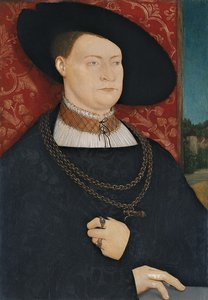
Bernhard Strigel
1461 - 1528 , Germany
Quick Facts
- Artistic Movement Or Style: Swabian School
- Artists Or Movements Influenced By This Artist:
- Danube School
- Renaissance Painting
- Artists Who Influenced This Artist:
- Zeitblom
- Hans Strigel
- Rogier van der Weyden
- Dürer
- Hans Holbein
- Date Of Birth: Memmingen, Germany (1461)
- Date Of Death: 1528
- Full Name: Bernhard Strigel
- Nationality: German
- Notable Artworks:
- Mary & Joseph with Jesus
- Emperor Maximilian I
- Portrait of Louis II of Hungary
- Saint Catherine and Dorothy
- Altarpiece of the Virgin
- Place Of Birth: Memmingen
Related Articles
High Medieval Art: 10 Masterpieces That Shaped an Era | ArtsDot
Journey through High Medieval Art! Explore 10 iconic masterpieces – from Giotto's frescoes to stunning Gothic cathedrals. Discover the stories behind these timeless paintings, sculptures & illuminated manuscripts. Find museum-quality art reproductions at ArtsDot.com.
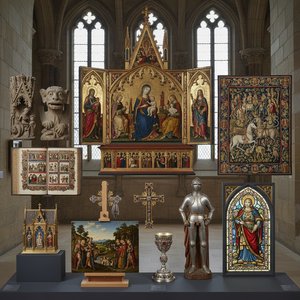
Late Medieval Masterpieces: 10 Artworks That Defined an Era | ArtsDot
Journey through 10 defining Late Medieval masterpieces – from Giotto's frescoes to Jan van Eyck’s realism. Explore the stories, techniques & vibrant colors of Gothic art. Find museum-quality reproductions and elevate your home decor with ArtsDot.com! Discover all masterpieces on ArtsDot.com
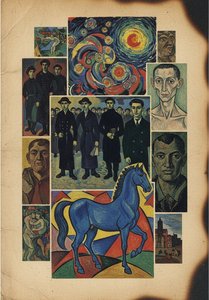
German Expressionism's 10 Defining Masterpieces | Art for Your Home
Explore 10 defining German Expressionism masterpieces – from Munch's 'The Scream' to Kandinsky’s abstracts. Discover the artists, stories & bold colors behind this powerful art movement. Find museum-quality reproductions at ArtsDot.com.
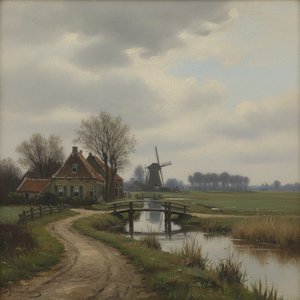
Jacob Henricus Maris: A Master of Dutch Atmospheric Realism & the Intimate Landscape
Explore the captivating world of Jacob Henricus Maris, a leading figure of the Dutch Hague School. Discover his atmospheric landscapes, signature brushstrokes & lasting influence on 19th-century art. Learn more at ArtsDot.
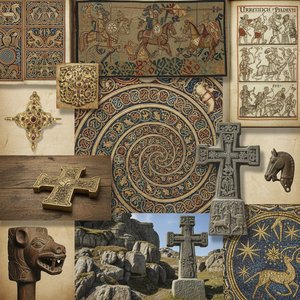
Early Medieval Art: 10 Masterpieces That Shaped a New World | ArtsDot
Journey through 10 stunning Early Medieval masterpieces – from the Book of Kells to Carolingian mosaics. Explore art history, symbolism & find museum-quality reproductions for your home at ArtsDot.com. Discover all masterpieces online!