 Preview
 Send
Send Share
Share
 Details

 Download
 Similars
 X-Ray
X-Ray Diaporama
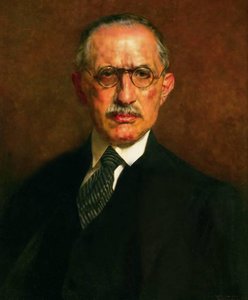
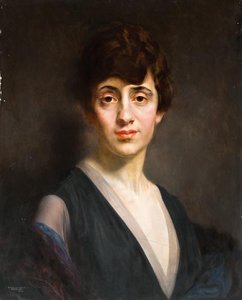
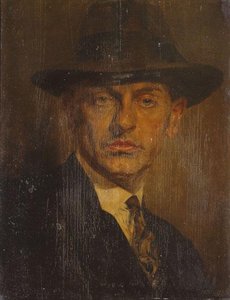
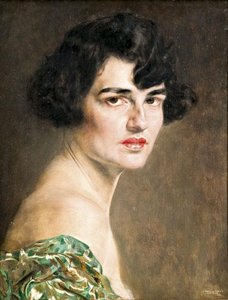
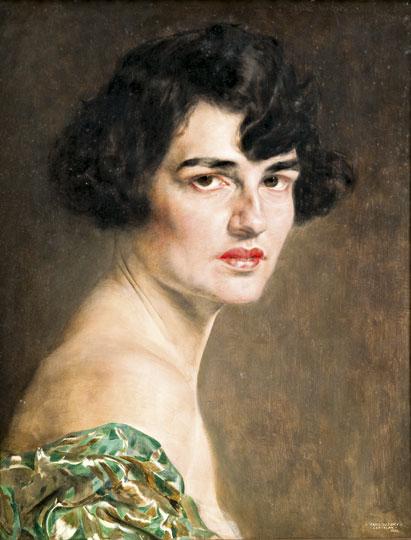
Portrait of Countess Héderváry
 Contemporary Realism
 1926
1926 50.0 x 40.0 cm
 Read More
Giclée / Art Print
Museum-quality giclée or canvas print with fast production and flexible finish options. ( Buy Hand Made Painting Buy Image)




































Pick from our preset sizes that match the artwork's original proportions.

You may enter your own dimensions to fit a specific frame or space. If your selected size does not match the original image's proportions, we will either crop the artwork or extend the image with a mirrored or solid-fill edge. A digital mockup will be sent for your approval before production begins.
Please note that the on-screen preview does not reflect the actual cropping or extension. Only the mockup will accurately show the final composition.
While custom sizes are available, we recommend selecting a dimension from the predefined list to preserve the original proportions.
Worldwide Delivery () in 2 weeks instead of standard 4/5 weeks. (23 August)

Free Worldwide Express Shipping

High-Quality Linen Canvas

Full Shipping Insurance

Customs Tax Refund Guarantee

True Color Matching Guarantee

60-Day Return Policy (Defects Only)

100% Money-Back Guarantee

Bulk Discount Offer
 Glass option is only available in size under 110 CM

Portrait of Countess Héderváry
Giclée / Art Print
Reproduction Size
-


Total Price
$ 63
Related Artworks
Artist Biography
The Accidental Visionary: The Life of Bertalan Karlovszky
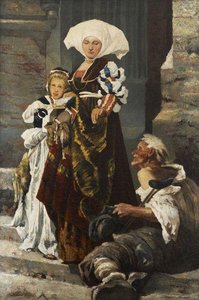
Bertalan Karlovszky (1858–1938) did not begin his journey with a brush in hand, but rather with the disciplined gaze of a soldier. Born in Munkács and raised amidst the vibrant streets of Budapest, his early years were marked by a profound lack of interest in the rigid structures of formal academia. Enrolled in a Military Academy, Karlovszky found himself far more captivated by the faces of his instructors and the character of his fellow cadets than by the lectures on strategy and command. In those quiet moments of rebellion, he practiced the art of observation, sketching portraits from memory and photographs with such startling accuracy that his commanding officer was moved to intervene. It was this very encounter—a moment where military discipline met raw artistic talent—that redirected his destiny, leading him away from the barracks and toward the prestigious studios of Europe. After three years of cadet life, Karlovszky embarked on a transformative odyssey through the great artistic capitals of the nineteenth century. His training began in Munich under the guidance of Otto Seitz, but it was the invitation to Paris that would truly define his aesthetic soul. There, he entered the studio of the legendary Mihály Munkácsy, a master of light and shadow. Under Munkácsy’s mentorship, Karlovszky’s technique blossomed to such an extraordinary degree that critics often found it difficult to distinguish his hand from that of his teacher. This period of intense immersion in the Parisian art scene allowed him to master the nuances of genre painting, infusing his works with a sense of narrative depth and atmospheric realism that would soon captivate audiences far beyond the borders of Hungary.Mastery of Light and the Human Form
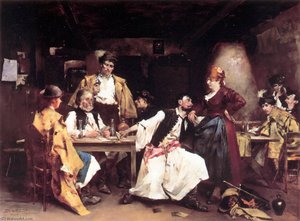
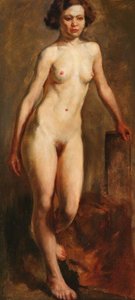
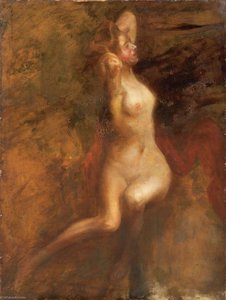
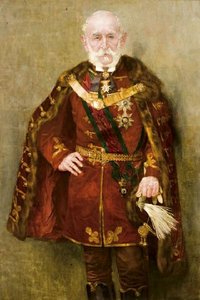
The brilliance of Karlovszky’s work lies in his ability to bridge the gap between academic precision and emotional resonance. His repertoire was remarkably diverse, ranging from intimate, luminous portraits to sweeping, nostalgic genre scenes. In works such as In the Tavern, he demonstrated a profound capacity for capturing the ephemeral essence of social life, using light to evoke a sense of warmth, camaraderie, and a bittersweet longing for a bygone era. His ability to manipulate texture and tone allowed him to create environments that felt lived-in and palpable, turning simple scenes of leisure into profound meditations on human connection. Beyond his genre scenes, Karlovszky possessed a singular talent for the human figure, often exploring themes of classical beauty and mystery. His Reclining Nude serves as a testament to his command over academic realism, where dramatic lighting and rich, velvety textures create an atmosphere of quiet intimacy. Whether he was capturing the regal elegance of a high-society portrait, such as his depictions of the Hungarian nobility, or the raw, unvarnished reality of everyday life, his brushwork remained consistently sophisticated. This versatility ensured that his paintings were not merely decorations but windows into the psychological and social landscapes of the late nineteenth and early twentieth centuries.Legacy and Academic Eminence
As his fame grew, Karlovszky’s reach extended across the Atlantic, as he successfully cultivated connections with American art dealers, bringing his celebrated works to a global stage where they fetched high prices and widespread acclaim. Upon returning to Budapest in 1894, he transitioned from a wandering student of the world to a pillar of the Hungarian art community. He dedicated much of his later life to the cultivation of future generations, operating his own painting school and eventually ascending to the prestigious position of Professor at the Hungarian University of Fine Arts. His career was marked by significant milestones that solidified his historical importance:- The Salon Success: His early exhibitions in Paris established him as a rising star in the international art market.
- Retrospective Recognition: In 1921, a major retrospective at the Hall of Art celebrated his lifelong contribution to the visual arts.
- Academic Leadership: His tenure as a Professor allowed him to shape the trajectory of Hungarian academic painting for decades.
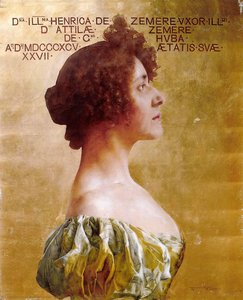
bertalan karlovszky
1858 - 1938
Quick Facts
- Artistic Movement Or Style: Academic Realism
- Artists Or Movements Influenced By This Artist: ['Diego Velázquez']
- Artists Who Influenced This Artist: ['Mihály Munkácsy']
- Date Of Death: 1938
- Full Name: Bertalan Karlovszky
- Nationality: Hungarian
- Notable Artworks:
- Portrait of Count de Bothuri Bathory
- Reclining Nude
- Place Of Birth: Munkács, Hungary
Related Articles

The Enduring Legacy of Oil on Canvas: Technique, History & Aesthetic Impact
Explore the rich history & techniques of oil painting – from Renaissance masters to Impressionism. Discover pigments, layering methods, and why this timeless medium endures. Expert insights for artists & art enthusiasts.

Oil on Canvas: A Historical & Technical Exploration of a Timeless Artistic Medium
Explore the rich history & enduring techniques of oil painting on canvas. Discover the science behind its longevity, conservation practices, and contemporary relevance. Expert insights for art enthusiasts.

The Enduring Power of Painting: A Historical & Contemporary Exploration of Form and Emotion
Explore the rich history & enduring techniques of oil painting with ArtsDot. Discover masterpieces, learn about art collecting, and find authentic handmade reproductions crafted by skilled artists.

The Enduring Legacy of Oil on Canvas: Technique, History & Contemporary Practice
Explore the rich history & enduring techniques of oil painting on canvas. Discover the science behind its longevity, conservation practices, and contemporary relevance. Expert insights for art enthusiasts.
The Enduring Legacy of Oil Paint: Technique, History & Emotional Resonance in Western Art
Explore the rich history & techniques of oil painting! Discover Renaissance masters, scientific principles behind color, and emotional resonance in art. Learn about glazing, layering, and atmospheric perspective – a guide for enthusiasts & collectors.