 Preview
 Send
Send Share
Share
 Details

 Download
 Similars
 X-Ray
X-Ray Diaporama
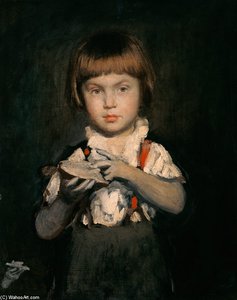
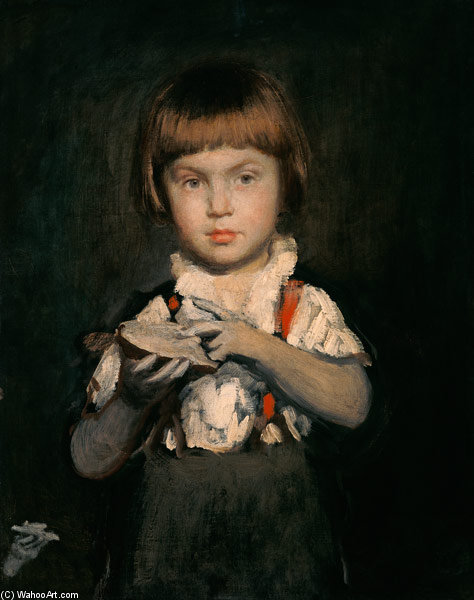
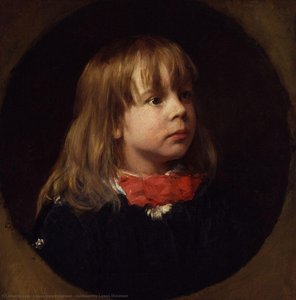
Boy With Bread And Butter

 Read More
Hand Made Oil Reproduction
Hand-painted oil on canvas in your size and frame, made to order by our artists. ( Buy Print Buy Image)




P118B $10

P118H $10

P118W $10

P438Z $10

P508JH $12

P508YH $12

P805H $10

P805Z $10

P919BZ $10

P919G $10

P919XJ $10

P959ZH $10

P968JZ $12

W106C $8

W218G $10

W218JH $8

W218Y $10

W307PJ $10

W316G $10

W316PJ $8

W316Y $10

W398PJ $8

W4111J $10

W500HY $15

W500JH $15

W692G $12

W849H $8

W940BG $15

W953PJ $8




Pick from our preset sizes that match the artwork's original proportions.

You may enter your own dimensions to fit a specific frame or space. If your selected size does not match the original image's proportions, we will either crop the artwork or extend the painting with additional hand-painted elements. A digital mockup will be sent for your approval before production begins.
Please note that the on-screen preview does not reflect the actual cropping or extension. Only the mockup will accurately show the final composition.
While custom sizes are available, we recommend selecting a dimension from the predefined list to preserve the original proportions.
After order, ArtsDot.com team will email client for instructions and provide a mockup preview
Worldwide Delivery () in 3/4 weeks instead of standard 5 weeks. (16 August). No compromise on quality.

Free Worldwide Express Shipping

High-Quality Linen Canvas

Full Shipping Insurance

Customs Tax Refund Guarantee

True Color Matching Guarantee

60-Day Return Policy (Defects Only)

100% Money-Back Guarantee

Bulk Discount Offer
 Glass option is only available in size under 110 CM

Boy With Bread And Butter
Reproduction Medium
Reproduction Size
-


Total Price
$ 263
Related Artworks

Artist Biography
Bertalan Székely (1835-1910): A Hungarian Romantic Academic
Bertalan Székely, born in Cluj-Napoca, Hungary, in 1835, stands as a pivotal figure in Hungarian art history—a painter who skillfully navigated the currents of Romanticism and Academic painting, leaving behind a legacy of evocative landscapes and dignified portraits.
Early Life and Artistic Training
Székely’s upbringing within a noble family instilled an appreciation for tradition and scholarship. Despite familial aspirations for him to pursue engineering, his passion for art led him to enroll at the Academy of Fine Arts in Vienna from 1851 to 1855. Under the tutelage of Johann Nepomuk Geiger and Carl Rahl, he honed foundational skills in drawing and composition—skills that would prove invaluable throughout his artistic career.
Return to Cluj-Napoca and Initial Teaching Experience
Upon returning to Cluj-Napoca after Vienna, Székely embarked on a period of teaching, shaping young artists’ perspectives and fostering an understanding of artistic principles. His involvement with count Aichelburg in Marschendorf provided him with valuable experience in managing artistic projects and collaborating with patrons.
Marriage and Move to Munich
Székely married and relocated to Munich in 1862, where he continued his artistic pursuits under the guidance of Karl von Piloty. It was during this time that he decisively embraced history painting—a genre favored by the Viennese Academy and reflecting the intellectual fervor of the era.
Notable Achievements and Artistic Style
Székely’s breakthrough came in 1862 when he secured a prestigious prize for his monumental depiction of “The Escape of Emperor Charles VII,” fueling his ambition to explore new artistic horizons. This success enabled him to undertake expeditions to the Netherlands and Paris, immersing himself in European artistic trends—influences that subtly shaped his distinctive style.
- Romanticism: Székely’s early works demonstrate a preoccupation with emotion and dramatic narrative, mirroring the Romantic movement's emphasis on subjective experience.
- Academic Painting: He mastered the conventions of Academic painting—characterized by meticulous detail, idealized figures, and adherence to classical proportions—particularly evident in his portraits and historical compositions.
- Landscape Painting: Székely transitioned towards landscape painting later in his career, capturing Hungarian vistas with sensitivity and precision.
- Decorative Murals: His contributions to Matthias Church, Budapest Opera House and Kecskemét City Hall showcased his talent for large-scale mural projects—integrating artistic vision with architectural grandeur.
Influence of Muybridge and Marey
Székely’s fascination extended beyond traditional genres; he investigated the pioneering work of Étienne Jules Marey and Edward Muybridge on motion studies, experimenting with innovative techniques to represent movement—a testament to his intellectual curiosity and willingness to embrace new artistic methodologies.
Legacy and Significance
Bertalan Székely’s enduring impact on Hungarian art is undeniable. He served as director of the Hungarian Royal Drawing School (later Hungarian University of Fine Arts) from 1902 to 1905, nurturing generations of artists and establishing a cornerstone for Hungarian artistic education. His paintings continue to resonate with viewers today—capturing not only visual beauty but also the spirit of his time—a reflection of Hungary’s cultural heritage.
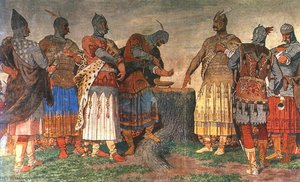
Bertalan Székely
1835 - 1910 , Hungary
Quick Facts
- Artistic Movement Or Style: Romantic & Academic
- Artists Or Movements Influenced By This Artist:
- Muybridge
- Marey
- Artists Who Influenced This Artist:
- Johann Nepomuk Geiger
- Carl Rahl
- Date Of Birth: May 8, 1835
- Date Of Death: August 21, 1910
- Full Name: Bertalan Székely
- Nationality: Hungarian
- Notable Artworks:
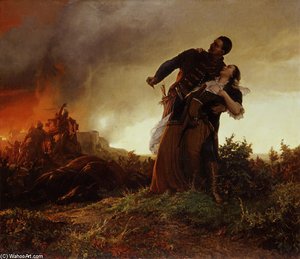
- The Escape of Emperor Charles VII
- Portrait of Adalbert Stifter
- Discovering the Body of King Louis II
- Thunderstorm
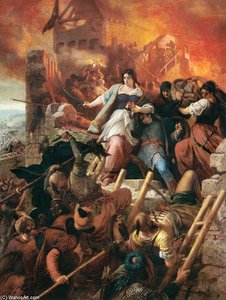
- Women of Eger
- Place Of Birth: Kolozsvár, Hungary
Related Articles

The Enduring Legacy of Oil on Canvas: Technique, History & Aesthetic Impact
Explore the rich history & techniques of oil painting – from Renaissance masters to Impressionism. Discover pigments, layering methods, and why this timeless medium endures. Expert insights for artists & art enthusiasts.

Oil on Canvas: A Historical & Technical Exploration of a Timeless Artistic Medium
Explore the rich history & enduring techniques of oil painting on canvas. Discover the science behind its longevity, conservation practices, and contemporary relevance. Expert insights for art enthusiasts.

The Enduring Power of Painting: A Historical & Contemporary Exploration of Form and Emotion
Explore the rich history & enduring techniques of oil painting with ArtsDot. Discover masterpieces, learn about art collecting, and find authentic handmade reproductions crafted by skilled artists.

The Enduring Legacy of Oil on Canvas: Technique, History & Contemporary Practice
Explore the rich history & enduring techniques of oil painting on canvas. Discover the science behind its longevity, conservation practices, and contemporary relevance. Expert insights for art enthusiasts.
Turn Your Digital Art Into Hand‑Painted Oil Masterpieces—Earn Big on Every Sale and Build an Enduring Legacy
Transform your NFT collection into hand‑painted oil masterpieces with ArtsDot’s expert artisans. Enjoy museum‑grade quality, free worldwide shipping, and a 100% satisfaction guarantee—turn digital art into a lasting legacy that earns you real value.