 Preview
 Send
Send Share
Share
 Details

 Download
 Similars
 X-Ray
X-Ray Diaporama
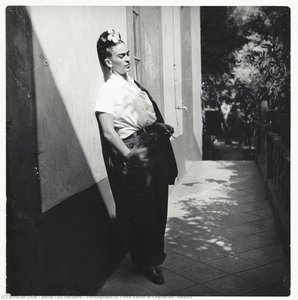
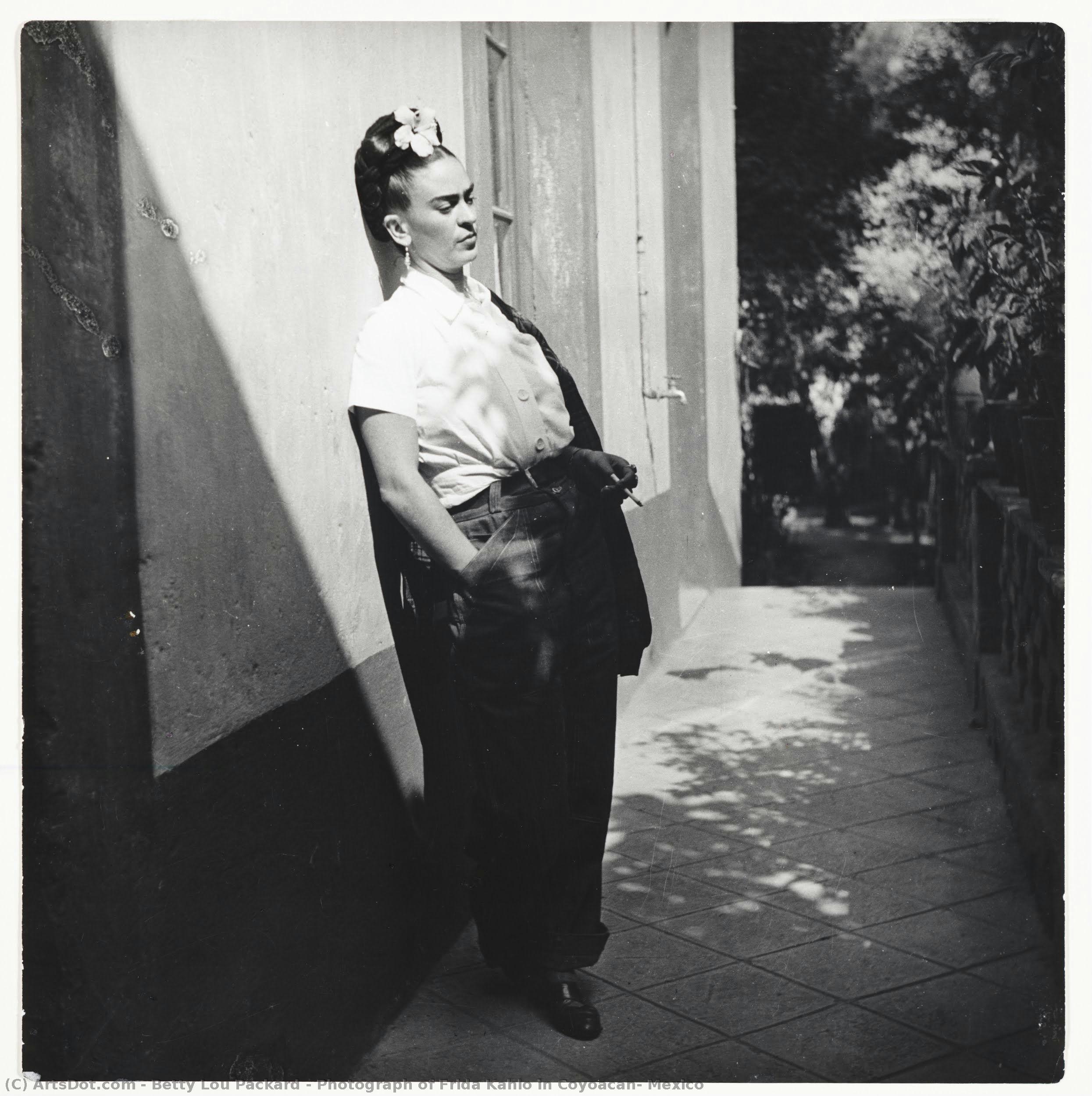
Photograph of Frida Kahlo in Coyoacan, Mexico
 Acrylic On Canvas
- WallArt
- Documentary Photography
 1941
1941 27.0 x 27.0 cm
 Archives of American Art
 Read More
Hand Made Oil Reproduction
Hand-painted oil on canvas in your size and frame, made to order by our artists. ( Buy Print Buy Image)




P118B $10

P118H $10

P118W $10

P438Z $10

P508JH $12

P508YH $12

P805H $10

P805Z $10

P919BZ $10

P919G $10

P919XJ $10

P959ZH $10

P968JZ $12

W106C $8

W218G $10

W218JH $8

W218Y $10

W307PJ $10

W316G $10

W316PJ $8

W316Y $10

W398PJ $8

W4111J $10

W500HY $15

W500JH $15

W692G $12

W849H $8

W940BG $15

W953PJ $8




Pick from our preset sizes that match the artwork's original proportions.

You may enter your own dimensions to fit a specific frame or space. If your selected size does not match the original image's proportions, we will either crop the artwork or extend the painting with additional hand-painted elements. A digital mockup will be sent for your approval before production begins.
Please note that the on-screen preview does not reflect the actual cropping or extension. Only the mockup will accurately show the final composition.
While custom sizes are available, we recommend selecting a dimension from the predefined list to preserve the original proportions.
After order, ArtsDot.com team will email client for instructions and provide a mockup preview
Worldwide Delivery () in 3/4 weeks instead of standard 5 weeks. (6 September). No compromise on quality.

Free Worldwide Express Shipping

High-Quality Linen Canvas

Full Shipping Insurance

Customs Tax Refund Guarantee

True Color Matching Guarantee

100-Day Return Policy (Defects Only)

100% Money-Back Guarantee

Bulk Discount Offer
 Glass option is only available in size under 110 CM

Photograph of Frida Kahlo in Coyoacan, Mexico
Reproduction Medium
Reproduction Size
-


Total Price
$ 263
A Moment Frozen in Time: Emmy Lou Packard’s Portrait of Frida Kahlo
The photograph captures Frida Kahlo at her home in Coyoacan, Mexico, circa 1941—a pivotal year for the artist and a testament to Emmy Lou Packard's keen observational skills. Packard, an American visual artist and social activist deeply rooted in San Francisco’s bohemian scene, meticulously documented Mexican identity and resilience through her artistic endeavors. This image isn’t merely a depiction; it’s a distillation of Kahlo’s spirit—quiet contemplation juxtaposed with unwavering strength—a characteristic that Packard expertly conveyed through masterful photographic technique.- Composition: The photograph centers on Kahlo, positioned slightly off-center against a wall bathed in dramatic directional lighting. This deliberate framing emphasizes her form and draws the viewer’s eye directly to her gaze.
- Lines & Shapes: Packard skillfully utilizes architectural elements—the wall, floor tiles, and doorway—to create prominent lines that converge towards the vanishing point, establishing a sense of perspective and depth. Geometric shapes dominate the image: rectangles define the architectural space, while Kahlo’s figure embodies organic forms.
- Texture & Light: Packard expertly employs light and shadow to sculpt the photograph's surface, suggesting texture on the wall and highlighting the contours of Kahlo’s clothing. The interplay of illumination contributes significantly to conveying mood and atmosphere.
Historical Context & Packard’s Vision
Packard’s fascination with Frida Kahlo stemmed from her profound admiration for Diego Rivera and his influence on Mexican art and culture. Observing Kahlo's life amidst the vibrant intellectual landscape of Coyoacán—a location synonymous with artistic experimentation and social reform—Packard sought to capture not just a likeness but also the essence of Kahlo’s inner world. The photograph reflects the broader artistic movement of the time, characterized by documentary photography aimed at portraying everyday life and capturing moments of profound emotion.Symbolism & Emotional Resonance
The posture of Frida Kahlo—leaning against the wall with a serene expression—communicates resilience and dignity. Packard’s choice to depict Kahlo in this pose speaks volumes about her determination to confront adversity with grace and fortitude. The lighting further amplifies this symbolism, casting shadows that underscore Kahlo's strength while simultaneously hinting at vulnerability. Packard’s photograph transcends mere representation; it embodies the spirit of Mexican identity—a blend of tradition and innovation—and invites viewers to contemplate themes of introspection and perseverance.Technique & Craftsmanship
Packard utilized silver gelatin printing, a technique renowned for its ability to produce nuanced tonal variations and reproduce images with exceptional clarity. Careful attention was paid to detail—capturing the subtle nuances of Kahlo’s facial expression and clothing texture—demonstrating Packard's dedication to artistic precision. The resulting print showcases remarkable sharpness and tonal range, preserving the photograph's original aesthetic qualities for generations to come.- Materials: Photographic paper and film were employed, ensuring archival stability and maintaining the integrity of the image’s visual information.
- Lighting: Directional lighting was strategically utilized to sculpt the photograph's surface, emphasizing contours and creating dramatic shadows that contribute to conveying mood and atmosphere.
- Perspective: The photograph employs one-point perspective, effectively simulating depth and enhancing the viewer’s immersion in the scene.
Related Artworks
Artist Biography
The Visionary Spirit of Emmy Lou Packard
Born amidst the sun-drenched landscapes near El Centro, California, in 1914, Emmy Lou Packard—often remembered by her name Betty Lou Packard—emerged as a profound voice in the American social realism movement. Her life was a tapestry woven from the threads of artistic mastery and fierce social activism, a dual existence that allowed her to capture not just the visual essence of her era, and the political heartbeat of a changing nation. Educated at the prestigious University of California, Berkeley, and the San Francisco Art Institute, Packard developed a technical prowess that would later serve as a powerful tool for her advocacy. Her early years were shaped by a deep connection to the American West, a landscape that would forever inform the rugged, honest textures found in her compositions.
The trajectory of Packard’s career was irrevocably altered by her encounters with the titans of Mexican Muralism. During a period of immense cultural exchange, she had the rare privilege of studying under Diego Rivera and being in the orbit of Frida Kahlo. This exposure to the monumental scale and political urgency of the Mexican masters infused her work with a sense of epic narrative. She did not merely observe these legends; she documented their lives through photography, capturing the raw, human moments behind the mythic personas. This intimate connection to the vanguard of social realism allowed her to integrate a profound sense of human struggle and dignity into her own paintings, printmaking, and expansive murals.
A Legacy of Social Realism and Activism
Packard’s artistic output was never detached from the struggles of the working class. Her work functioned as a visual chronicle of the socio-political tensions of the twentieth century. Through her mastery of printmaking and large-scale mural work, she brought the plight of the laborer and the beauty of the common man to the forefront of the public consciousness. Her style was characterized by a robust, grounded realism that favored truth over artifice, often utilizing bold lines and earthy palettes to evoke the grit and resilience of her subjects. In San Francisco, her presence was felt not just in galleries, but in the very streets where her murals spoke to the community about justice, labor rights, and social equity.
The significance of Emmy Lou Packard lies in her ability to bridge the gap between fine art and political protest. Her achievements include:
- Mastery of Diverse Media: A seamless ability to transition between the delicate precision of printmaking and the monumental demands of mural painting.
- Historical Documentation: Her photographic contributions that provided a rare, intimate glimpse into the lives of Diego Rivera and Frida Kahlo.
- Social Advocacy: Using her canvas as a platform for political discourse, making her a pivotal figure in the West Coast social realism movement.
- Cultural Integration: Blending the influences of Mexican Muralism with the American landscape to create a unique, localized visual language.
As she navigated the decades leading up to her passing in 1998, Packard remained a steadfast sentinel of truth through art. Her legacy continues to resonate within the halls of San Francisco’s art history, reminding us that the brush is often as mighty as any political manifesto. To look upon a Packard piece is to witness a soul deeply engaged with the world, capturing the fleeting moments of human struggle and transforming them into enduring monuments of historical significance.
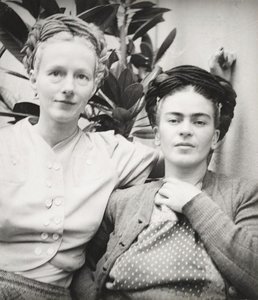
betty lou packard
1914 - 1998 , United States of America
Quick Facts
- Artistic Movement Or Style: Social Realism
- Artists Who Influenced This Artist:
- Diego Rivera
- Frida Kahlo
- Date Of Birth: April 15, 1914
- Date Of Death: February 22, 1998
- Full Name: Emmy Lou Packard
- Nationality: American
- Place Of Birth: Near El Centro, USA
Related Articles
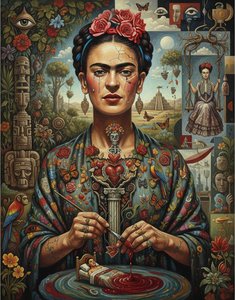
Frida Kahlo: A Life Painted – Surrealism, Identity & Autobiographical Narrative
Explore the life & art of Frida Kahlo – a journey through surrealism, identity, pain, and resilience. Discover her autobiographical masterpieces & lasting feminist legacy with ArtsDot.
Revolution on Canvas: Exploring the Socio-Political Power & Artistic Legacy of Mexican Muralism
Explore the powerful world of Mexican muralism! Discover Diego Rivera, Frida Kahlo & Orozco's revolutionary art, social impact & lasting legacy. Expert insights & high-quality reproductions at ArtsDot.
Diego Rivera: A Revolutionary Vision of Mexican Identity Through Muralism
Explore the revolutionary murals of Diego Rivera and his profound impact on Mexican art & identity. Discover his techniques, iconic works like 'Man at the Crossroads,' and lasting legacy with ArtsDot.
From Snapshot to Masterpiece: Transforming Wedding Photos into Timeless Oil Paintings
Transform cherished wedding photos into timeless oil paintings! Expert artists at create bespoke portraits & heirloom art. Discover the process, styles & lasting value.
José Clemente Orozco: A Revolutionary Vision of Mexican Muralism & the Human Condition
Explore the powerful world of José Clemente Orozco, a key figure in Mexican Muralism. Discover his revolutionary art, social commentary, and lasting impact on 20th-century painting. Learn about his unique style & legacy.