 Preview
 Send
Send Share
Share
 Details

 Download
 Similars
 X-Ray
X-Ray Diaporama
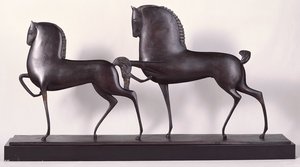
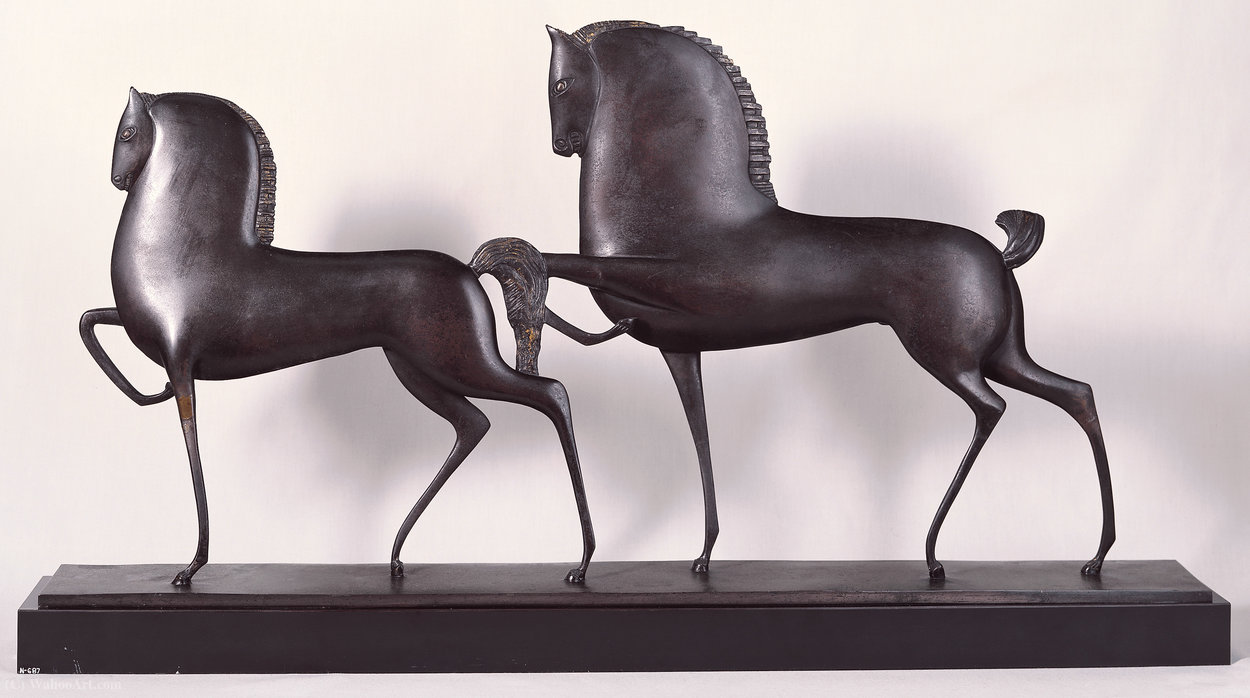
On Parade (Stallions), (1931)

 Read More
Hand Made Oil Reproduction
Hand-painted oil on canvas in your size and frame, made to order by our artists. ( Buy Print Buy Image)




































Pick from our preset sizes that match the artwork's original proportions.

You may enter your own dimensions to fit a specific frame or space. If your selected size does not match the original image's proportions, we will either crop the artwork or extend the painting with additional hand-painted elements. A digital mockup will be sent for your approval before production begins.
Please note that the on-screen preview does not reflect the actual cropping or extension. Only the mockup will accurately show the final composition.
While custom sizes are available, we recommend selecting a dimension from the predefined list to preserve the original proportions.
After order, ArtsDot.com team will email client for instructions and provide a mockup preview
Worldwide Delivery () in 3/4 weeks instead of standard 5 weeks. (30 August). No compromise on quality.

Free Worldwide Express Shipping

High-Quality Linen Canvas

Full Shipping Insurance

Customs Tax Refund Guarantee

True Color Matching Guarantee

60-Day Return Policy (Defects Only)

100% Money-Back Guarantee

Bulk Discount Offer
 Glass option is only available in size under 110 CM

On Parade (Stallions), (1931)
Reproduction Medium
Reproduction Size
-


Total Price
$ 263
Related Artworks

Artist Biography
Boris Lovet Lorski: Sculptor of Elegance and Paradox
Boris Lovet Lorski (1894 – 1973) was born in Kovno, Lithuania—now Vilnius—a child of Russian Orthodox parents who instilled in him a deep appreciation for classical art and humanist ideals. His early education focused on architecture at the Imperial Academy of Art in Petrograd (Saint Petersburg), where he honed his technical skills alongside fellow artists grappling with the burgeoning modernist movement. This formative period profoundly shaped his artistic sensibilities, grounding him in tradition while simultaneously exposing him to innovative ideas about form and expression.- Early Influences: Lovet Lorski’s aesthetic was heavily influenced by Auguste Rodin, whose expressive sculptures championed psychological realism and conveyed profound emotion through subtle gestures and textures. Similarly, he admired the idealized beauty of Greek sculpture, particularly statues depicting gods and heroes—a fascination that would permeate his oeuvre.
- Move to New York: Following the Russian Revolution in 1917, Lovet Lorski emigrated to the United States in 1920, establishing himself in New York City and quickly gaining recognition as a sculptor of considerable talent. He embraced the Art Deco style—characterized by geometric forms, streamlined surfaces, and opulent ornamentation—reflecting the optimism and dynamism of the era.
Sculptural Style and Technique
Lovet Lorski’s sculptural technique was marked by meticulous attention to detail and a masterful command of materials. He primarily worked in bronze and marble, employing lost-wax casting methods—a process that allowed for exceptional precision and refinement—to create figures imbued with both grace and power. His sculptures often featured stylized representations of the human form, rendered in smooth, polished surfaces that conveyed an aura of serenity and timeless beauty. However, Lovet Lorski’s work defied easy categorization; he deliberately juxtaposed classical ideals with modernist sensibilities, resulting in pieces that possessed a paradoxical blend of elegance and vulgarity.- Distinctive Features: Characteristic of his style were monumental female nude sculptures—particularly those depicting idealized figures with impossibly narrow hips and expansive arms—which evoked imagery from ancient Egypt. These works celebrated the feminine form while simultaneously embracing the geometric precision of Art Deco design.
- Material Choices: Lovet Lorski favored materials that enhanced the sculptural effect, utilizing bronze and marble to achieve surfaces that shimmered with reflectivity and conveyed a sense of solidity and permanence. He experimented with exotic woods and unusual stones—such as onyx and granite—to create textural contrasts and deepen the emotional resonance of his sculptures.
Notable Works and Recognition
Boris Lovet Lorski achieved considerable acclaim during his lifetime, exhibiting extensively in New York City and internationally. His most celebrated sculpture is undoubtedly *On Parade (Stallions)* (1931), a monumental bronze equestrian monument commissioned for the Pennsylvania Academy of Fine Arts—a testament to his mastery of form and technique. The sculpture captures the dynamism of movement while simultaneously conveying an idealized vision of strength and nobility.- Museum Collections: Lovet Lorski’s sculptures are housed in prominent museums across North America and Europe, including the Smithsonian American Art Museum, the Los Angeles County Museum of Art, and the Petit Palais in Paris—a testament to his enduring legacy as one of the foremost sculptors of his generation.
- Awards and Honors: He received numerous accolades for his artistic achievements, culminating in a Chevalier of the Legion of Honor bestowed upon him by President Eisenhower in 1957—a recognition of his contribution to American art and culture.
Legacy and Influence
Boris Lovet Lorski’s sculptures continue to inspire artists and scholars alike, serving as enduring symbols of elegance, idealism, and artistic innovation. His pioneering approach to sculptural form—characterized by a deliberate fusion of classical tradition and modernist experimentation—established him as a pivotal figure in the history of Art Deco sculpture and cemented his place among the most influential sculptors of the twentieth century. Lovet Lorski’s work remains a compelling reminder that beauty can coexist with boldness, and that artistic expression transcends temporal boundaries.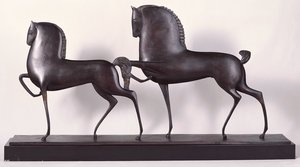
Quick Facts
- Artistic Movement Or Style: Art Deco
- Artists Or Movements Influenced By This Artist: ['Modernist']
- Artists Who Influenced This Artist: ['Gustave Baumann']
- Date Of Birth: 1894
- Date Of Death: 1973
- Full Name: Boris Lovet Lorski
- Nationality: Lithuanian
- Notable Artworks: ['On Parade (Stallions), 1931']
- Place Of Birth: Kovno, Lithuania
Related Articles

Bronze Age to Modern Masters: 10 Sculptures That Redefined Art | ArtsDot
Journey through art history with 10 legendary bronze sculptures – from Michelangelo's David to Rodin’s Thinker. Explore the stories, techniques & timeless beauty of these masterpieces. Find museum-quality reproductions & elevate your home decor on ArtsDot.com.

Bronze Sculptures That Defined Art History | ArtsDot
Journey through art history with our Top 10 bronze sculptures! Explore masterpieces by Rodin, Michelangelo & more. Discover stories behind iconic statues and find museum-quality reproductions for your home decor at ArtsDot.com.
The Enduring Legacy of Bronze: A Historical & Artistic Exploration for the Collector
Explore the rich history & enduring appeal of bronze sculpture with expert insights for collectors at ArtsDot. Learn about casting techniques, iconic artists, collecting tips & contemporary interpretations.
The Enduring Legacy of Bronze: History, Technique & Artistic Expression for the Collector
Explore the rich history & enduring appeal of bronze sculpture with expert insights for collectors at ArtsDot. Learn about casting techniques, iconic artists, and collecting tips.
The Enduring Legacy of Bronze Sculpture: A Collector's Guide to Form & Cultural Significance
Explore the rich history & enduring appeal of bronze sculpture with expert insights for collectors at ArtsDot. Learn about casting techniques, iconic artists, and collecting tips to build a discerning art collection.