 Preview
 Send
Send Share
Share
 Details

 Download
 Similars
 X-Ray
X-Ray Diaporama
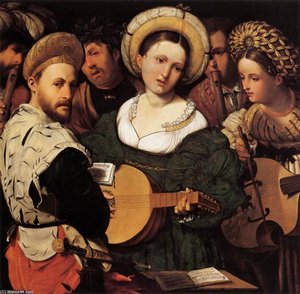
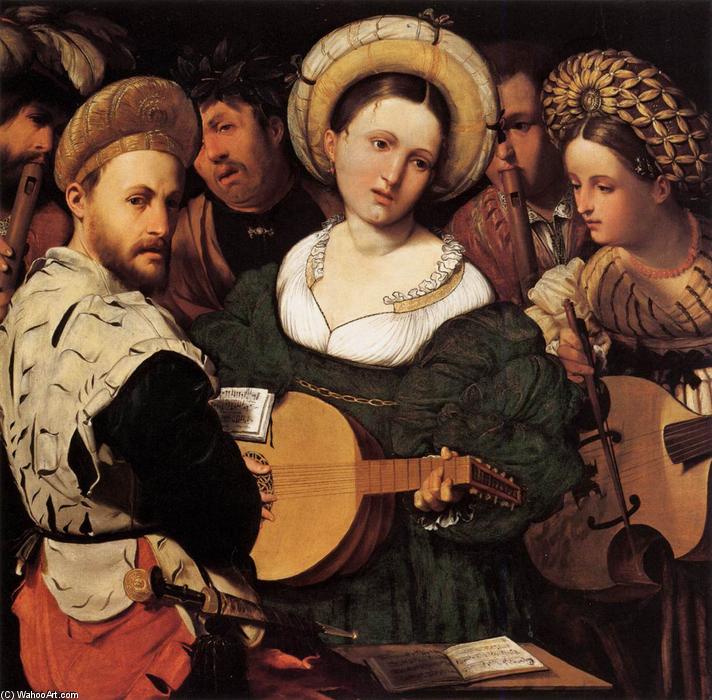
The Concert
 Oil On Canvas
- WallArt
- Baroque
 1528
1528 91.0 x 91.0 cm
 Museum of Art
 Read More
Hand Made Oil Reproduction
Hand-painted oil on canvas in your size and frame, made to order by our artists. ( Buy Print Buy Image)




P118B $10

P118H $10

P118W $10

P438Z $10

P508JH $12

P508YH $12

P805H $10

P805Z $10

P919BZ $10

P919G $10

P919XJ $10

P959ZH $10

P968JZ $12

W106C $8

W218G $10

W218JH $8

W218Y $10

W307PJ $10

W316G $10

W316PJ $8

W316Y $10

W398PJ $8

W4111J $10

W500HY $15

W500JH $15

W692G $12

W849H $8

W940BG $15

W953PJ $8




Pick from our preset sizes that match the artwork's original proportions.

You may enter your own dimensions to fit a specific frame or space. If your selected size does not match the original image's proportions, we will either crop the artwork or extend the painting with additional hand-painted elements. A digital mockup will be sent for your approval before production begins.
Please note that the on-screen preview does not reflect the actual cropping or extension. Only the mockup will accurately show the final composition.
While custom sizes are available, we recommend selecting a dimension from the predefined list to preserve the original proportions.
After order, ArtsDot.com team will email client for instructions and provide a mockup preview
Worldwide Delivery () in 3/4 weeks instead of standard 5 weeks. (17 August). No compromise on quality.

Free Worldwide Express Shipping

High-Quality Linen Canvas

Full Shipping Insurance

Customs Tax Refund Guarantee

True Color Matching Guarantee

60-Day Return Policy (Defects Only)

100% Money-Back Guarantee

Bulk Discount Offer
 Glass option is only available in size under 110 CM

The Concert
Reproduction Medium
Reproduction Size
-


Total Price
$ 388
Artwork Description
The Concert: A Baroque Tableau of Musical Harmony
Callisto Piazza da Lodi’s “The Concert,” painted in 1528, isn't merely a depiction of musicians; it’s a vibrant distillation of the Renaissance ideal – a celebration of harmony, beauty, and the transformative power of music. This oil painting, now housed within the Museum of Art in Philadelphia, transports us to a richly appointed salon, brimming with activity and radiating an atmosphere of joyous performance. Piazza masterfully captures a pivotal moment where sound coalesces into visual spectacle, inviting the viewer to become a silent participant in this opulent scene.
The composition is immediately arresting, dominated by the central figure of a woman playing a lute – a symbol of refined artistry and intellectual pursuit during the era. She’s not simply performing; she embodies grace and poise, her posture suggesting both concentration and delight. Around her swirl other musicians: a man with a pipe, another skillfully manipulating a flute, and a young woman lost in the melody of her cello. The arrangement is deliberately crowded, creating an intimate space where each figure seems to be engaged in a shared experience. The inclusion of instruments like the recorder and lyra da braccio speaks to the diverse musical landscape of Northern Italy at the time – a region renowned for its vibrant musical traditions.
A Masterclass in Brescian Baroque Style
Piazza’s work firmly establishes itself within the burgeoning Brescian school of painting, a movement characterized by its dramatic lighting, rich colors, and meticulous attention to detail. Influenced heavily by Romanino and Moretto, Piazza inherits their penchant for dynamic compositions and a heightened sense of theatricality. The artist skillfully employs linear perspective, subtly flattening the background to draw our focus onto the performers. Notice how the figures are rendered with carefully defined lines, creating a sense of volume and texture – the folds of their robes, the sheen of their instruments, and the delicate details of their faces all contribute to an incredibly tactile quality.
Technically, Piazza demonstrates a sophisticated understanding of oil painting techniques. He utilizes layering—glazing—to build up color gradually, achieving remarkable depth and luminosity. The use of chiaroscuro – dramatic contrasts between light and shadow – is particularly effective in highlighting the central figure and creating a sense of drama. The textures are incredibly rich; you can almost feel the velvet of the robes, the polished wood of the instruments, and the warmth of the candlelight illuminating the scene.
Symbolism and the Language of Music
Beyond its aesthetic merits, “The Concert” is laden with symbolic meaning. The lute, a prominent instrument in the composition, represents not only musical skill but also intellectual refinement and artistic expression. The presence of multiple instruments signifies the diverse elements that contribute to a harmonious whole – music, intellect, and social interaction. The woman’s headdress, resembling a halo, subtly alludes to the divine inspiration behind music, suggesting that it is a gift from God.
Furthermore, the scene itself can be interpreted as an allegory for the pursuit of knowledge and enlightenment. Music, in this context, becomes a metaphor for understanding – a means of unlocking the secrets of the universe and achieving spiritual harmony. The joyous atmosphere of the performance reflects the belief that beauty and truth are intertwined, and that art has the power to elevate the human spirit.
A Timeless Echo of Renaissance Grandeur
“The Concert” by Callisto Piazza da Lodi is more than just a painting; it’s a window into a bygone era – a testament to the artistic achievements of the Brescian school and a celebration of the enduring power of music. Its vibrant colors, dynamic composition, and rich symbolism continue to captivate viewers centuries after its creation. Reproductions of this masterpiece offer an opportunity to bring this moment of Baroque grandeur into your own space, allowing you to experience firsthand the beauty and harmony that Piazza so skillfully captured on canvas.
Related Artworks




Artist Biography
The Legacy of Callisto Piazza da Lodi
In the vibrant tapestry of the Italian Renaissance and the burgeoning Baroque era, few names capture the essence of Lombardy’s artistic transition quite like Callisto Piazza da Lodi. Born in the historic city of Lodi around 1500, Piazza emerged as a pivotal figure within the Brescian school, a movement that would eventually redefine the visual language of Northern Italy. His life and work serve as a bridge between the meticulous, refined elegance of the Ferrarese tradition and the dramatic, emotive power of the Brescian masters. Though historical records offer only glimpses into his private years, his brushwork reveals a man deeply attuned to the shifting currents of 16th-century culture, where humanist ideals and papal patronage breathed new life into religious and secular iconography alike.
The foundations of Piazza’s mastery were likely laid within the fertile ground of a family of painters. The Piazza clan established a significant presence in Brescia, creating a workshop environment that functioned as both a sanctuary for tradition and a laboratory for innovation. It is widely believed by scholars that his early training was shaped by the influence of Ludovicto Mazzolino of Ferrara, whose style brought a certain jewel-like precision and intricate detail to the canvas. This Ferrarese influence, blended with the subtle nuances of Giovanni Agostino da Lodi, allowed Piazza to develop a technique that balanced delicate ornamentation with a growing interest in the atmospheric depth and light-play that would become hallmarks of his mature period.
A Master of Light and Brescian Drama
As his career progressed, Piazza became deeply embedded in the artistic soul of Brescia, a city that was then undergoing a profound stylistic evolution. He operated within a collective spirit, contributing to a body of work that embraced the revolutionary chiaroscuro effects championed by contemporaries such as Gian Battista Romanino. This mastery of light and shadow allowed him to imbue his religious frescoes and altarpieces with a sense of palpable presence and spiritual weight. His compositions often moved away from static, iconographic arrangements toward more dynamic, narrative-driven scenes that invited the viewer into a shared emotional space.
The development of his style can be observed through several key artistic pillars:
- The Integration of Chiaroscuro: Utilizing dramatic contrasts to create volume and a sense of theatrical movement within sacred narratives.
- Ferrarese Precision: Retaining a meticulous attention to detail and fine textures, a remnant of his early stylistic influences.
- Lombard Naturalism: A commitment to depicting figures and landscapes with an earthy, grounded realism that resonated with the Brescian aesthetic.
- Architectural Grandeur: His ability to execute large-scale frescoes that harmonized seamlessly with the ecclesiastical architecture of Northern Italy.
Historical Significance and Artistic Endurance
The historical importance of Callisto Piazza da Lodi lies not only in his individual achievements but in his role as a conduit for regional artistic identity. By synthesizing the refined elegance of the Ferrarese school with the rugged, emotive energy of the Brescian movement, he helped forge a distinct visual dialect that would influence generations of Lombard painters. His commissions, ranging from intimate devotional works to expansive religious frescoes, reflect the broader socio-political landscape of 16th-century Italy, where art served as both a tool for spiritual instruction and a symbol of civic prestige.
Though the passage of centuries has obscured some of the finer details of his biography, the enduring impact of his oeuvre remains visible in the way light interacts with form in the works of his successors. Piazza’s ability to capture the divine within the human experience—through the careful application of pigment and the strategic use of shadow—ensures his place in the pantheon of Italian masters. He remains a vital subject for any student of the Renaissance, representing a moment in time when the boundaries of art were being pushed toward the dramatic brilliance of the Baroque.

Callisto Piazza da Lodi
1500 - 1561 , Italy
Quick Facts
- Artistic Movement Or Style: Brescian Style
- Artists Or Movements Influenced By This Artist: ['Romanino']
- Artists Who Influenced This Artist:
- Romanino
- Moretto
- Dosso Dossi
- Ludovico Mazzolino
- Date Of Birth: Lodi, Italy (1500)
- Date Of Death: 1561
- Full Name: Callisto Piazza da Lodi
- Nationality: Italian
- Notable Artworks:
- The Concert
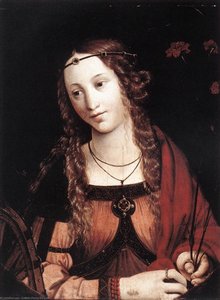
- St Catherine of Alexandria
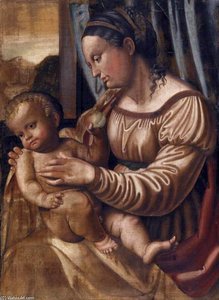
- Madonna and Child
- Place Of Birth: Lodi
Related Articles
Leonardo da Vinci's Masterpieces: Explore 25 Iconic Artworks for Your Home | ArtsDot
Journey through Leonardo da Vinci's genius with our curated selection of 25 iconic artworks. Explore the stories behind Mona Lisa, The Last Supper & more Renaissance masterpieces. Find museum-quality art reproductions for your home at ArtsDot.com.

Baroque Drama: Bringing Opulence & Emotion into Contemporary Interiors
Explore the opulent world of Baroque interior design! Discover key elements, modern applications & how to bring dramatic elegance into your home with 's authentic reproductions.

Leonardo da Vinci: A Renaissance Master’s Synthesis of Art, Science & Human Observation – Reinterpreted for the Collector
Explore Leonardo da Vinci’s timeless masterpieces with ArtsDot. Discover insights into his art, science, and legacy – trusted expertise for discerning collectors seeking authentic reproductions & investment opportunities.

Baroque Masterpieces: 10 Paintings That Defined an Era |
Journey through the drama & grandeur of Baroque art! Explore 10 masterpieces by Caravaggio, Rembrandt, Rubens & more. Discover stunning oil paintings, rich colors & timeless stories. Find museum-quality reproductions at .
Pietro da Cortona: Baroque Grandeur & the Synthesis of Roman Painting
Explore the life & masterpieces of Pietro da Cortona, a defining figure of the Italian Baroque. Discover his stunning frescoes at Palazzo Barberini and lasting influence on Roman art history. Learn more with ArtsDot.