 Send
Send Share
Share
 Details

 Download
 Similars
 Diaporama
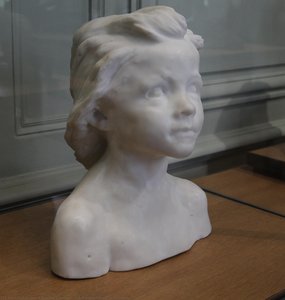
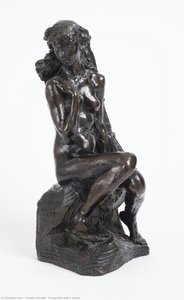
Young Girl with a Sheaf


 Read More
Hand Made Oil Reproduction
Hand-painted oil on canvas in your size and frame, made to order by our artists. ( Buy Print Buy Image)




































Pick from our preset sizes that match the artwork's original proportions.

You may enter your own dimensions to fit a specific frame or space. If your selected size does not match the original image's proportions, we will either crop the artwork or extend the painting with additional hand-painted elements. A digital mockup will be sent for your approval before production begins.
Please note that the on-screen preview does not reflect the actual cropping or extension. Only the mockup will accurately show the final composition.
While custom sizes are available, we recommend selecting a dimension from the predefined list to preserve the original proportions.
After order, ArtsDot.com team will email client for instructions and provide a mockup preview
Worldwide Delivery () in 3/4 weeks instead of standard 5 weeks. (20 August). No compromise on quality.

Free Worldwide Express Shipping

High-Quality Linen Canvas

Full Shipping Insurance

Customs Tax Refund Guarantee

True Color Matching Guarantee

60-Day Return Policy (Defects Only)

100% Money-Back Guarantee

Bulk Discount Offer
 Glass option is only available in size under 110 CM

Young Girl with a Sheaf
Reproduction Medium
Reproduction Size
-


Total Price
$ 263
Artwork Description
Young Girl with a Sheaf - A Portrait of Innocence and Rustic Beauty
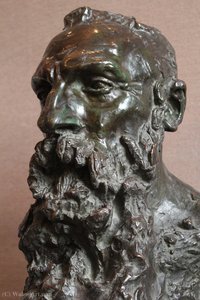
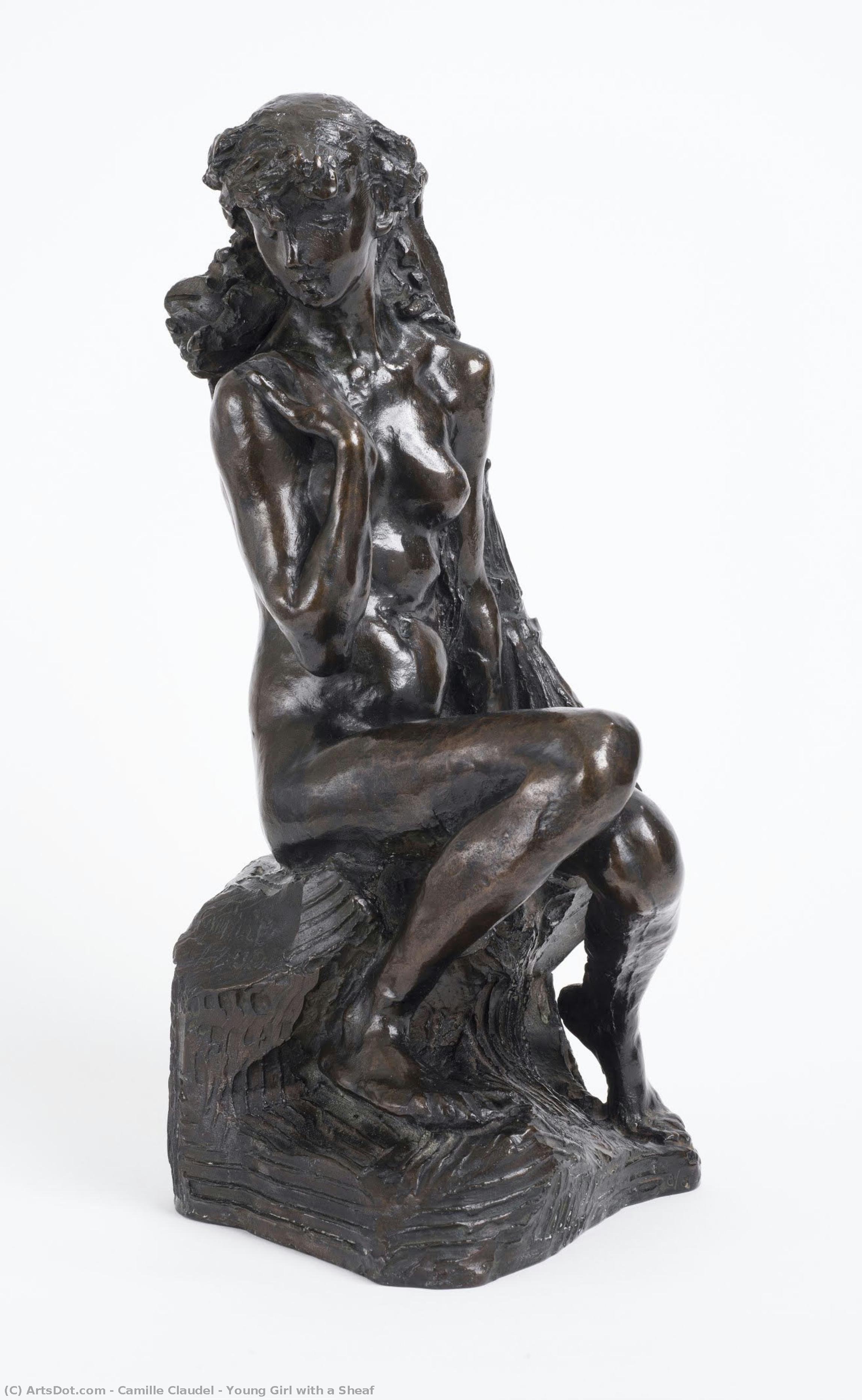
Camille Claudel’s “Young Girl with a Sheaf,” created in 1890, stands as a cornerstone of Impressionistic sculpture—a testament to Rodin's influence and Claudel’s singular vision. More than just a depiction of youthful femininity, the piece embodies a profound connection between human form and the natural world, capturing a moment of quiet contemplation amidst the simplicity of rural life.
Claudel’s formative years spent in Fère-en-Tardenois instilled within her an unwavering appreciation for organic materials—clay, soil, stone—a dedication that would permeate her artistic practice throughout her career. Her collaboration with Auguste Rodin wasn't merely professional; it was a crucible of intellectual exchange where Claudel honed her understanding of anatomical precision and sought to translate the essence of human emotion into sculptural form.
Composition and Form: A Dialogue Between Figure and Landscape
The sculpture occupies nearly the entirety of its frame, positioning the young woman slightly off-center—a deliberate compositional choice that draws the eye upwards towards the sheaf of wheat. This arrangement isn’t accidental; it establishes a visual dialogue between the female figure and the agricultural element, symbolizing fertility and nurturing – themes prevalent in Claudel's oeuvre.
Claudel meticulously crafted the sculpture’s form, prioritizing anatomical accuracy while simultaneously conveying a sense of naturalistic movement. The woman’s posture—leaning gently against the wheat—suggests repose yet hints at an inner awareness, inviting viewers to ponder upon themes of introspection and serenity. Rodin himself recognized Claudel's exceptional talent for capturing subtle nuances of expression.
Materiality and Technique: Bronze as Medium of Emotion
“Young Girl with a Sheaf” is cast bronze—a technique favored by Claudel that allowed her to achieve remarkable textural detail and luminosity. The lost-wax casting method ensured the preservation of intricate surface ornamentation, reflecting Claudel’s meticulous attention to craftsmanship.
The sculptor skillfully employed tooling and chasing techniques to refine the sculpture's contours, enhancing its visual impact and emphasizing the interplay of light and shadow across its polished surface. This careful manipulation of material contributes significantly to the artwork’s emotive power—creating a palpable sense of warmth and solidity that speaks to the enduring beauty of classical form.
Symbolism and Emotional Resonance: An Icon of Romantic Idealization
Beyond its formal qualities, “Young Girl with a Sheaf” resonates deeply with symbolic significance. The youthful woman embodies innocence and purity—qualities celebrated in Romantic art—while the sheaf of wheat represents abundance and renewal. Claudel’s masterful rendering captures not merely an image but an emotion—a quiet contemplation that transcends time.
The sculpture's enduring appeal lies in its ability to evoke feelings of peace, tranquility, and admiration for the sublime beauty of nature. It serves as a poignant reminder of Rodin’s belief in art’s capacity to illuminate the human spirit – a legacy cemented by Claudel’s unforgettable contribution to sculptural history.
Related Artworks
Artist Biography
A Life Sculpted in Passion and Shadow
Camille Claudel, a name now synonymous with artistic brilliance and tragic circumstance, emerged from the French countryside in 1864 to challenge the conventions of sculpture and leave an indelible mark on the art world. Born into a family straddling the worlds of rural tradition and burgeoning intellectualism in Fère-en-Tardenois, Claudel’s early life was marked by both freedom and constraint. Her father, involved in financial dealings, and her mother, from a lineage steeped in the Champagne region's heritage, provided a backdrop against which young Camille’s innate artistic inclinations could blossom—though not without societal friction. Even as a child, she displayed an extraordinary affinity for working with natural materials – clay, soil, stone – foreshadowing a destiny inextricably linked to three-dimensional form. This early fascination wasn’t merely playful; it was a fundamental expression of her inner world, a need to give shape to the emotions and observations that stirred within her. The family's moves—to Villeneuve-sur-Fère, Bar-le-Duc, Nogent-sur-Seine, and Wassy-sur-Blaise—exposed Claudel to diverse landscapes and experiences, subtly informing her artistic sensibility.Forging a Path in Rodin’s Orbit
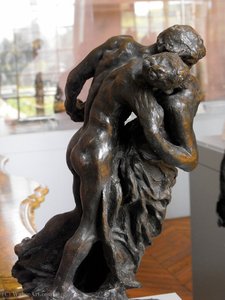
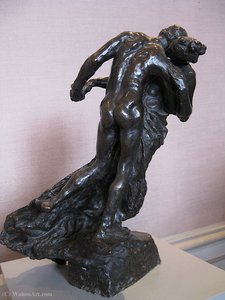
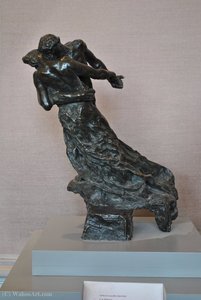
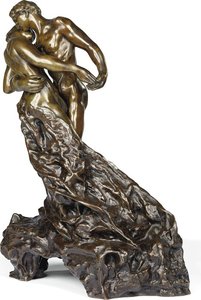
The pivotal moment in Claudel's artistic development arrived with her move to Paris in 1881 and subsequent studies under Alfred Boucher. However, it was her introduction to Auguste Rodin that would irrevocably alter the course of her life and art. Initially joining his workshop as a model, she quickly transcended this role, becoming a collaborator, muse, and lover. The decade spent working alongside Rodin was a period of intense creative exchange. Claudel’s talent proved undeniable; she assisted him on monumental projects like *The Burghers of Calais*, skillfully modeling hands and feet with a precision that belied her youth. Yet, this relationship, while profoundly influential, was also deeply complex. The passionate connection between the two sculptors fueled their artistic endeavors but was shadowed by Rodin’s existing commitments and the inherent power imbalance within their dynamic. As Claudel's own voice began to emerge, distinct from Rodin’s influence, a subtle tension arose—a struggle for recognition and independence that would define much of her career. Her early works, while bearing traces of Rodin’s style, demonstrated an increasingly lyrical and expressive quality, hinting at the unique artistic vision she was developing. *The Waltz* (1893), with its dynamic composition and emotional intensity, stands as a testament to this burgeoning independence—a departure from Rodin's aesthetic that signaled her arrival as a force in her own right.A Distinct Voice: Style and Major Works
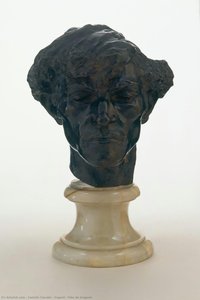
Camille Claudel’s artistic style is characterized by its raw emotionality, dynamic compositions, and profound exploration of human relationships. Unlike the often idealized forms prevalent in academic sculpture, Claudel's figures are imbued with a palpable sense of movement, psychological depth, and vulnerability. Her sculptures weren’t simply representations of bodies; they were embodiments of inner states—love, longing, despair, and defiance. Notable works like *Giganti (Tête de brigand)* reveal her mastery of capturing intense emotion through dramatic facial expressions and powerful physicality. *L'Age Mur*, a poignant depiction of an aging couple, explores the complexities of long-term relationships with unflinching honesty. *Young Girl with a Sheaf* showcases her ability to convey innocence and vulnerability, while *Sakuntala*, inspired by Indian mythology, demonstrates her willingness to draw inspiration from diverse cultural sources. Over time, Claudel’s style evolved, moving beyond initial imitation towards a more personal expression characterized by experimentation with materials and forms. She wasn't afraid to challenge conventional notions of beauty, embracing imperfection and asymmetry to convey the complexities of human experience.Tragedy, Obscurity, and Rediscovery
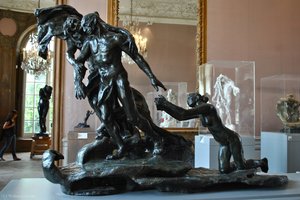
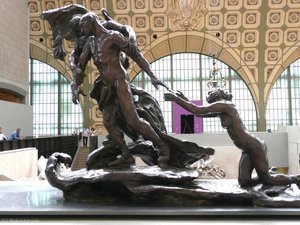
The late 19th and early 20th centuries proved a period of immense hardship for Claudel. The cancellation of a significant bronze commission in 1899—a decision widely believed to have been influenced by Rodin—marked a turning point, shattering her hopes for professional recognition and financial stability. This setback coincided with increasing mental health struggles, culminating in her involuntary commitment to a mental asylum in 1913, at the behest of her family. For three decades, she remained within its walls, largely forgotten by the art world. The circumstances surrounding her institutionalization remain shrouded in mystery, fueled by speculation about familial pressures and societal biases against women artists. During this period, Claudel’s creative output dwindled, though she continued to sculpt sporadically, often using rudimentary materials. Her tragic fate served as a stark reminder of the obstacles faced by female artists in a patriarchal society—obstacles that extended beyond artistic skill to encompass social expectations, economic limitations, and mental health stigmas. It wasn't until the late 20th century that Claudel’s work began to receive the recognition it deserved. Renewed interest sparked by biographical research and exhibitions led to a reassessment of her artistic contributions, revealing a sculptor of exceptional talent and originality. The opening of the national Camille Claudel Museum in Nogent-sur-Seine in 2017 stands as a powerful testament to her enduring legacy—a belated but fitting tribute to an artist who dared to challenge conventions and express the depths of human emotion through the timeless medium of sculpture. Today, she is rightfully regarded as a significant figure in French art history, inspiring generations with her passionate work and poignant story. Her life serves as both a celebration of artistic genius and a cautionary tale about the fragility of creativity in the face of societal pressures.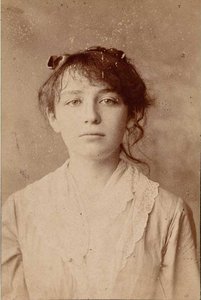
Camille Claudel
1864 - 1943 , France
Quick Facts
- Artistic Movement Or Style: Expressionism
- Artists Who Influenced This Artist:
- Auguste Rodin
- Alfred Boucher
- Date Of Birth: 1864
- Date Of Death: 1943
- Full Name: Camille Claudel
- Nationality: French
- Notable Artworks:
- The Waltz
- Sakuntala
- Giganti
- L'Age Mur
- Place Of Birth: Fère-en-Tardenois, France
Related Articles

Bronze Age to Modern Masters: 10 Sculptures That Redefined Art | ArtsDot
Journey through art history with 10 legendary bronze sculptures – from Michelangelo's David to Rodin’s Thinker. Explore the stories, techniques & timeless beauty of these masterpieces. Find museum-quality reproductions & elevate your home decor on ArtsDot.com.

Bronze Sculptures That Defined Art History | ArtsDot
Journey through art history with our Top 10 bronze sculptures! Explore masterpieces by Rodin, Michelangelo & more. Discover stories behind iconic statues and find museum-quality reproductions for your home decor at ArtsDot.com.

The Enduring Legacy of Bronze: A Historical & Artistic Exploration for the Collector
Explore the rich history & enduring appeal of bronze sculpture with expert insights for collectors at ArtsDot. Learn about casting techniques, iconic artists, collecting tips & contemporary interpretations.
The Enduring Legacy of Bronze: History, Technique & Artistic Expression for the Collector
Explore the rich history & enduring appeal of bronze sculpture with expert insights for collectors at ArtsDot. Learn about casting techniques, iconic artists, and collecting tips.

The Enduring Legacy of Bronze Sculpture: Technique, Symbolism & Cultural Impact
Explore the rich history & enduring appeal of bronze sculpture with expert insights for collectors. Learn about casting techniques, iconic artists, collecting tips & contemporary interpretations at ArtsDot.