 Preview
 Send
Send Share
Share
 Details

 Download
 Similars
 X-Ray
X-Ray Diaporama
William Smith manuscript vol 1/38
 1806
1806- 19th Century
 26.0 x 46.0 cm
 The Library of Trinity College Dublin
 Read More
Hand Made Oil Reproduction
Hand-painted oil on canvas in your size and frame, made to order by our artists. ( Buy Print Buy Image)




































Pick from our preset sizes that match the artwork's original proportions.

You may enter your own dimensions to fit a specific frame or space. If your selected size does not match the original image's proportions, we will either crop the artwork or extend the painting with additional hand-painted elements. A digital mockup will be sent for your approval before production begins.
Please note that the on-screen preview does not reflect the actual cropping or extension. Only the mockup will accurately show the final composition.
While custom sizes are available, we recommend selecting a dimension from the predefined list to preserve the original proportions.
After order, ArtsDot.com team will email client for instructions and provide a mockup preview
Worldwide Delivery () in 3/4 weeks instead of standard 5 weeks. (17 August). No compromise on quality.

Free Worldwide Express Shipping

High-Quality Linen Canvas

Full Shipping Insurance

Customs Tax Refund Guarantee

True Color Matching Guarantee

60-Day Return Policy (Defects Only)

100% Money-Back Guarantee

Bulk Discount Offer
 Glass option is only available in size under 110 CM

William Smith manuscript vol 1/38
Reproduction Medium
Reproduction Size
-


Total Price
$ 263
Artwork Description
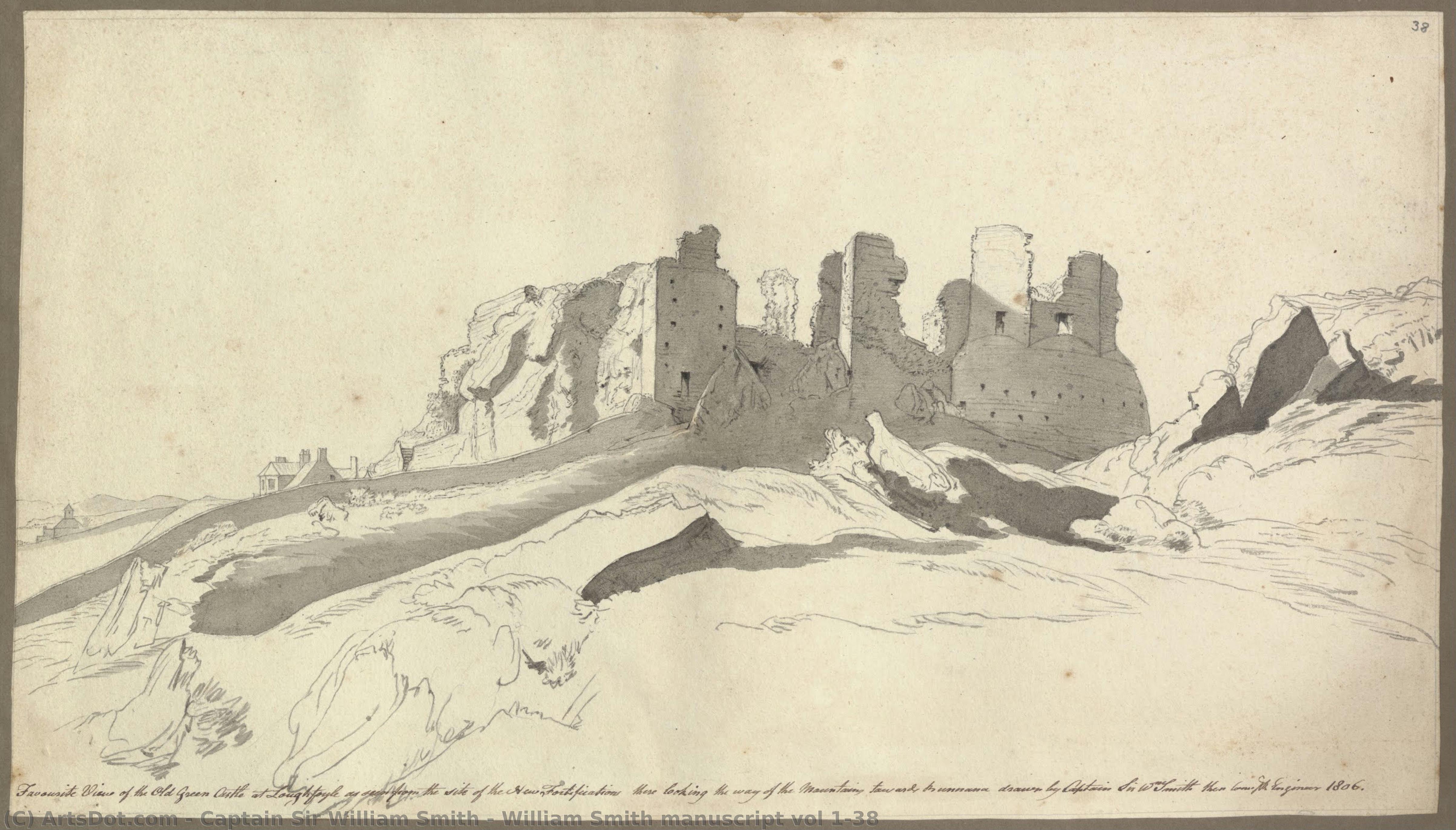
A Vision of Fortified Grandeur
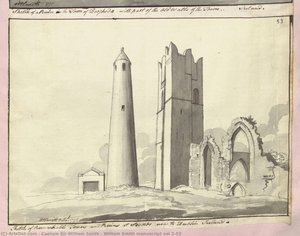
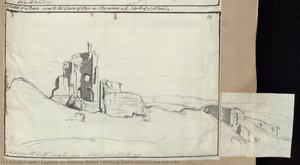
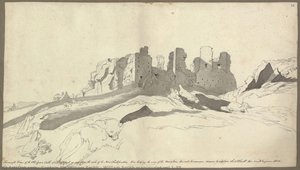
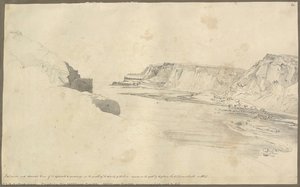
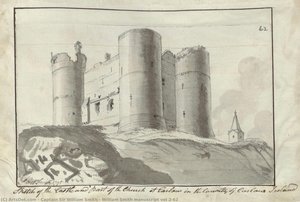
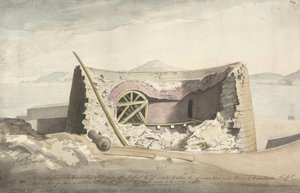
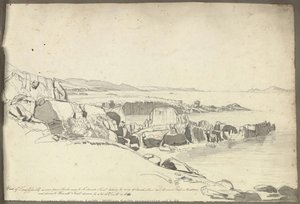
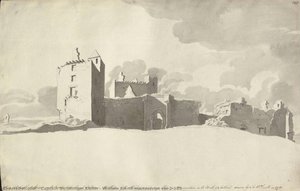
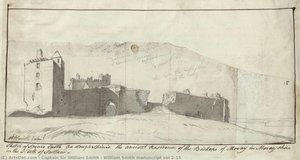
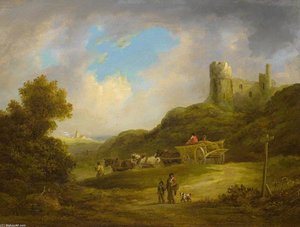
In this mesmerizing fragment from the manuscript of Captain Sir William Smith, dated 1806, we are transported to a realm where the ruggedness of nature meets the architectural ambition of man. The painting presents a breathtaking mountainous landscape, characterized by a stark, almost desert-like austerity that strips away the distractions of lush vegetation to focus the viewer's eye on pure form and structure. Perched precariously upon jagged peaks, several castles rise like stone sentinels against the horizon. These fortifications, intricately detailed, create a sense of vertical drama, leading the eye upward through a labyrinth of cliffs and precipices. The composition is not merely a depiction of geography, but an exploration of height and isolation, where each castle seems to tell a silent story of defense and dominion over the desolate terrain.
The artist’s technique reveals a profound mastery of scale and perspective. By placing a solitary figure near one of the lower fortifications, Smith provides a vital emotional anchor for the viewer. This human presence serves as a poignant reminder of our own smallness when confronted with the monumental scale of the natural world. The interplay of light and shadow across the barren rock faces suggests a harsh, unforblinking sun, casting deep shadows that define the craggy textures of the mountains. For the collector or interior designer, this piece offers a sophisticated focal point; its muted, earthy palette and commanding presence make it an ideal centerpiece for spaces that value classical grandeur and a sense of quiet, contemplative strength.
The Intersection of History and Artistry
To understand this work, one must look toward the remarkable life of its creator, Captain Sir William Smith. A man whose existence was defined by the dualities of naval command and artistic observation, Smith brought the disciplined eye of a navigator to the canvas. Created during the height of the Napoleonic era, this painting reflects a period when the world was being redrawn through both conflict and exploration. The architectural motifs within the landscape evoke a sense of romanticism—a fascination with the ancient, the ruined, and the formidable. There is an inherent symbolism in these mountain citadels; they represent the human desire to establish permanence and order within an unpredictable and often inhospitable environment.
For those seeking to adorn a curated collection, this reproduction offers more than just visual beauty; it offers a window into the early 19th-century psyche. The piece resonates with an emotional depth that speaks of solitude, resilience, and the enduring spirit of discovery. Whether integrated into a contemporary minimalist setting or a traditional study lined with books, the painting’s intricate details and historical weight provide an unparalleled layer of intellectual and aesthetic richness. It is a work that invites long periods of study, rewarding the observer with new discoveries of light, shadow, and structural complexity with every glance.
Related Artworks




Artist Biography
A Life Bridging Navy and Canvas: The Dual World of Captain Sir William Smith
Born in London in 1764, Captain Sir William Smith – also known as William Sidney Smith – carved a remarkable life that defied easy categorization. He was not simply a naval officer, nor solely an artist; rather, he embodied a fascinating intersection of both worlds, navigating the turbulent waters of late 18th and early 19th-century Britain with a unique blend of strategic acumen and artistic sensibility. Smith’s early career unfolded against the backdrop of significant global conflict – the American Revolutionary War, the French Revolutionary Wars, and the Napoleonic Wars – providing him with both opportunity for advancement and fertile ground for observation. He rose through the ranks of the Royal Navy, demonstrating courage and initiative that often bordered on insubordination, a characteristic that simultaneously propelled his success and created friction with superiors. His outspoken nature and willingness to act independently were hallmarks of a man who trusted his own judgment above all else. This independent spirit would later be famously acknowledged by Napoleon Bonaparte himself, who conceded that Smith had nearly altered the course of his destiny during the defense of Acre in 1799.From Naval Battles to Brushstrokes: The Artistic Inclination
Despite a life dominated by naval service, Smith possessed a distinct artistic talent, documented through a collection of paintings now held within the National Museum of the Royal Navy. These works offer a compelling glimpse into the mind of a man who found solace and expression in art amidst the demands of military duty. While not formally trained as an artist, Smith’s paintings reveal a keen eye for detail, composition, and atmosphere. His subject matter is diverse, ranging from grand historical scenes to intimate landscapes. The Armada, a large-scale oil on canvas measuring 160 x 223 cm, stands as a testament to his ambition and skill, depicting the dramatic clash between the Spanish Armada and the English fleet in 1588. This painting isn’t merely a historical representation; it's an immersive experience, capturing the chaos and intensity of naval warfare with impressive dynamism. In contrast, Close of Day, a more intimate work at 74 x 100 cm, showcases Smith’s ability to evoke tranquility and beauty through subtle gradations of light and color, portraying a serene naval sunset. Even smaller pieces like Yomping (26 x 40 cm) demonstrate his observational skills, capturing the rugged terrain of Dartmoor with striking realism. These paintings weren't created for public exhibition or critical acclaim; they were personal endeavors, offering an outlet for a complex and multifaceted personality.A Legacy Forged in Conflict and Diplomacy
Smith’s military achievements are as compelling as his artistic creations. His involvement in the defense of Acre in 1799 cemented his reputation as a brilliant strategist and courageous leader. Facing overwhelming odds, he successfully repelled Napoleon's forces, preventing further French expansion into the Sinai Peninsula. This victory earned him widespread acclaim in Britain and the grudging respect of Napoleon himself, who famously lamented that Smith had thwarted his ambitions. Beyond warfare, Smith’s career encompassed diplomacy and espionage, reflecting a versatility that was rare for officers of his time. He navigated complex political landscapes with skill, often operating independently to achieve strategic objectives. His involvement in the first Russian Antarctic expedition, though indirectly through the naming of Smith Island, further demonstrates his far-reaching influence and connection to exploration.The Enduring Appeal of a Unique Vision
Captain Sir William Smith died in 1840, leaving behind a legacy that extends beyond military accolades and artistic creations. He represents a fascinating archetype – the officer who was also an artist, the strategist who possessed a sensitive soul. His paintings offer a unique window into his world, revealing not only his technical skill but also his emotional response to the events and landscapes he encountered. Today, his works are increasingly appreciated for their historical significance and artistic merit, offering viewers a chance to connect with a remarkable individual whose life was defined by both duty and passion. Discovering Smith’s art is more than just appreciating paintings; it's uncovering a hidden facet of British history and the captivating story of a man who dared to pursue multiple paths with equal dedication and brilliance. Explore his 19 artworks on ArtsDot.com, and delve deeper into the life of this extraordinary figure.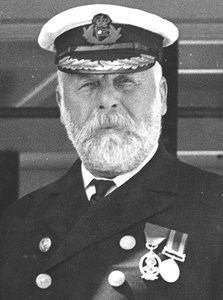
Captain Sir William Smith
1764 - 1840 , United Kingdom
Quick Facts
- Artistic Movement Or Style: Naval painting
- Date Of Birth: 1764
- Date Of Death: 1840
- Full Name: William Sidney Smith
- Nationality: British
- Notable Artworks:
- The Armada
- Close of Day
- Yomping
- Place Of Birth: London, UK
Related Articles

Beyond the Horizon: 10 Landscape Masterpieces for Your Home Decor
Journey through 10 breathtaking landscape paintings by Monet, Van Gogh & more! Explore iconic artworks, artistic techniques & find inspiration for your home decor. Museum-quality reproductions at ArtsDot.com. Discover all masterpieces on ArtsDot.com

Romantic Landscapes: 10 Masterpieces for Your Home | ArtsDot
Journey through 10 Romantic landscape masterpieces by Friedrich, Turner & Cole. Explore emotional art, sublime nature scenes & iconic 19th-century paintings. Find museum-quality reproductions for your home at ArtsDot.com – discover the full collection online!

Evocations of Place: A Historical Journey Through Landscape Art
Explore the rich history of landscape art with ArtsDot. Discover renowned artists, movements like Impressionism & Romanticism, and expert guidance for collecting timeless pieces. Find your perfect serene escape today!

Hokusai's Masterpieces: 25 Iconic Prints & Paintings for Art Lovers | ArtsDot
Journey through Katsushika Hokusai’s 25 most iconic artworks, including *The Great Wave*. Explore the ukiyo-e master's history, style & timeless Japanese woodblock prints. Find museum-quality reproductions for your home at ArtsDot.com.

John Constable's Masterpieces: Explore 25 Iconic Landscapes for Your Home
Journey through John Constable's 25 most celebrated landscapes. Explore Romanticism, Dedham Vale & his masterful use of light in iconic paintings like 'Hay Wain'. Find museum-quality art reproductions and elevate your home decor on ArtsDot.com.