 Preview
 Send
Send Share
Share
 Details

 Download
 Similars
 X-Ray
X-Ray Diaporama
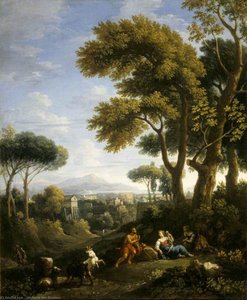
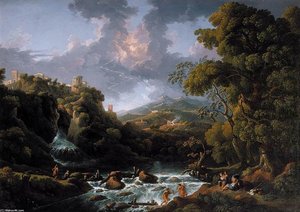
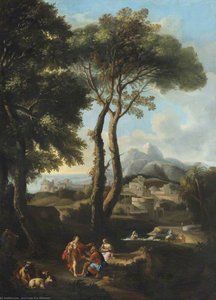
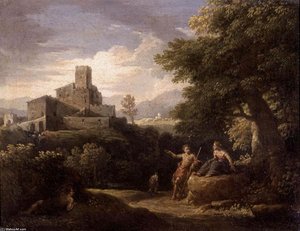
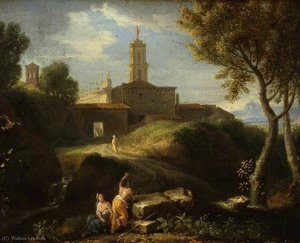
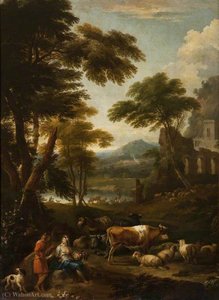
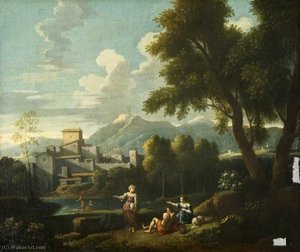
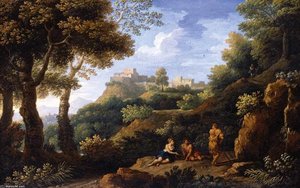
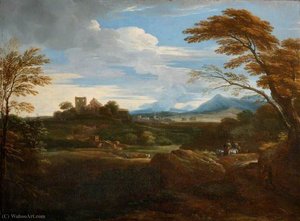
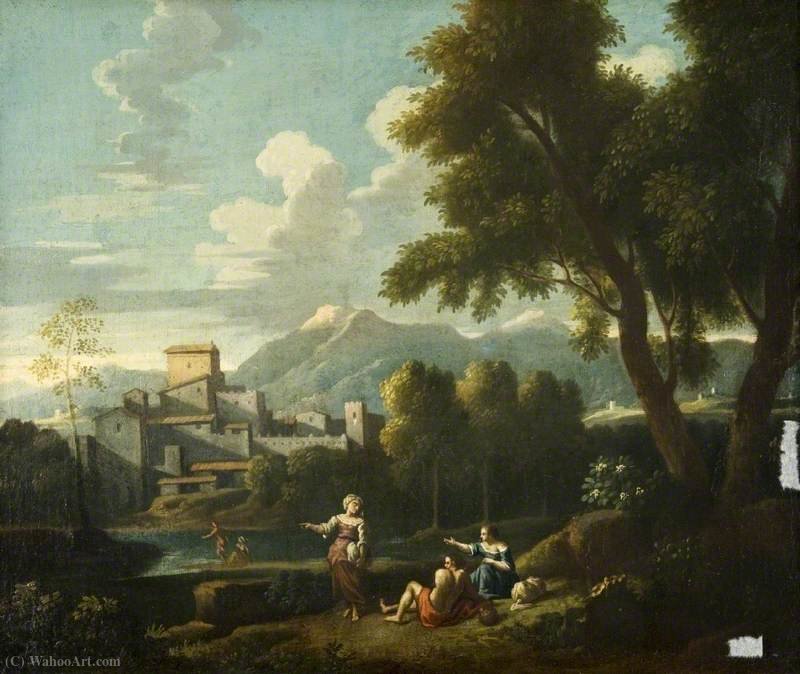
Landscape with a Building and Distant Mountains

 Read More
Hand Made Oil Reproduction
Hand-painted oil on canvas in your size and frame, made to order by our artists. ( Buy Print Buy Image)




































Pick from our preset sizes that match the artwork's original proportions.

You may enter your own dimensions to fit a specific frame or space. If your selected size does not match the original image's proportions, we will either crop the artwork or extend the painting with additional hand-painted elements. A digital mockup will be sent for your approval before production begins.
Please note that the on-screen preview does not reflect the actual cropping or extension. Only the mockup will accurately show the final composition.
While custom sizes are available, we recommend selecting a dimension from the predefined list to preserve the original proportions.
After order, ArtsDot.com team will email client for instructions and provide a mockup preview
Worldwide Delivery () in 3/4 weeks instead of standard 5 weeks. (16 August). No compromise on quality.

Free Worldwide Express Shipping

High-Quality Linen Canvas

Full Shipping Insurance

Customs Tax Refund Guarantee

True Color Matching Guarantee

60-Day Return Policy (Defects Only)

100% Money-Back Guarantee

Bulk Discount Offer
 Glass option is only available in size under 110 CM

Landscape with a Building and Distant Mountains
Reproduction Medium
Reproduction Size
-


Total Price
$ 313
Related Artworks
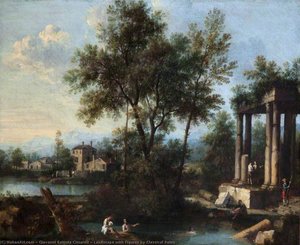
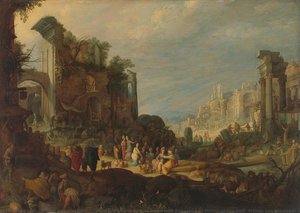
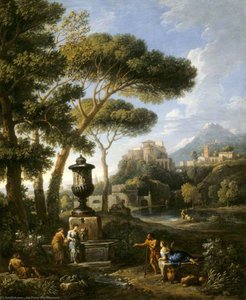
Artist Biography
A Flemish Painter in Roman Arcadia
Jan Frans van Bloemen, a name perhaps less immediately recognizable than some of his contemporaries, nevertheless occupies a significant place within the landscape tradition of 18th-century Rome. Born in Antwerp in 1662 into a family deeply rooted in artistic practice – his brothers Pieter and Norbert also pursued painting careers – Van Bloemen’s journey led him to become a celebrated chronicler of the Roman countryside, earning him the affectionate nickname “Orizzonte” or “Horizonti” for his masterful depiction of distant vistas. His story is one of familial collaboration, artistic migration, and ultimately, establishing a unique voice within the vibrant tapestry of Italianate landscape painting. Early training likely occurred under the watchful eye of Pieter, laying the foundation for Jan Frans’s future endeavors. Formal studies with Anton Goubau in Antwerp between 1681 and 1684 proved pivotal, introducing him to the “bamboccianti” style – scenes of everyday life set within Roman or Mediterranean landscapes – a theme that would resonate throughout his career. A brief sojourn in Paris around 1682, followed by time spent in Lyon alongside Adriaen van der Kabel, further broadened his artistic horizons before the magnetic pull of Rome beckoned.
Rome: Establishing a Veduta Tradition
The year 1688 marked a turning point as Jan Frans and his brothers settled permanently within the heart of Rome, registering with the parish of Sant’Andrea delle Fratte. This relocation wasn't merely a change of scenery; it was an immersion into a thriving artistic community and a commitment to capturing the beauty of the Roman Campagna. Van Bloemen quickly established himself as a leading painter of *vedute* – views – specializing in classical landscapes that echoed the aesthetic principles championed by earlier masters like Claude Lorrain and Gaspard Dughet. His success wasn’t immediate, but it was steady, fueled by commissions from prominent patrons including Queen Elizabeth Farnese, Roman nobility, and even papal circles. The bonds within the artistic community were strong; Caspar van Wittel served as godfather to his first child, a testament to the collaborative spirit of the time. He became an active member of the Bentvueghels, a society for Dutch and Flemish artists in Rome, where he received the moniker “Orizzonte,” acknowledging his skill in rendering expansive landscapes. Despite this local acclaim, full acceptance into the prestigious Accademia di San Luca was delayed until late in life – perhaps a reflection of prevailing Roman preferences for other artistic styles or a reluctance to fully embrace landscape painting as a high art form.
Artistic Style and Influences
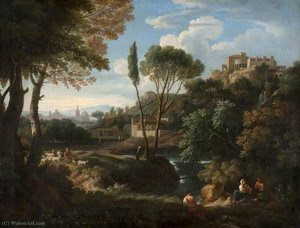
Van Bloemen’s paintings are characterized by their serene beauty and meticulous attention to detail, offering idealized visions of the Roman countryside. He drew heavily from the legacy of Claude Lorrain and Gaspard Dughet, employing techniques like recession through multiple planes, soft, warm lighting, and the integration of classical and religious motifs. However, he wasn’t simply a copyist; he developed a distinctive style focused on “estate views” – depictions of noble estates nestled within the Campagna, seamlessly blending modern scenes with an Arcadian ideal. Unlike some contemporaries who favored panoramic vistas, Van Bloemen preferred a more intimate perspective, emphasizing the permanence and harmony of these estates within their surroundings. His technique, known as *pittura di tocco*, involved using small, spirited brushstrokes – a kind of impressionistic dabbing – to create texture and atmosphere. This approach lent his landscapes a sense of immediacy and vibrancy, capturing the play of light and shadow across the rolling hills and ancient ruins. He often collaborated with figure painters like Carlo Maratti, Placido Costanzi, and Pompeo Batoni, particularly in later years when tackling more ambitious compositions, though he was adept at imitating their styles himself. His most fruitful collaboration was arguably with Placido Costanzi, whom he considered the finest collaborator on paintings depicting scenes from “The Flight to Egypt.”
Legacy and Lasting Impact
Jan Frans van Bloemen’s contribution extends beyond his individual canvases; he played a vital role in shaping the Italianate landscape tradition. His meticulous observation of nature, combined with his classical sensibility, influenced generations of artists who followed. While his brother Pieter gained recognition for battle scenes and animal paintings, Jan Frans carved out a niche as a master of *vedute*, capturing the essence of the Roman countryside with unparalleled skill. He was also a skilled staffage painter, often adding figures to landscapes – sometimes even painting them himself – demonstrating his versatility. His landscape drawings, occasionally mistaken for those of Pieter, frequently featured imaginary ruins, showcasing his imaginative flair. Though he faced some hurdles in gaining full acceptance within the Roman art establishment, Van Bloemen’s work continued to be sought after by discerning collectors and patrons throughout his lifetime. Today, his paintings offer a window into 18th-century Rome, providing not only beautiful depictions of the landscape but also valuable insights into the cultural values and aesthetic preferences of the era. His serene and evocative portrayals of the Roman countryside continue to captivate viewers, solidifying his place as a significant figure in the history of European art.
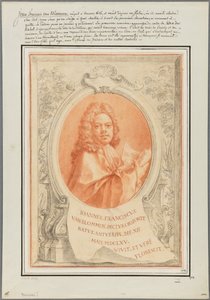
Jan Frans van Bloemen
1662 - 1749 , Belgium
Quick Facts
- Artistic Movement Or Style: Italianate landscape
- Artists Who Influenced This Artist:
- Claude Lorrain
- Gaspard Dughet
- Date Of Birth: 1662
- Date Of Death: 1749
- Full Name: Jan Frans van Bloemen
- Nationality: Flemish
- Notable Artworks:
- Landscape with a Building...
- Pastoral landscape
- A Classical Landscape...
- Other Names:
- Orizzonte
- Horizonti
- Place Of Birth: Antwerp, Belgium
Related Articles
Van Gogh's Masterpieces: Explore 25 Iconic Paintings & Art for Your Home
Journey through Vincent van Gogh's 25 most iconic paintings! Explore 'Starry Night', 'Sunflowers,' and more—discover the stories, techniques & emotions behind these Post-Impressionist masterpieces. Find museum-quality art reproductions for your home at ArtsDot.com.

Beyond the Horizon: 10 Landscape Masterpieces for Your Home Decor
Journey through 10 breathtaking landscape paintings by Monet, Van Gogh & more! Explore iconic artworks, artistic techniques & find inspiration for your home decor. Museum-quality reproductions at ArtsDot.com. Discover all masterpieces on ArtsDot.com

Rembrandt's Masterpieces: Explore 25 Iconic Paintings & Prints | ArtsDot
Journey through Rembrandt van Rijn's 25 most iconic paintings & etchings. Explore Dutch Golden Age masterpieces, dramatic chiaroscuro, and timeless portraits. Find museum-quality art reproductions to elevate your home decor on ArtsDot.com.
Cornelis van Poelenburch: Bridging Mannerism & the Dutch Baroque Landscape
Discover Cornelis van Poelenburch, a pivotal Dutch Baroque landscape painter bridging Mannerism & Italianate styles. Explore his life, key works, and lasting influence on 17th-century art with ArtsDot.

Romantic Landscapes: 10 Masterpieces for Your Home | ArtsDot
Journey through 10 Romantic landscape masterpieces by Friedrich, Turner & Cole. Explore emotional art, sublime nature scenes & iconic 19th-century paintings. Find museum-quality reproductions for your home at ArtsDot.com – discover the full collection online!