 Preview
 Send
Send Share
Share
 Details

 Download
 Similars
 X-Ray
X-Ray Diaporama
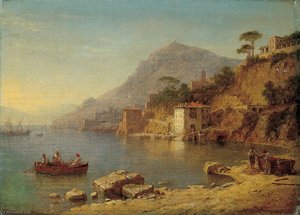
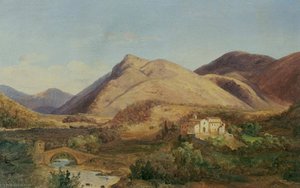
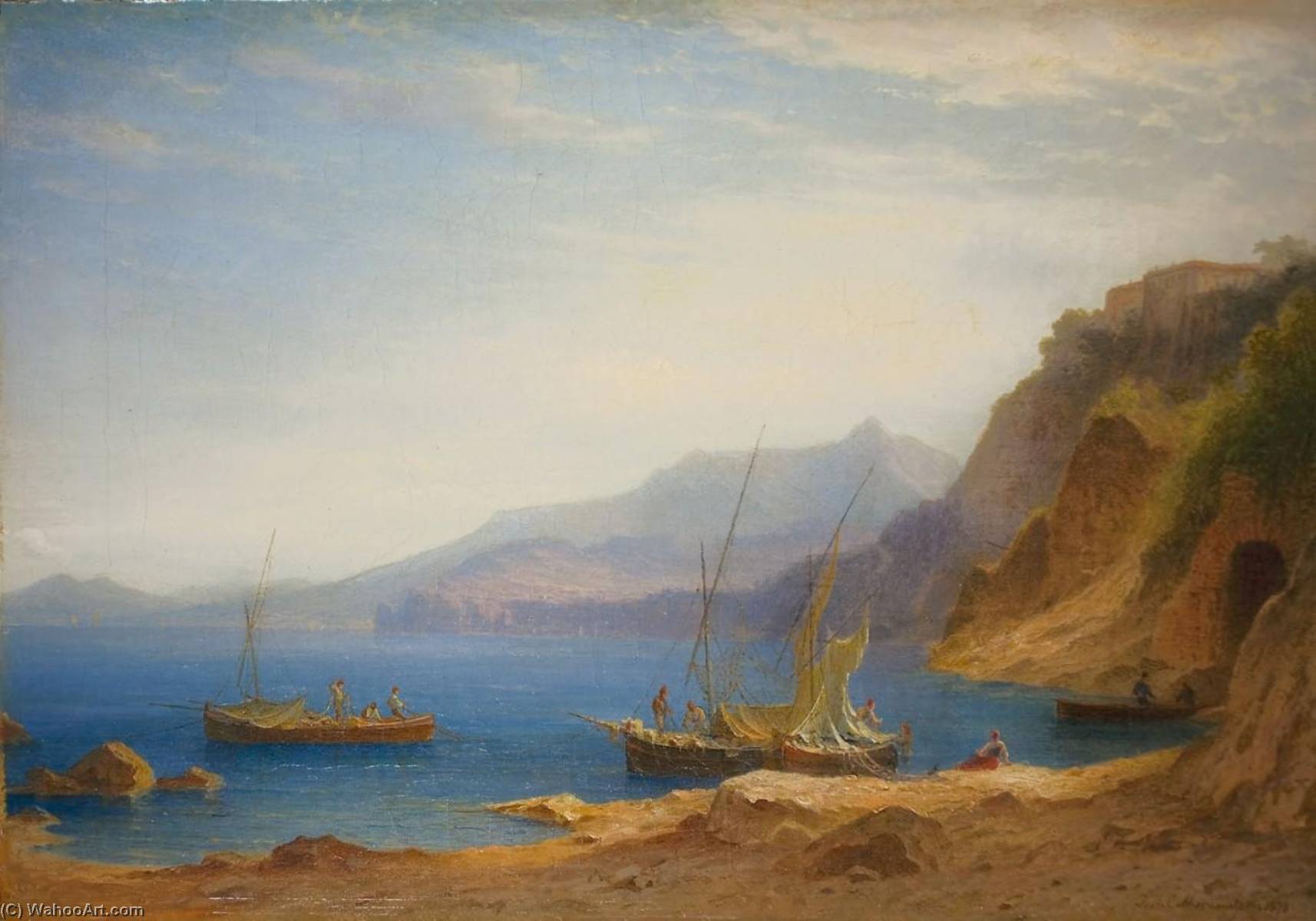
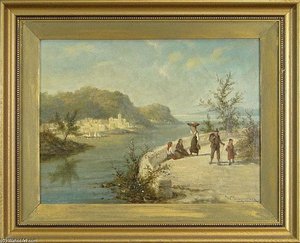
Italian Mountain Lake

 Read More
Hand Made Oil Reproduction
Hand-painted oil on canvas in your size and frame, made to order by our artists. ( Buy Print Buy Image)




































Pick from our preset sizes that match the artwork's original proportions.

You may enter your own dimensions to fit a specific frame or space. If your selected size does not match the original image's proportions, we will either crop the artwork or extend the painting with additional hand-painted elements. A digital mockup will be sent for your approval before production begins.
Please note that the on-screen preview does not reflect the actual cropping or extension. Only the mockup will accurately show the final composition.
While custom sizes are available, we recommend selecting a dimension from the predefined list to preserve the original proportions.
After order, ArtsDot.com team will email client for instructions and provide a mockup preview
Worldwide Delivery () in 3/4 weeks instead of standard 5 weeks. (16 August). No compromise on quality.

Free Worldwide Express Shipping

High-Quality Linen Canvas

Full Shipping Insurance

Customs Tax Refund Guarantee

True Color Matching Guarantee

60-Day Return Policy (Defects Only)

100% Money-Back Guarantee

Bulk Discount Offer
 Glass option is only available in size under 110 CM

Italian Mountain Lake
Reproduction Medium
Reproduction Size
-


Total Price
$ 338
Related Artworks
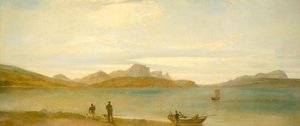
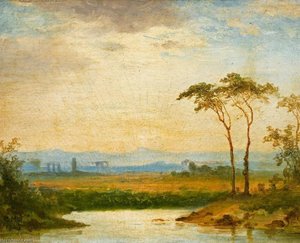
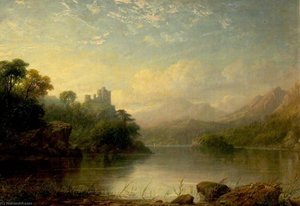

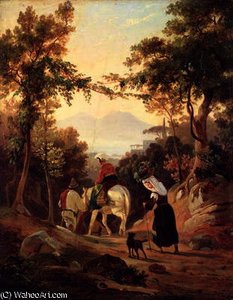
Artist Biography
Carl Morgenstern: A Visionary Landscape Painter of Late Romantic Germany
Carl Fredricksen (1770 – 1852) stands as a singular figure in German art history, recognized primarily for his evocative landscapes and portraits that embody the spirit of the late Romantic era. Born in Magdeburg, Prussia, Morgenstern’s artistic journey began with rigorous academic training under Johann August Eberhard at Halle University, grounding him firmly in classical philology alongside philosophical inquiry – an intellectual duality that profoundly shaped his creative output. While overshadowed by contemporaries like Friedrich Schlegel and Ludwig Tieck, Morgenstern carved out a distinctive niche through meticulous observation of nature and a masterful manipulation of tonal color palettes, establishing himself as one of the foremost landscape painters of his time.- Early Influences: Morgenstern’s formative years were marked by exposure to Enlightenment ideals championed by Immanuel Kant, fostering a preoccupation with rationalism and moral philosophy that subtly permeated his artistic sensibilities. However, he swiftly embraced the burgeoning Romantic movement, captivated by its emphasis on emotion, imagination, and the sublime—a shift powerfully reflected in his increasingly dramatic depictions of mountainous vistas and stormy seas.
- The Dorpat Years: His relocation to Dorpat University Library in 1802 proved pivotal, transforming Morgenstern from a contemplative philosopher into a prolific artist dedicated to capturing the grandeur of Estonia’s Baltic landscape. During this period, he abandoned his initial focus on Plato's dialogues and turned instead toward literary criticism and art history, analyzing texts by Goethe and Schiller with unparalleled insight.
- Technique & Style: Morgenstern’s artistic technique was characterized by a deliberate restraint—a calculated avoidance of excessive brushwork that prioritized tonal harmony and atmospheric depth. He favored muted earth tones – ochres, siennas, umbers – blended seamlessly to convey the subtle nuances of light and shadow, creating landscapes imbued with an almost palpable sense of stillness and contemplation. His portraits similarly demonstrated meticulous attention to detail, capturing not merely physical likeness but also psychological character—a hallmark of Romantic portraiture.
Notable Works & Artistic Legacy
Morgenstern’s oeuvre comprises approximately 300 paintings, predominantly landscapes executed in oil on canvas. Among his most celebrated compositions are “The Baltic Coast,” depicting the rugged coastline of Estonia with breathtaking realism and expressive color; “Mount Königsberg,” a monumental depiction of Prussia's highest peak showcasing Morgenstern’s mastery of tonal gradation; and numerous portraits of prominent intellectuals and dignitaries—including depictions of Friedrich Nietzsche and Hermann Diels—that reveal his keen understanding of human psychology. His meticulous documentation of geological formations and botanical specimens underscores his commitment to scientific observation alongside artistic creativity.- Georg Schäfer & Ny Carlsberg Glyptotek: Morgenstern’s paintings are housed in prestigious institutions such as the Georg Schäfer Museum in Tartu, Estonia, and the Ny Carlsberg Glyptotek in Copenhagen, Denmark, ensuring their enduring presence within the canon of German Romantic art.
- Influence on Spitzweg Collection: His legacy extends beyond museum collections; Morgenstern’s works are included in the Spitzweg Collection, demonstrating his impact on subsequent generations of artists and scholars interested in landscape painting and psychological portraiture.
Symbolism & Philosophical Depth
Beyond mere visual representation, Morgenstern's paintings resonate with philosophical considerations rooted in Kantian epistemology—a preoccupation with perceiving the sublime as an experience that transcends rational understanding. He sought to convey not just what he saw but also what he felt—the awe and wonder inspired by confronting the immensity of nature and the complexities of human consciousness. This intellectual underpinning informs his artistic vision, elevating his landscapes from picturesque depictions into meditations on beauty, morality, and the relationship between humanity and the cosmos. Morgenstern’s contribution to German art lies not only in his technical prowess but also in his ability to infuse his canvases with profound philosophical ideas—a testament to the enduring power of Romantic thought.Concluding Remarks: A Quiet Giant
Carl Morgenstern remains a relatively obscure figure compared to many of his contemporaries, yet his paintings continue to captivate viewers with their understated elegance and atmospheric depth. His unwavering dedication to observation combined with intellectual rigor cemented his position as one of the foremost landscape painters of his era—a quiet giant whose artistic legacy persists through the enduring beauty of his landscapes and the insightful portrayal of human character.
carl morgenstern
1811 - 1893
Quick Facts
- Artistic Movement Or Style: Romanticism
- Artists Or Movements Influenced By This Artist: ['Bildungsroman']
- Artists Who Influenced This Artist: ['Friedrich August Wolf']
- Date Of Birth: August 28 [O.S. August 17] 1770
- Date Of Death: September 15 [O.S. September 3] 1852
- Full Name: Johann Karl Simon Morgenstern
- Nationality: German
- Notable Artworks:
- De Platonis Republica commentationes tres
- Auszüge aus den Tagebüchern und Papieren eines Reisenden
- Place Of Birth: Magdeburg, Germany
Related Articles
Evoking the Horizon: A Historical & Artistic Exploration of Coastal Scenes in Painting
Explore the rich history of coastal scenes in painting! Discover Impressionist masterpieces, American realism & contemporary visions. Learn about renowned artists and find your perfect seascape at ArtsDot.
Richard Parkes Bonington: A Brief but Brilliant Career – Romantic Landscapes & the Dawn of Plein Air Painting
Explore the short but impactful career of Richard Parkes Bonington, a pivotal figure bridging British Romanticism & French plein air painting. Discover his luminous landscapes and lasting influence on Delacroix & beyond.
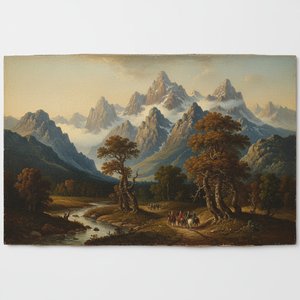
Majestic Peaks on Canvas: A Historical & Artistic Exploration of Mountains in Fine Art
Explore the history of mountain painting! Discover Romantic masterpieces & key artists like Dahl & Calame. Learn about the Sublime & Picturesque aesthetics and find your perfect artwork at ArtsDot.
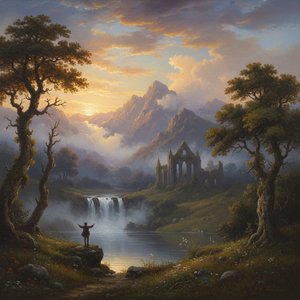
Evoking Emotion & Transcendence: Romantic Landscape Painting (18th-19th Century)
Explore the emotional depth of Romantic landscape painting (18th-19th century). Discover key artists like Friedrich & Cole, and the concepts of the sublime. Expert insights for art lovers & collectors.
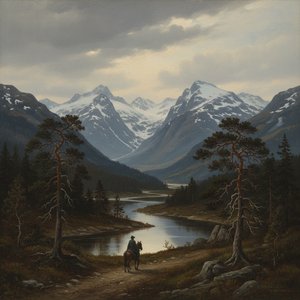
Johan Christian Dahl: Pioneering Norwegian Romantic Landscape Painting
Explore the life & art of Johan Christian Dahl, Norway's first great Romantic painter. Discover his iconic landscapes, cultural impact, and lasting legacy with ArtsDot.