 Preview
 Send
Send Share
Share
 Details

 Download
 Similars
 X-Ray
X-Ray Diaporama
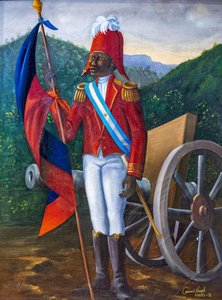
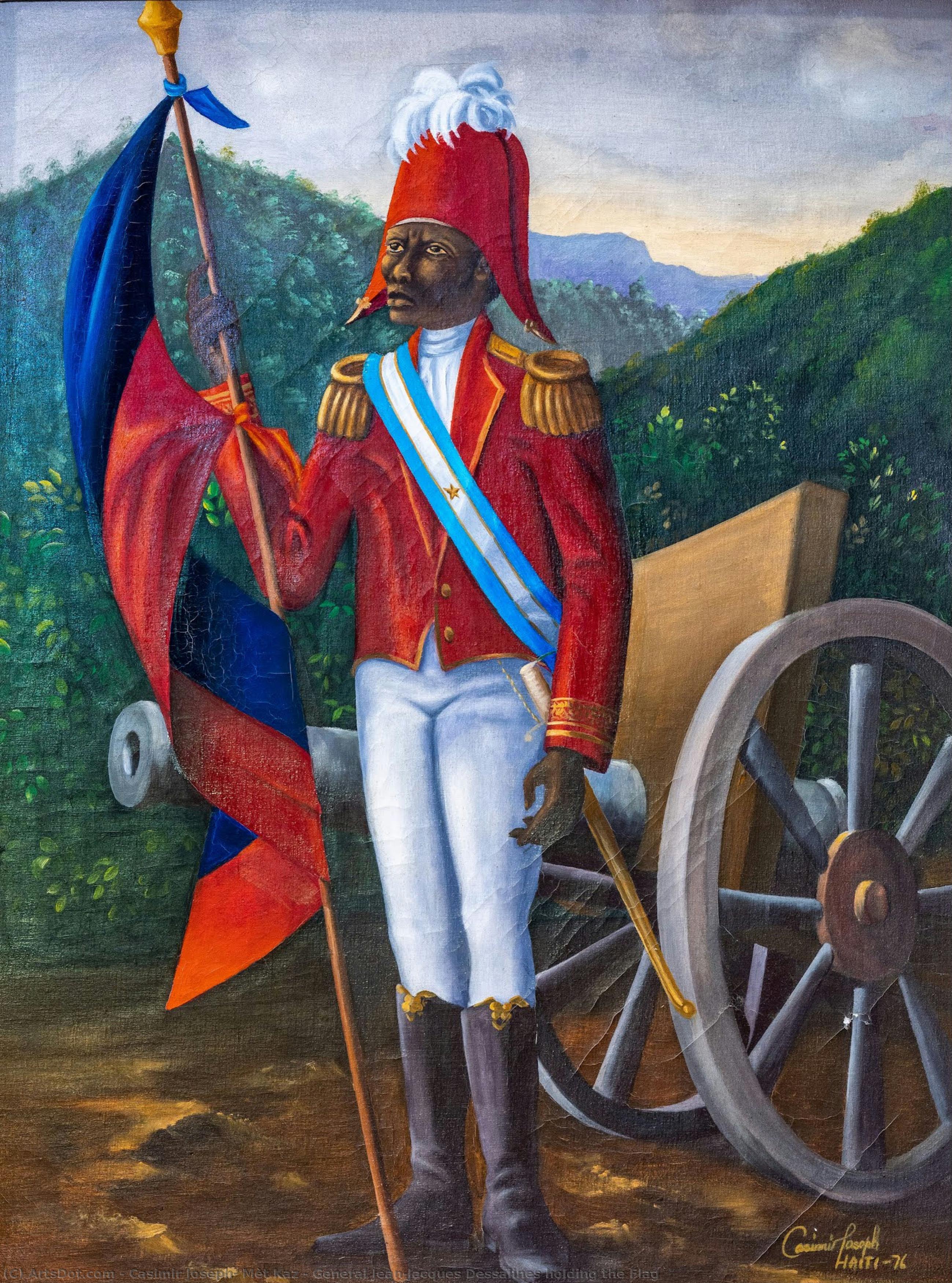
General Jean-Jacques Dessalines holding the Flag


 Read More
Giclée / Art Print
Museum-quality giclée or canvas print with fast production and flexible finish options. ( Buy Hand Made Painting Buy Image)




P118B $10

P118H $10

P118W $10

P438Z $10

P508JH $12

P508YH $12

P805H $10

P805Z $10

P919BZ $10

P919G $10

P919XJ $10

P959ZH $10

P968JZ $12

W106C $8

W218G $10

W218JH $8

W218Y $10

W307PJ $10

W316G $10

W316PJ $8

W316Y $10

W398PJ $8

W4111J $10

W500HY $15

W500JH $15

W692G $12

W849H $8

W940BG $15

W953PJ $8




Pick from our preset sizes that match the artwork's original proportions.

You may enter your own dimensions to fit a specific frame or space. If your selected size does not match the original image's proportions, we will either crop the artwork or extend the image with a mirrored or solid-fill edge. A digital mockup will be sent for your approval before production begins.
Please note that the on-screen preview does not reflect the actual cropping or extension. Only the mockup will accurately show the final composition.
While custom sizes are available, we recommend selecting a dimension from the predefined list to preserve the original proportions.
Worldwide Delivery () in 2 weeks instead of standard 4/5 weeks. (3 September)

Free Worldwide Express Shipping

High-Quality Linen Canvas

Full Shipping Insurance

Customs Tax Refund Guarantee

True Color Matching Guarantee

60-Day Return Policy (Defects Only)

100% Money-Back Guarantee

Bulk Discount Offer
 Glass option is only available in size under 110 CM

General Jean-Jacques Dessalines holding the Flag
Giclée / Art Print
Reproduction Size
-


Total Price
$ 63
Related Artworks

Artist Biography
Robert Delaunay: A Revolutionary of Color and Light
Robert Delaunay, born Robert-Victor-Felix Delaunay on April 12th, 1885, in the bustling heart of Paris, was not merely a painter; he was a pioneer who fundamentally reshaped our perception of color and its expressive potential. His life, marked by both artistic innovation and personal transformation, culminated in a legacy that continues to resonate within the realms of modern art. Initially apprenticed to a theatrical designer, Delaunay’s early career laid the groundwork for his later exploration of abstraction, fueled by an intense fascination with the interplay between light, color, and form. This initial grounding provided him with a unique understanding of visual composition and dynamism – skills he would later harness in groundbreaking ways.The Seeds of Orphism: Neo-Impressionism and Early Abstraction
Delaunay’s artistic journey began within the framework of Neo-Impressionism, a movement characterized by its meticulous application of small dots of pure color to recreate the effects of light and atmosphere. However, he quickly moved beyond this approach, recognizing its limitations in conveying his desired emotional impact. Influenced by figures like Paul Signac and, crucially, by the writings of Marcel Breuer on color theory – particularly the concept that color possesses an inherent energy and can be experienced independently of objects – Delaunay embarked on a radical experiment: to paint not what he *saw*, but what he *felt*. This shift led him away from representational imagery towards increasingly abstract compositions. His early works, such as “Saint-Séverin” (1912), demonstrate this transition, utilizing vibrant hues and geometric forms to evoke the essence of a Parisian landmark rather than a literal depiction. The influence of Edgar Degas’s use of color is also evident in his work during this period.Orphism: A Symphony of Color
Around 1912, Delaunay and his wife, Sonia Delaunay (née Robert), co-founded the movement known as Orphism – a name derived from the Greek word “orphanos,” meaning ‘child.’ This wasn’t simply an artistic style; it was a philosophy. Orphism sought to liberate color from its traditional role of representing objects and instead treat it as an independent, expressive force. Delaunay developed his own unique system for achieving this, employing circular discs – often radiating with intense hues – arranged in dynamic compositions that pulsed with energy. These “Discs” were not merely decorative; they represented a fundamental shift in how color was perceived and utilized within painting. The movement gained significant attention through exhibitions at the Salon des Indépendants and, crucially, through the support of Guillaume Apollinaire, who coined the term "Orphism" to describe this vibrant new approach. The Delaunays’ home became a hub for artistic experimentation, attracting fellow artists like Stanton Macdonald-Wright, Morgan Russell, and Patrick Henry Bruce, all deeply influenced by their radical ideas.Abstraction and Beyond: Color as Form
Following World War I, Delaunay's work underwent another significant transformation. He moved away from the strict geometric forms of Orphism, embracing a more fluid and expressive style that incorporated elements of Cubism and Simultanism – the simultaneous presentation of multiple viewpoints within a single composition. His later paintings, such as “Endless Rhythm” (1932), demonstrate this evolution, utilizing layered colors and dynamic brushstrokes to create an immersive visual experience. During this period, he also explored large-scale panel paintings, often incorporating relief elements, further emphasizing the physicality of color and its ability to exist independently of representation. His theoretical writings on color continued to be influential, advocating for a purely visual art based on the inherent qualities of light and hue.Legacy and Influence
Robert Delaunay’s impact on 20th-century art is undeniable. His pioneering work in abstraction, his revolutionary approach to color theory, and his establishment of Orphism fundamentally altered the course of modern painting. His influence can be seen in the works of numerous artists, including Paul Klee, Franz Marc, and even later movements such as Abstract Expressionism. Beyond his artistic achievements, Delaunay’s legacy extends to his role as a theorist and educator, shaping the understanding and appreciation of color within the art world. He died in Montpellier on October 25th, 1941, leaving behind a body of work that continues to inspire and challenge viewers today – a testament to the enduring power of color and its capacity to evoke emotion and transform our perception of reality.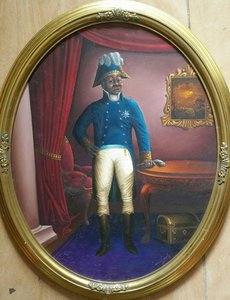
casimir joseph, mèt kaz
1941 - 2021 , Haiti
Quick Facts
- Artistic Movement Or Style:
- Divisionism
- Cubism
- Orphism
- Abstract art
- Artists Or Movements Influenced By This Artist:
- Stanton Macdonald-Wright
- Morgan Russell
- Patrick Henry Bruce
- Der Blaue Reiter
- August Macke
- Franz Marc
- Paul Klee
- Thomas Benton
- Lyonel Feininger
- Guillaume Apollinaire
- Artists Who Influenced This Artist:
- Neoimpressionism
- Cézanne
- Date Of Birth: April 12, 1885
- Date Of Death: October 25, 1941
- Full Name: Robert Delaunay
- Nationality: French
- Notable Artworks:
- Endless Rhythm
- Cubism
- Orphic Cubism
- Simultanism
- Place Of Birth: Paris, France
Related Articles
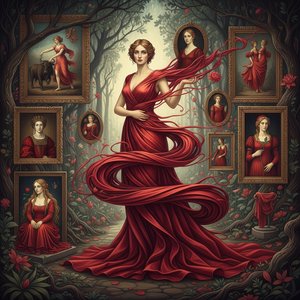
Crimson Threads of Narrative: Exploring Symbolism & Representation in Artworks Featuring the Red Dress
Explore the rich symbolism of the red dress in art history! From ancient power displays to iconic portraits like Cézanne’s 'Madame Cezanne', discover the cultural and artistic significance behind this captivating color. Expert analysis & insights.
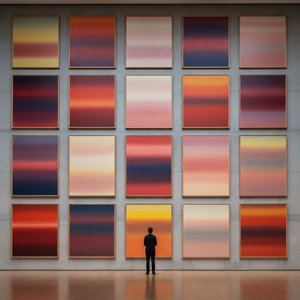
Mark Rothko's Masterpieces: 25 Paintings That Define Abstract Expressionism | ArtsDot
Explore 25 iconic Mark Rothko paintings that define Abstract Expressionism. Discover the stories, colors & emotions behind these masterpieces. Find museum-quality art reproductions and curated decor ideas at ArtsDot.com.
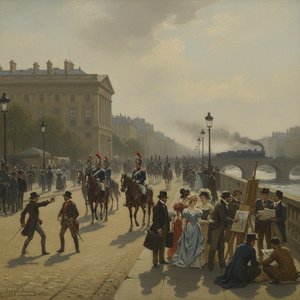
Émile Jean Horace Vernet: Romantic Realism & Depicting 19th-Century Life
Explore the life & art of Émile Jean Horace Vernet, a master of Romantic Realism. Discover his captivating battle scenes, portraits, and Orientalist works – a window into 19th-century France. Learn about his techniques & enduring legacy.
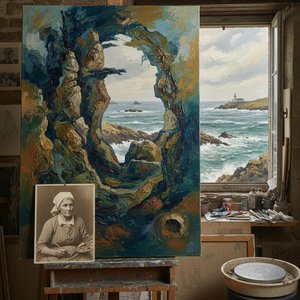
Yvonne Jean Haffen: A Breton Vision of Post-War Abstraction
Discover the captivating world of Yvonne Jean Haffen, a leading figure in post-war French abstraction. Explore her unique style, vibrant color palettes, and investment potential with ArtsDot.
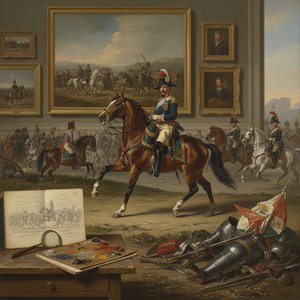
Jean-Louis Ernest Meissonier: Realism, Historical Narrative & Artistic Perfection
Explore the world of Jean-Louis Ernest Meissonier, a master of French Realism renowned for his meticulously detailed historical & military scenes. Discover his iconic artworks and lasting legacy.