 Preview
 Send
Send Share
Share
 Details

 Download
 Similars
 X-Ray
X-Ray Diaporama
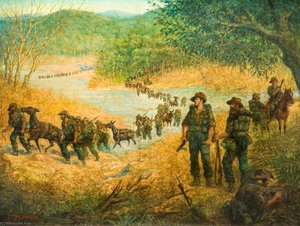
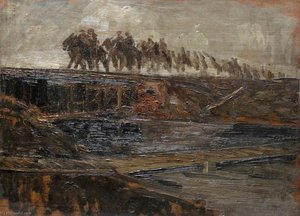
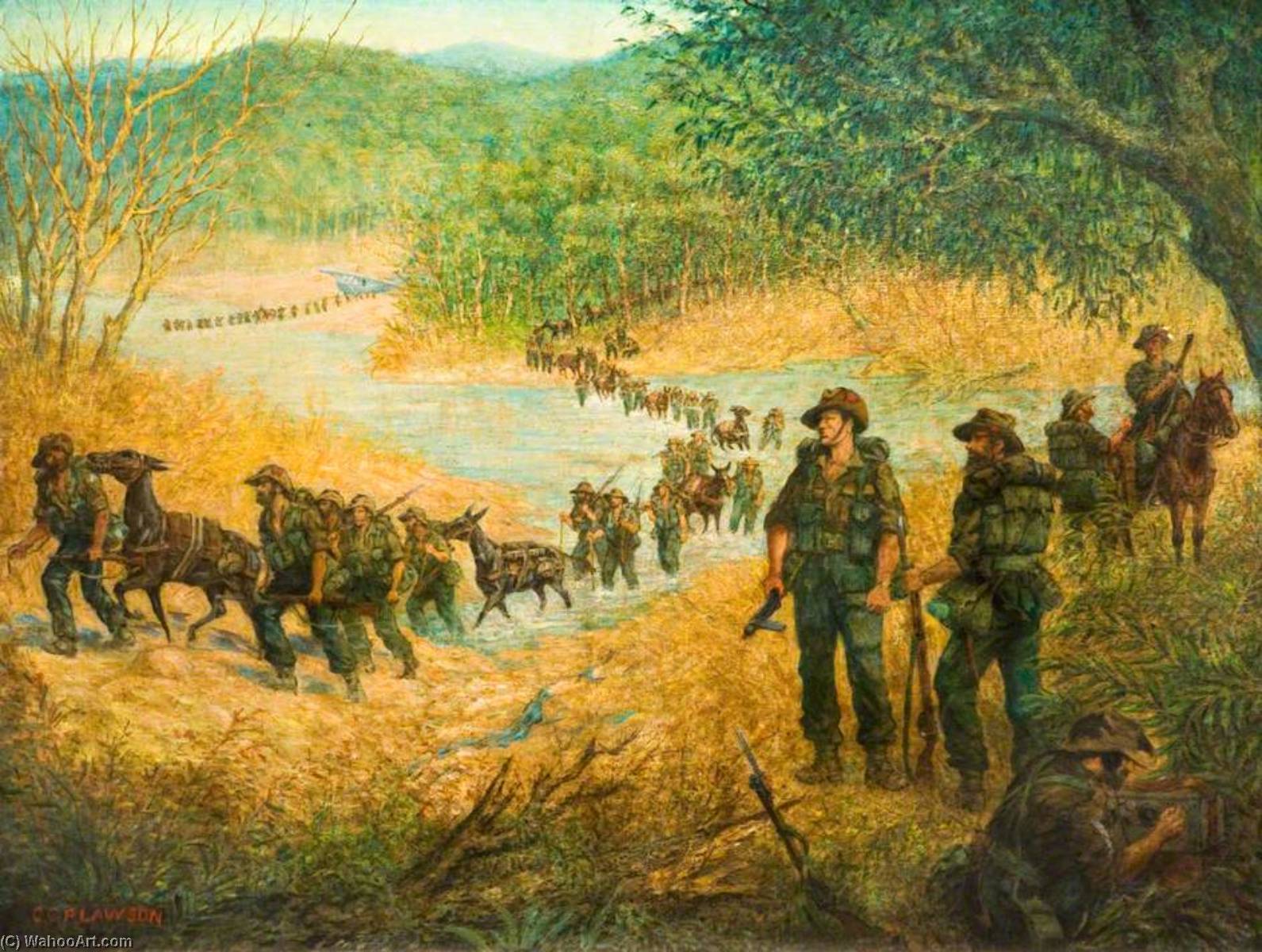
1st South Staffords on the March in Burma, 1944
 Oil
Oil- WallArt
 1944
1944- Modern
 60.0 x 96.0 cm
 The Staffordshire Regiment Museum
 Read More
Hand Made Oil Reproduction
Hand-painted oil on canvas in your size and frame, made to order by our artists. ( Buy Print Buy Image)




P118B $10

P118H $10

P118W $10

P438Z $10

P508JH $12

P508YH $12

P805H $10

P805Z $10

P919BZ $10

P919G $10

P919XJ $10

P959ZH $10

P968JZ $12

W106C $8

W218G $10

W218JH $8

W218Y $10

W307PJ $10

W316G $10

W316PJ $8

W316Y $10

W398PJ $8

W4111J $10

W500HY $15

W500JH $15

W692G $12

W849H $8

W940BG $15

W953PJ $8




Pick from our preset sizes that match the artwork's original proportions.

You may enter your own dimensions to fit a specific frame or space. If your selected size does not match the original image's proportions, we will either crop the artwork or extend the painting with additional hand-painted elements. A digital mockup will be sent for your approval before production begins.
Please note that the on-screen preview does not reflect the actual cropping or extension. Only the mockup will accurately show the final composition.
While custom sizes are available, we recommend selecting a dimension from the predefined list to preserve the original proportions.
After order, ArtsDot.com team will email client for instructions and provide a mockup preview
Worldwide Delivery () in 3/4 weeks instead of standard 5 weeks. (30 August). No compromise on quality.

Free Worldwide Express Shipping

High-Quality Linen Canvas

Full Shipping Insurance

Customs Tax Refund Guarantee

True Color Matching Guarantee

60-Day Return Policy (Defects Only)

100% Money-Back Guarantee

Bulk Discount Offer
 Glass option is only available in size under 110 CM

1st South Staffords on the March in Burma, 1944
Reproduction Medium
Reproduction Size
-


Total Price
$ 263
A Journey Through Time: The Resilience of the 1st South Staffords
In the evocative canvas of 1st South Staffords on the March in Burma, 1944, we are transported to a pivotal moment in the annals of World War II. This historical masterpiece captures more than just a military movement; it encapsulates the very essence of human endurance and the heavy burden of duty. The scene unfolds across a sprawling field, where a column of soldiers moves with a rhythmic, determined pace through the lush, untamed landscape of Burma. As we gaze upon the composition, the eye is immediately drawn to the interplay between man and beast, as horses and mules, laden with the essential supplies of war, tramping alongside their human counterparts. The painting serves as a profound window into a period of immense global upheaval, freezing a moment of quiet, focused preparation amidst the looming shadows of conflict.
The artistry within this piece lies in its ability to blend historical documentation with a deeply moving atmosphere. The artist masterfully utilizes the natural setting—a verdant expanse framed by dense, protective trees—to create a sense of both isolation and sanctuary. There is a palpable weight to the scene, felt in the heavy backpacks worn by the men and the steady, rhythmic gait of the animals. Each figure, whether mounted or walking on foot, contributes to a larger narrative of collective effort and shared destiny. The composition invites the viewer to walk alongside this regiment, feeling the humidity of the Burmese terrain and the solemnity of their mission.
Technique and Visual Grandeur
From an aesthetic perspective, this work is a triumph of historical realism. The technique employed allows for a rich texture that brings the organic elements of the landscape to life—the soft foliage of the surrounding trees, the dusty earth beneath the hooves, and the rugged gear of the infantry. The light in the painting plays a crucial role, filtering through the canopy to highlight the determination etched on the faces of the fourteen men visible in the procession. This careful manipulation of light and shadow creates a sense of depth that pulls the observer into the heart of the march.
For the discerning collector or interior designer, this piece offers an unparalleled opportunity to introduce a conversation starter into any space. The scale of 60 x 96 cm provides a commanding presence, making it an ideal centerpiece for a study, a library, or a sophisticated gallery wall. The painting does not merely decorate a room; it anchors it with a sense of gravity and historical importance. Its palette, rooted in the natural tones of the Burmese wilderness, offers a timeless elegance that complements both classic and contemporary decor, providing a window into a world of bravery and steadfastness.
The Emotional Legacy of the March
Beyond its technical merits, the true power of this work resides in its emotional resonance. It is a tribute to the 1st South Staffords, celebrating the teamwork and grit required to navigate the complexities of wartime logistics. There is a subtle melancholy inherent in the scene—a recognition of the uncertainty that lay ahead for these soldiers—yet it is balanced by an overwhelming sense of purpose. The painting captures the quiet heroism found not in grand battles, but in the daily, grueling perseverance of the march.
Owning a high-quality reproduction of this work means preserving a fragment of history. It allows the spirit of 1944 to reside within a modern home, offering a constant reminder of the strength of the human spirit when faced with monumental challenges. Whether viewed as an educational piece for history enthusiasts or as a profound work of art for those moved by the beauty of historical narrative, this painting remains an enduring testament to a generation defined by their courage.
Related Artworks
Artist Biography
A Fleeting Glimpse of English Beauty: The Life and Art of Cecil Gordon Lawson
Cecil Gordon Lawson, a name perhaps less resonant than those of his contemporaries like Millais or Constable, nevertheless occupies a vital, poignant space in the narrative of 19th-century British landscape painting. Born on December 3rd, 1849, in Fountain Place, Wellington, Shropshire, Lawson’s life was tragically brief, concluding at just thirty-two years old in 1882. Yet within those few decades, he managed to forge a distinctive artistic voice—one that beautifully blended idyllic visions of the English countryside with an undercurrent of melancholy and a keen observation of rural life. He came from a family steeped in artistic tradition; his father, William Lawson, was a respected portrait painter, and his mother also practiced as an artist. This nurturing environment, coupled with the talents of his brothers – Francis Wilfrid, a historical painter, and Malcolm Leonard, a musician – fostered within Cecil a deep devotion to art from a very young age. The family’s move to London soon after his birth exposed him to the burgeoning artistic scene of the capital, setting the stage for his future endeavors.An Untutored Eye: Early Influences and Artistic Development
Remarkably, Lawson received no formal artistic training. His education came entirely from within the family circle—drawing lessons from his father and brother Wilfrid—and through diligent self-study. This unconventional path allowed him to develop a uniquely personal style, initially influenced by the delicate realism of William Henry Hunt. Early works focused on intimate studies of fruit, flowers, and the picturesque scenes along the River Thames in Chelsea, where the family resided. He began exhibiting at the Royal Academy in 1870 with *Cheyne Walk*, signaling his arrival onto the London art scene. Simultaneously, he honed his skills as a draughtsman for wood engraving, a common practice that provided both income and valuable experience in capturing detail and light. Lawson quickly became associated with a circle of like-minded artists—Fred Walker, G.J. Pinwell, Hubert Herkomer, Charles Keene, and William Small—who shared a commitment to depicting contemporary life with honesty and sensitivity. Around 1869, he transitioned from watercolour to oil painting, a shift that allowed for greater expressive possibilities and richer tonal variations.The Idyllist Vision: Major Works and Artistic Style
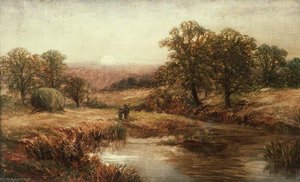
Lawson’s artistic journey was marked by extensive travel throughout Britain—Ireland, Wales, Kent—and continental Europe, including the Netherlands, Belgium, and France. These journeys profoundly impacted his work, broadening his palette and inspiring new subject matter. *A Hymn to Spring* (1871-72), though initially rejected by the Academy, demonstrated a move towards a more colourful approach, foreshadowing the vibrancy that would characterize much of his later work. It now resides in the Santa Barbara Museum of Art. However, it was *The Hop-Gardens of England* (1874), exhibited at the Royal Academy in 1876, that truly established his reputation. The painting garnered widespread praise for its luminous atmosphere and meticulous depiction of rural labour. His most significant triumph came with *The Minister’s Garden* (1878), showcased at the Grosvenor Gallery and subsequently acquired by Manchester Art Gallery. This work exemplifies Lawson's ability to imbue seemingly ordinary scenes with a sense of poetic beauty and quiet contemplation. Later paintings, such as *The August Moon*, now in Tate Britain, reveal a more introspective and melancholic tone, reflecting perhaps his own declining health. Lawson’s style is often associated with the Idyllist school—artists who sought to capture the idyllic aspects of rural life while acknowledging its inherent hardships. He drew inspiration from masters like Thomas Gainsborough, John Crome, and John Constable, but infused their traditions with a distinctly personal vision.A Legacy Cut Short: Family, Final Years, and Enduring Influence
In 1879, Lawson married Constance Birnie Philip, the daughter of sculptor John Birnie Philip, further solidifying his connection to a prominent artistic family. They had one son, Cecil Constant Philip Lawson (1880-1967), who would also pursue a career as an artist, continuing the family legacy. Sadly, Lawson’s health deteriorated in his later years, prompting a visit to the French Riviera in search of respite. However, this proved insufficient, and he succumbed to inflammation of the lungs on June 10th, 1882, at West Brompton, London. Despite his untimely death, Cecil Gordon Lawson left behind a body of work that continues to captivate viewers with its evocative depictions of the English countryside. He is remembered as a key figure in 19th-century British landscape painting—an artist who restored traditions while imbuing them with personal vision and a poignant sense of beauty. His paintings, held in major collections like Tate Britain and Manchester Art Gallery, serve as a lasting testament to his talent and enduring artistic sensibility. He remains a vital voice in understanding the complexities of Victorian England and its relationship with the natural world.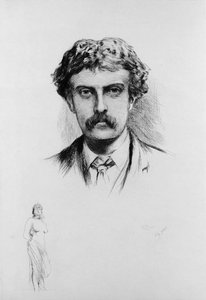
Cecil Gordon Lawson
1851 - 1882 , United Kingdom
Quick Facts
- Artistic Movement Or Style: Idyllist, Landscape
- Artists Or Movements Influenced By This Artist: 19thC British Landscape
- Artists Who Influenced This Artist:
- Gainsborough
- Crome
- Constable
- W.H. Hunt
- Date Of Birth: Dec 3, 1849
- Date Of Death: Jun 10, 1882
- Full Name: Cecil Gordon Lawson
- Nationality: British
- Notable Artworks:
- A Hymn to Spring
- Hop-Gardens of England
- The Minister's Garden
- The August Moon
- Place Of Birth: Wellington, UK
Related Articles
Fernand Léger's Masterpieces: 25 Iconic Paintings & The Machine Age Aesthetic | ArtsDot
Explore 25 iconic Fernand Léger paintings that defined the Machine Age & Cubism. Discover the stories behind his bold colors, geometric forms & avant-garde style. Find museum-quality art reproductions on ArtsDot.com.
Isaac Lazarus Israëls: A Chronicle of Dutch Life & the Evolution of Impressionistic Realism
Explore the captivating world of Isaac Lazarus Israëls (1865-1934), a leading Dutch Amsterdam Impressionist. Discover his city scenes, portraits & travels through Asia – a chronicle of Dutch life and artistic evolution.