 Preview
 Send
Send Share
Share
 Details

 Download
 Similars
 X-Ray
X-Ray Diaporama
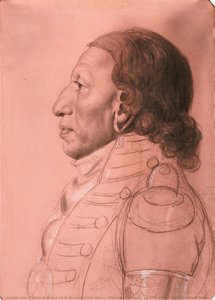
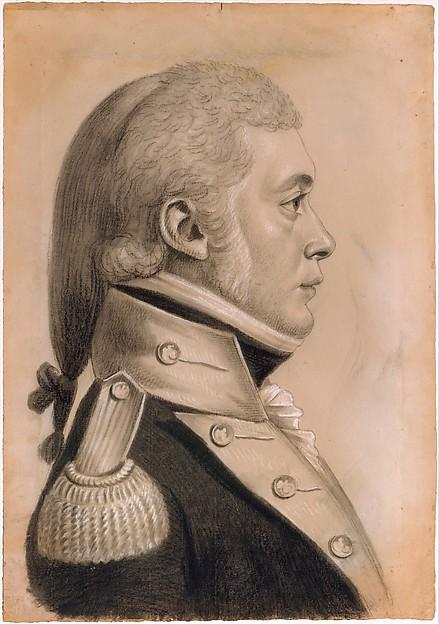
Dyer Sharp Wynkoop
 Neoclassicism
 1800
1800 54.0 x 38.0 cm
 Read More
Hand Made Oil Reproduction
Hand-painted oil on canvas in your size and frame, made to order by our artists. ( Buy Print Buy Image)




































Pick from our preset sizes that match the artwork's original proportions.

You may enter your own dimensions to fit a specific frame or space. If your selected size does not match the original image's proportions, we will either crop the artwork or extend the painting with additional hand-painted elements. A digital mockup will be sent for your approval before production begins.
Please note that the on-screen preview does not reflect the actual cropping or extension. Only the mockup will accurately show the final composition.
While custom sizes are available, we recommend selecting a dimension from the predefined list to preserve the original proportions.
After order, ArtsDot.com team will email client for instructions and provide a mockup preview
Worldwide Delivery () in 3/4 weeks instead of standard 5 weeks. (27 August). No compromise on quality.

Free Worldwide Express Shipping

High-Quality Linen Canvas

Full Shipping Insurance

Customs Tax Refund Guarantee

True Color Matching Guarantee

60-Day Return Policy (Defects Only)

100% Money-Back Guarantee

Bulk Discount Offer
 Glass option is only available in size under 110 CM

Dyer Sharp Wynkoop
Reproduction Medium
Reproduction Size
-


Total Price
$ 263
Related Artworks
Artist Biography
Charles Balthazar Julien Févret de Saint-Mémin: A Pioneer of American Portraiture
Born in France during a period of immense upheaval – the throes of the French Revolution – Charles Balthazar Julien Févret de Saint-Mémin’s life was one of constant movement and adaptation. Initially destined for military service, his family's circumstances led them to Switzerland before ultimately settling in New York City in 1793. This relocation marked a pivotal shift; instead of pursuing a career on the battlefield, Saint-Mémin found himself immersed in the burgeoning American landscape, quickly establishing himself as a remarkably skilled portraitist and, later, a respected museum director. His journey represents more than just an individual’s story; it embodies the artistic exchange between Europe and America during a transformative era.
Saint-Mémin's early training in France provided him with a solid foundation in classical art principles. However, his time in New York exposed him to a distinctly American sensibility – a growing desire for self-representation and a fascination with the nation’s founding figures. He quickly recognized an opportunity: the nascent United States desperately needed portraits that captured the personalities and gravitas of its leaders and prominent citizens. He embraced this demand, becoming one of the first artists to establish a professional portrait practice in the young republic.
The Physiognotrace Technique and Early Portraits
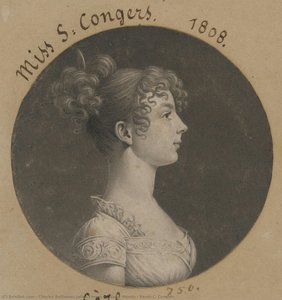
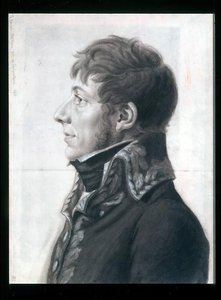
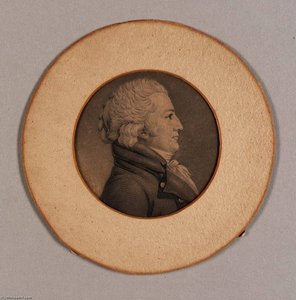
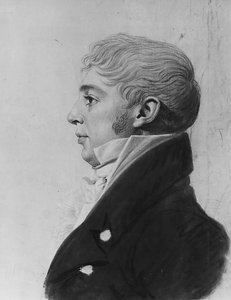
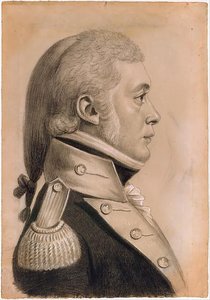
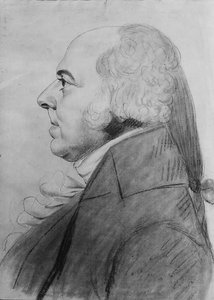
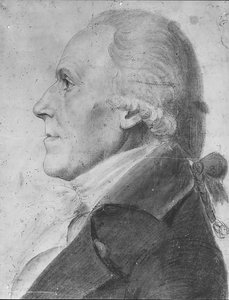
Saint-Mémin’s artistic approach was profoundly influenced by the invention of the physiognotrace, a device created by Gilles-Louis Chretien in 1786. This ingenious instrument mechanically reproduced an outline of a sitter's profile, capturing subtle nuances of expression with remarkable accuracy. Saint-Mémin quickly mastered this technique, utilizing it to create remarkably lifelike portraits that went beyond mere likenesses; they conveyed the inner character and spirit of his subjects. His early works, including those of Alexander Macomb and John Marshall, demonstrate a keen eye for detail and an ability to translate fleeting expressions onto paper.
Crucially, Saint-Mémin didn’t simply replicate what he saw with the physiognotrace. He meticulously refined the mechanical outline with watercolor, adding delicate shading and subtle touches that brought his subjects to life. This combination of technological innovation and artistic skill set him apart from many of his contemporaries, establishing a distinctive style characterized by its precision and emotional depth.
Portraits of Washington, Jefferson, and Beyond
Saint-Mémin’s most celebrated portraits undoubtedly include those of George Washington and Thomas Jefferson. These works are not merely representations of the nation's leaders; they are carefully constructed narratives that embody their respective virtues and legacies. Washington’s portrait, for instance, exudes a sense of dignified authority, while Jefferson’s captures an air of intellectual curiosity and quiet contemplation. He also produced portraits of numerous other influential figures – including members of Congress, prominent merchants, and even Native American leaders – offering a fascinating glimpse into the social and political landscape of early America.
His work with Plains Indian delegations in Washington D.C., commissioned by President Jefferson, is particularly noteworthy. These portraits weren’t simply commissions; they were attempts to document and understand these indigenous communities, reflecting both the era's complex relationship with Native Americans and Saint-Mémin’s own artistic ambition.
Return to France and Legacy
After nearly two decades in America, Saint-Mémin returned to France in 1814. He dedicated the remainder of his life to serving as director of the Musée des Beaux-Arts de Dijon, a role that allowed him to share his artistic knowledge and passion for art with a new generation. He died in Dijon in 1852, leaving behind a significant body of work that profoundly influenced the development of portraiture in America.
Saint-Mémin’s legacy extends beyond his individual portraits. He played a crucial role in establishing the tradition of life drawing and portrait painting in the United States, paving the way for future generations of American artists. His innovative use of the physiognotrace technique, combined with his meticulous attention to detail and his ability to capture the essence of his subjects, cemented his place as one of the most important figures in early American art history. His work serves as a testament to the dynamic exchange between Europe and America during a period of profound social, political, and artistic transformation.
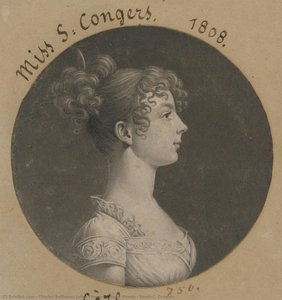
charles balthazar julien févret de saint mémin
1770 - 1852
Quick Facts
- Artistic Movement Or Style: Neoclassical Portraiture
- Artists Or Movements Influenced By This Artist: ['American Portraiture']
- Artists Who Influenced This Artist: ['Gilles-Louis Chretien']
- Date Of Birth: 1770
- Date Of Death: 1852
- Full Name: Charles Balthazar Julien Févret de Saint-Mémin
- Nationality: French
- Notable Artworks:
- Washington Portrait
- Jefferson Portrait
- Osage Warrior
- Place Of Birth: France
Related Articles
The Nuances of Graphite: Exploring Emotional Depth & Technical Mastery in Pencil Drawing
Explore the captivating world of graphite drawing! Discover its rich history, master essential techniques like chiaroscuro, and learn how artists evoke emotion through this timeless medium. Expert insights for art enthusiasts.
The Alchemy of Graphite: An Expert Guide to Mastering Detail and Depth in Pencil Sketching
Unlock the secrets of graphite sketching with our expert guide for art students. Learn to master pencil grades, create realistic depth, and capture intricate textures through professional techniques designed to elevate your observational drawing skills.
Discover the Divine: Inspiring Saint Anthony Artworks to Elevate Your Home Decor
Transform your home with the profound beauty of Saint Anthony artworks. Explore exquisite Baroque reproductions by Murillo and Zurbarán, hand-painted on 100% cotton canvas to bring divine serenity and timeless elegance to your interior design.
Graphite Masters: 10 Iconic Paintings & Timeless Art for Your Home
Explore 10 iconic paintings dominated by graphite tones – from Rembrandt's chiaroscuro to Goya’s drama. Discover art history, techniques & find museum-quality reproductions for your home at . Explore the full collection online.

The Enduring Power of Line: Exploring Themes & Techniques in Drawing Across Art History
Explore the rich history of drawing! Discover key techniques like linear perspective & iconic artists from the Renaissance to modern times. Enhance your art appreciation with ArtsDot.